The 30 Greatest Ford Trucks Ever Made: From the Model TT to the F-150 Lightning
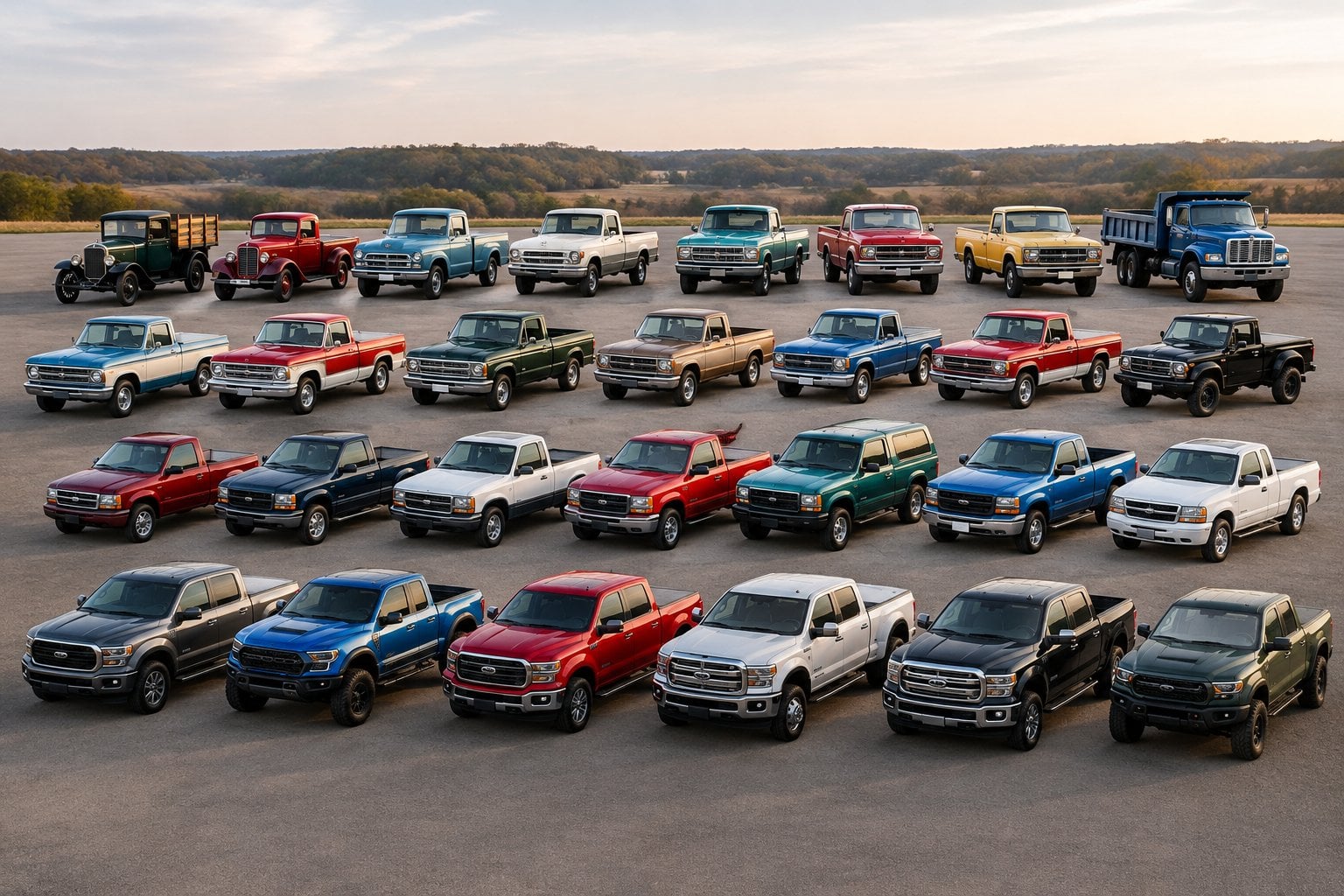
Ford has built pickup trucks for more than a century, and the lineup includes models that shaped the truck market and others that simply got the job done. Some stand out for engineering advances, while others earned their place through sales numbers or lasting popularity among owners.
This list looks at 30 Ford trucks that represent the brand’s history, from early workhorses to modern performance models. You’ll find entries chosen for their impact on design, capability, or cultural relevance rather than personal preference alone.
Each truck on this list played a role in defining what Ford’s lineup has become today. The selections span different decades and purposes, giving you a broad view of how these vehicles evolved over time.
1. Ford Model TT (1917)
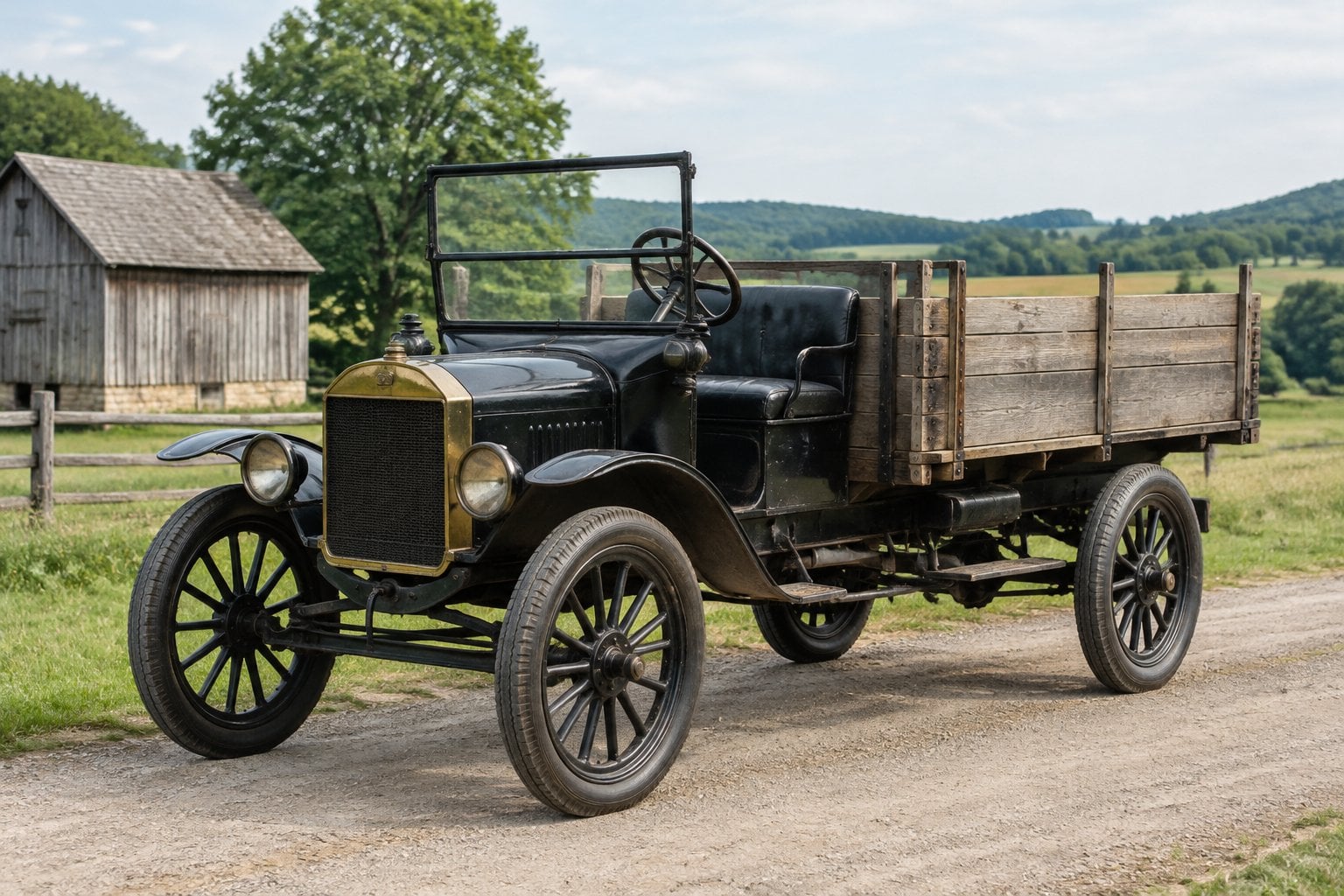
The Model TT is where your Ford truck history actually starts. Introduced in 1917, it was Ford’s first vehicle built specifically for commercial hauling rather than passenger use.
You’ll recognize its roots immediately. It shared the Model T’s basic design but added a longer 125-inch wheelbase, a reinforced frame, and a heavier rear axle to handle cargo.
Ford rated the Model TT for one ton of payload, a significant jump over the standard Model T chassis. A worm-drive rear axle gave you better torque for hauling, though top speed stayed around 15 mph.
Early on, Ford sold the TT mainly as a bare chassis. The rest was up to you, since body styles came from independent coach builders who fitted stake beds, panel bodies, or custom cargo boxes depending on your trade.
Shopkeepers, farmers, and small businesses relied on the Model TT because it was affordable and simple to maintain. Its success proved there was real demand for dedicated work trucks, setting the direction Ford would follow for the next century.
2. Ford Model T Runabout Pickup (1925)
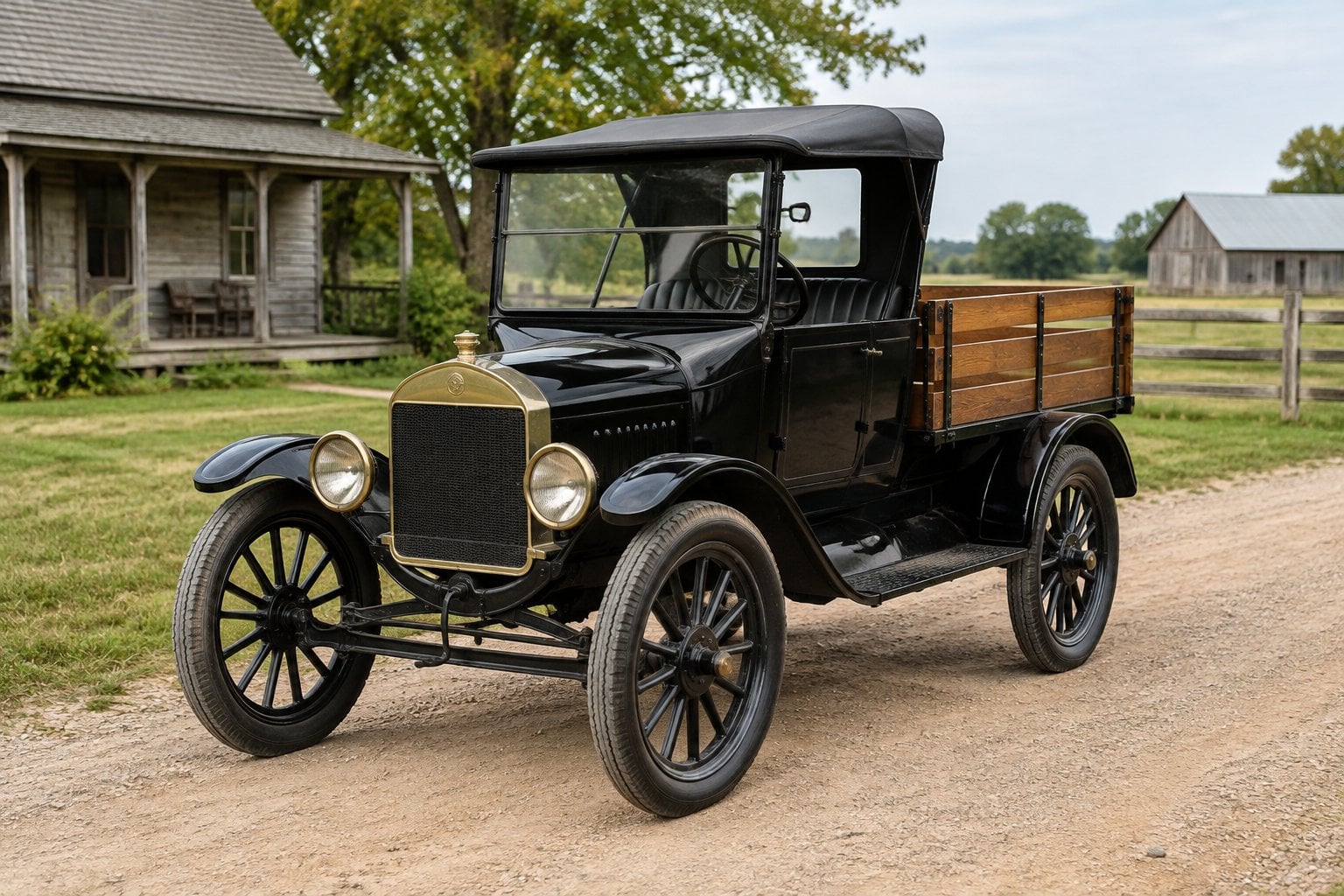
When you look at where the Ford pickup truck started, you land on this model. Ford introduced the Model T Runabout with a factory-installed pickup bed in April 1925, and it’s widely credited as the first factory-built pickup truck sold in America.
Before this, you would have had to buy a Runabout and convert it yourself, or pay a local coachbuilder to add a cargo bed. Ford noticed how many owners were already doing this and decided to offer a ready-made version instead.
The steel bed measured 56 inches long and 40-3/4 inches wide, with an adjustable tailgate and four stake pockets for securing loads. You got this setup for $281, making it an affordable option for farmers, tradesmen, and small business owners who needed a light-duty work vehicle.
The truck ran on Ford’s familiar 177-cubic-inch four-cylinder engine, producing around 20 horsepower, enough for the needs of the era. You can trace nearly every pickup truck that followed back to this model’s basic formula: a car chassis paired with a dedicated cargo bed.
3. Ford Model B Pickup (1932)
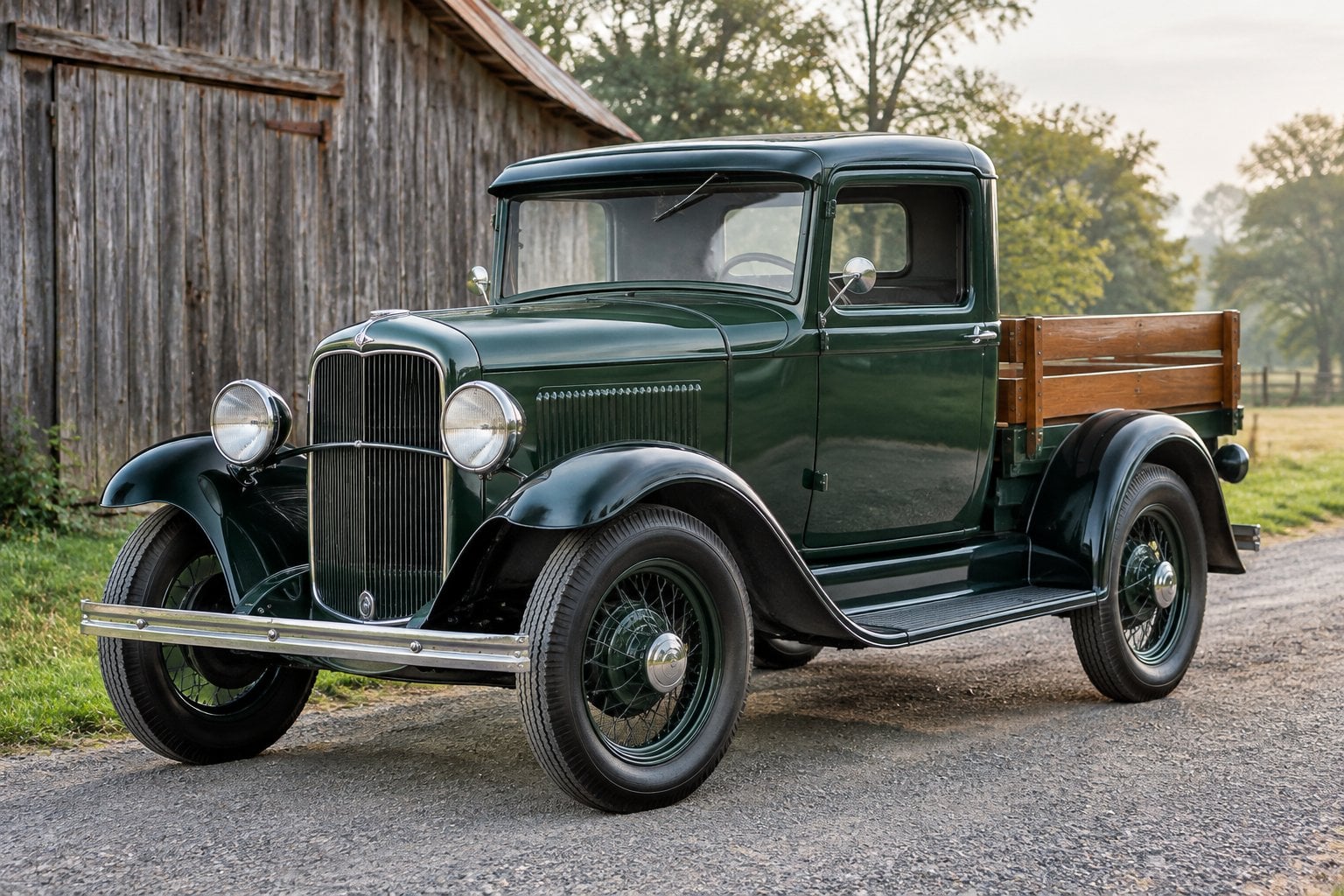
When you look at the 1932 Ford Model B Pickup, you’re looking at the four-cylinder version of Ford’s famous 1932 design, sold alongside the new V-8 Model 18 that debuted the same year.
You get a 200-cubic-inch four-cylinder producing around 50 horsepower, paired with a basic three-speed manual transmission. This was a simple, functional powertrain designed for light commercial use rather than heavy hauling.
The Model B shared its chassis, transverse leaf spring suspension, and four-wheel mechanical brakes with its V-8 sibling, the car now nicknamed the Deuce. You’ll notice the body styling is nearly identical, which is part of why collectors value well-preserved or restored examples so highly today.
If you’re drawn to hot rod culture, you’ll recognize why this truck became a favorite build platform decades later. Its scarcity, clean lines, and versatile chassis made it a natural choice for customization, and original or faithfully restored units now command strong prices among serious collectors.
4. Ford Model 50 Pickup (1935)
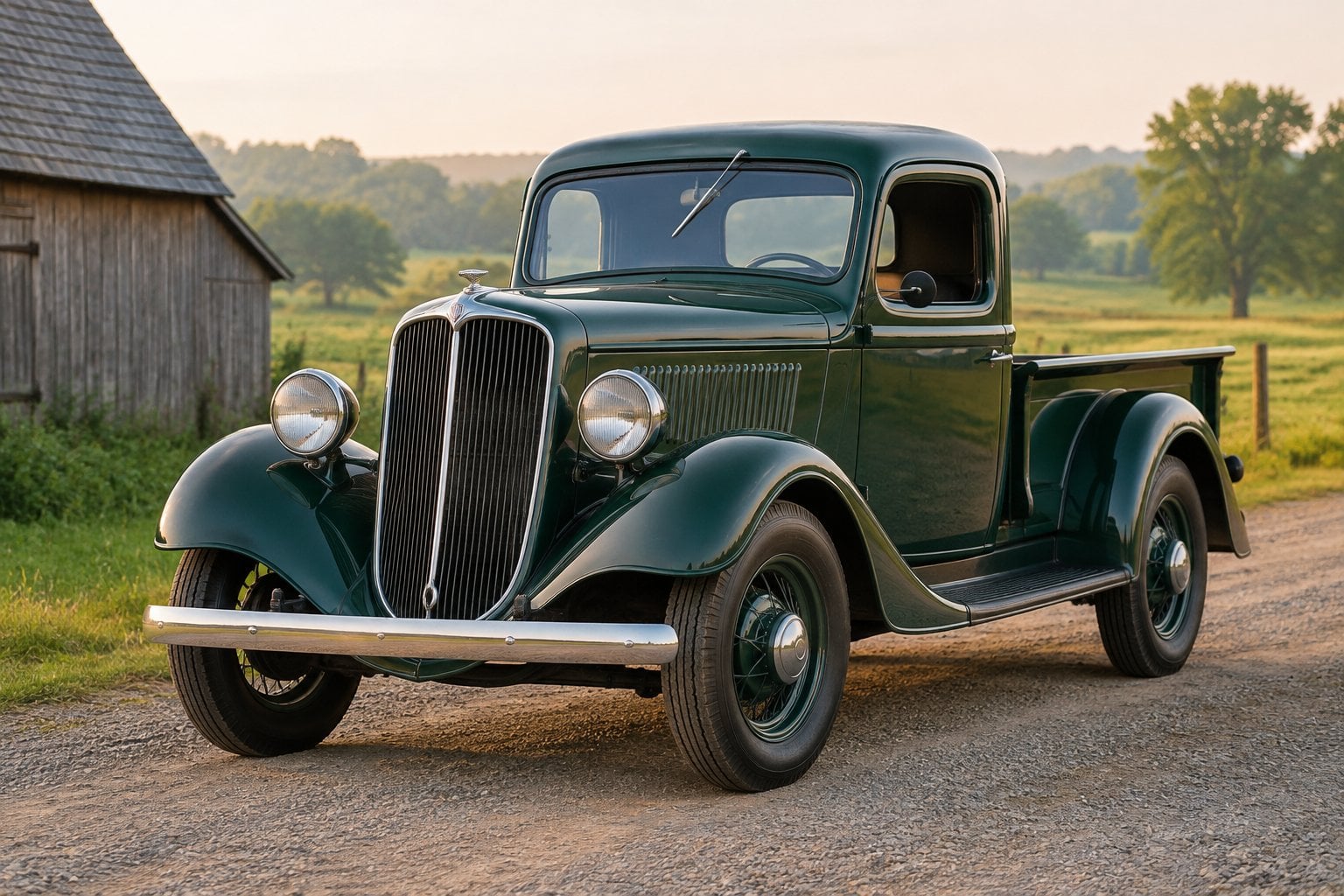
You can trace a lot of modern truck design back to 1935, the year Ford gave its half-ton pickup a full redesign. Instead of reusing the older 1932-34 body, Ford built the Model 50 with fresh styling that made it look years ahead of its predecessors.
Under the hood, you get the flathead V8, displacing 221 cubic inches and producing around 85 horsepower. That was strong output for a working-class truck during the Depression era, and it set this pickup apart from four-cylinder competitors.
The frame was reinforced and the suspension beefed up to handle real work, even though the truck shared its basic chassis with Ford’s passenger cars. You could count on it for genuine payload use, not just light duty.
If you look at this truck today, you’ll notice how it balanced style with function. Owners and collectors often point to its V8 power and updated looks as reasons it helped Ford compete hard against Chevrolet during a tough economic period.
5. Ford F-1 (1948)
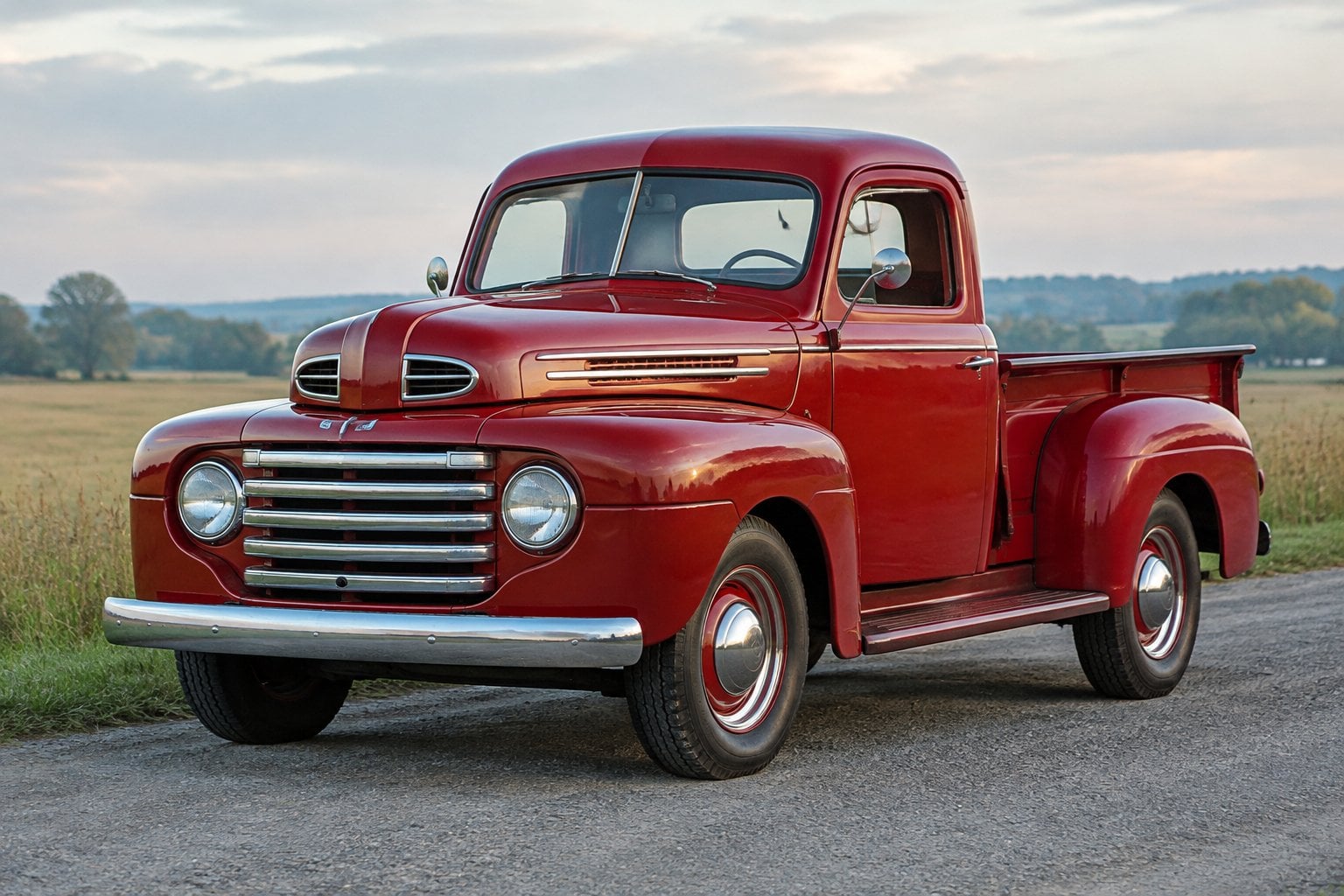
When you look at the 1948 Ford F-1, you’re looking at the truck that started the entire F-Series line. Ford introduced it on January 16, 1948, calling it part of the “Bonus Built” lineup. It was the company’s first all-new post-war vehicle, and it marked a clear break from using car chassis for truck production.
You’ll notice the F-1 was built on a dedicated truck platform, something Ford hadn’t done before. This separation of car and truck engineering gave the F-1 better durability and a design suited specifically to work use.
Under the hood, you had access to Ford’s flathead V8, a powerplant known for its reliability during that era. A six-cylinder option was also available depending on your needs.
Owners and collectors today praise the F-1 for its straightforward mechanical design and its place in automotive history. If you’re drawn to early examples, you’ll find they’re valued for original, unrestored features rather than later refinements. The F-1’s influence set the direction for every F-Series truck that followed.
6. Ford F-100 (1953)
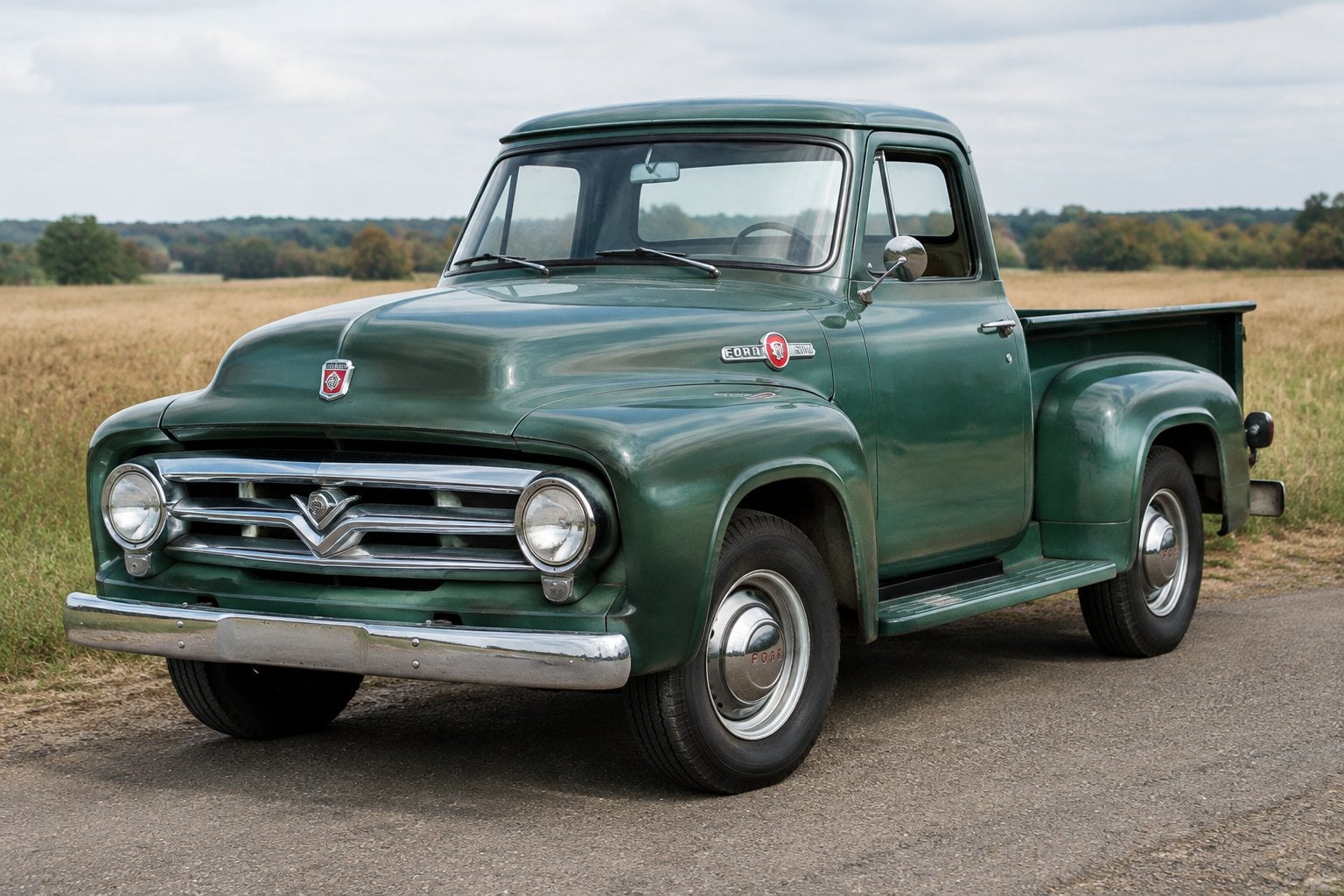
You can point to the 1953 F-100 as the truck that reshaped how you think about pickups altogether. Ford replaced the F-1 with the F-100 that year, giving you a wider cab, updated styling, and a more integrated look across the lineup.
1953 also marked Ford’s 50th anniversary, a detail you’ll notice on the horn button of original trucks from that model year. It was also the final year you could get a Flathead V8 in a Ford truck, making this an important transition point before Ford moved to overhead-valve engines.
You’ll find that collectors value these first-year trucks specifically because they predate the refinements made later in the 1953-1956 generation. If you’re searching for originality rather than later updates, this is the year to focus on.
When you look at pricing today, project trucks run lower while show-quality restorations command significantly more. You’re looking at a truck that balanced farm utility with genuine comfort improvements, something buyers at the time hadn’t seen before.
7. Ford F-100 Big Window (1956)
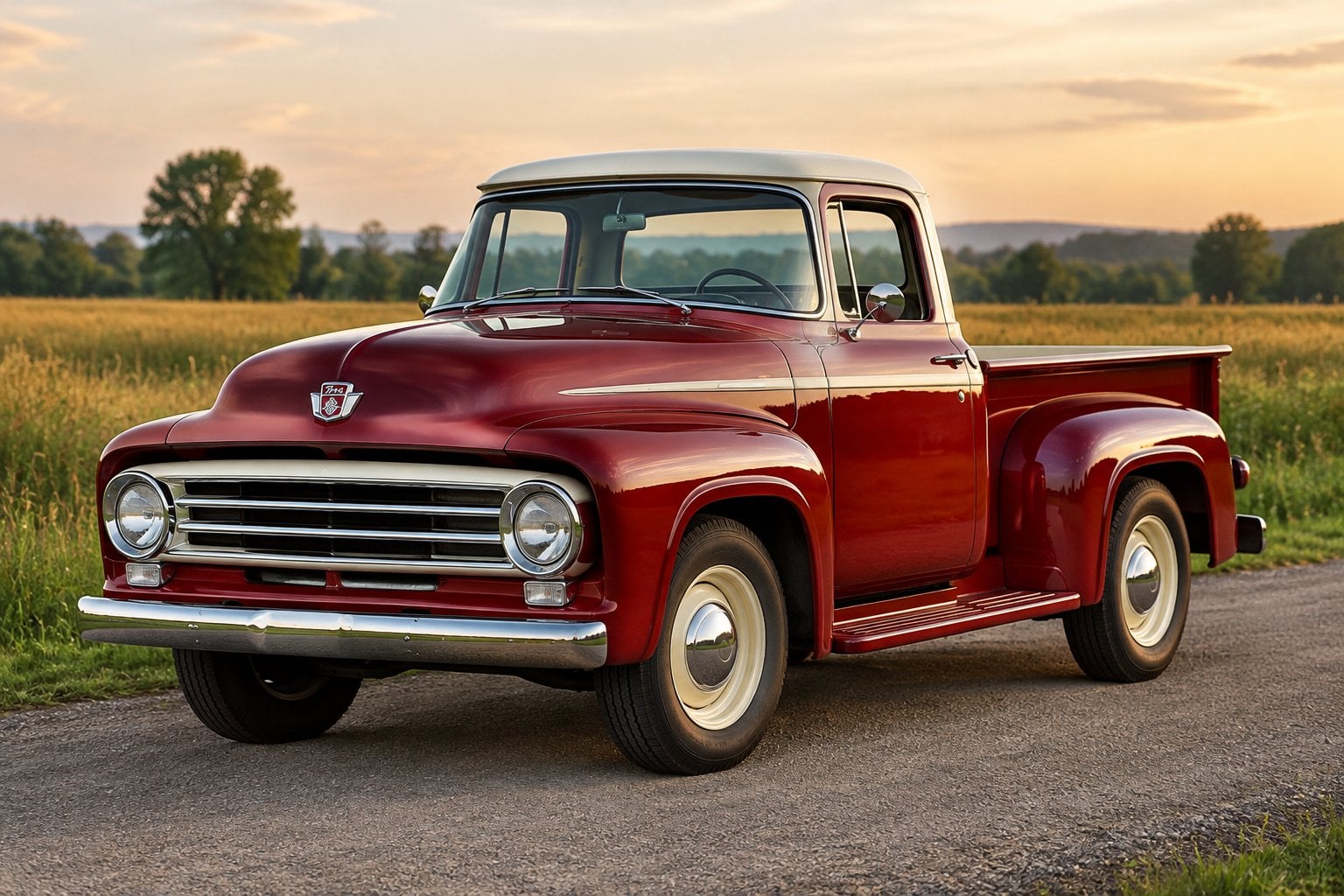
You get the final year of Ford’s second-generation F-Series, and it closed the run on a high note. The big window cab set this truck apart from the standard small-window cab, giving you significantly better rearward visibility through a wraparound rear window.
Ford paired this with a new wraparound windshield at the front, so you’re looking at a cab with far fewer blind spots than previous model years offered.
Under the hood, you had choices. The standard 223 cubic-inch inline-six got the job done for basic hauling, while the 272 cubic-inch Y-block V8 gave you noticeably more power for a light-duty truck of that era.
A 12-volt electrical system replaced the older 6-volt setup, improving your starting reliability and accessory performance.
You’ll find this truck praised for its clean, balanced styling and its position as the final year of the 1953-1956 generation. Collectors value it for its combination of classic proportions and genuine mechanical upgrades over earlier 1953-1955 models.
8. Ford F-100 Unibody (1961)
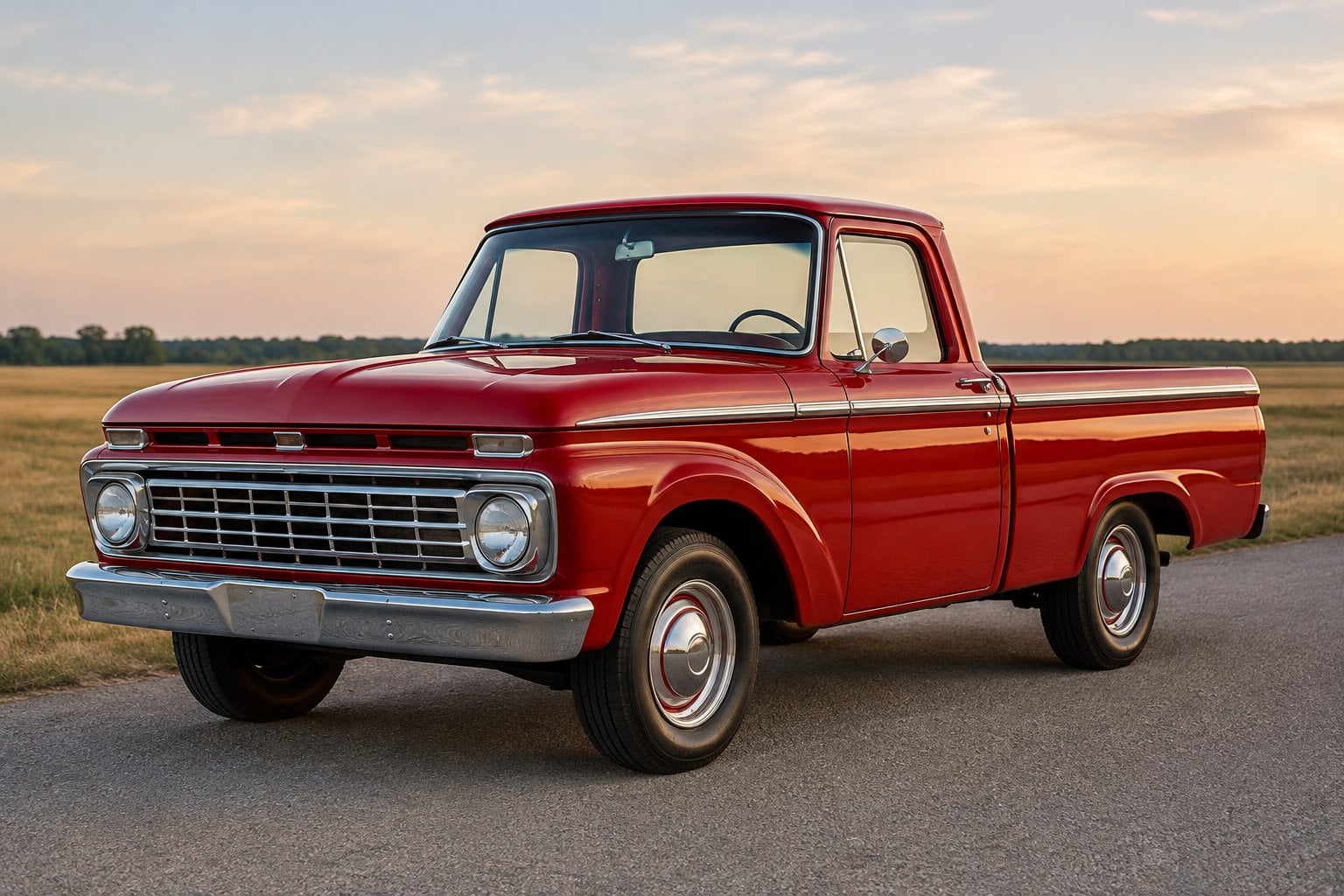
When you look at the 1961 Ford F-100, you’re seeing a truck that broke from tradition in a significant way. Ford welded the cab and bed into a single continuous structure instead of building them as separate units on a ladder frame. This created a smooth, uninterrupted line between the hood, bed sides, and window sill, giving the truck a lower, wider stance than previous generations.
You’ll find this feature only on two-wheel-drive Styleside models, and it lasted just three model years, from 1961 through 1963. The design improved rigidity and handling, which you’d notice if you drove one on the highway. But you’d also run into a real drawback: heavy loads in the bed could flex the frame and cause the cab doors to bind or stick.
Ford addressed this by 1964, returning to body-on-frame construction. Despite its short run, you can still appreciate the Unibody F-100 today for its styling and engineering ambition, qualities that make it a standout among early 1960s pickups.
9. Ford F-100 Twin I-Beam (1965)
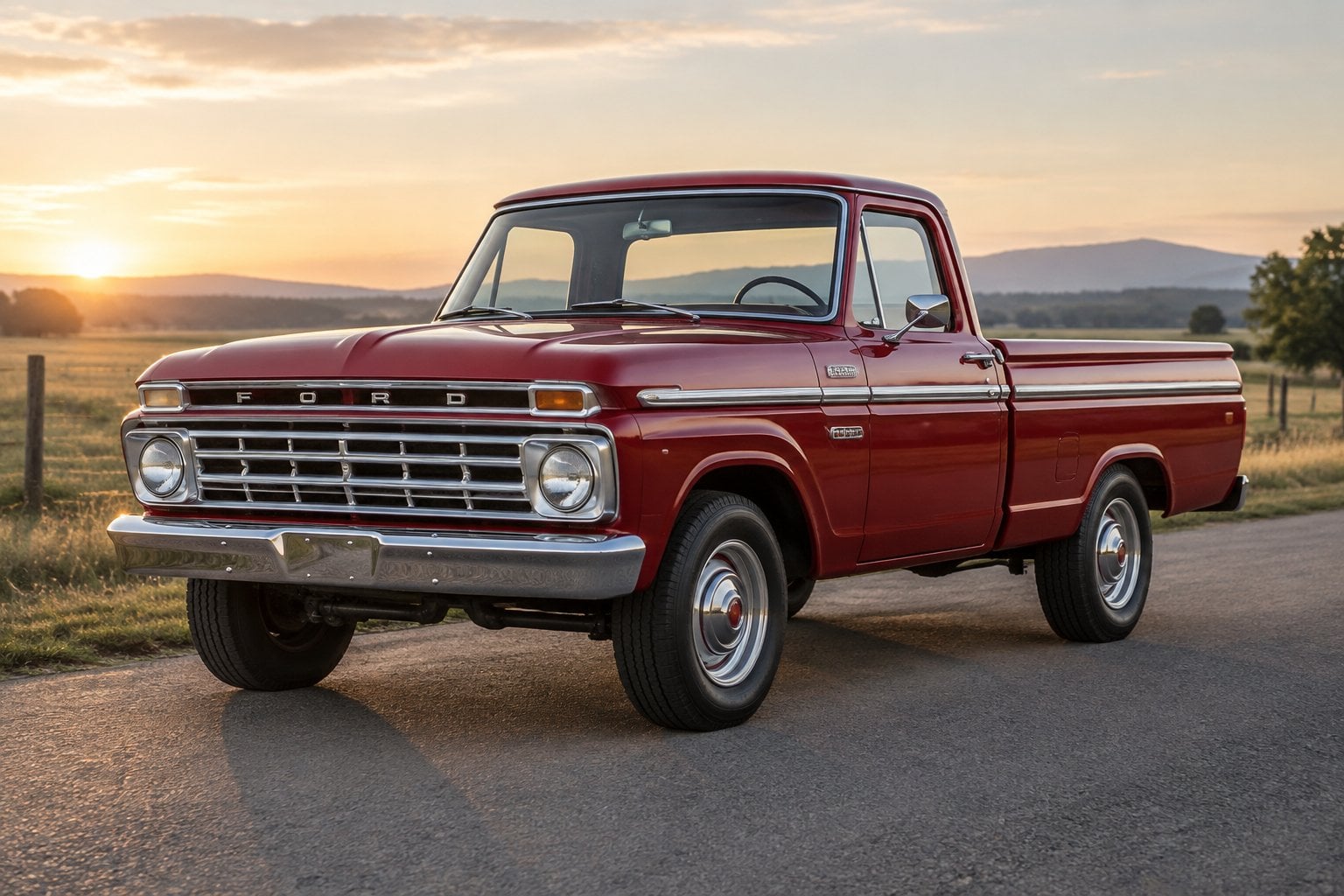
You can point to the 1965 F-100 as the year Ford changed how its trucks rode and handled. This was the year Ford introduced the Twin I-Beam independent front suspension, replacing the old solid front axle used on two-wheel-drive models.
Each front wheel got its own I-beam axle, letting it react to bumps independently of the other. You’d notice the difference immediately if you drove one back to back with an earlier F-100: a smoother ride, better handling, and less harshness over rough roads.
Under the hood, you had three engine choices. The 240 and 300 cubic-inch inline sixes replaced the older 223, while a 352 cubic-inch V-8 gave you the option of more power if you needed it.
This generation also carried over the lower, wider cab design introduced a few years earlier. If you’re looking at F-Series history, this truck marks a clear turning point, since Ford kept refining and using Twin I-Beam suspension in its trucks for decades afterward.
10. Ford F-100 Styleside (1967)
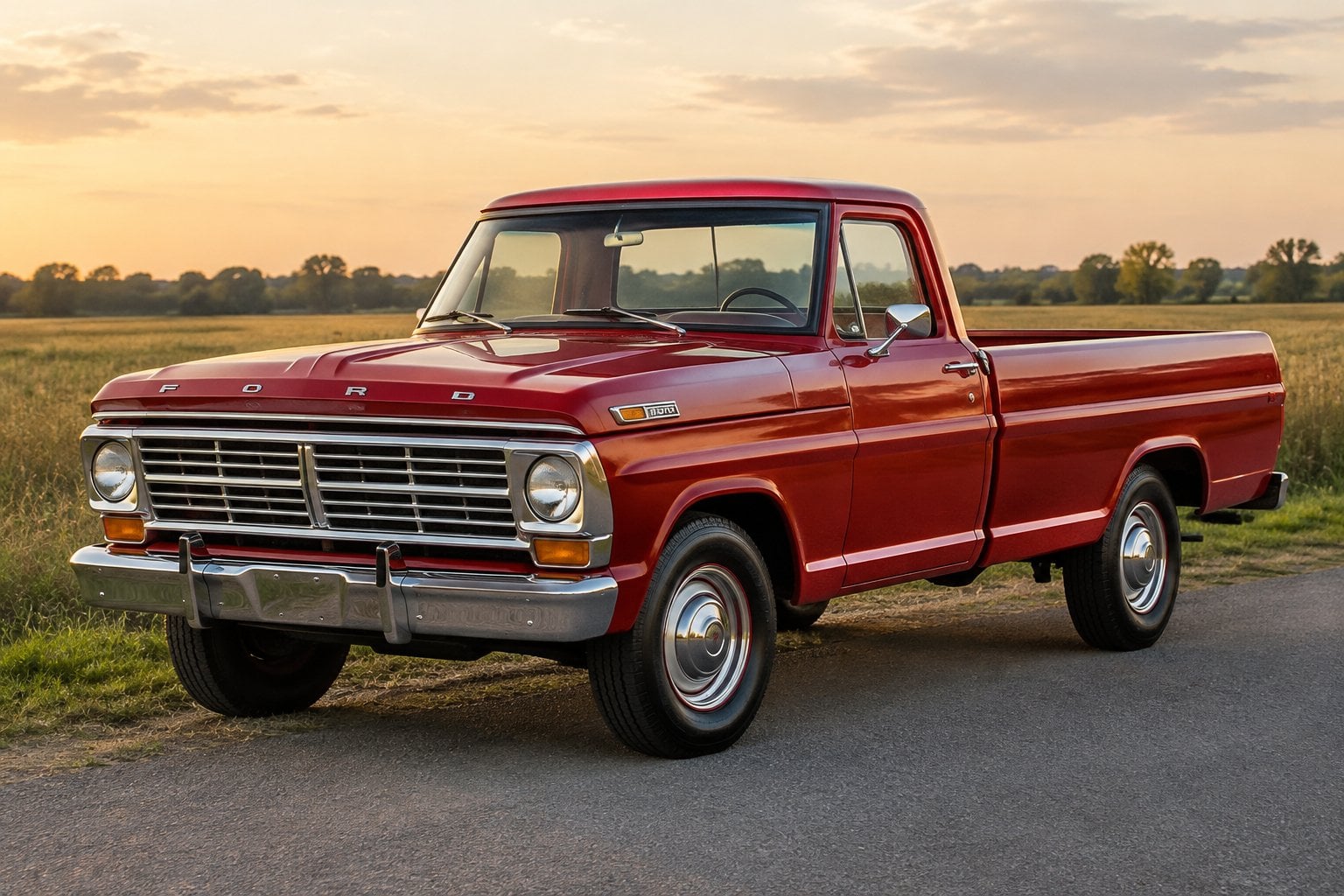
When you look at the 1967 Ford F-100 Styleside, you’re seeing the start of Ford’s fifth-generation F-Series. This body style launched with wider, more squared-off styling that replaced the rounded look of earlier trucks.
You’ll find the F-100 offered a redesigned cab that gave drivers more interior room and improved visibility. Ford also kept the Twin I-Beam front suspension introduced in 1965, which gave you a smoother ride on two-wheel-drive models than previous solid-axle setups.
Your engine choices included the 240 cubic-inch inline-six as the base option, with the 300 inline-six and 352 FE V8 available for more power. These engines gave you flexibility depending on whether you prioritized fuel economy or towing capability.
Owners and reviewers have long praised this generation for its durability and the balance it struck between work-truck practicality and everyday comfort. You can still find plenty of these trucks on the road today, a testament to how well-built they were.
The 1967 F-100 set the design language that would define Ford pickups through 1972, making it a foundational model for collectors who value its clean lines and dependable mechanicals.
11. Ford F-250 Highboy (1969)
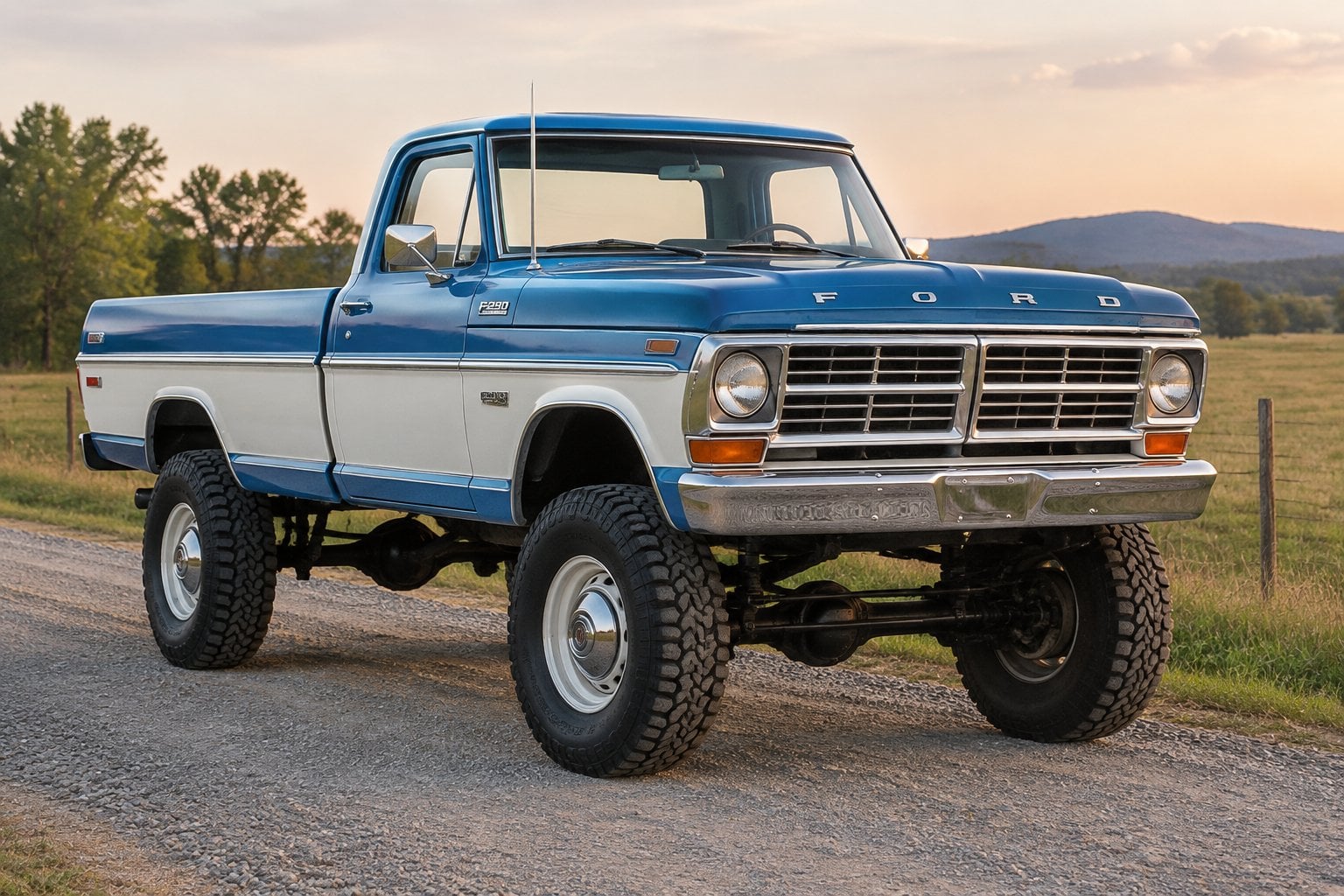
You’ll recognize this truck instantly by its tall stance. The nickname “Highboy” comes from its divorced transfer case design, which sat the frame higher than later F-250 4×4 models.
If you’re looking at a 1969 model, you’re seeing one of the earlier examples from this generation, produced during a period when Ford’s F-Series was gaining serious traction with buyers who needed real off-road capability.
Under the hood, you could find a 360 or 390 cubic inch V8 paired with a four-speed manual transmission, a common combination that gave these trucks solid power for hauling and towing work. The NP435 four-speed was a popular choice, and you’ll find it praised for its durability.
You’ll appreciate the simplicity of this truck’s mechanical layout if you’re into working on vehicles yourself. The divorced transfer case setup, while contributing to a higher center of gravity, also gave you better ground clearance for off-road use.
Owners today value these trucks for their straightforward engineering and genuine off-road pedigree.
12. Ford Bronco (1970)
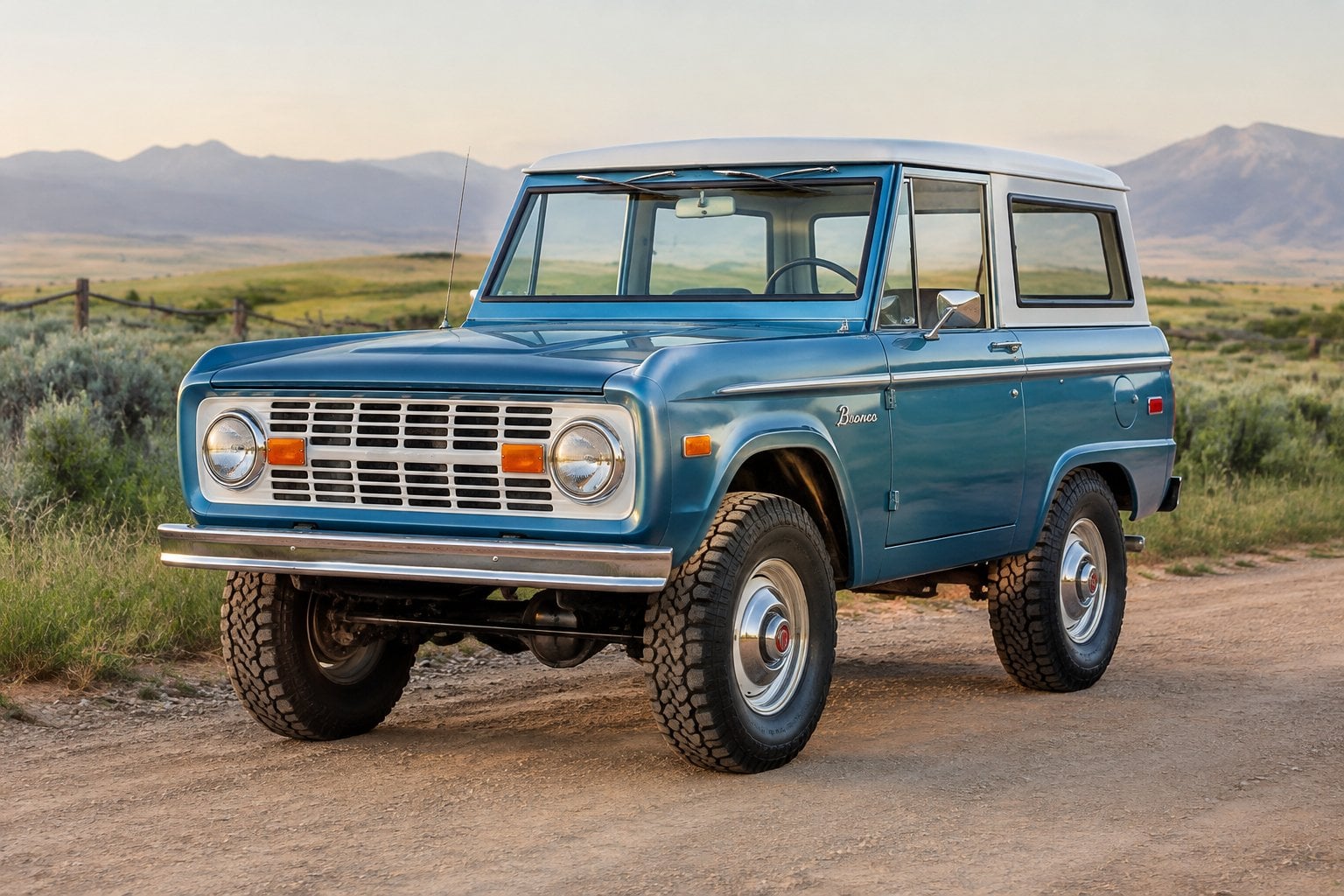
By 1970, you’re looking at Ford’s early Bronco in its original, uncomplicated form. The compact SUV had launched a few years earlier to compete directly with the Jeep CJ and International Harvester Scout, and this model year still carried that straightforward, no-frills approach.
You had a choice between a 170ci inline-six as the standard engine or an optional 302ci V8 if you wanted more torque. A 3-speed manual transmission handled power delivery, keeping the drivetrain simple and easy to maintain.
What stands out about this Bronco is how it balanced off-road capability with everyday usability. You could drive it through rough terrain on a weekend and still use it for routine errands during the week, something that wasn’t common among off-road vehicles at the time.
Reviewers and owners have long praised its compact size and maneuverability, qualities that made it easier to handle on tight trails than larger trucks. The solid front axle and part-time four-wheel-drive system gave you dependable traction without overcomplicating the mechanicals underneath.
13. Ford F-100 Ranger XLT (1973)
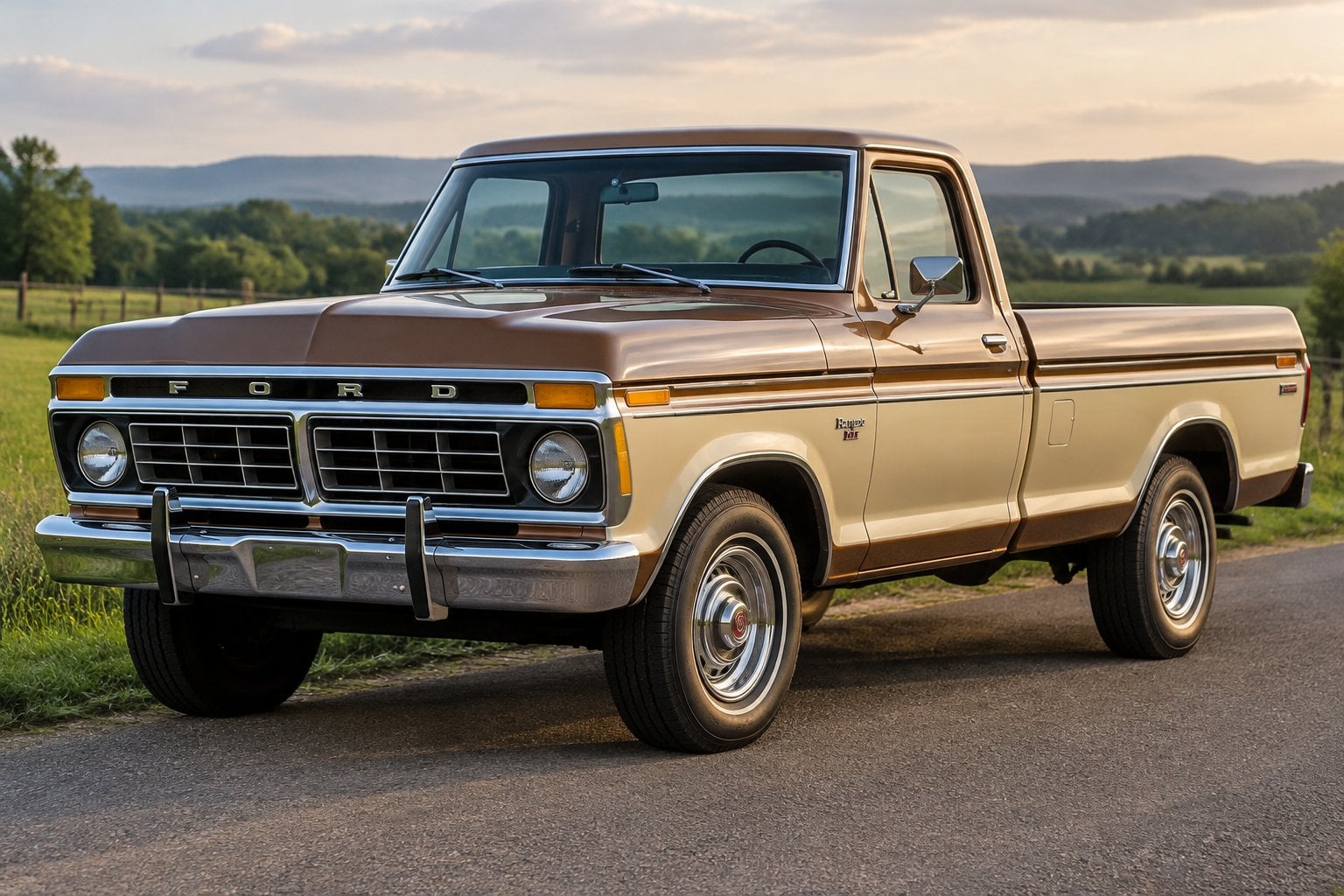
When you look at the 1973 F-100 Ranger XLT, you’re looking at the start of Ford’s sixth-generation F-Series, often called the “Dentside” trucks for their distinctive body creases. This was a full redesign, with a larger cab, wider stance, and styling that carried Ford’s trucks through the rest of the decade.
You had a choice of engines, including an inline-six, along with 302, 360, and 390 cubic-inch V8 options. The XLT Ranger trim sat near the top of the lineup, giving you more comfort and trim features than the base Custom models.
This generation also set the stage for the F-150, which arrived a couple years later.
If you’re drawn to early 1970s trucks, you’ll appreciate the F-100 Ranger XLT for its clean lines, dependable V8 power, and its role in shaping Ford’s truck identity for years to come.
14. Ford F-150 4×4 (1977)
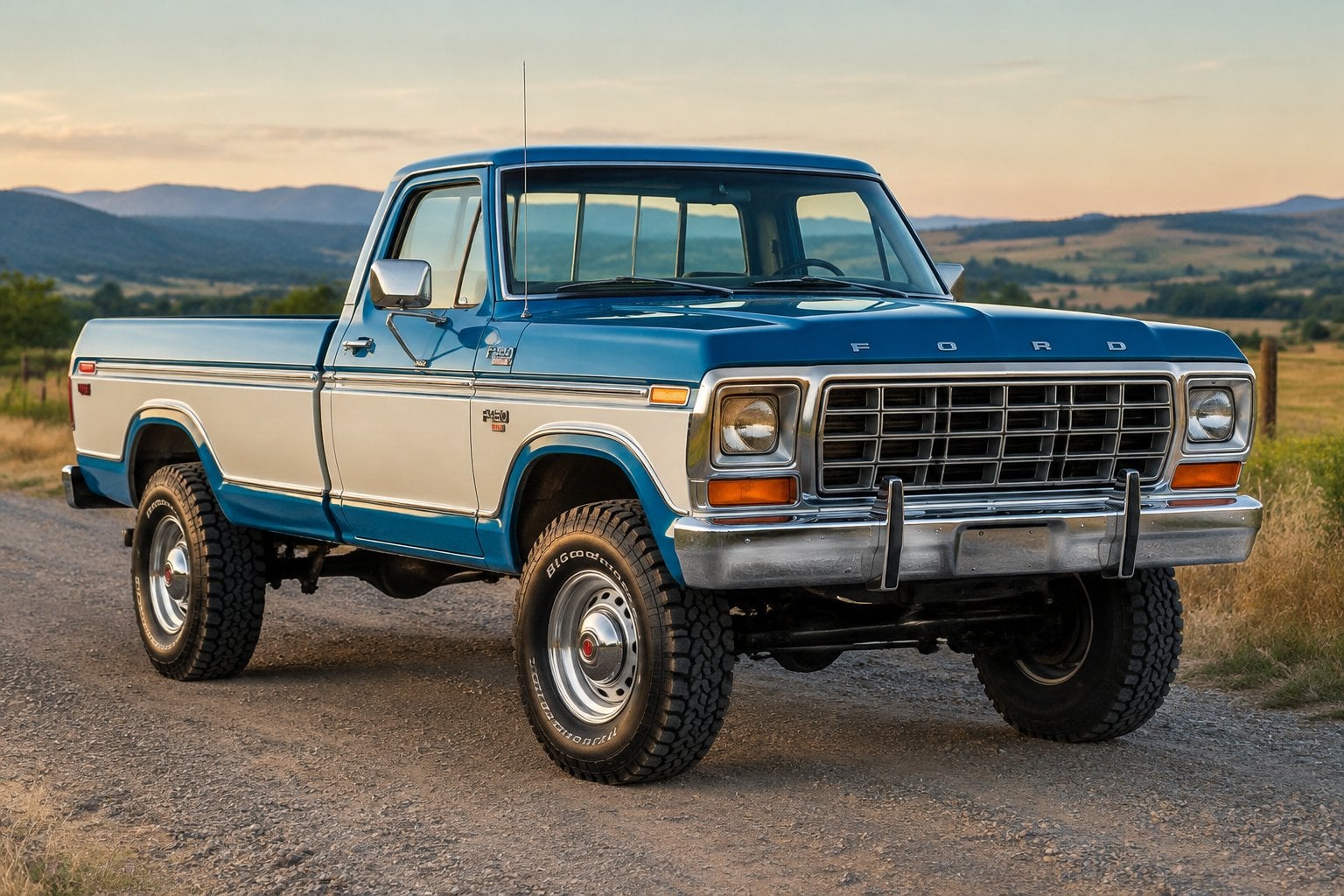
In 1977, you saw the F-Series take the lead as America’s best-selling truck, a position it has held ever since.
The F-150 4×4 sat at the center of that shift, built on the sixth-generation F-Series platform. You had a choice of several V8 engines, including the 5.8-liter (351) V8, giving you dependable power for work or towing.
Ford designed this truck to handle both daily labor and rougher terrain. The 4×4 drivetrain gave you the off-road capability that buyers increasingly wanted, while the F-150 trim bridged the gap between light-duty and heavy-duty hauling needs.
You’ll find that owners and collectors still praise this generation for its straightforward mechanical layout and durability. Many trucks from this era remain on the road today, a testament to how well they were built.
If you’re looking at a 1977 F-150 4×4 now, you’re looking at the truck that helped define Ford’s dominance in the pickup market for decades to come.
15. Ford Bronco (1978)
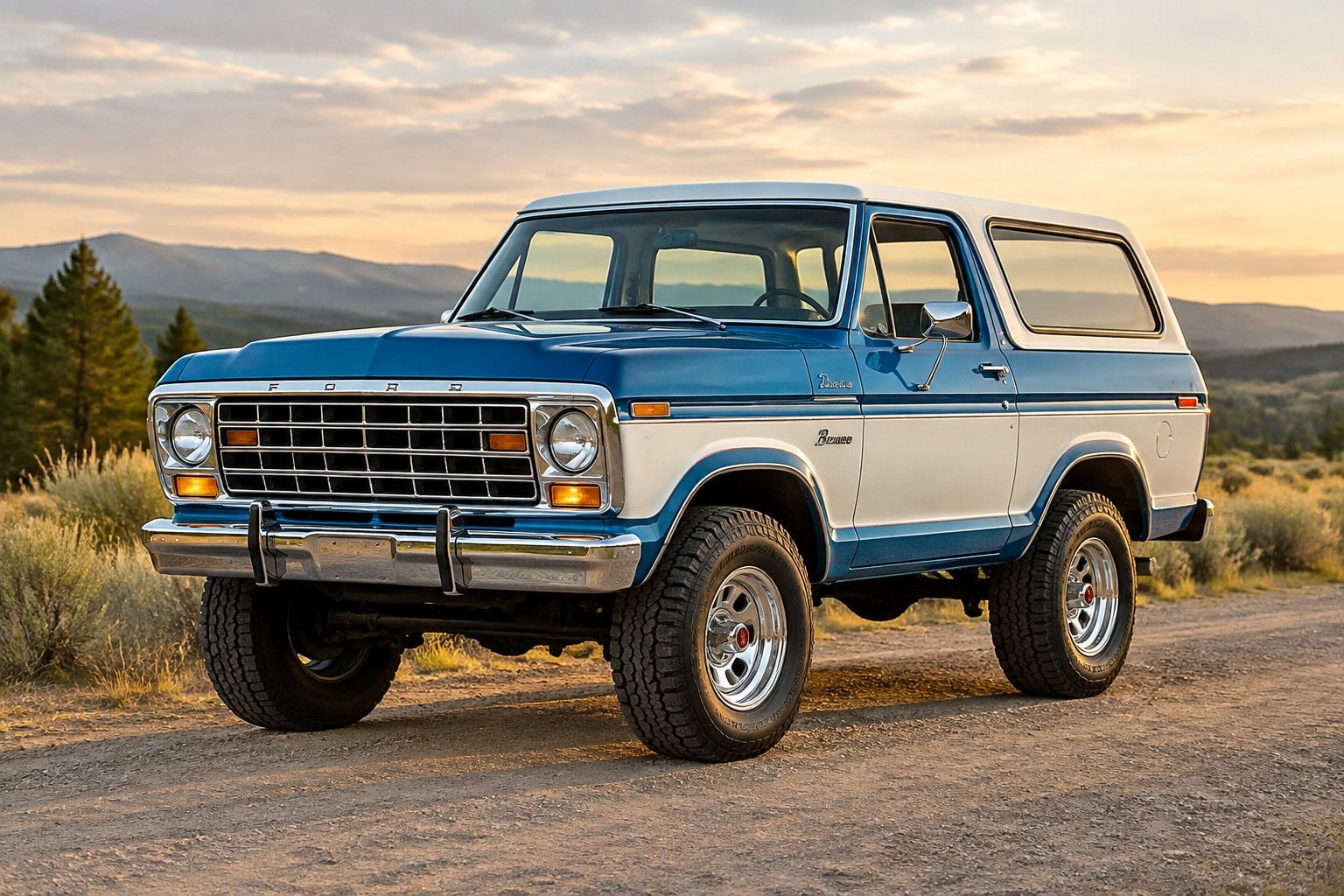
You get a completely different vehicle from the earlier Bronco generation when you look at the 1978 model. Ford moved the Bronco onto a larger platform for this redesign, sharing its front-end styling and many components with the full-size F-Series pickup.
If you’re examining a 1978 model, you’ll notice round headlamps on Custom trims, while the Ranger XLT came with rectangular units. You also get a removable fiberglass rear roof section, which lets you convert the Bronco into an open-air vehicle when you want that option.
Under the hood, you’re limited to V8 power only, paired with four-wheel drive as standard equipment. You can choose between a part-time transfer case with the manual transmission or a full-time system with the automatic.
You’ll find that collectors and owners today praise this generation for its durability and its connection to the F-Series truck lineage. If you’re restoring one, you’re working with a vehicle regarded as tough, capable, and representative of late-1970s American truck design.
16. Ford F-150 Styleside (1980)
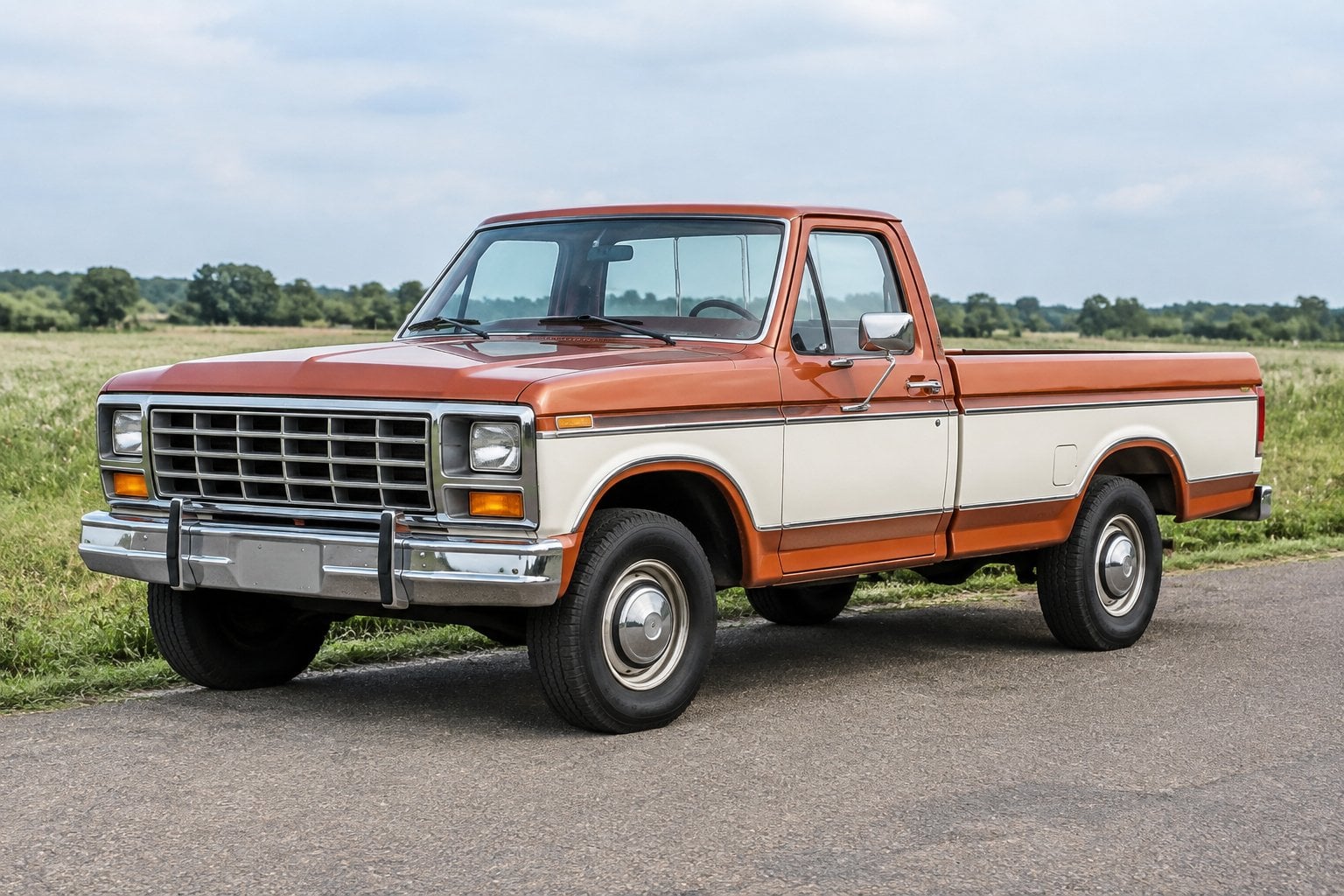
When you look at the 1980 F-150 Styleside, you’re seeing the start of a completely new chapter for Ford’s truck lineup. This model launched the seventh generation of the F-Series, a full redesign giving you flatter body panels and a squared-off grille that departed from the rounded look of the previous generation.
You’ll notice the emphasis on aerodynamics in the body design, a result of wind tunnel testing that Ford conducted to improve fuel efficiency. That focus on efficiency mattered to buyers during a period when gas prices and mileage were serious concerns.
Under the hood, you had a choice of inline-six and V8 engines, giving you flexibility depending on whether you prioritized economy or towing power. The chassis was also new, built to handle heavier loads than earlier models while improving ride quality.
You could order the F-150 Styleside as a regular cab or SuperCab, with a Crew Cab offered on heavier-duty models, so your options for passenger and cargo space were broader than before. Owners and reviewers have pointed to the truck’s durability and straightforward mechanical design as reasons it still holds up decades later.
17. Ford Ranger (1983)
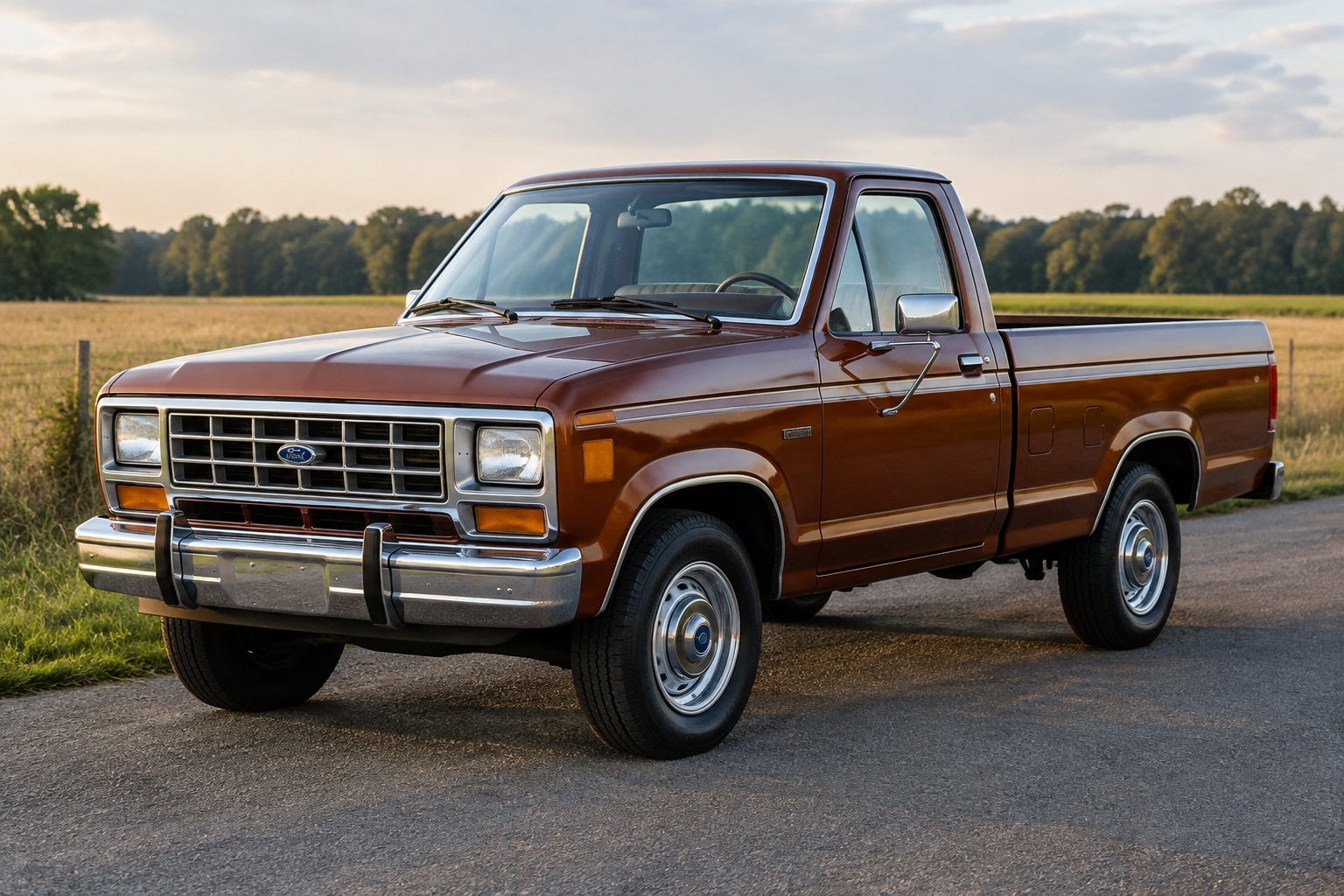
You can trace the modern Ranger back to this very truck. Ford introduced it in early 1982 as a 1983 model, replacing the old Courier and giving you a domestically built compact pickup for the first time.
You had a choice of engines at launch, including a 2.0L four-cylinder as the base option, with a 2.3L four-cylinder and a 2.8L V6 also available. A diesel option came along shortly after, giving you more flexibility depending on your fuel preferences and towing needs.
You’ll notice the timing wasn’t accidental. Ford built the Ranger to compete directly with Japanese compact trucks that had been gaining ground on American buyers throughout the late 1970s.
You got a truck that prioritized fuel efficiency and maneuverability over brute strength, which suited the economic realities of the early 1980s. Reviewers and owners praised its simple mechanicals and ease of maintenance.
You can still find these trucks in daily use today, a testament to their durable chassis and straightforward engineering. The 1983 Ranger set the template that Ford would refine for nearly three decades afterward.
18. Ford F-150 SVT Lightning (1993)
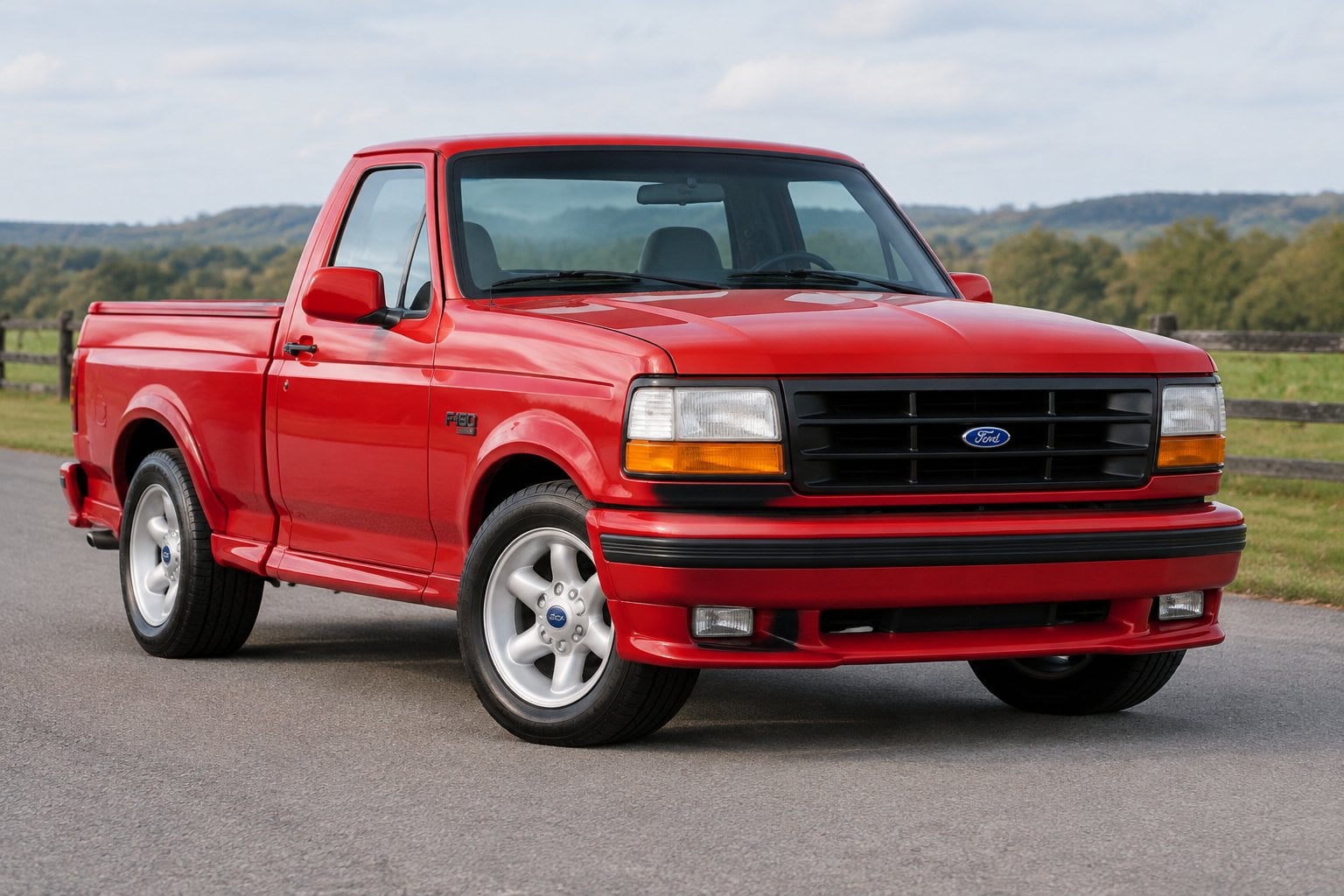
You get a true original when you look at the 1993 Ford F-150 SVT Lightning. Ford’s Special Vehicle Team built this truck to prove that a full-size pickup could deliver genuine muscle-car performance, and it worked.
Under the hood, you find a high-output 351W V8, tuned specifically for this application. Ford paired it with stiffer suspension, bigger brakes, and quicker steering, so you get a truck that handles corners instead of just hauling loads.
You’ll notice the Lightning doesn’t look dramatically different from a standard F-150 at first glance. That understated appearance was part of the appeal — you get serious capability without flashy styling that draws unwanted attention.
Production ran from 1993 through 1995, and Ford kept numbers limited throughout that run. If you talk to owners today, you’ll hear consistent praise for the balance this truck struck: enough power to feel exciting, but still practical enough for daily use.
You can credit this generation with essentially inventing the modern performance-truck segment that later models would expand on.
19. Ford F-250 Power Stroke (1994)
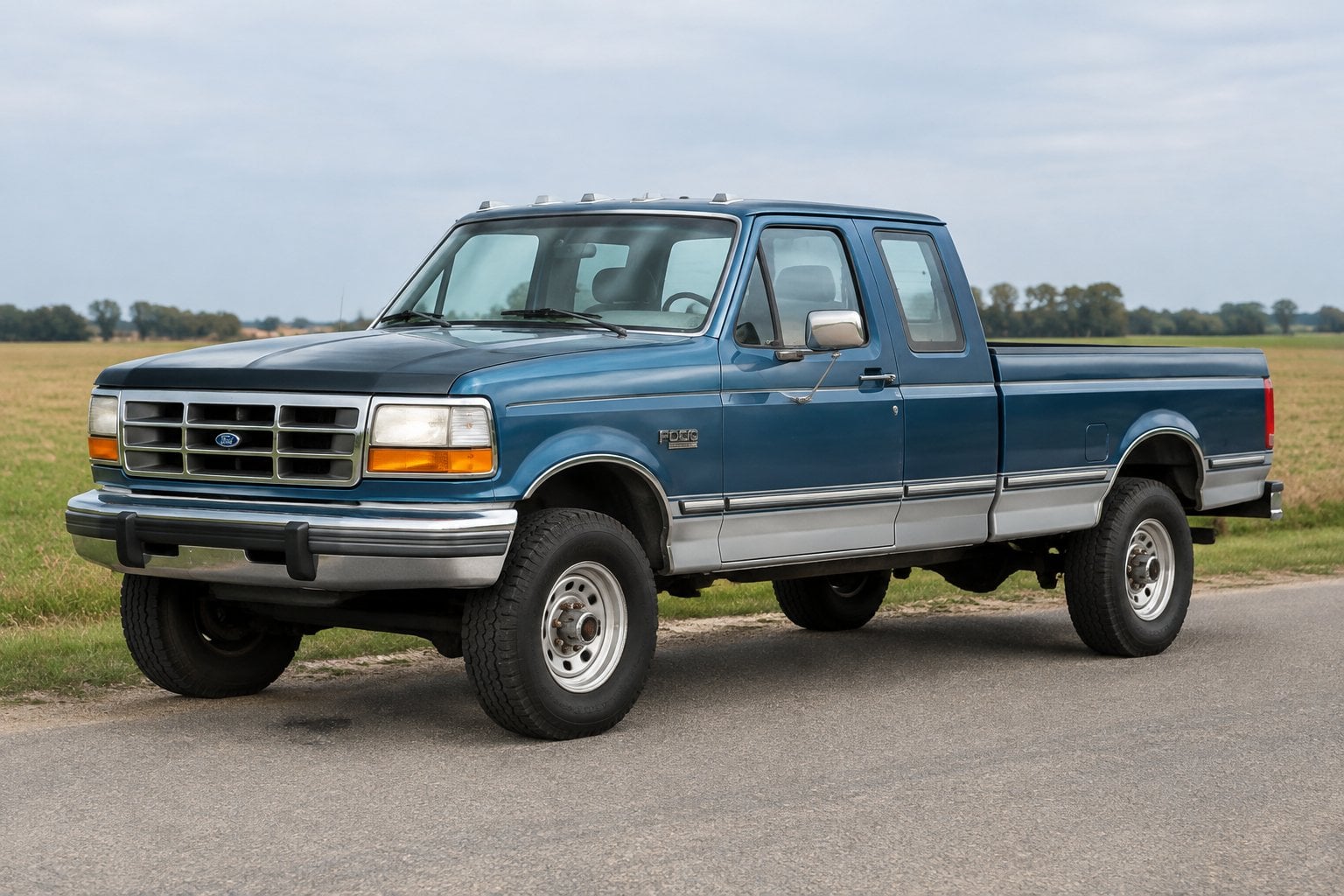
When you look at the 1994 Ford F-250, you’re looking at the truck that introduced the 7.3L Power Stroke diesel engine to the market. Ford partnered with Navistar International to develop this engine, and it changed how you think about heavy-duty hauling.
You get a V-8 design with direct injection and a turbocharger, which gave you more torque than the gas engines of the time. Owners found it could handle demanding towing and payload work without the mechanical headaches that plagued earlier diesel options.
What stands out to you most is the reliability record this engine built over the following decade. Mechanics and truck owners alike came to trust the 7.3L for its simplicity and durability, often citing engines that ran well past 300,000 miles with basic maintenance.
You’ll notice this truck arrived at a pivotal moment in the diesel truck wars, giving Ford a genuine answer to Dodge’s Cummins engine. The 1994 F-250 set a foundation that later Power Stroke models would build on, and it remains a benchmark you can point to when discussing dependable diesel engineering.
20. Ford F-250 Super Duty (1999)
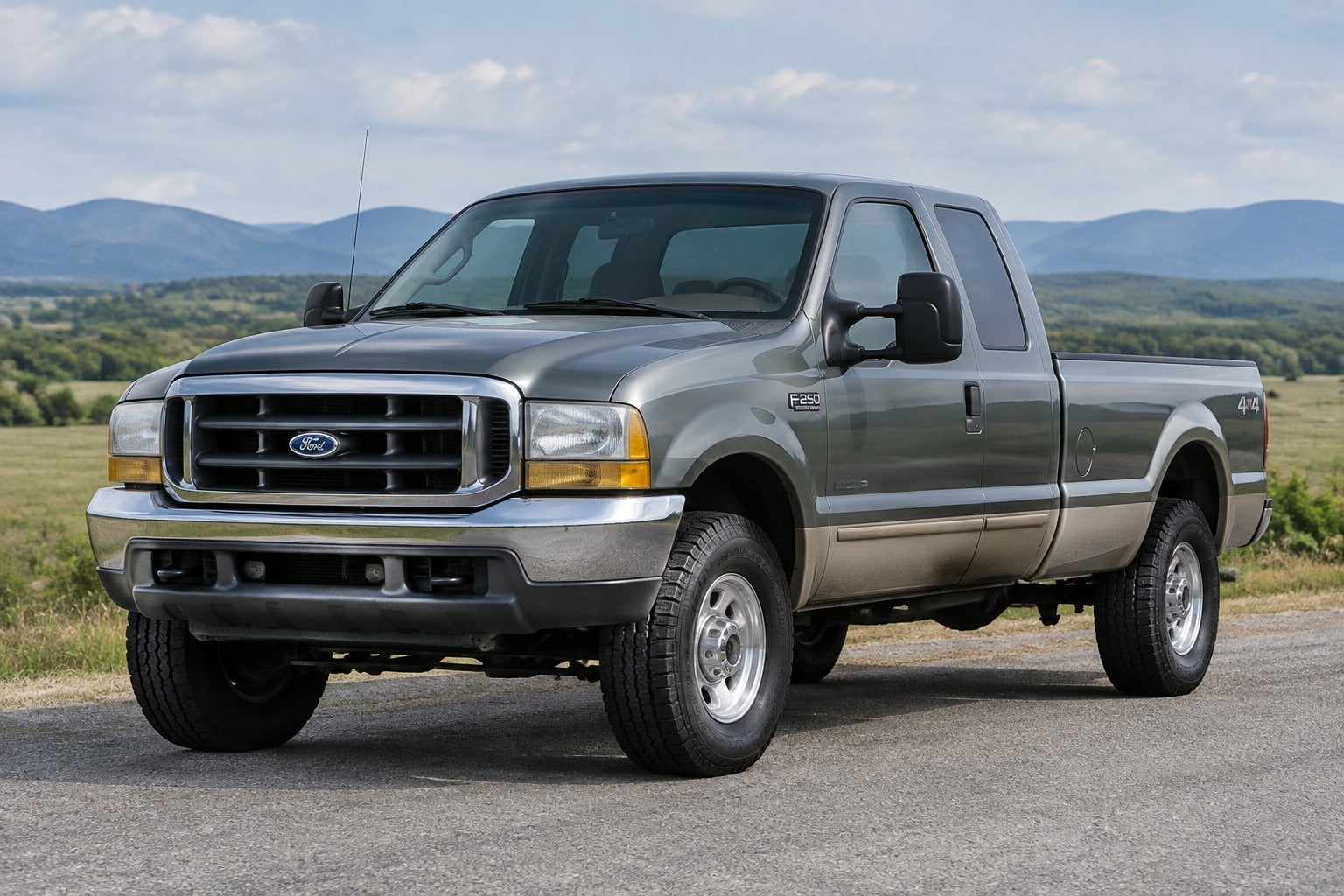
When you look at the 1999 F-250 Super Duty, you’re looking at the truck that separated heavy-duty Ford pickups from their half-ton siblings for good. Before this model, the F-250 shared much of its structure with the F-150. Ford changed that approach entirely for 1999.
You get a dedicated heavy-duty frame, a bigger cab, and styling that makes the truck look distinctly more serious than lighter Ford pickups of the era. The grille, fenders, and overall stance were built to signal capability at a glance.
Under the hood, you could choose the 7.3-liter Power Stroke diesel, an engine that became a favorite among owners who needed strong towing and payload numbers. A gas V8 option was also available for buyers who didn’t need diesel torque.
You’ll find that reviewers and owners praised its durability, work-ready design, and the strength of that diesel drivetrain. Many of these trucks are still in daily use decades later, which says something about how well they were built.
21. Ford F-150 SVT Lightning (2000)
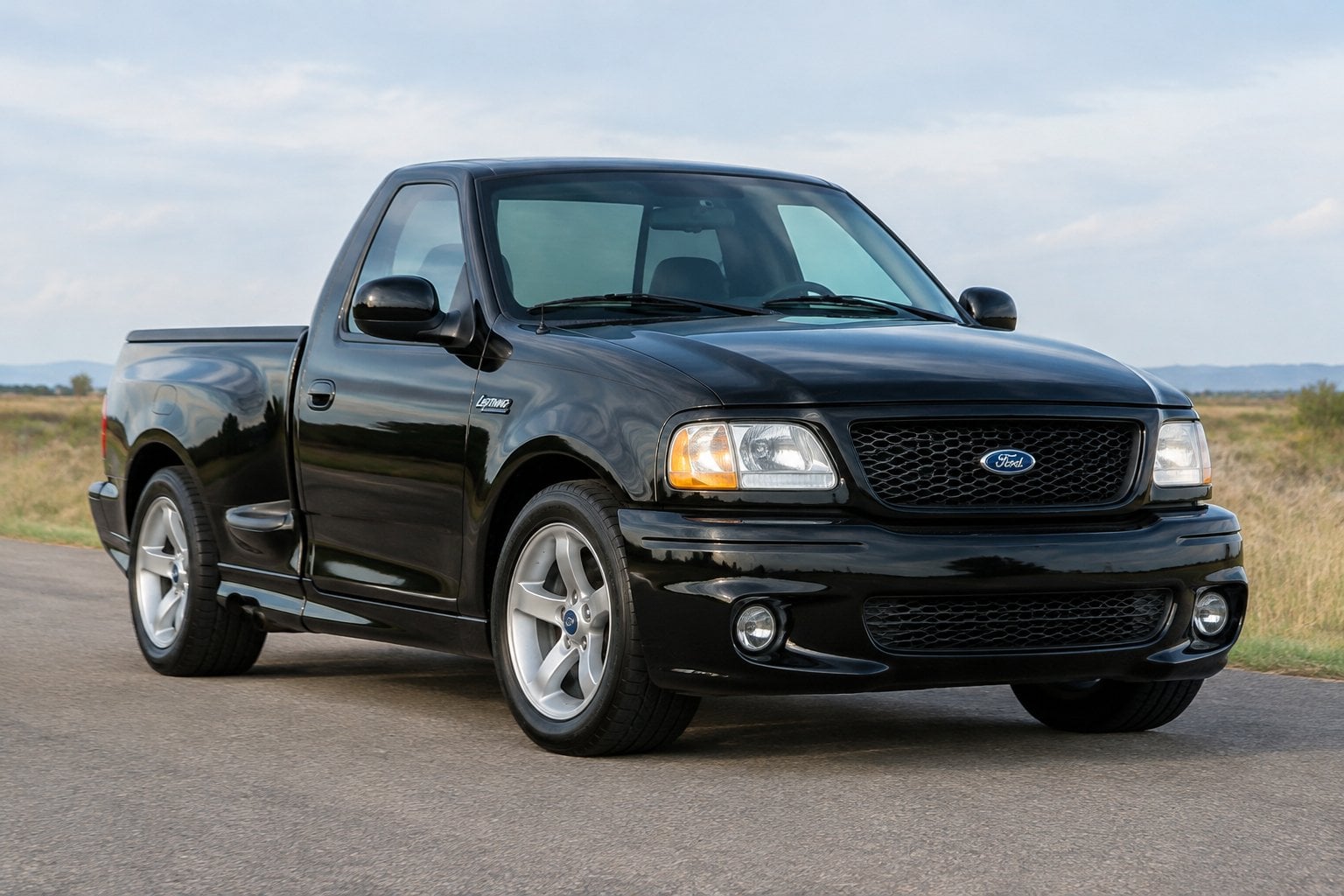
If you wanted one of the fastest production pickups on the market in 2000, the SVT Lightning was your answer. Ford’s Special Vehicle Team built it around a supercharged 5.4L V8, producing 360 horsepower and 440 lb-ft of torque.
Its straight-line speed embarrassed plenty of sports cars at the time. SVT paired that engine with a stiffer suspension, larger brakes, and wider tires, giving you handling that felt closer to a performance car than a work truck.
The Lightning came only as a standard cab, a choice SVT made deliberately to keep weight down and preserve the truck’s aggressive stance. You got a lowered ride height and a sport-tuned suspension that set it apart visually from standard F-150s.
Reviewers and owners praised its blend of straight-line speed and cornering ability, qualities rare in a full-size pickup at that time. The 2000 model continued the Lightning’s reputation as a street truck built for performance rather than hauling or towing capability.
22. Ford F-150 (2004)
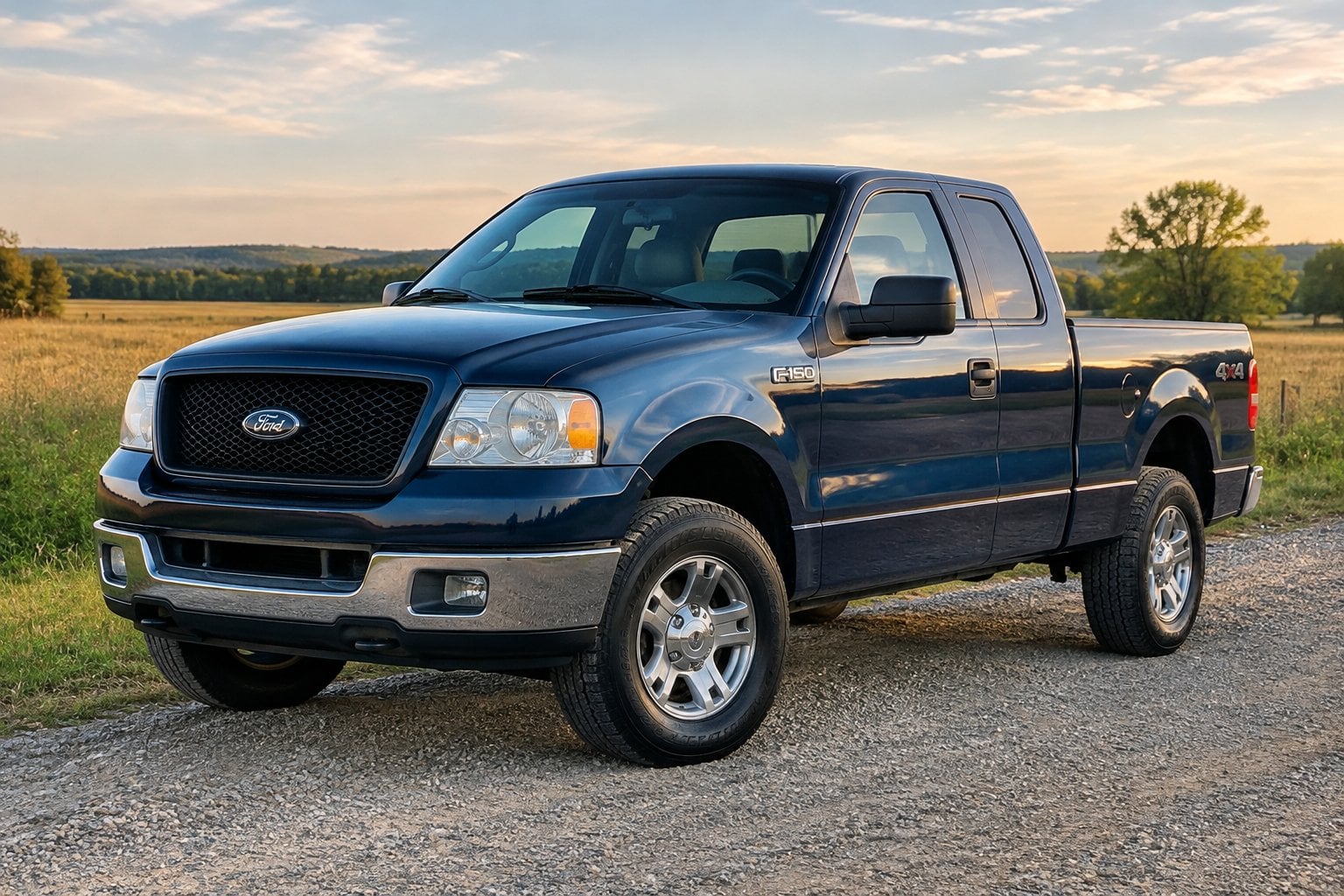
The 2004 Ford F-150 marked the start of the eleventh generation, giving you a redesigned platform built to improve on the previous decade’s model. You get a fully boxed frame, which added rigidity and strength compared to earlier F-150s that used an open C-channel design.
Under the hood, you had a choice of engines, including a 4.6-liter V8, a 5.4-liter V8, and a base 4.2-liter V6. These options let you balance fuel economy against towing needs, depending on your work or daily driving requirements.
Payload and towing figures were competitive for the segment at the time, making this truck suitable for both contractors and families. You also got an updated interior with better materials and more comfortable seating than previous generations offered.
Reviewers praised the smoother ride and more refined handling compared to older F-150s. Owners often point to this model year as dependable, with many trucks still running well past 150,000 miles when properly maintained.
23. Ford F-450 Super Duty (2008)
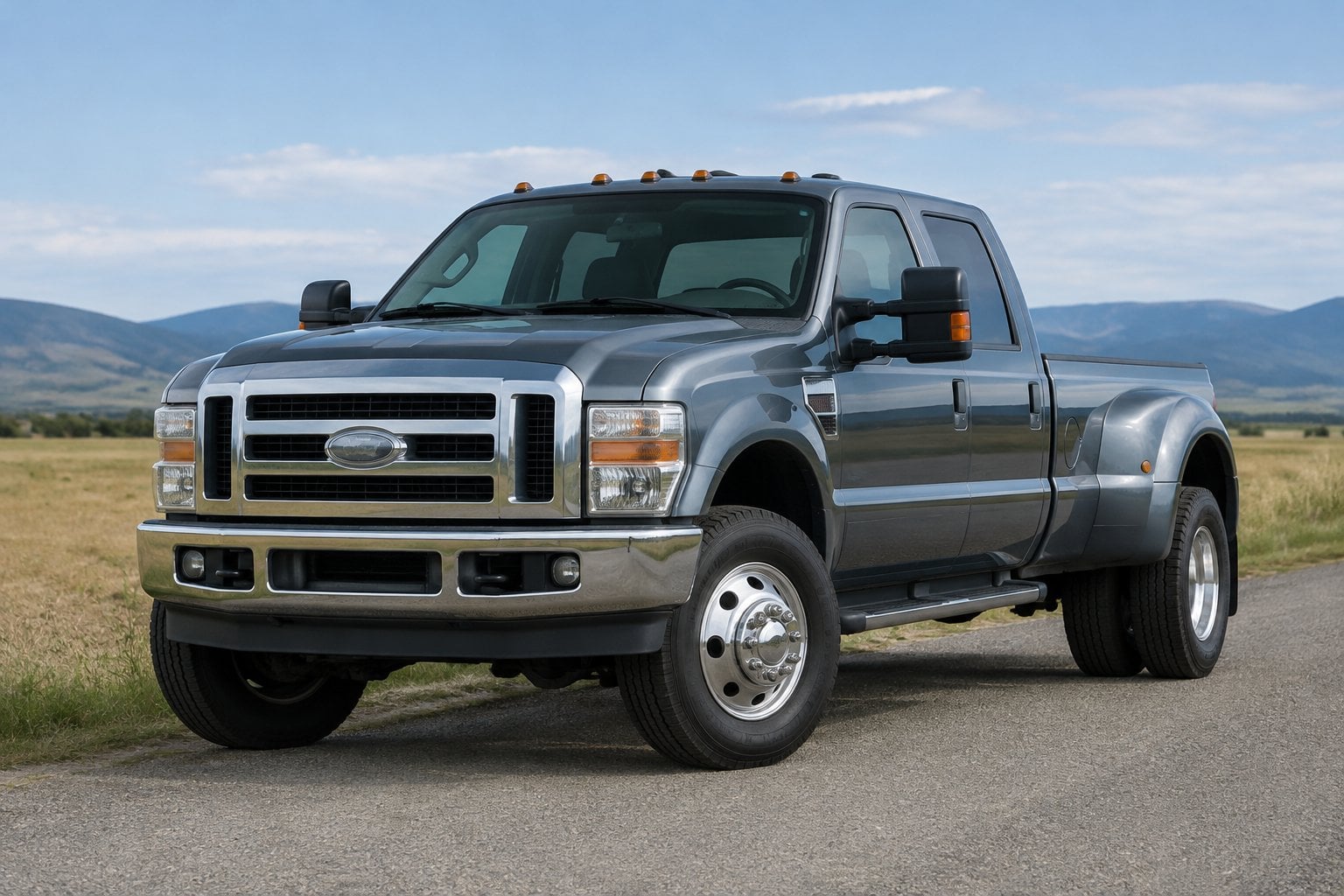
For 2008, Ford took the F-450 and turned it into something you could actually buy as a consumer pickup, not just a commercial chassis-cab. This gave you a truck built for serious towing and hauling, with a factory-backed warranty you wouldn’t get from an aftermarket conversion.
Under the hood, you got the 6.4L Power Stroke diesel V8, paired with a stronger frame and upgraded driveline components to handle the extra stress. This setup gave you towing capacity that outpaced nearly every other pickup on the market at the time, especially with a fifth-wheel or gooseneck hookup.
You’ll find that reviewers praised the truck’s dually rear axle configuration and reinforced frame rails, which added stability when you’re hauling heavy trailers. The cab was shared with other Super Duty models, so you still got comfortable seating and a familiar dashboard layout despite the truck’s extreme capability.
If you were shopping for a one-ton-plus truck in 2008, this was about as capable as you could get without stepping into medium-duty commercial territory.
24. Ford F-150 SVT Raptor (2010)
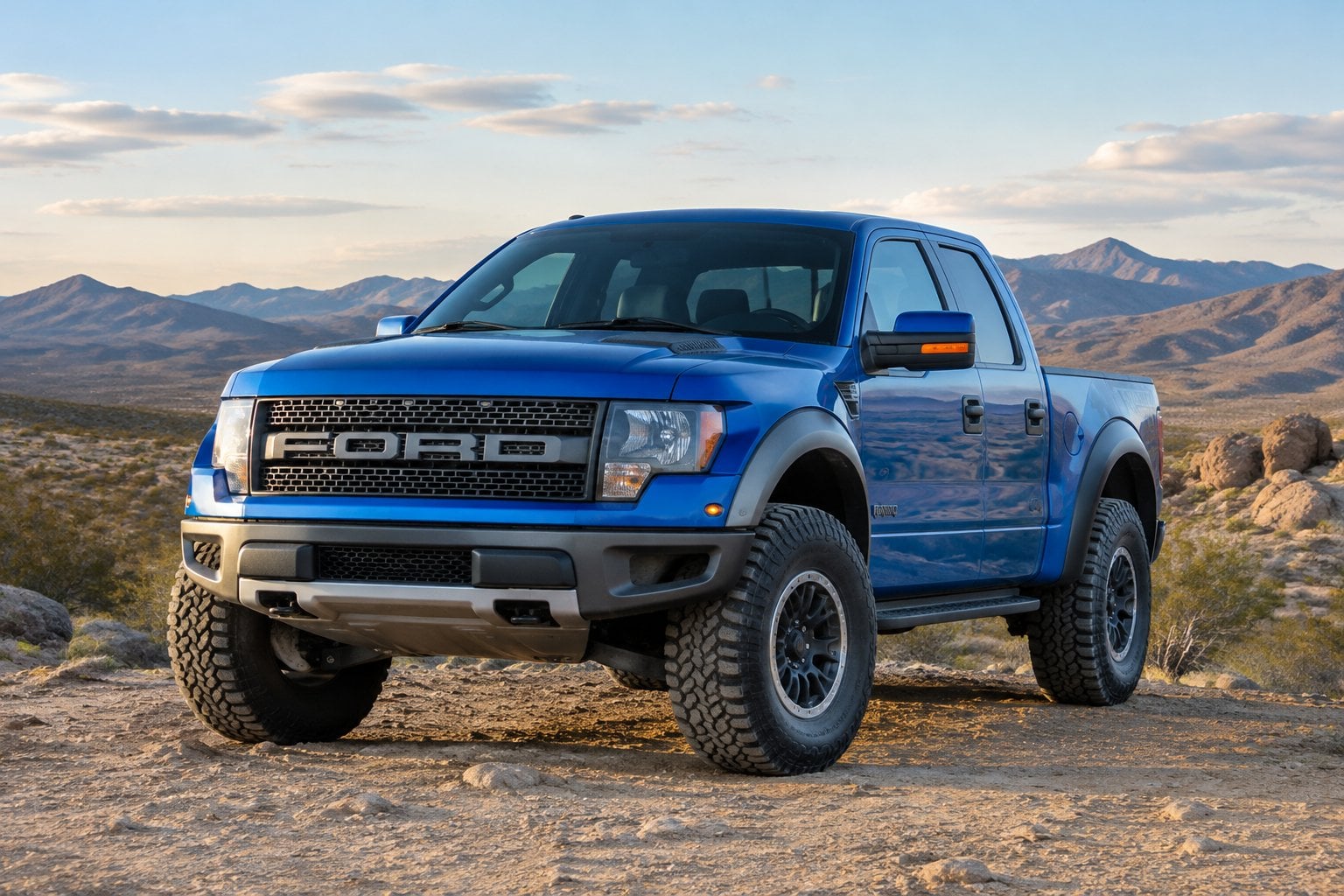
If you wanted proof that a factory truck could handle real off-road abuse, the 2010 F-150 SVT Raptor gave it to you. Ford’s Special Vehicle Team built it specifically for high-speed desert running, not just light trail work.
You get a 5.4-liter V8 as the standard engine, with a 6.2-liter V8 option arriving shortly after launch. Both were paired with long-travel Fox Racing shocks designed to absorb the kind of punishment most trucks couldn’t survive.
You won’t find this truck chasing payload or towing records. Instead, you get wider fenders, a reinforced frame, and big BFGoodrich all-terrain tires built for stability at speed over rough terrain.
Reviewers praised how it changed expectations for what a pickup could do off-road straight from the factory. You didn’t need aftermarket suspension work to take it hard into the desert.
It arrived with no direct competitor, and it took other manufacturers years to respond. For many enthusiasts, this is the truck that created the modern performance off-road segment.
25. Ford F-250 Super Duty 6.7L Power Stroke (2011)
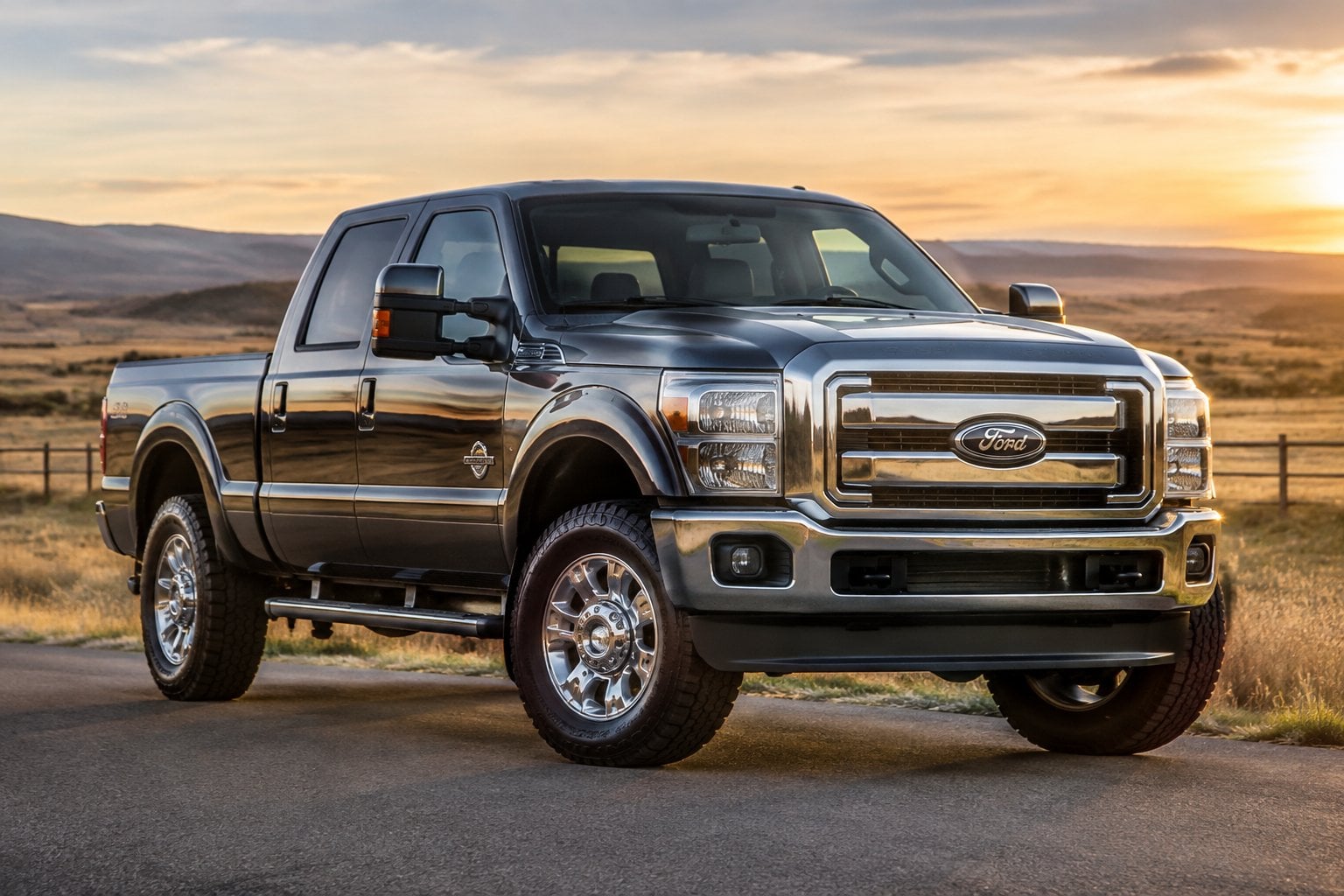
When you look at the 2011 F-250, you’re looking at a genuine turning point for Ford’s heavy-duty lineup. This was the first model year Ford built its own diesel engine in-house, instead of sourcing it from Navistar. The result was the 6.7L Power Stroke V8, paired with a six-speed automatic transmission.
You get 390 horsepower and 735 lb-ft of torque from this engine, numbers that beat the outgoing diesel by a wide margin. Ford also redesigned the exterior for 2011, giving the truck a tougher, more modern look alongside its new powertrain.
If you owned one of these trucks, you likely noticed how the compacted graphite iron block held up under heavy loads. That material choice let Ford push power higher without sacrificing durability, something reviewers and owners both pointed to as a key strength.
You’ll find this truck remembered as the start of a Power Stroke generation that lasted for years. It set the standard for what a Ford-built diesel could do in a Super Duty platform.
26. Ford F-150 (2015)
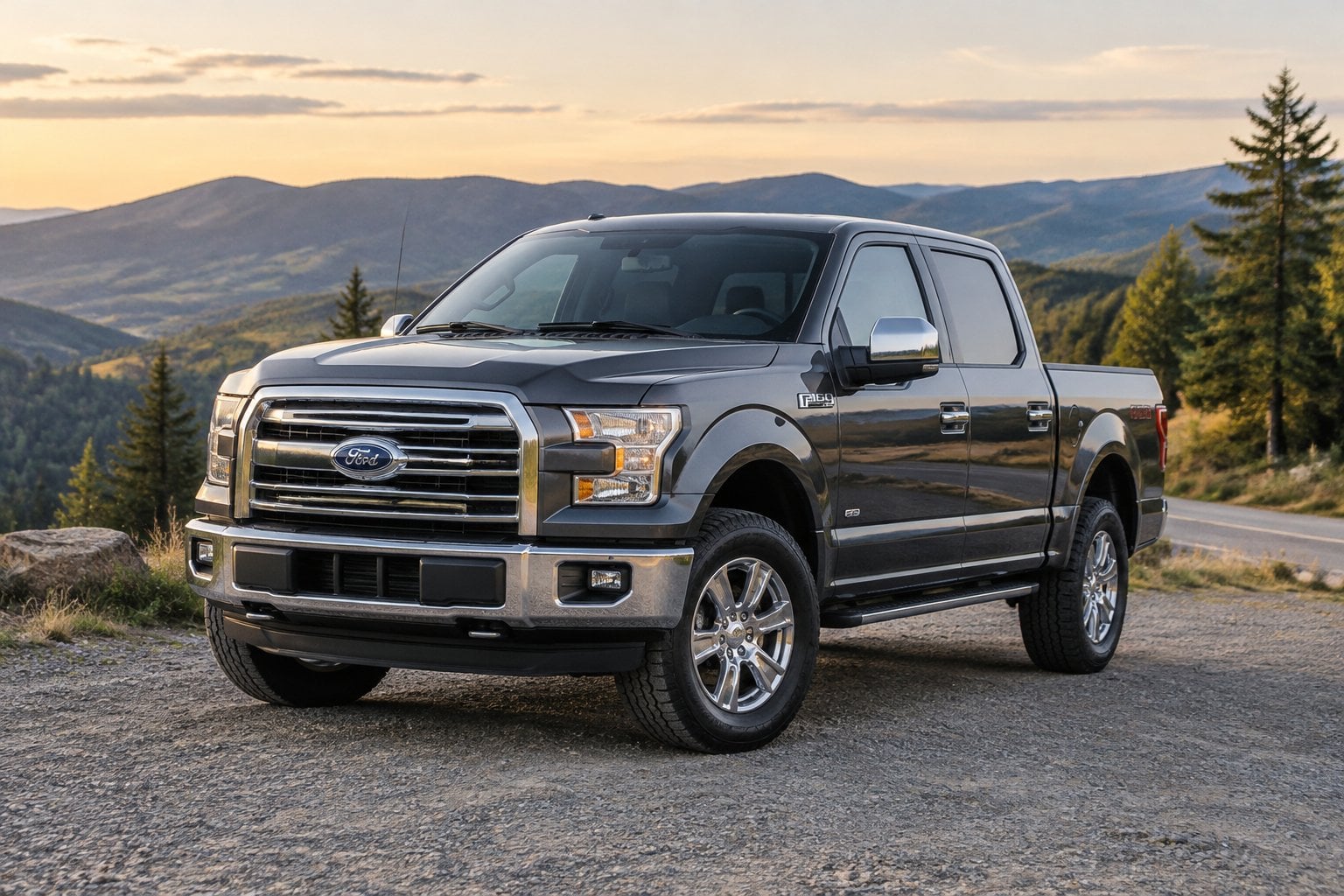
The 2015 F-150 marked a significant shift for Ford’s pickup lineup. You’re looking at the first model year of the thirteenth-generation F-150, and it introduced a military-grade aluminum-alloy body on a high-strength steel frame.
This change cut hundreds of pounds from the truck’s weight compared to its predecessor. You’ll find that reduced weight translated into better fuel economy and improved payload capacity without sacrificing durability.
Engine options for this year included a 2.7L EcoBoost V6, a 3.5L EcoBoost V6, a 3.5L naturally aspirated V6, and a 5.0L V8. Each engine gave you a different balance of power, towing capability, and efficiency depending on your needs.
Reviewers praised the 2015 model for its innovative approach to construction at a time when most manufacturers avoided aluminum bodies on full-size trucks. Owners appreciated the reduced weight’s effect on handling and acceleration.
This model year represented a turning point, as it proved Ford’s willingness to take risks with materials and engineering on its best-selling vehicle.
27. Ford F-150 Raptor (2017)
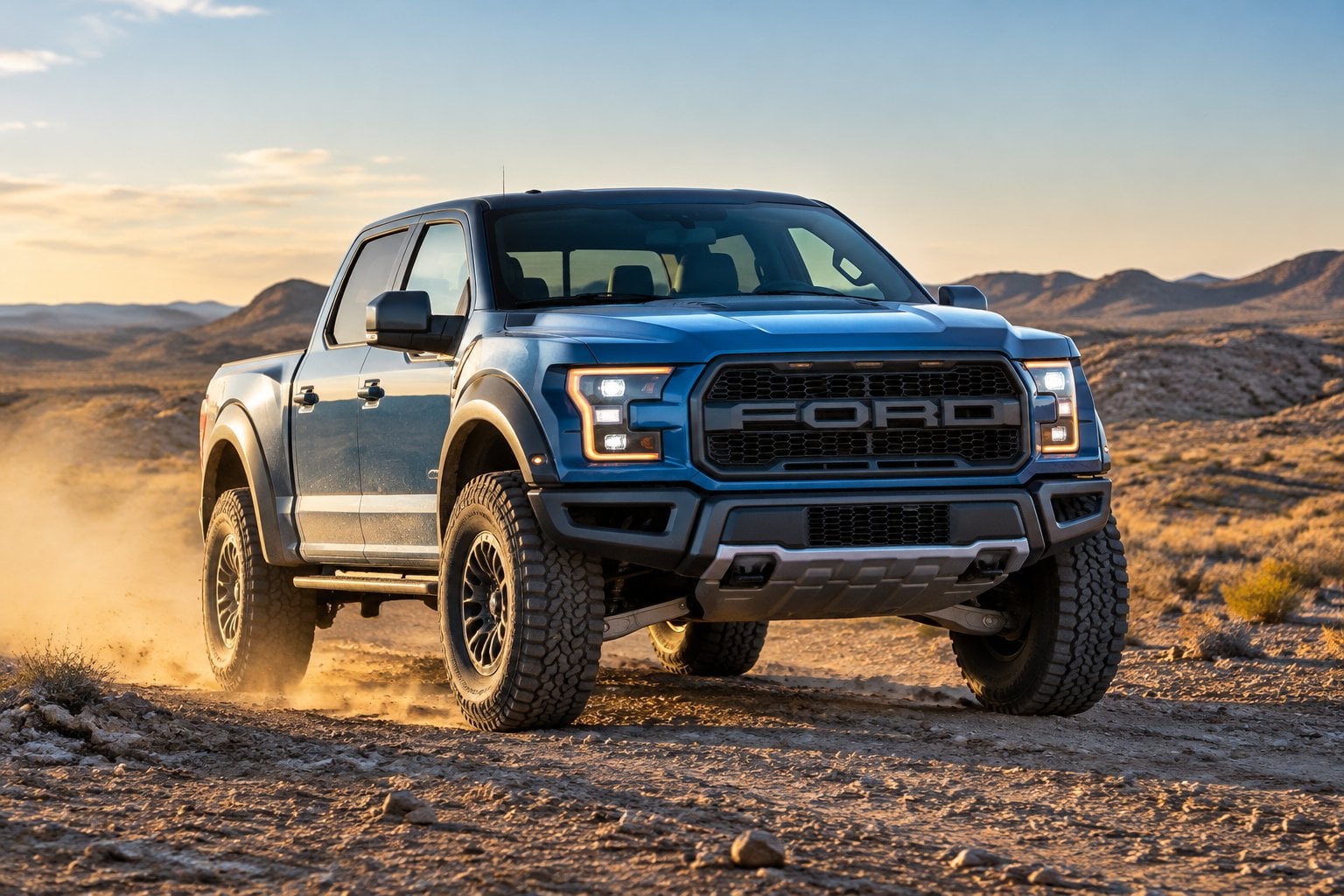
The second-generation Raptor marked a major shift for Ford’s off-road truck lineup. You get a high-strength, military-grade aluminum alloy body that reduced weight compared to the previous steel-bodied model, improving agility without sacrificing durability.
Under the hood, you find a 3.5-liter EcoBoost twin-turbo V6 producing 450 horsepower and 510 lb-ft of torque. This replaced the first generation’s V8, and you benefit from a 10-speed automatic transmission that improves both acceleration and fuel efficiency.
Reviewers praised the Raptor’s Fox Racing shocks and long-travel suspension, which let you tackle rough terrain at high speeds while maintaining control. You also get multiple drive modes, including a Baja setting tuned for desert running.
Owners consistently highlighted the truck’s off-road composure and daily drivability. You don’t have to sacrifice comfort for capability here, since the cabin includes supportive seats and modern tech features.
The 2017 Raptor earned wide praise from major automotive publications. It set a new benchmark for factory-built off-road trucks during this period.
28. Ford Ranger (2019)
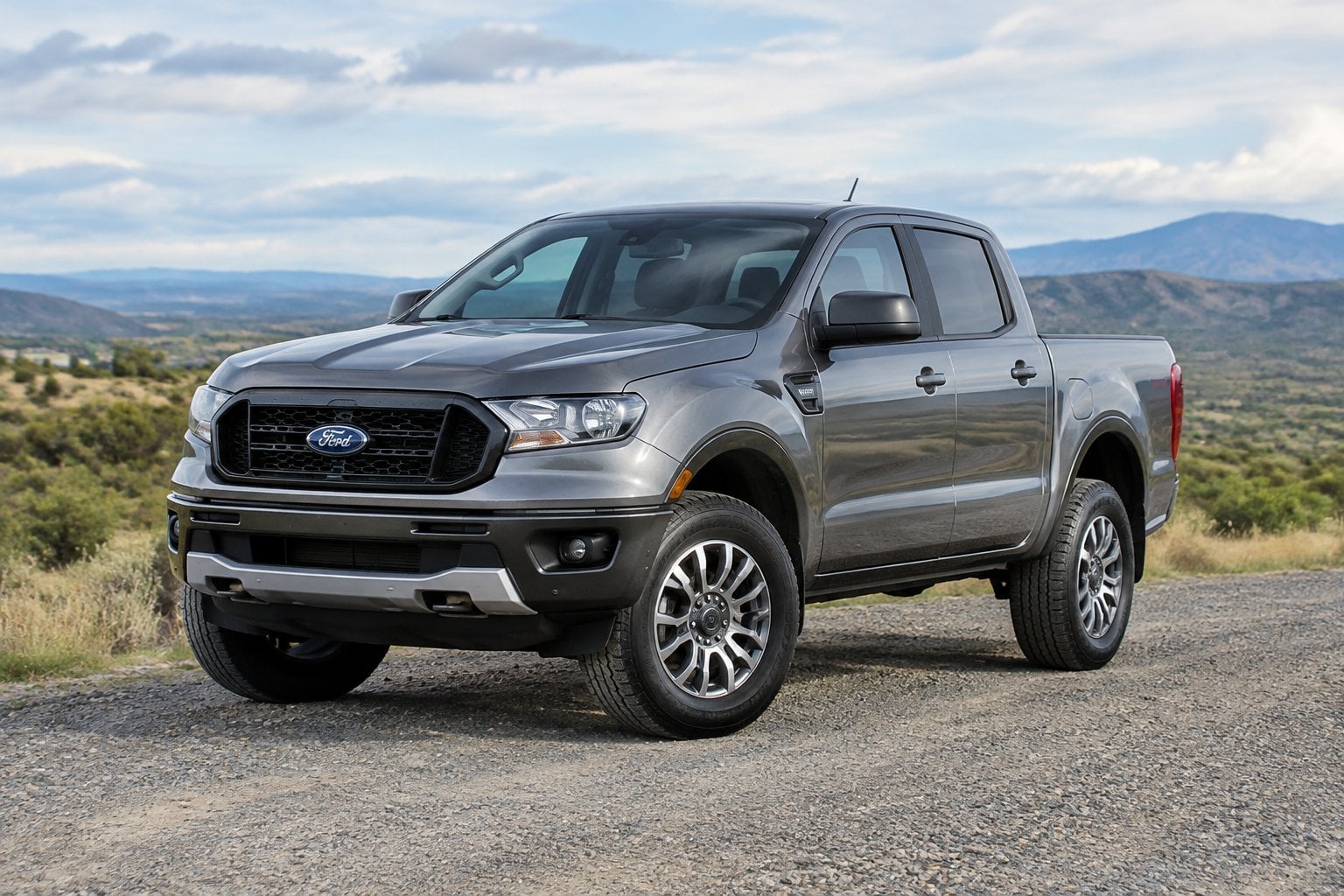
When you look at the 2019 Ford Ranger, you’re seeing Ford’s return to the midsize truck segment after a lengthy absence from the U.S. market. You get a 2.3-liter EcoBoost turbocharged four-cylinder engine paired with a ten-speed automatic transmission, the same transmission architecture used in the F-150 Raptor.
Towing capacity reaches up to 7,500 pounds when properly equipped, putting you ahead of several competitors in the class. Payload capacity sits around 1,860 pounds, giving you solid utility for a truck this size.
You’ll find reviewers praised the Ranger’s responsive powertrain and composed on-road manners. The ten-speed automatic earned particular attention for smooth, well-timed shifts.
Off-road capability impressed you if you opted for the FX4 package, which added terrain management features and off-road tuning.
For a nameplate returning after years away, you got a truck that competed credibly against established rivals rather than feeling like an afterthought.
29. Ford F-150 Lightning (2022)
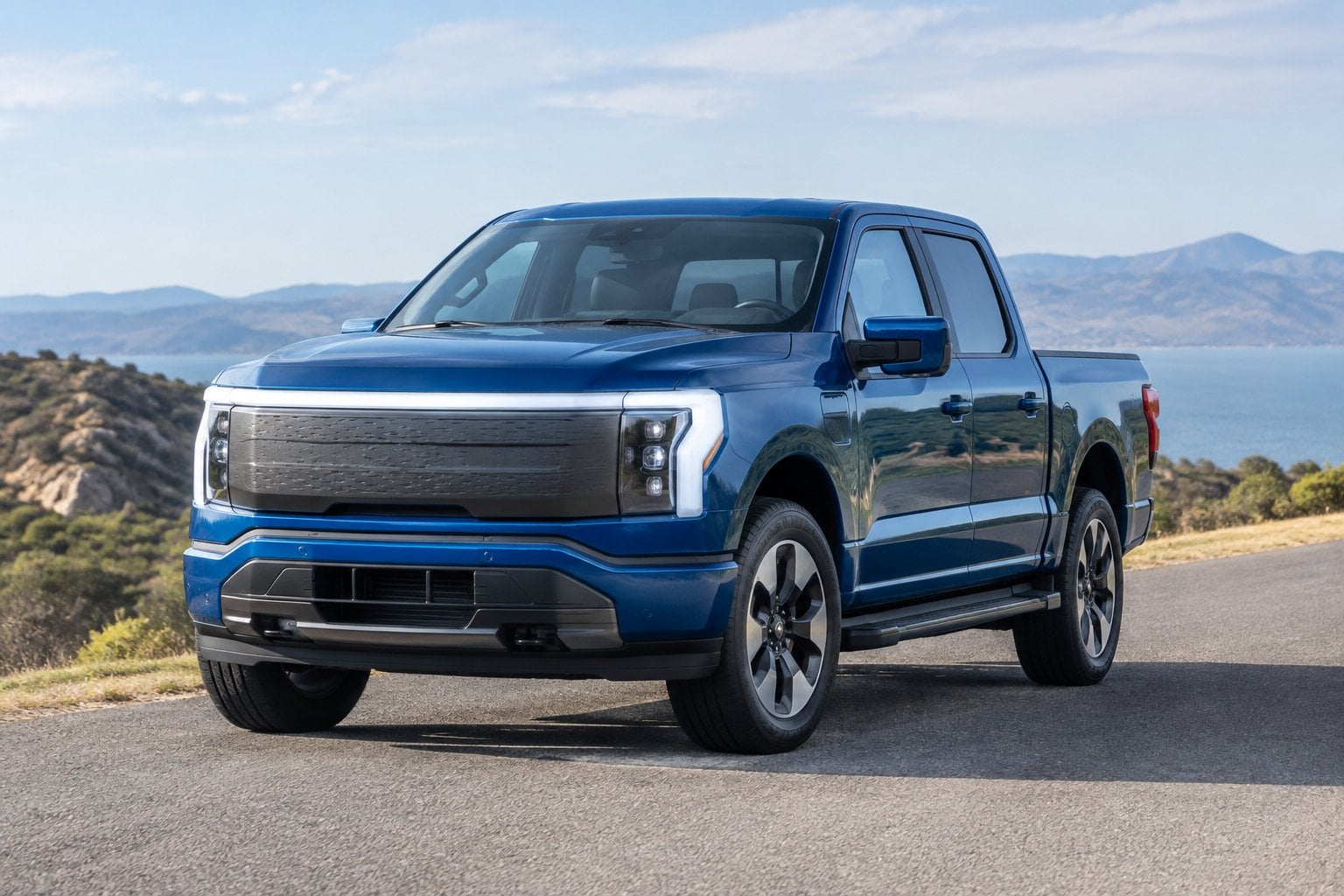
You can point to the F-150 Lightning as the moment Ford proved an electric truck could still feel like a true F-150. It launched for the 2022 model year, built on a dedicated platform with a dual-motor setup delivering standard four-wheel drive.
Depending on your battery pack choice, you get an EPA-estimated range of roughly 230 to 320 miles. Towing capacity reaches up to 10,000 pounds on higher trims, while payload tops out around 2,000 pounds, putting it in line with gas-powered half-ton trucks.
You’ll notice the frunk is one of its biggest selling points. That front trunk offers substantial lockable storage where an engine normally sits, plus available power outlets that can run tools or even back up your house during an outage.
Reviewers praised its instant torque and quiet, smooth driving experience. You also get standard driver-assist technology and a large touchscreen interface.
MotorTrend named it 2023 Truck of the Year, citing its blend of everyday usability and genuine capability. For you, it represents Ford adapting its best-selling nameplate to a new kind of powertrain without losing what made the F-150 dependable.
30. Ford Maverick (2022)
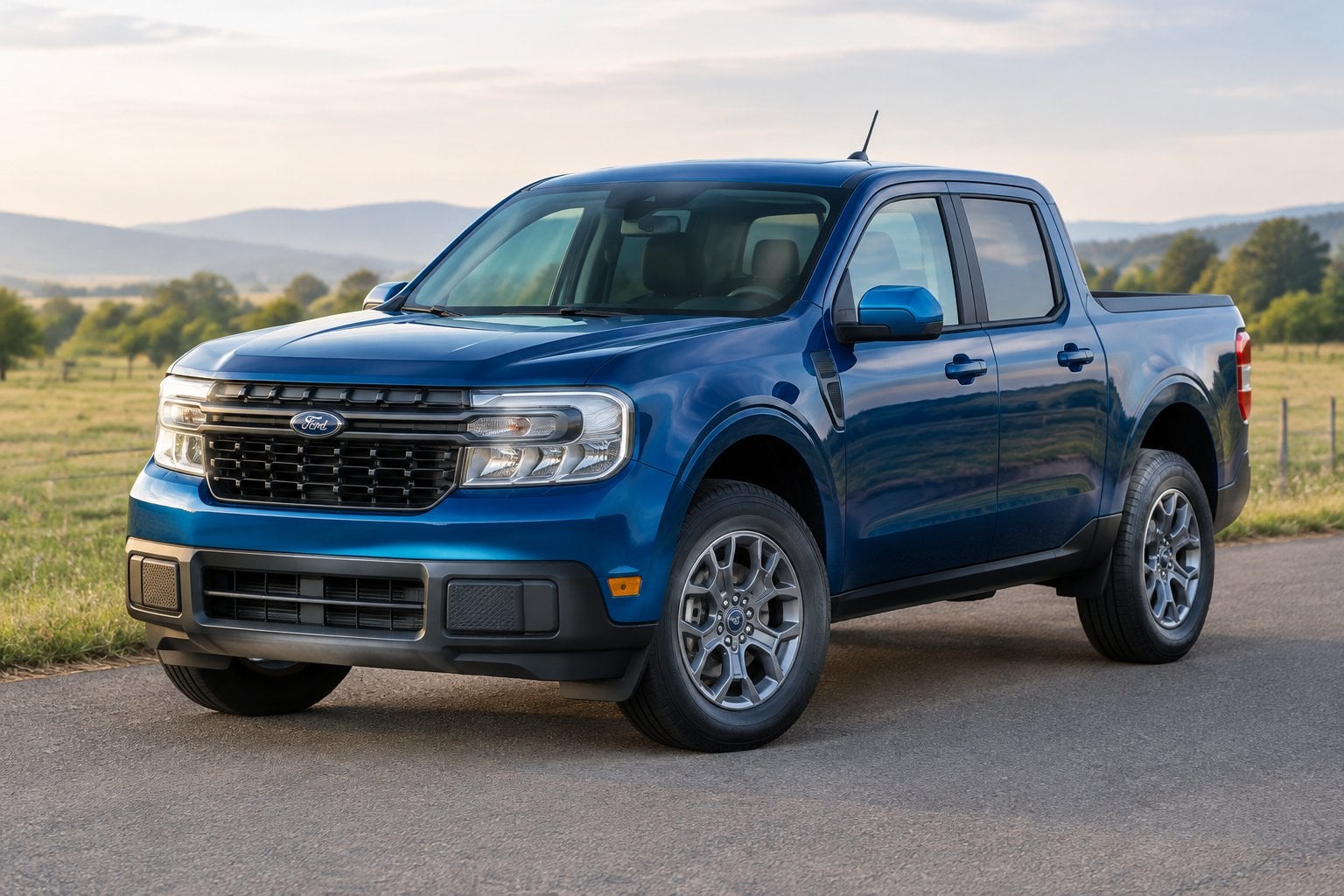
You get a compact pickup that brought the small truck segment back to life. Ford positioned it below the Ranger, and it reached buyers who wanted truck utility without the size or cost of a full-size model.
Your base engine option is a 2.5-liter hybrid, paired with a continuously variable transmission. This setup earns you some of the best fuel economy of any pickup on the market, with EPA ratings around 40 mpg in city driving. If you need more towing capacity, you can opt for the 2.0-liter EcoBoost engine, which can tow up to 4,000 pounds with the available 4K Tow Package, compared to 2,000 pounds on the hybrid.
You’ll notice the starting price sits well below most competitors, which drew attention from reviewers and buyers looking for an affordable new vehicle. The bed includes a flexible design with built-in slots and brackets, letting you configure dividers and storage without aftermarket parts.
Reviewers praised its efficiency, practical size, and value. You get a truck that fits in a standard garage while still handling real work tasks.
What Makes a Ford Truck Significant
A truck earns a spot among Ford’s greatest based on three factors: how well it performed its job, how much it changed future designs, and how it resonated with buyers and culture. You can trace these threads through nearly every model on this list.
Capability and Engineering
When you evaluate a Ford truck’s significance, engineering comes first. Payload capacity, towing numbers, and engine output tell you how a truck actually performs under load.
The 7.3L Power Stroke diesel, for example, set a benchmark for durability that fleet owners and diesel enthusiasts still reference today. Ford’s Super Duty line pushed towing capacity into territory once reserved for commercial trucks.
Key engineering milestones include:
- Twin-turbo EcoBoost V6 engines that matched V8 power with better fuel economy
- High-strength aluminum alloy bodies introduced on the F-150 to cut weight
- Four-wheel drive systems refined for both off-road use and daily towing
You can measure a truck’s capability by specs, but real-world reliability over hundreds of thousands of miles is what separates a good truck from a significant one.
Influence on Truck Design
Some Ford trucks changed how every manufacturer approaches pickup design. The 1953 F-100 moved trucks away from pure work vehicles and toward something you could drive daily without sacrificing comfort.
That shift mattered because it created the template other automakers would follow for decades. Separate cab and bed design, car-like interiors, and distinct trim levels were all shaped in part by decisions Ford made early on.
You see this influence most clearly in:
- Cab configurations (regular, extended, crew) that became industry standard
- Upscale trim levels like XLT and Lariat
- The shift toward independent front suspension for ride comfort
When a design choice shows up across the entire truck market, you know it originated from genuine innovation rather than trend-following.
Sales and Cultural Impact
Numbers tell part of the story. The F-Series has held the title of best-selling truck in the United States for decades, and that consistency reflects buyer trust built over generations.
Cultural relevance adds another layer. A truck that appears in film, music, and everyday American life carries weight beyond its spec sheet.
Consider how certain models became shorthand for reliability or toughness in popular culture:
- Sales longevity: Decades as America’s best-selling vehicle
- Brand loyalty: Multi-generational ownership within families
- Cultural presence: Frequent appearances in media and advertising
You can’t separate a truck’s significance from how deeply it embedded itself into daily American life, not just automotive history.
Understanding Ford Truck Generations
Ford trucks span more than seven decades of production, organized into distinct generations with their own naming conventions, body styles, and mechanical updates. Knowing how these generations are structured helps you identify which truck fits your needs and what to expect from its engineering.
How Ford Truck Names and Classes Evolved
Your understanding of Ford’s truck lineup starts with the naming system. From 1953 to 1983, the entry-level half-ton truck carried the F-100 badge. The F-150 arrived in 1975 and became the entry-level half-ton after the F-100 was dropped following the 1983 model year. It remains the standard today.
The F-Series itself traces back to 1948, predating even the F-100 name. Ford organizes trucks into weight classes using numbers like F-150, F-250, and F-350, with higher numbers indicating greater payload and towing capacity.
Body styles changed alongside these naming shifts. Early trucks featured basic single cabs and solid front axles built for agricultural and commercial work. Later generations introduced:
- Extended and crew cab configurations
- Independent front suspension on lighter-duty models
- Aluminum body panels starting in the mid-2010s
Why Model Year and Configuration Matter
Your truck’s model year determines which generation it belongs to, and this affects parts compatibility, engine options, and available features. The F-150 is currently in its fourteenth generation, introduced for the 2021 model year, so a 2021 model differs mechanically from one built even two years earlier.
Configuration details matter just as much as the year. Engine choices, cab size, bed length, and drivetrain all vary within a single generation. Ordering parts or planning upgrades requires knowing your exact specifications, not just the general era.
This precision also affects resale value and maintenance planning. A well-documented configuration history gives you clearer expectations for repairs and compatibility with aftermarket components.