The 30 Greatest Chevy Trucks Ever Built: From the 490 Light Delivery to the Silverado EV
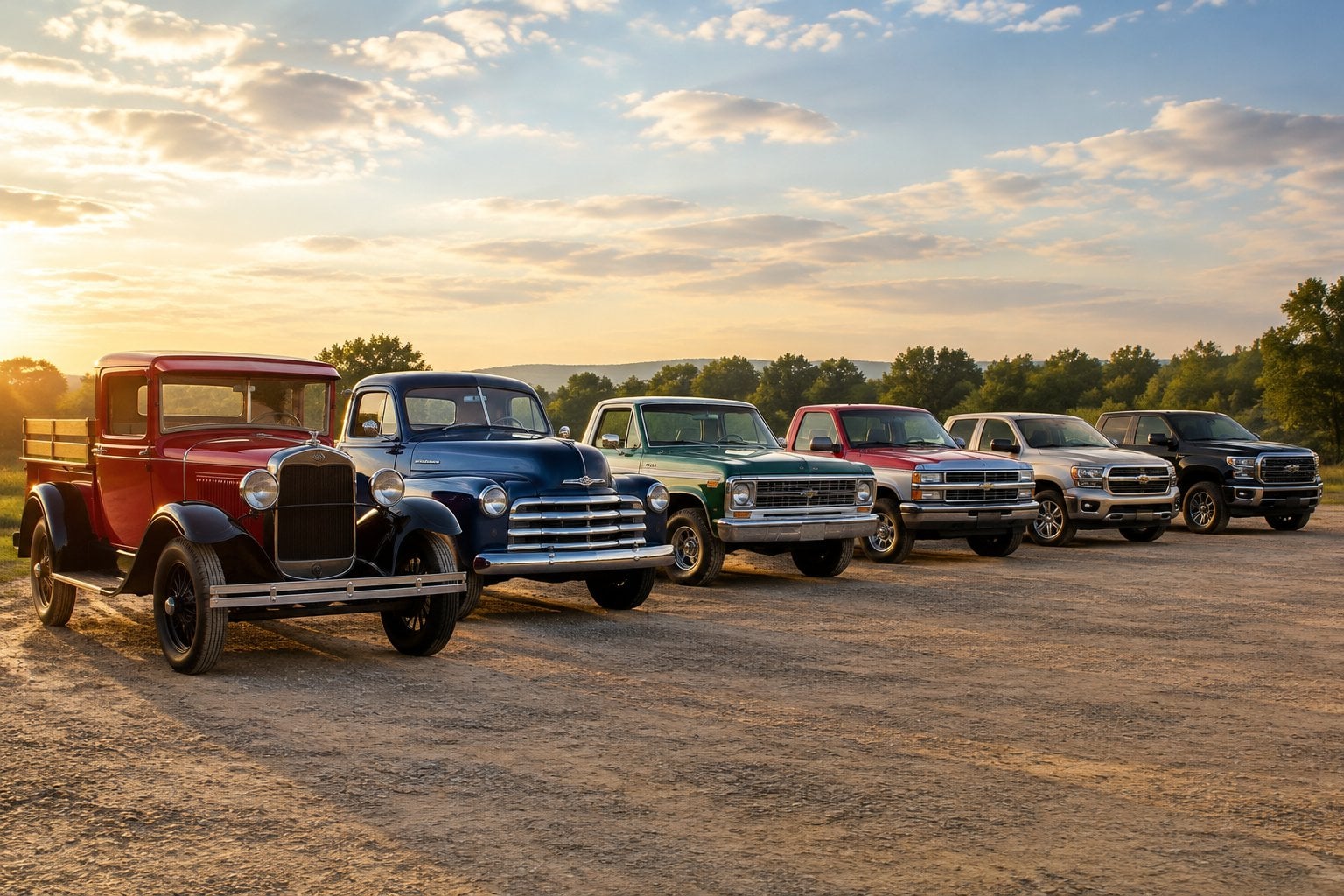
Chevrolet has built pickup trucks for more than a century, and the lineup includes models that span work trucks, muscle trucks, and modern full-size pickups. Each generation reflects a different set of priorities, from basic hauling capability in the early decades to the technology and power found in today’s trucks.
This list brings together the Chevy trucks that stand out for their engineering, performance, cultural impact, or lasting popularity with owners. You will find entries from multiple decades, representing the range of designs and purposes Chevy trucks have served over the years.
Looking at these trucks together gives you a clearer picture of how Chevrolet’s approach to truck building has changed, and what has remained consistent throughout.
1. Chevrolet 490 Light Delivery (1918)
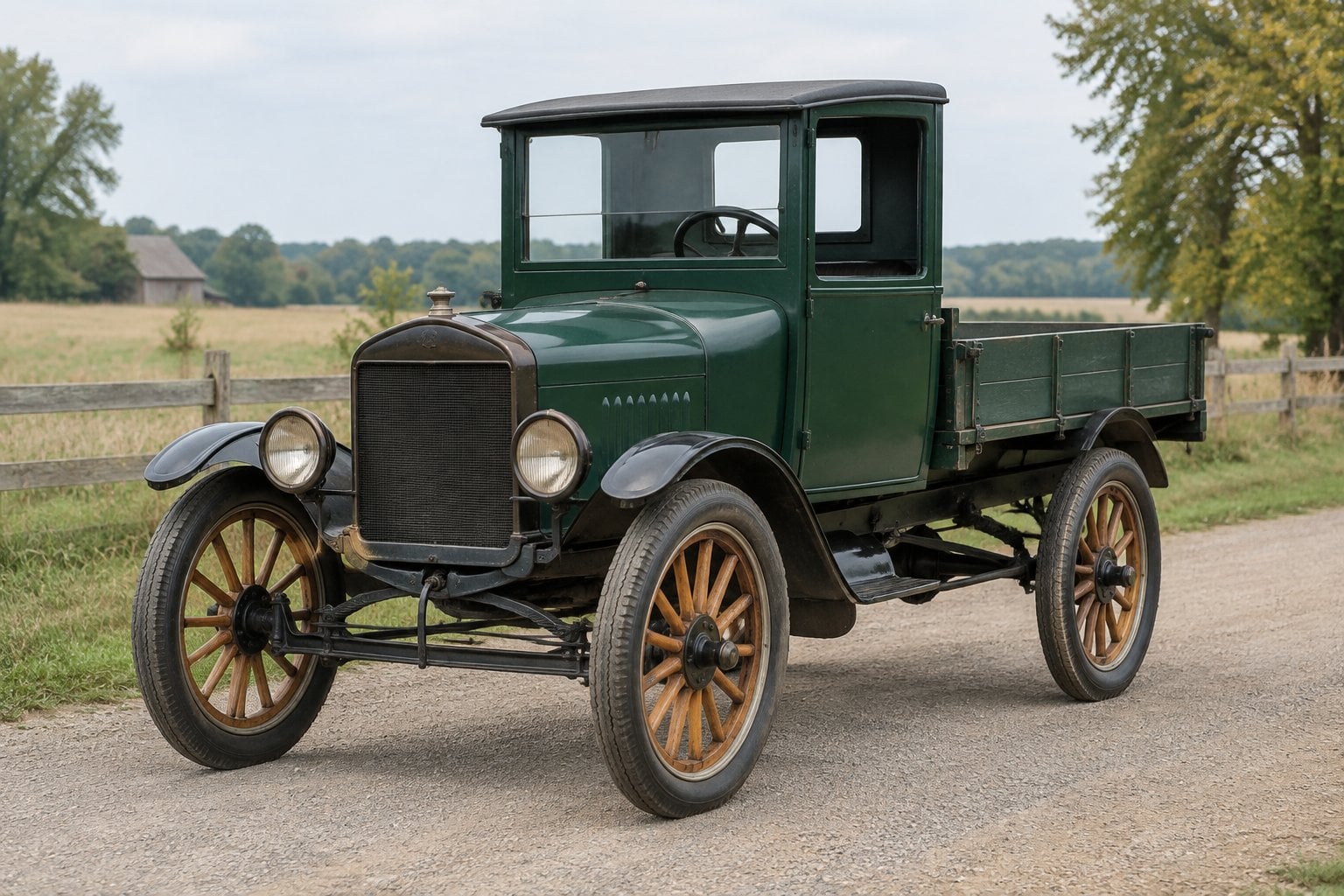
This is where your Chevy truck story begins. In 1918, the same year Chevrolet merged with GM, you saw the brand respond to Ford’s Model TT with its own commercial offering.
The 490 Light Delivery was based on Chevrolet’s 490 passenger car, but it wasn’t just a car with a bed bolted on. The frame and rear suspension were strengthened to handle hauling, giving you a half-ton rated hauler built for real work.
Under the hood, you got a 171-cubic-inch four-cylinder engine producing 26 horsepower. That’s modest by any later standard, but it was enough to get small loads moving in an era when most commercial transport still relied on horses.
Its price put it within reach of small business owners.
What matters most here is the precedent it set. This truck marked the start of a lineup that would become one of America’s best-selling truck lines.
2. Chevrolet Series AC International Pickup (1929)
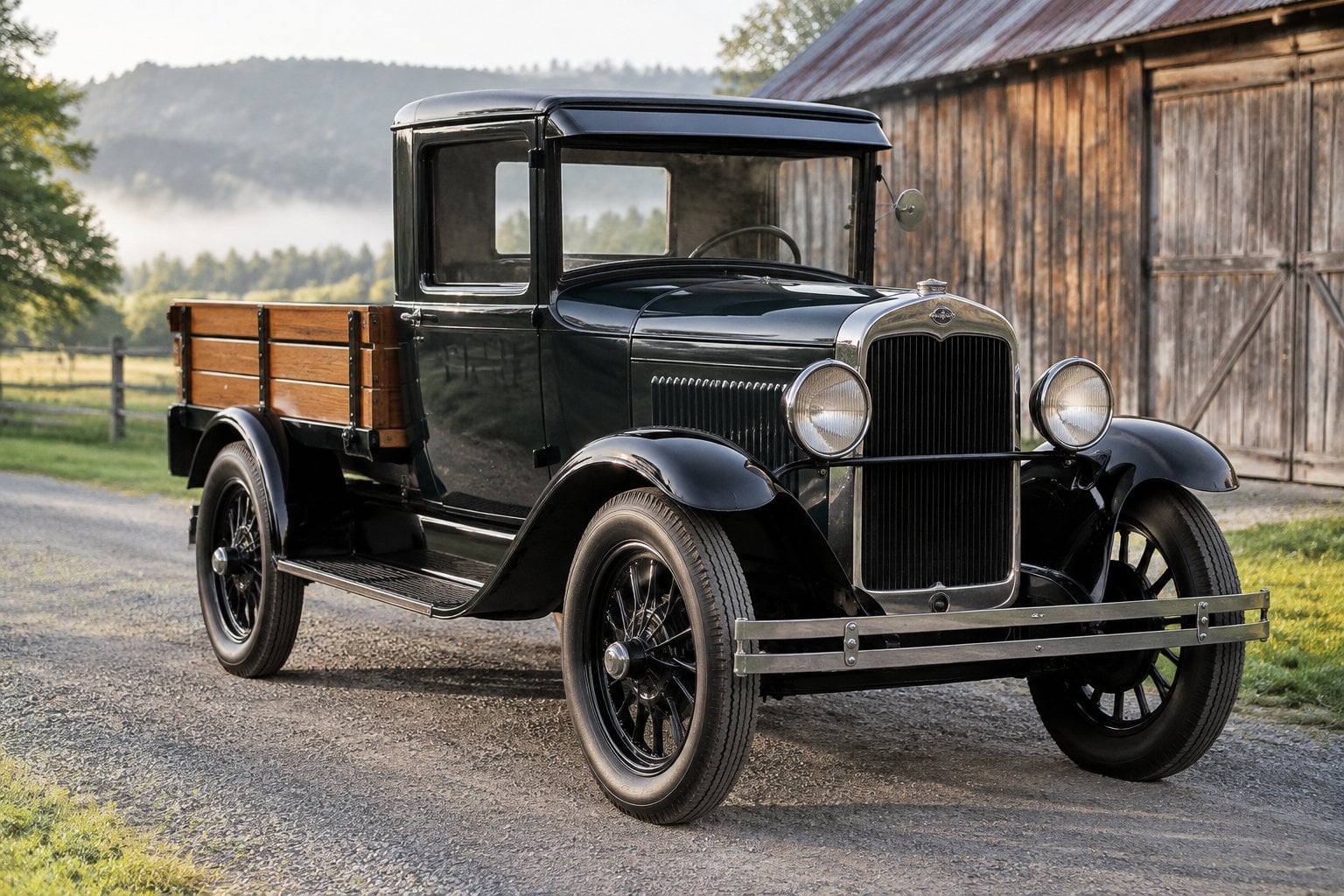
You’re looking at a genuine turning point for Chevrolet trucks. In 1929, the company replaced its four-cylinder setup with a new overhead valve six-cylinder engine, displacing 194 cubic inches and producing 46 horsepower. It gave you noticeably smoother operation and better power delivery than the four-bangers you’d find in competing light trucks.
Your pickup rode on a 107-inch wheelbase, giving it a stable, planted feel for a work vehicle of that era.
What stands out most is how this engine influenced Chevrolet’s future. The overhead valve six you’d find under the hood became a foundation the brand built on for decades. If you appreciate engineering milestones, this truck represents one of the earliest steps toward the dependable six-cylinder trucks Chevrolet became known for.
3. Chevrolet Half-Ton Pickup (1936)
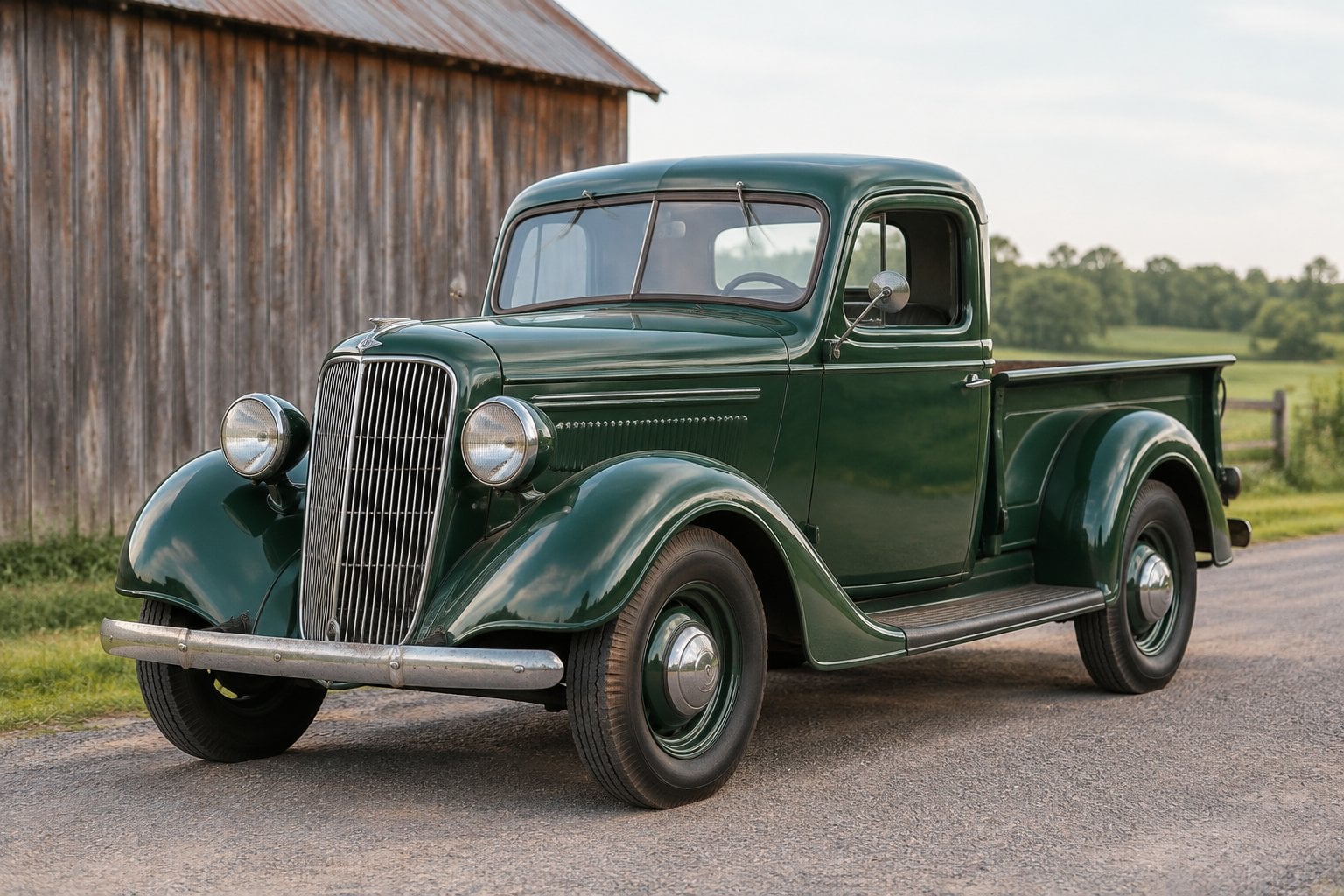
You get a major design shift when you look at the 1936 Chevrolet half-ton. Chevrolet redesigned its truck cabs that year, moving to a rounder, more streamlined body. This change brought the trucks closer in appearance to Chevrolet’s passenger cars.
Under the hood, you find the Stovebolt overhead-valve six-cylinder engine, a design known for its durability. Some 1936 models carried the 206.8 cubic-inch version of this engine, paired with a three-speed manual transmission.
You’ll notice horizontal hood louvers on the 1936 trucks, replacing the vertical louvers used in 1935.
Body styles you could choose from included the standard pickup, a canopy express with a canvas top and side curtains, and panel delivery versions. Common options included side-mounted spare tires, chrome bumpers, and wire wheels.
4. Chevrolet AK Series Pickup (1941)
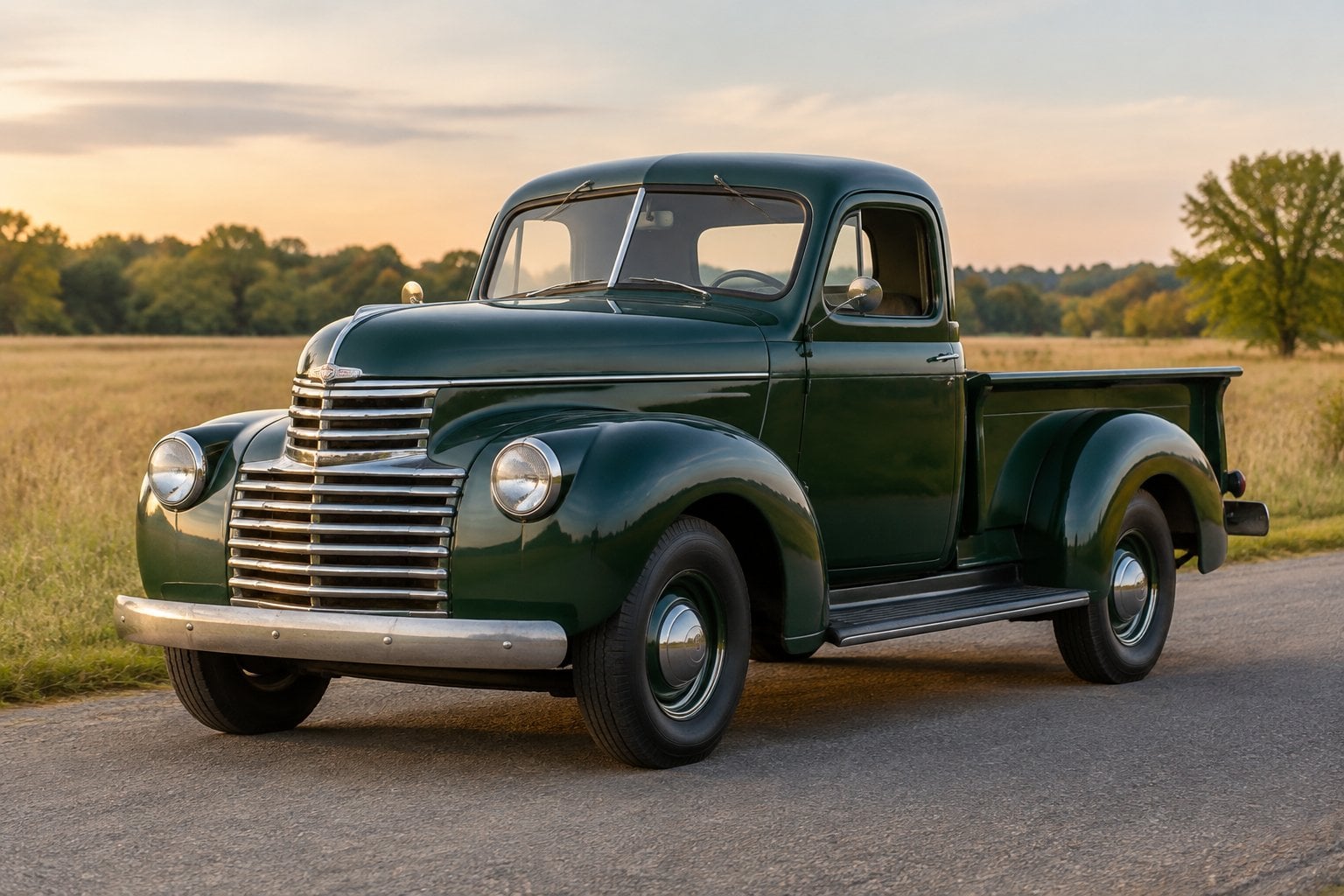
When you look at the 1941 Chevrolet AK Series, you see the moment Chevy pickups broke away from sharing a design with passenger cars. Before this truck, Chevy’s light-duty haulers looked nearly identical to its sedans. The AK Series changed that with its own front sheetmetal and a distinct grille.
You can identify an AK Series Chevy by its grille pattern of horizontal upper bars and vertical lower bars.
Under the hood, you’d find a 216.5 cubic-inch inline-six, the same engine used in Chevrolet’s passenger cars at the time. This gave you dependable power for a light-duty work truck of that era.
The AK Series ran from 1941 through 1947. If you owned one, you were driving a truck built right as American manufacturing shifted toward wartime production, giving it a sturdier, more purposeful stance than its predecessors.
5. Chevrolet Advance-Design 3100 (1947)
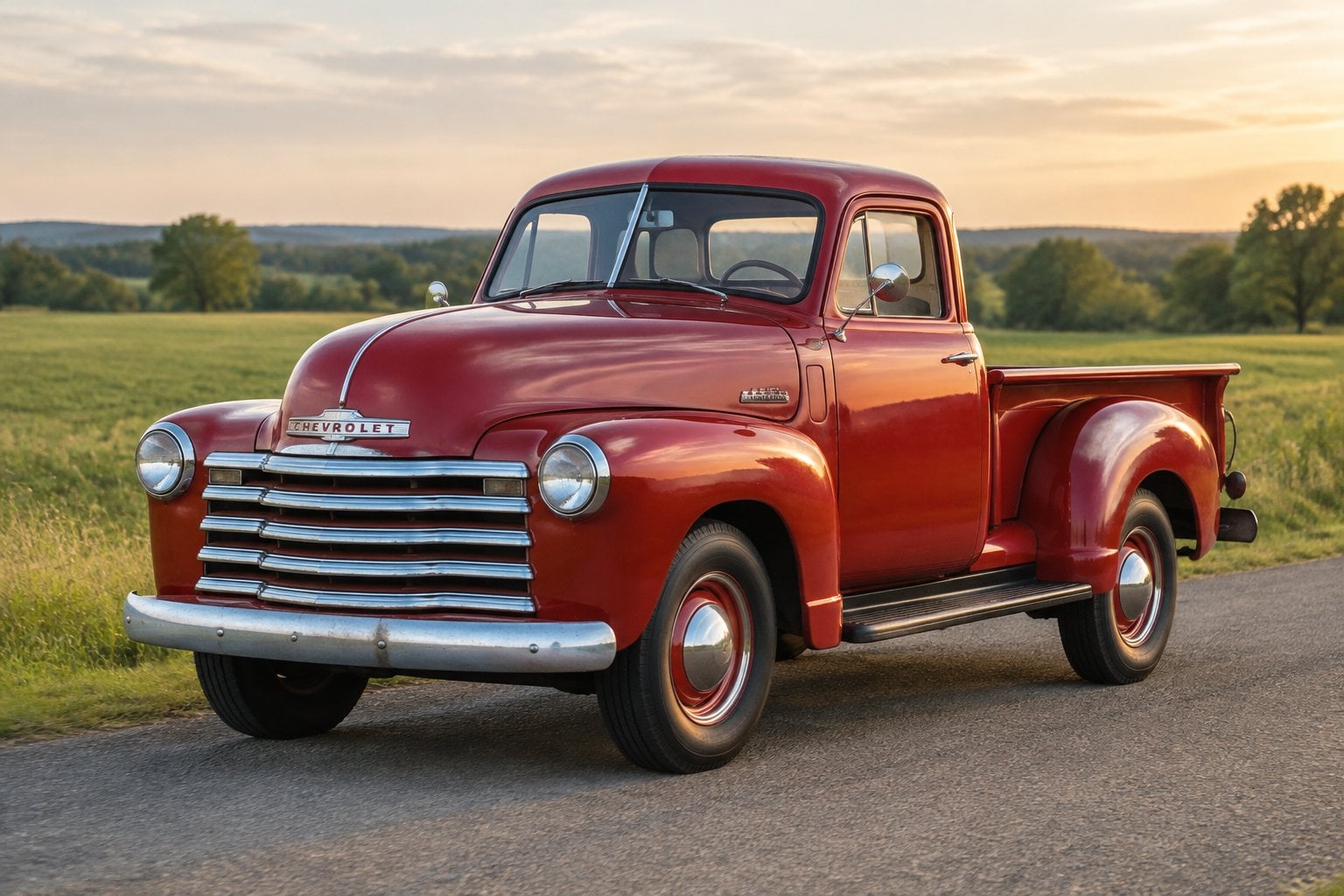
You’re looking at the truck that changed how Chevrolet built pickups after World War II. The Advance-Design 3100 arrived in June 1947 as a complete break from the prewar AK Series, and you can see the shift immediately in its rounded cab, wider stance, and larger cargo box.
This was Chevrolet’s first all-new truck design after the war, and the company marketed it as sleeker and stronger than anything you’d have seen from them before.
Under the hood, you get the “Stovebolt” inline-six, an engine family known for being dependable rather than flashy. You won’t find high horsepower numbers here, but you will find a motor that holds up under regular use.
The 3100 designation marks it as the half-ton model, sitting below the 3600 and 3800 in Chevrolet’s new truck hierarchy.
What you’ll hear from owners and collectors is consistent: this truck’s proportions and cab design have aged well. Its popularity in restoration and customization circles today reflects how well the original design holds up, decades after Chevrolet stopped building it in 1955.
6. Chevrolet Task Force 3100 (1955)
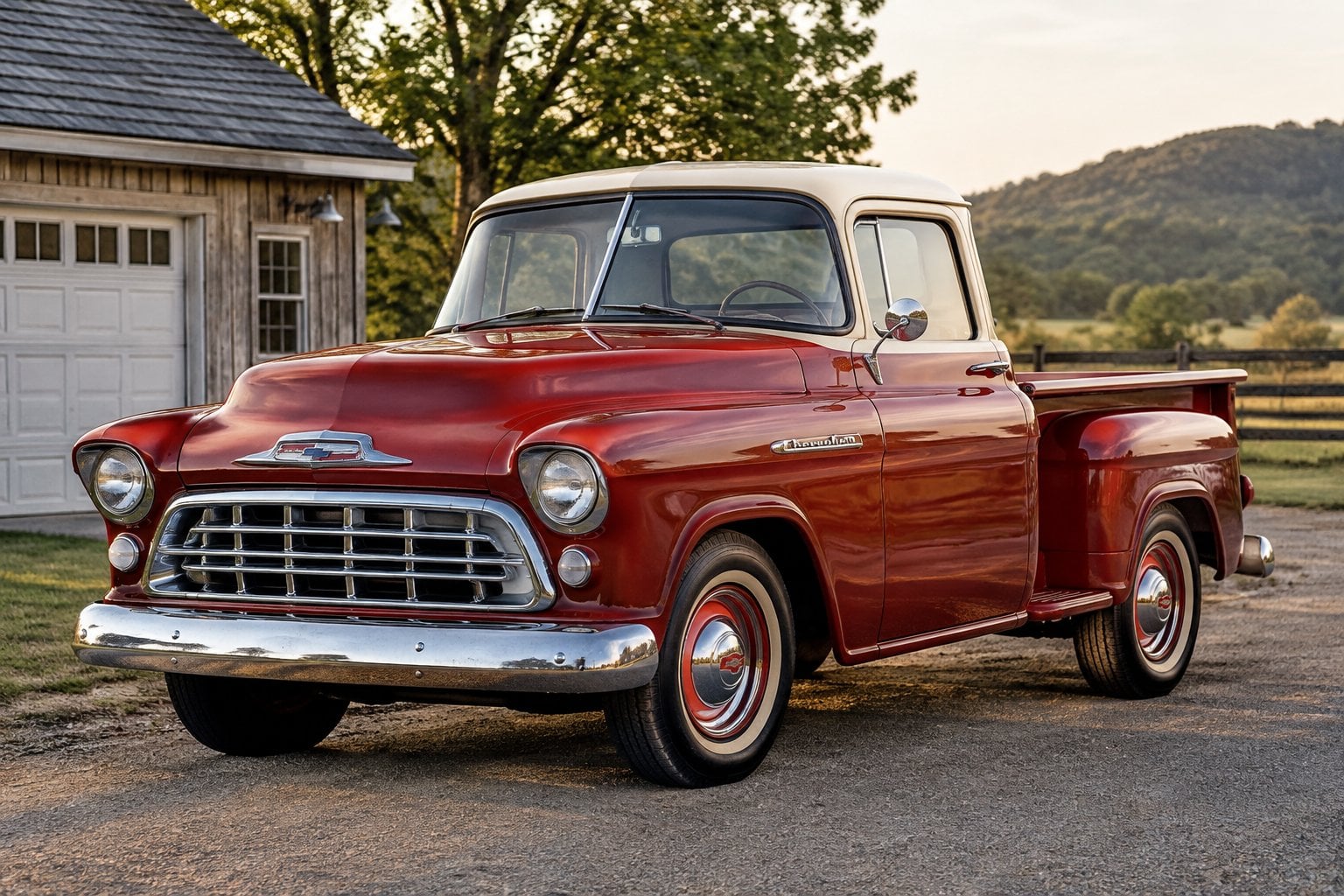
When you look at the 1955 Task Force, you’re seeing the first major redesign of Chevy’s light-duty trucks since 1947. You get a wraparound windshield, smoother fenders, and a lower, wider stance that moved the truck away from its strictly utilitarian roots.
This generation also introduced the small-block V-8 to Chevy’s truck line. You could finally order a pickup with real power under the hood, paired with 12-volt electrics that improved starting reliability over the old 6-volt systems.
Inside, you’d notice a more car-like cabin, with better sightlines and a dashboard laid out for comfort rather than pure function. Chevy offered two-tone paint schemes and additional chrome trim, giving you options to dress up what had previously been a bare-bones work vehicle.
As a half-ton model, the 3100 handled typical light hauling and towing duties without issue, though it wasn’t built for heavy commercial loads. You’ll find collectors and restorers prize this truck for its styling as much as its drivability. It represents the moment Chevy trucks started appealing to buyers who wanted something they could drive every day, not just use on the job.
7. Chevrolet Cameo Carrier (1955)
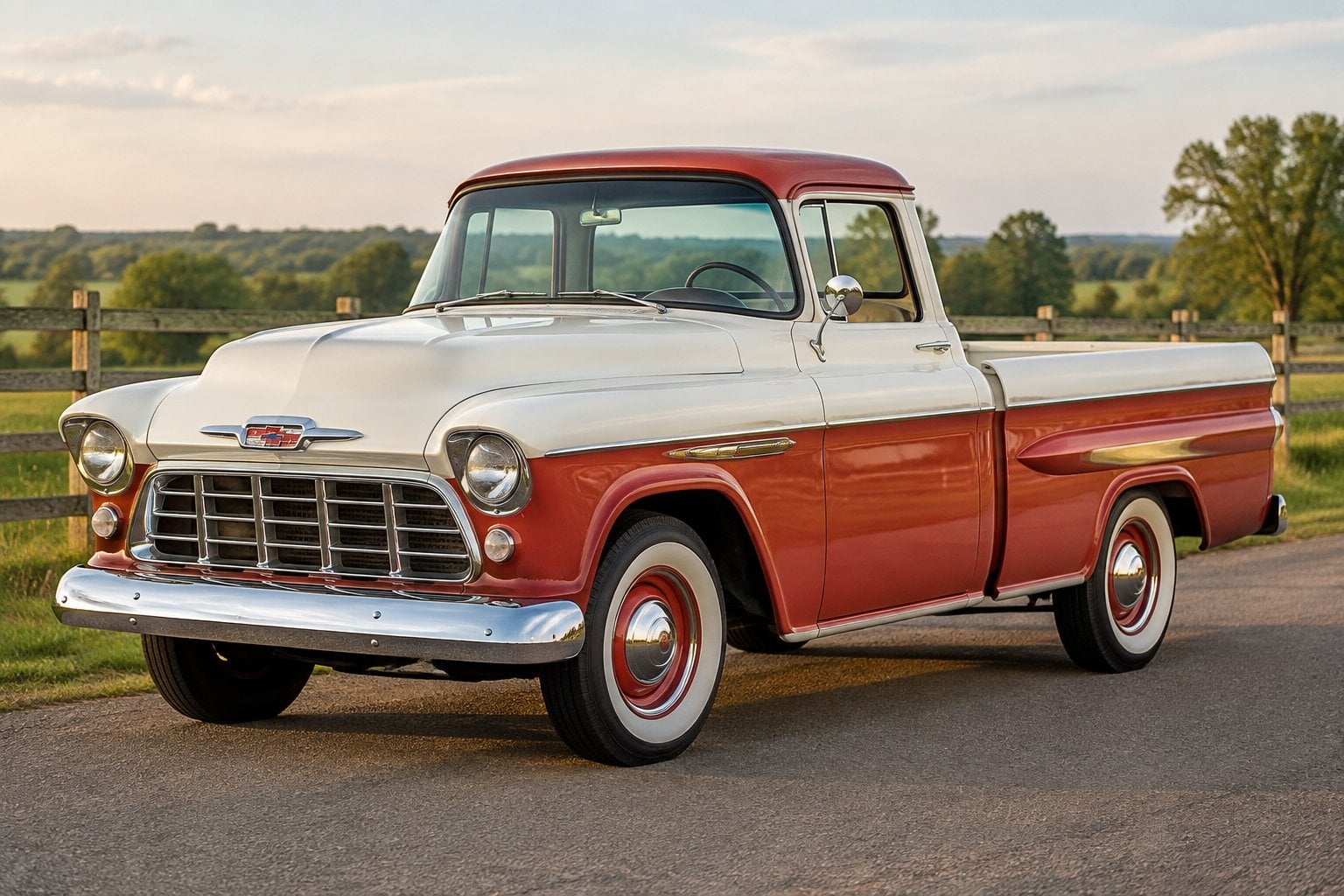
When you look at the 1955 Chevrolet Cameo Carrier, you’re looking at the truck that changed how pickups could be styled. Before this, you’d see work trucks with exposed bed rails and rear fenders bolted on like an afterthought.
Chevrolet gave you something different: a smooth, slab-sided bed with fiberglass outer panels, the same material used on the Corvette. The result hid the wheel wells and created a clean, finished look you wouldn’t expect on a half-ton hauler.
You got this new bed design layered onto the Task Force platform, which also introduced a wraparound windshield, V-8 power, and 12-volt electrics that year. If you were shopping for a truck that could double as a weekend driver, the Cameo gave you two-tone paint and chrome trim options most work trucks didn’t offer.
You’ll find that collectors and reviewers still praise the Cameo for bridging the gap between utility and style. It sold around 5,200 units in its debut year, making it a relatively rare find if you’re hunting for one today.
8. Chevrolet 3100 Big Window (1957)
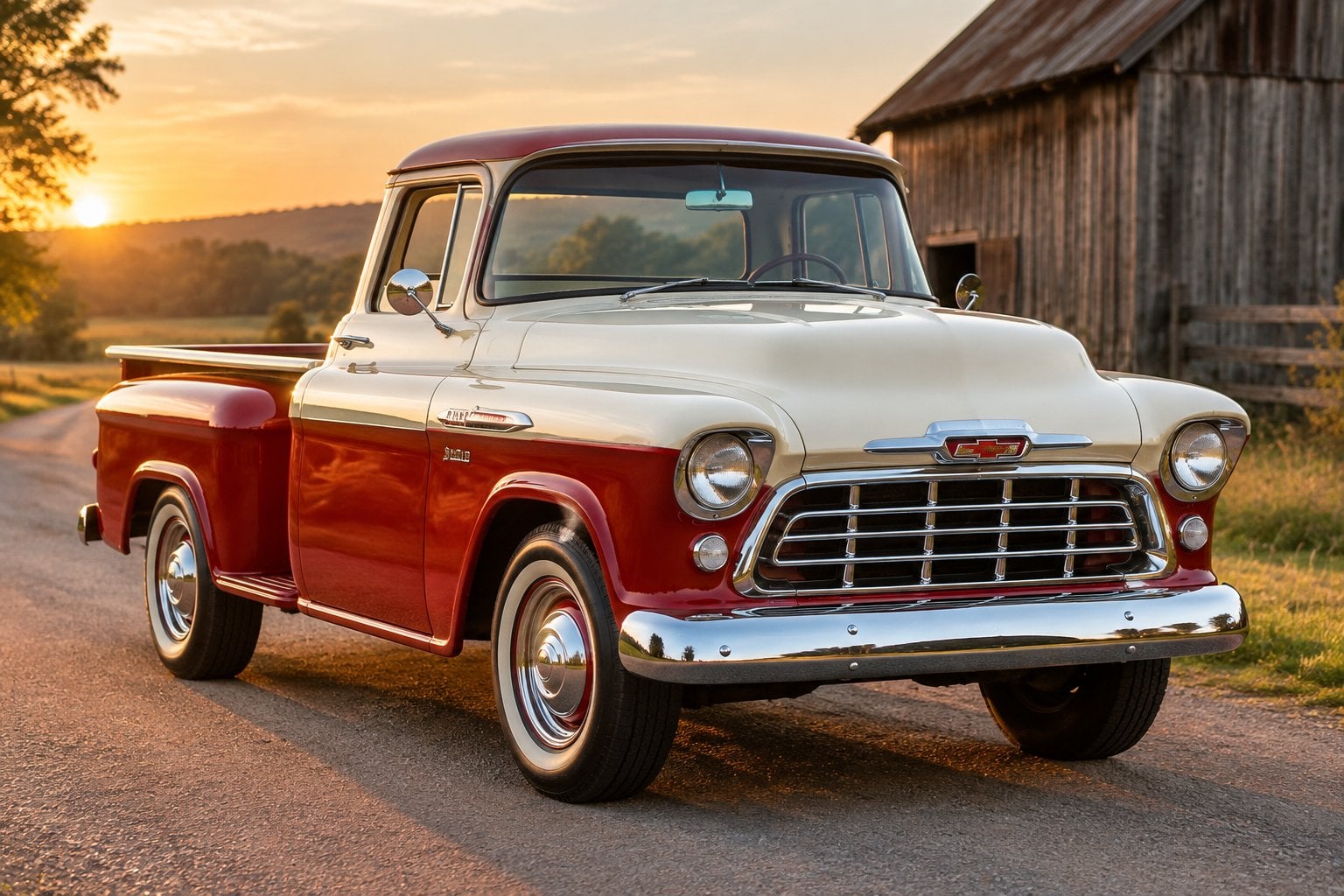
The 1957 sits in the middle of the Task Force run (1955-1959), and the optional wraparound Big Window rear glass gave you far better rearward visibility in a way that mattered on the road and in daily work.
Under the hood, you had a choice between a 235-cubic-inch inline-six and the small-block V8, paired with a three-speed manual or optional four-speed. This gave you flexibility depending on whether you prioritized fuel economy or extra power for hauling.
As a half-ton, the 3100 handled most farm and trade work of the era. You’ll notice the cab design still emphasized function, with a wraparound windshield and simple, durable interior trim.
Collectors and restorers today praise the 1957 model for its styling, including its one-year-only grille and hood. If you want a classic that blends usability with visual appeal, this is often the year people point to first.
9. Chevrolet El Camino (1959)
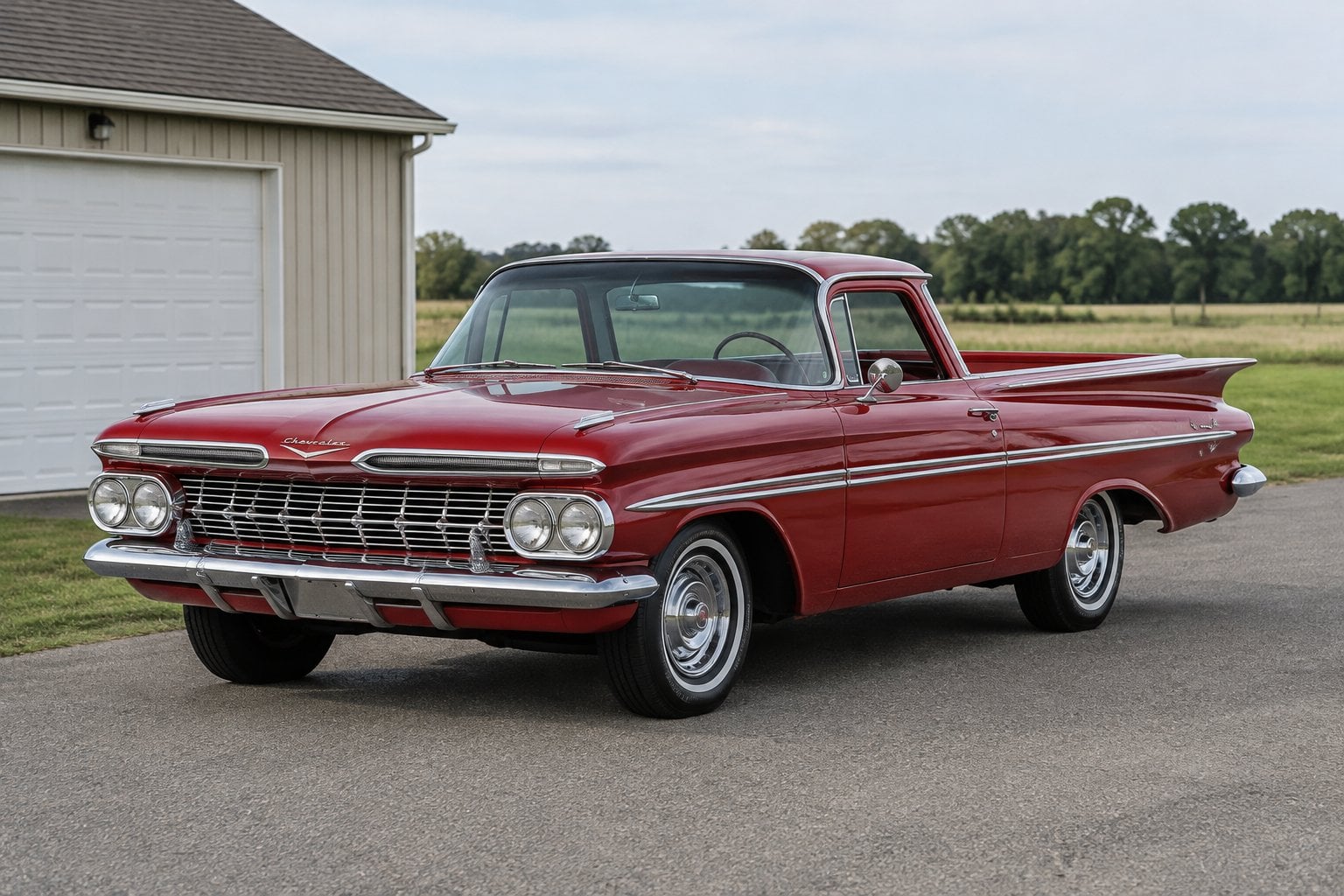
You can trace the El Camino’s origins to Chevrolet’s response to the Ford Ranchero, which had arrived two years earlier. Introduced in October 1958 for the 1959 model year, it was built on the full-size Chevrolet passenger car platform rather than a traditional truck chassis.
You get a vehicle that blends the styling of the 1959 Impala with a cargo bed grafted onto the rear. The exaggerated fins and chrome trim of that era are present, giving it more visual flash than most work trucks of the time.
Despite the showy exterior, you still had real utility to work with. The bed offered real cargo space, with a double-wall design and steel skid strips built in.
Under the hood, you could choose a standard 235-cubic-inch inline-six rated at 135 horsepower, or step up to optional V8 engines, including a 348-cubic-inch unit. Reviewers and owners have long noted that this first-generation El Camino offered car-like ride comfort rarely found in pickups of its day.
10. Chevrolet C/K Apache (1960)
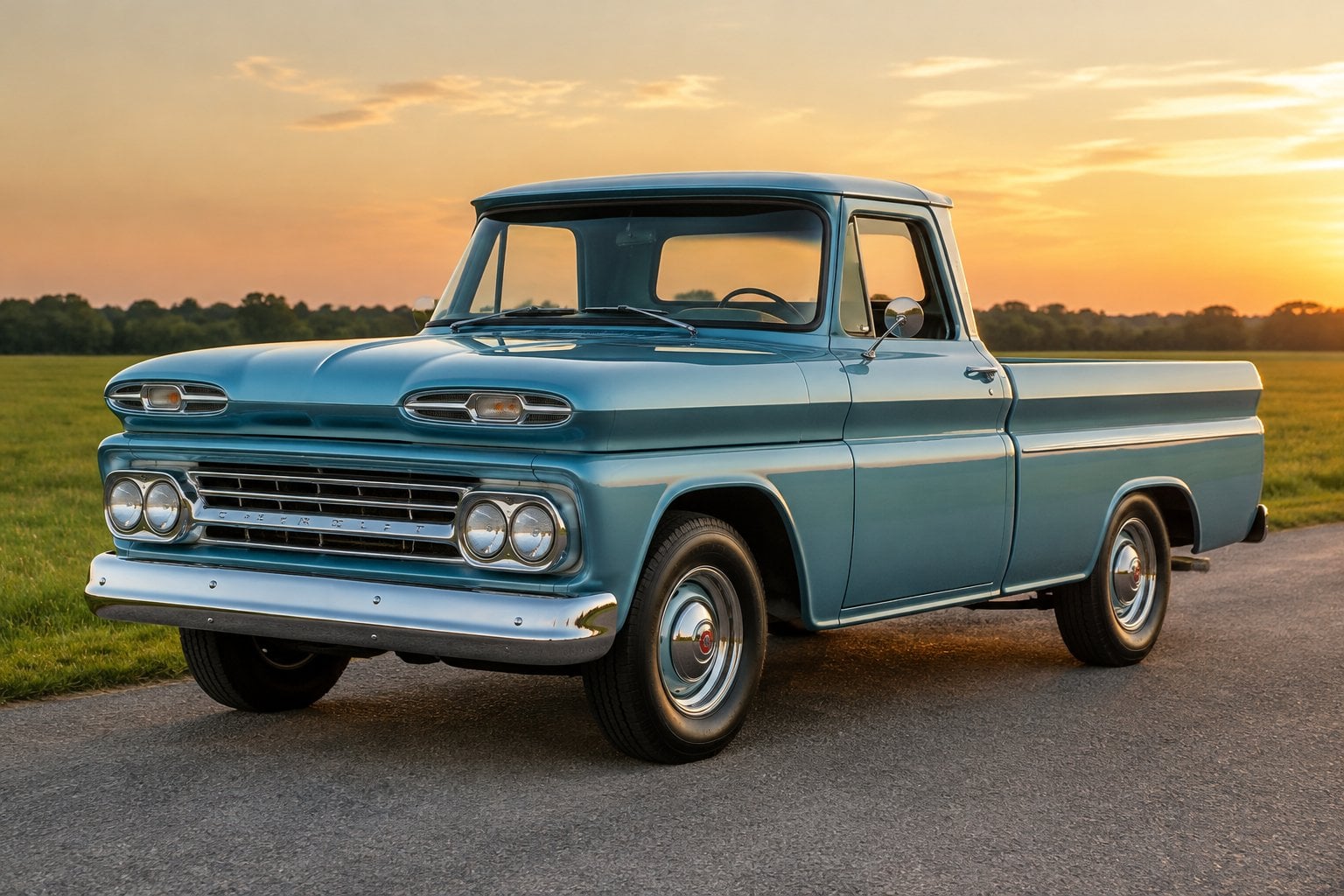
You can trace the start of GM’s modern truck era back to 1960, when Chevrolet replaced its Task Force line with the all-new C/K series. The Apache name carried over to this generation, applied to half-ton, three-quarter-ton, and one-ton models.
If you compare it to earlier Chevy trucks, the differences are obvious right away. The body sits lower, the cab is wider, and you get a smoother ride thanks to a new independent front suspension setup on two-wheel-drive models.
You had a choice between the stepside bed and the smoother fleetside design, both of which remain popular today. Engine options included the dependable inline-six as well as small-block V8 choices, giving you flexibility depending on whether you needed economy or power.
Owners and collectors still appreciate how usable this truck feels, even decades later. You get a cab that’s comfortable enough for daily driving, combined with genuine work-truck capability.
Its clean lines and balanced proportions make it a favorite among restorers, and it’s easy to see why this model marks such a clear turning point in Chevy’s truck lineup.
11. Chevrolet C10 Fleetside (1963)
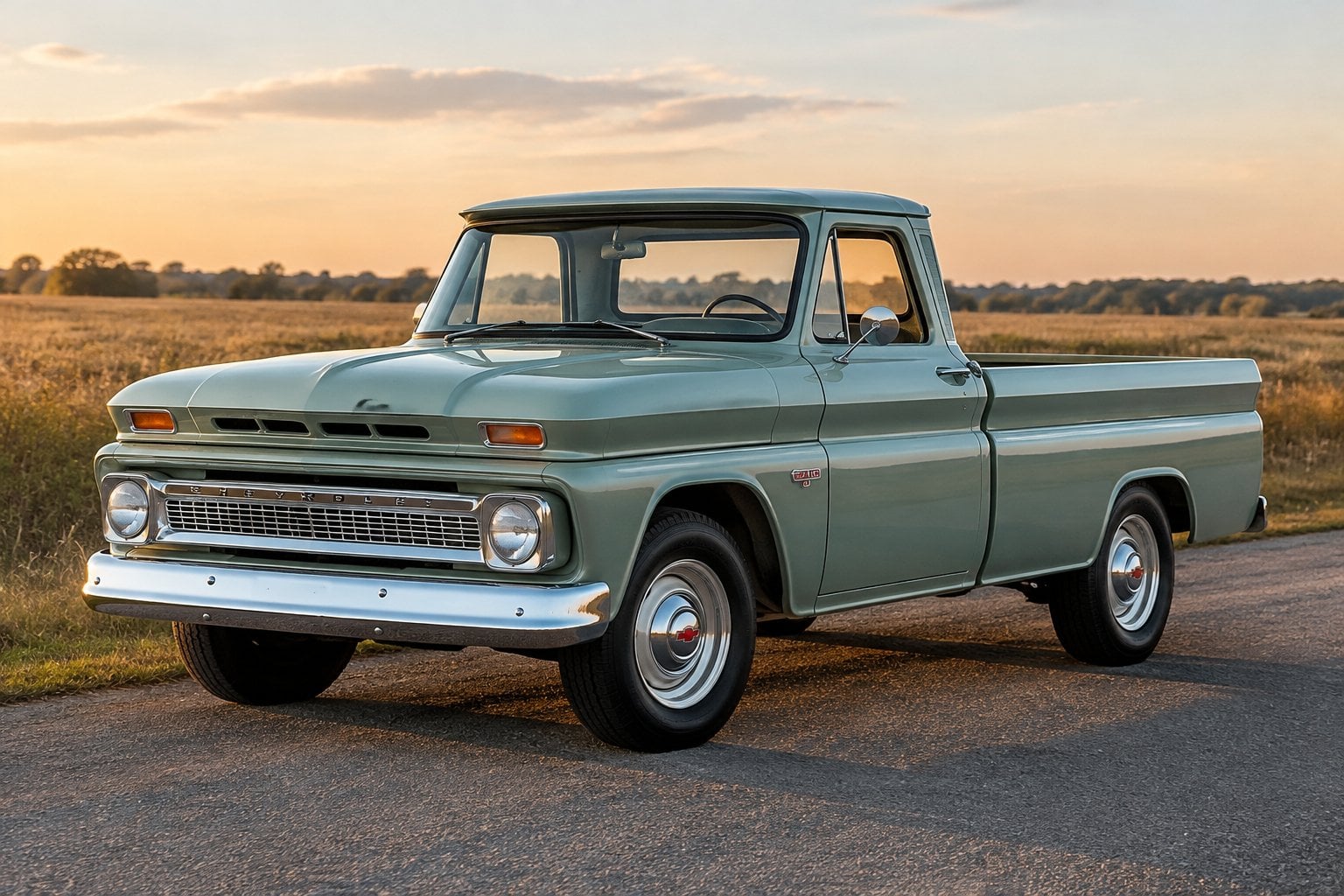
If you’re looking at the 1963 C10 Fleetside, you’re looking at one of the cleanest designs Chevy put out in the early 1960s. This was a mid-cycle year for the first-generation C/K trucks (1960-1966), with cleaner updated styling up front.
Under the hood, you had several engine options. The base inline-six delivered reliable, workmanlike power, while the available 283 cubic-inch V8 gave you noticeably better performance for hauling and daily driving.
For 1963, Chevrolet replaced the earlier torsion-bar front suspension with coil springs. That gave you a smoother ride without sacrificing the load capacity you needed for work duty.
Payload ratings varied by configuration, but half-ton models like the C10 were built to handle real jobs without complaint. Owners today still praise the 1963 Fleetside for its simple mechanicals, easy-to-maintain drivetrain, and styling that’s aged well.
When you compare it to its stepside sibling, the Fleetside’s smooth bed sides gave you a cleaner look and slightly more cargo width, which is part of why it remains a favorite among collectors.
12. Chevrolet C10 Custom (1965)
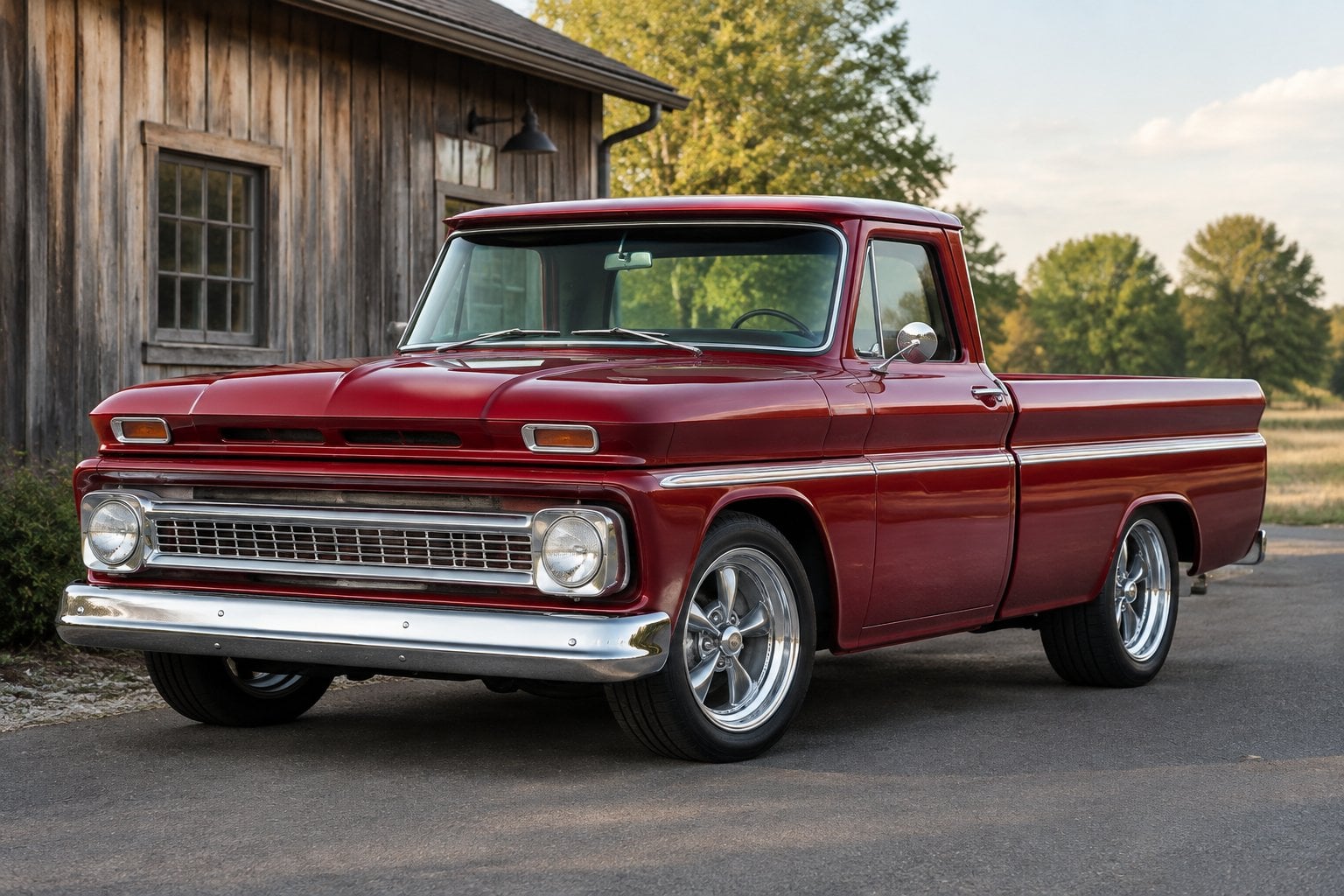
You’ll recognize the 1965 C10 as part of the first-generation C/K series that Chevrolet introduced in 1960. By 1965, the truck had settled into a clean, boxy design with simple chrome trim and a wide grille that still looks sharp today.
Under the hood, you could find a range of engines, including inline-sixes and small-block V8 options like the 283 and 327. These engines gave you a balance of reliability and reasonable power for daily work or weekend driving.
What makes the ’65 C10 a favorite among builders is its versatility. You can keep it stock for a classic look, or drop in a modern LS engine and air-ride suspension for a full restomod.
Owners and custom shops often praise this truck’s proportions, calling them ideal for lowering, widening stance, or adding custom wheels. You’ll also notice its simple frame design makes it easier to modify than later generations.
Its popularity at truck shows and magazine features comes down to that mix of classic styling and flexible platform, which gives you plenty of room to make it your own.
13. Chevrolet C10 (1967)
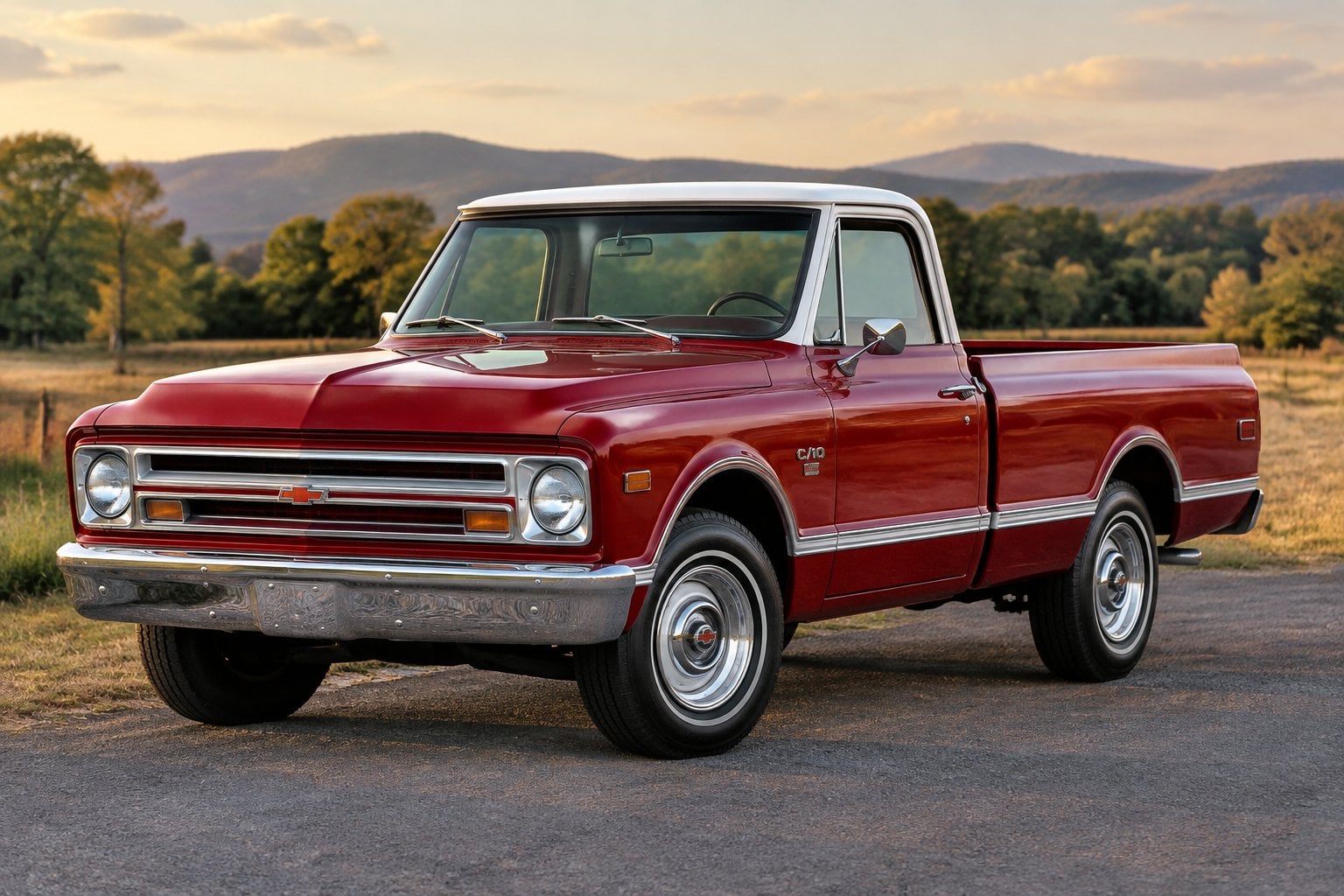
If you’re looking for the model that started a new direction for Chevy trucks, this is it. The 1967 C10 launched the second-generation C/K series, known internally as the “Action Line” trucks.
You’ll notice the styling right away. Chevy moved away from the boxier look of earlier trucks and gave the C10 smoother, more rounded body lines. The cab was wider too, giving you more interior space and a more comfortable seating position.
Under the hood, you had several engine choices, including inline-six options and small-block V8s. Power steering and power brakes were available, which made daily driving less demanding than on earlier trucks.
Owners and reviewers often point to the improved ride quality as a major selling point. Chevy updated the suspension and chassis, so you got a smoother experience whether you were hauling cargo or just driving around town.
The short-wheelbase configuration became especially popular with builders and collectors. You’ll still see plenty of these trucks restored or customized today, which says a lot about how well the original design has held up.
14. Chevrolet K20 (1969)
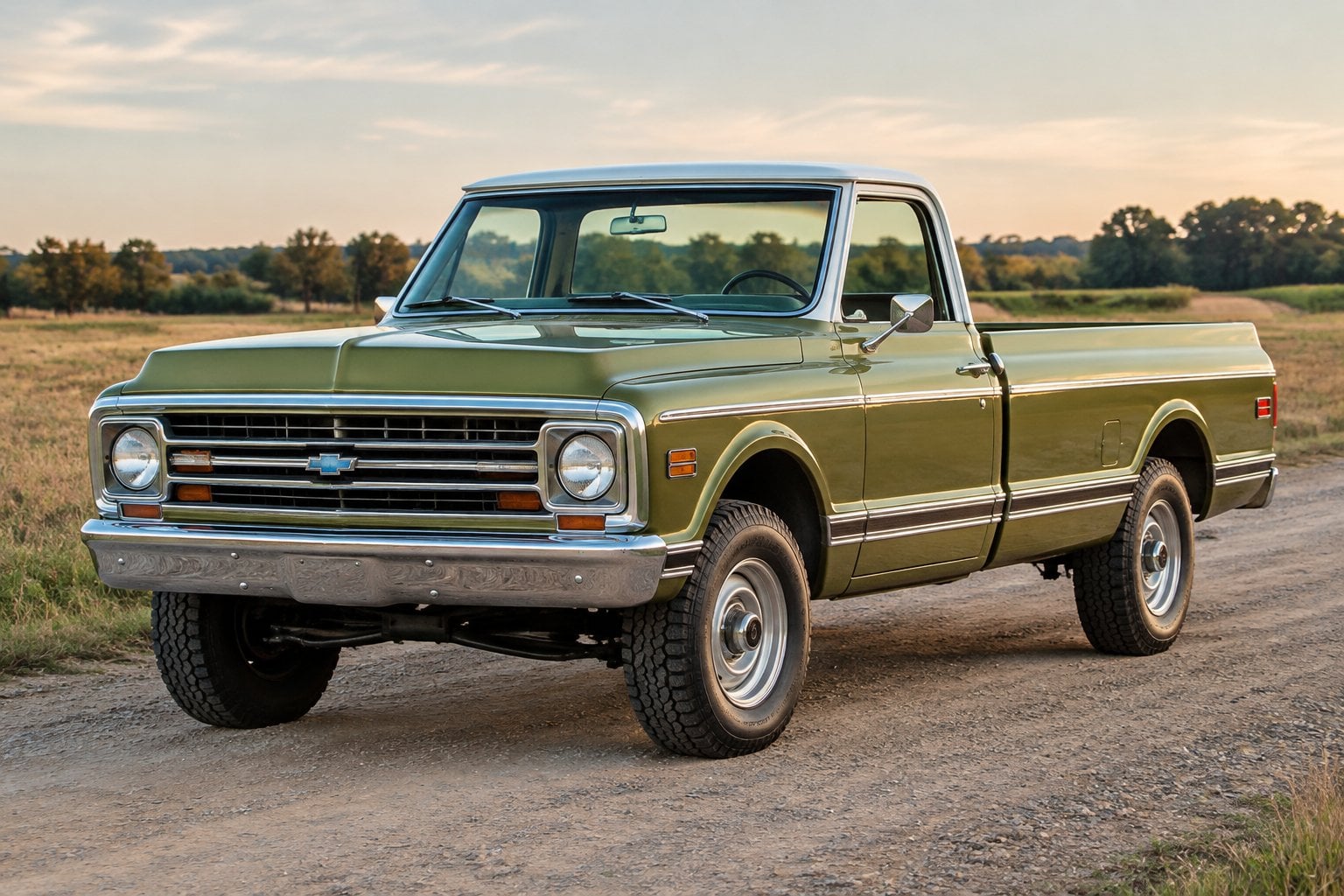
You get a three-quarter ton truck built for work, not comfort. The K20 came from Chevy’s second-generation C/K lineup, part of the “Action Line” series produced from 1967 to 1972. It was designed to handle heavier loads and tougher jobs than its half-ton sibling, the K10.
Four-wheel drive gave you traction that most pickups of the era couldn’t match. You could expect a range of engine options, including small-block and big-block V8s, depending on how the truck was configured. This flexibility let buyers match power output to their specific hauling or towing needs.
What stands out to collectors today is the K20’s reputation for durability. You’ll find many examples still running decades later, often restored or upgraded with modern drivetrains.
Owners praise the truck’s straightforward mechanical design, which makes it easier to repair and modify than newer trucks. The K20 represents a period when Chevy trucks prioritized simplicity and strength over electronics and convenience features.
15. Chevrolet El Camino SS 454 (1970)
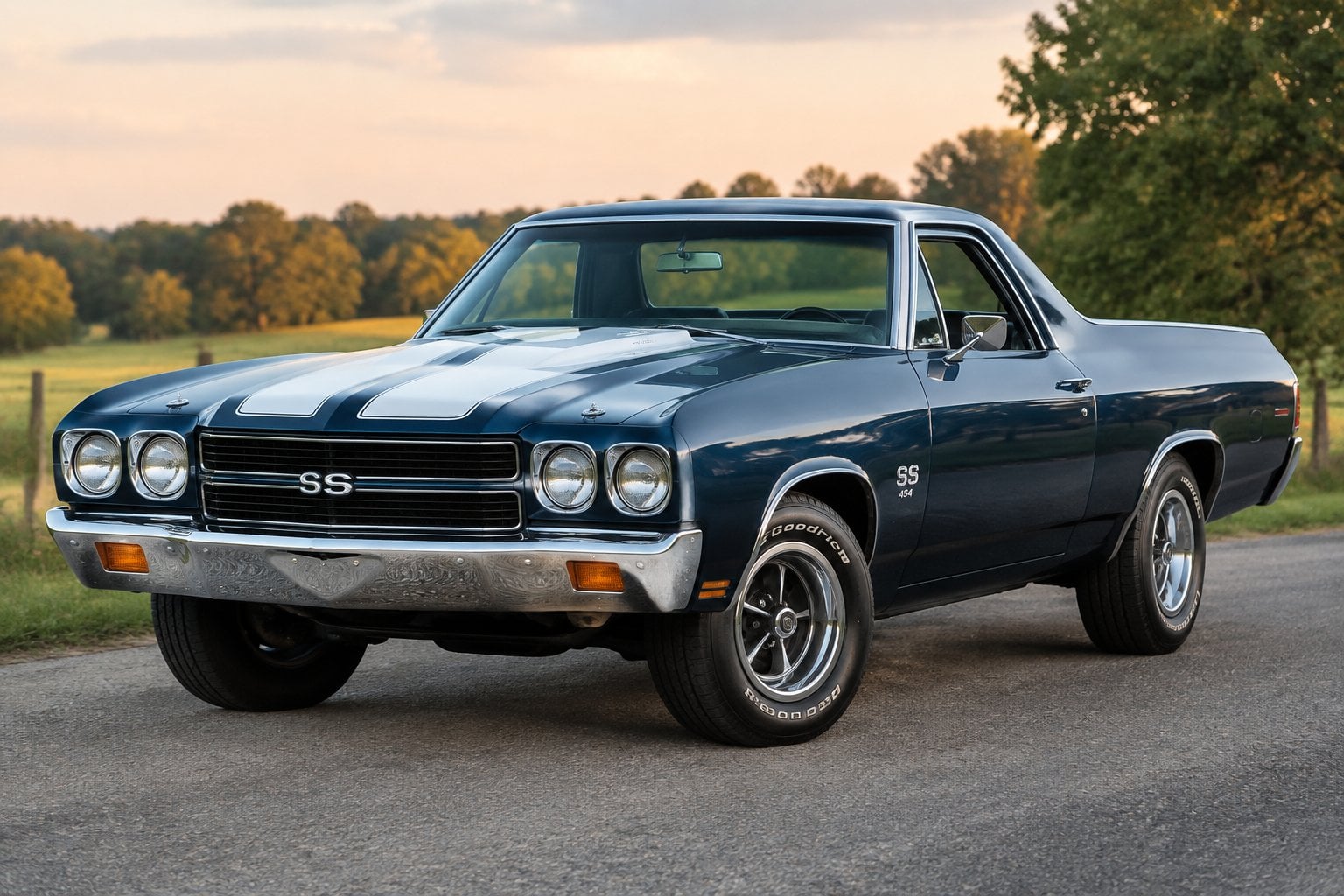
You get a vehicle that refuses to fit one category when you look at the 1970 El Camino SS 454. It shares its platform and sheetmetal with the Chevelle, giving you a car-like front end attached to a usable cargo bed.
Under the hood, you have the option of two big-block 454 engines: the LS5, rated at 360 horsepower, or the LS6, rated at 450 horsepower. The LS6 matched the engine Chevrolet offered in the Chevelle SS that same year, so you know the performance potential is real, not watered down for the truck version.
You can haul a modest payload in the bed while still having access to serious muscle-car acceleration, a combination few manufacturers attempted at the time. Owners and reviewers have long praised this balance of utility and power as the defining trait of the model.
The SS badge brought you handling upgrades and styling cues that set it apart from standard El Camino trims. This generation represents the high point of performance for the car-truck concept Chevrolet first introduced in 1959.
16. Chevrolet C10 Cheyenne Super (1972)
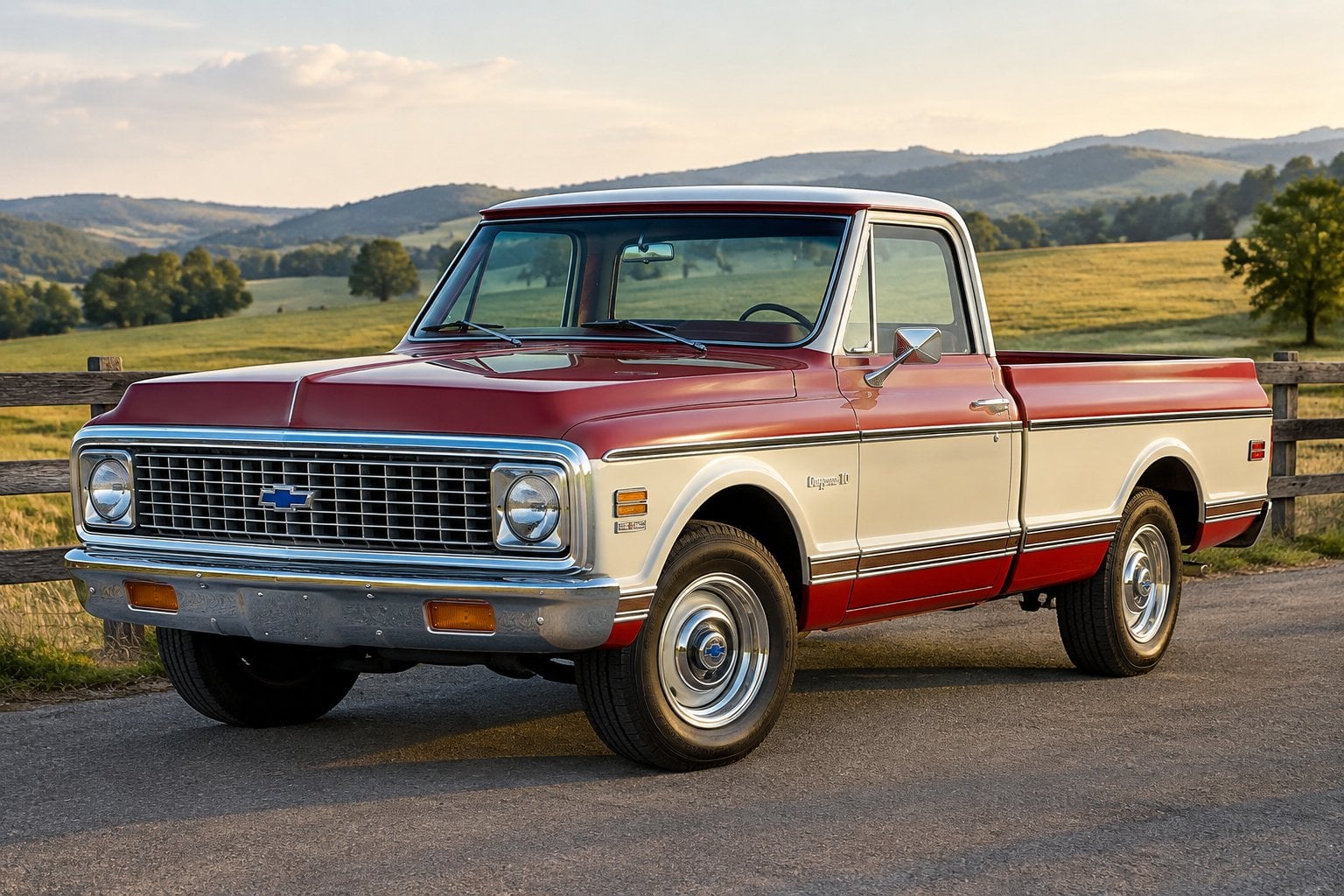
You’re looking at the final model year of the second-generation C/K series, and Chevrolet used it to push the C10 further into luxury territory. The Cheyenne Super sat above the base Cheyenne trim, adding extras like woodgrain dash accents, upgraded door panels, and cloth or vinyl seating options that felt closer to a car’s interior than a work truck’s.
Under the hood, you’d typically find a 350 cubic-inch small-block V-8, though buyers could also choose from a range of six-cylinder and other V-8 options depending on their needs. The 1971 facelift carried into 1972, giving these trucks an eggcrate grille and the return of the bowtie emblem up front.
You’ll also notice the coil-spring front suspension, which made for a noticeably smoother ride than many rivals. Collectors and owners today point to the balance this truck struck: real hauling capability paired with comfort you wouldn’t expect from an early-1970s pickup. That combination is part of why clean, original examples remain highly sought after.
17. Chevrolet K5 Blazer (1973)
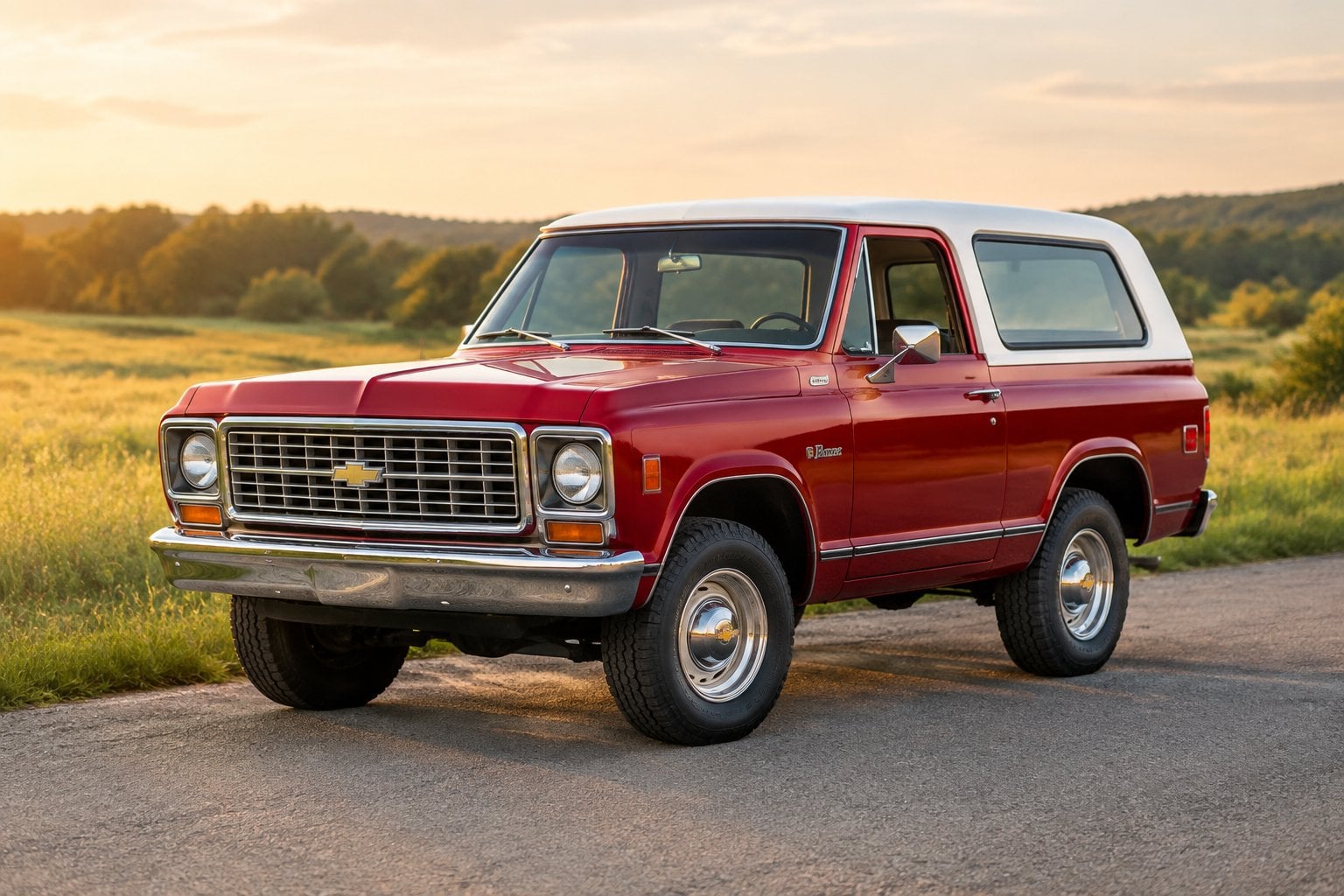
The 1973 K5 Blazer marked the start of the second generation, and you can spot it immediately by the squared-off body style that replaced the original Action Line design.
Under the hood, you had several engine choices, including inline-six options and a range of V8s. The bigger V8s gave you real towing muscle, something buyers wanted as the Blazer’s reputation grew among outdoor and work truck users.
You still got a removable top, which let you convert the vehicle from an enclosed SUV to an open-air truck depending on the season or task at hand.
Owners have praised this model for its combination of full-size pickup toughness with genuine passenger versatility. If you’re looking at classic SUVs today, this year represents the point where the Blazer’s long-running second generation formula took shape.
18. Chevrolet R10 Silverado (1987)
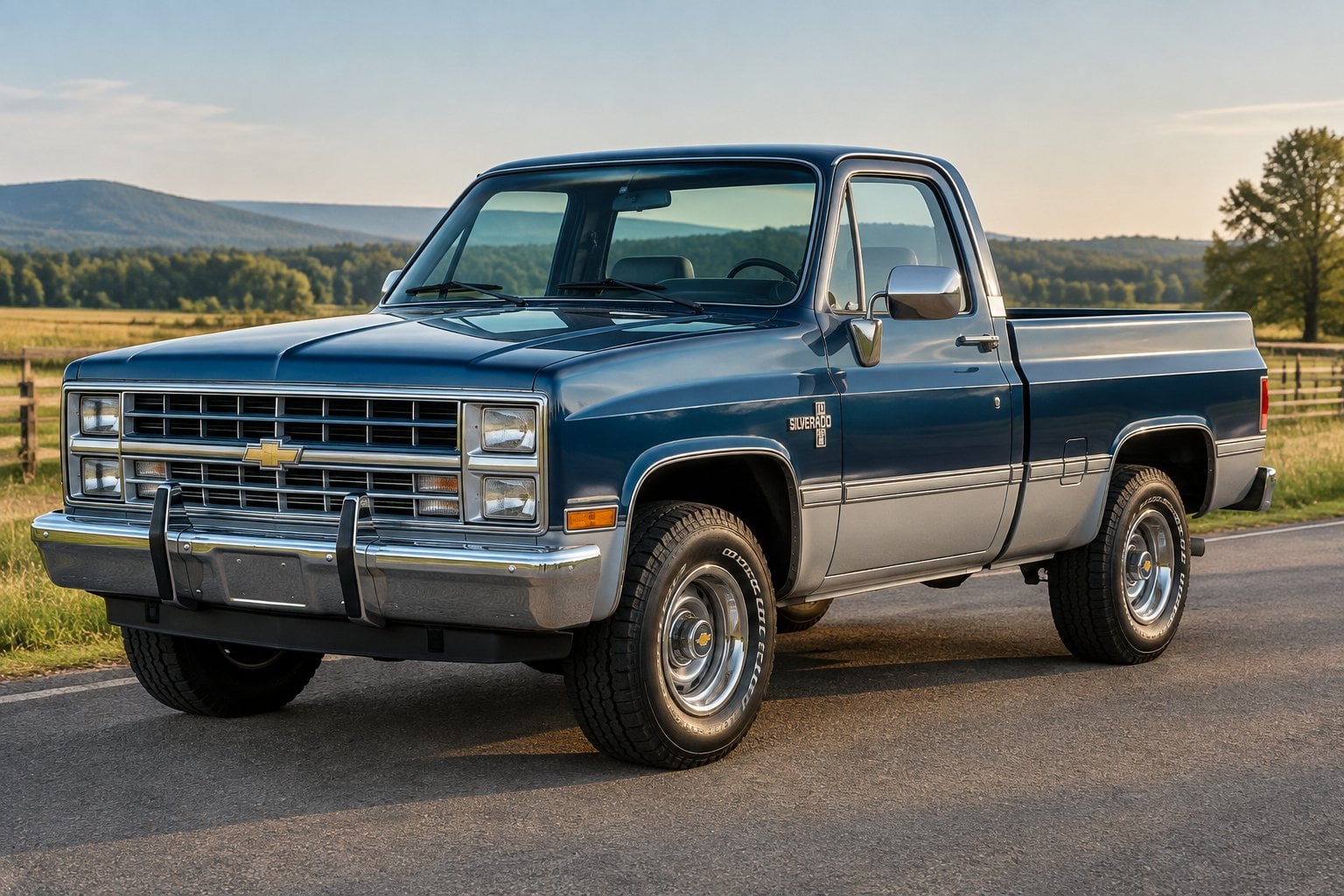
By 1987, you were looking at the final year of GM’s third-generation C/K trucks before the GMT400 platform took over. GM renamed the line R/V for this last model year, but under the badge change, you still got the square-body design that had defined Chevy trucks since the early 1970s.
Your R10 Silverado came with a body-on-frame construction that owners trusted for its durability. Engine options typically included small-block V8s, giving you a dependable balance of power and simplicity that was easy to maintain.
The Silverado trim added comfort and styling upgrades over the base model, so you got better interior appointments without sacrificing the truck’s working-class reliability. This made it a practical choice whether you needed a daily driver or a dependable work truck.
Today, you’ll find the 1987 R10 Silverado holds steady appeal among collectors. Its rugged build and classic lines give it lasting value, and its status as the last of the square-body generation makes it a notable chapter in Chevy’s truck history.
19. Chevrolet 454 SS (1990)
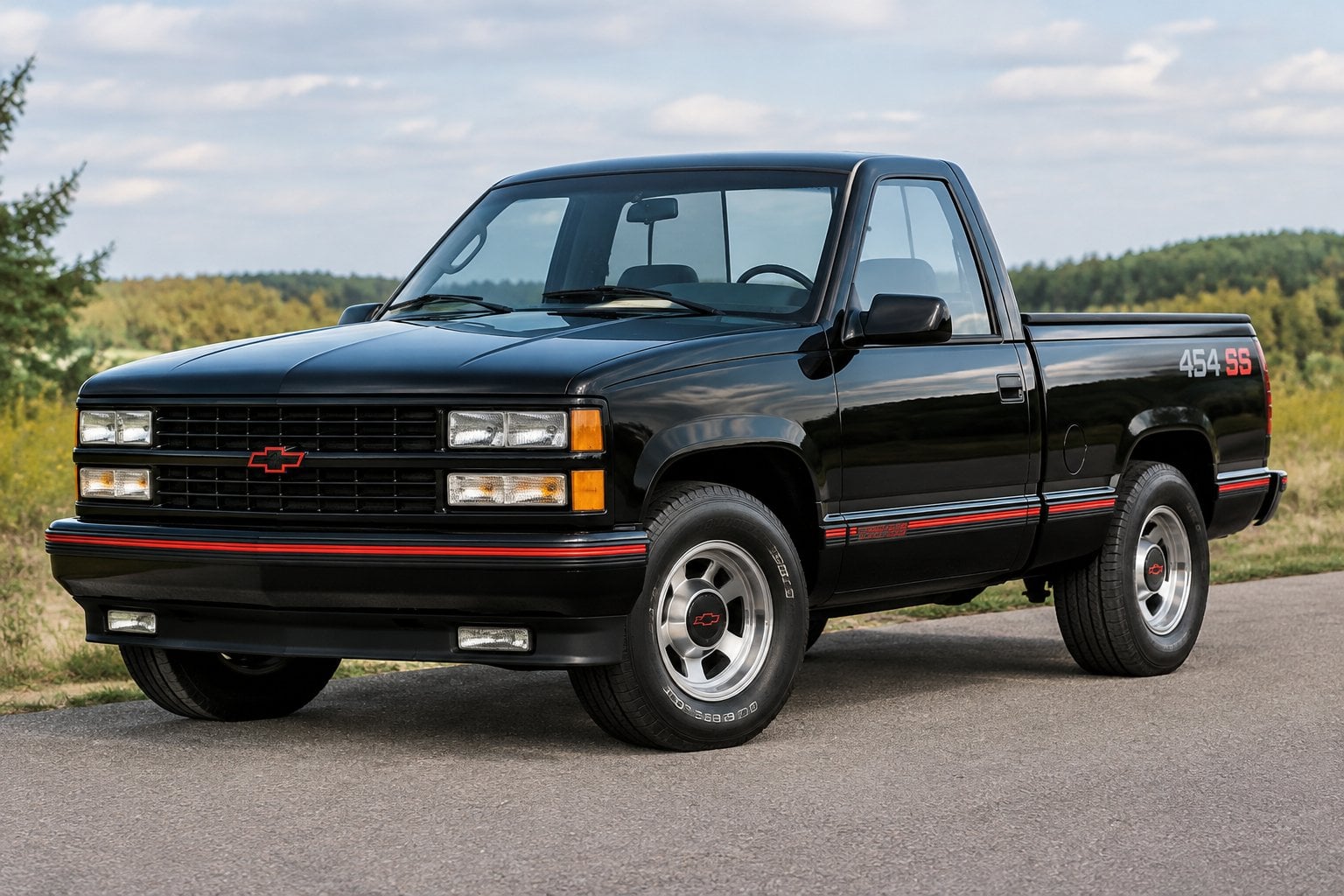
You get a regular-cab, short-bed C1500 built with one goal: speed. Chevrolet dropped the 7.4-liter 454 big-block V8 from its heavy-duty trucks into a lighter half-ton body, and the result was one of the quickest pickups of its era in a straight line.
The 1990 model came only in black, paired with a monochrome exterior and a sport suspension borrowed from the available Sport Equipment Package. You’ll notice the stance sits lower than a standard C1500, thanks to stiffer springs and shocks tuned for handling rather than hauling heavy loads.
Power came through a 3-speed Turbo Hydra-Matic 400 automatic, since Chevrolet didn’t offer a manual option. Output landed around 230 horsepower and 385 lb-ft of torque, numbers that felt substantial for a truck in 1990.
You won’t find high production figures here. Chevrolet built this truck in limited numbers during its first year, making the all-black 1990 version the rarest and most sought-after of the four model years produced.
20. Chevrolet S-10 Baja (1991)
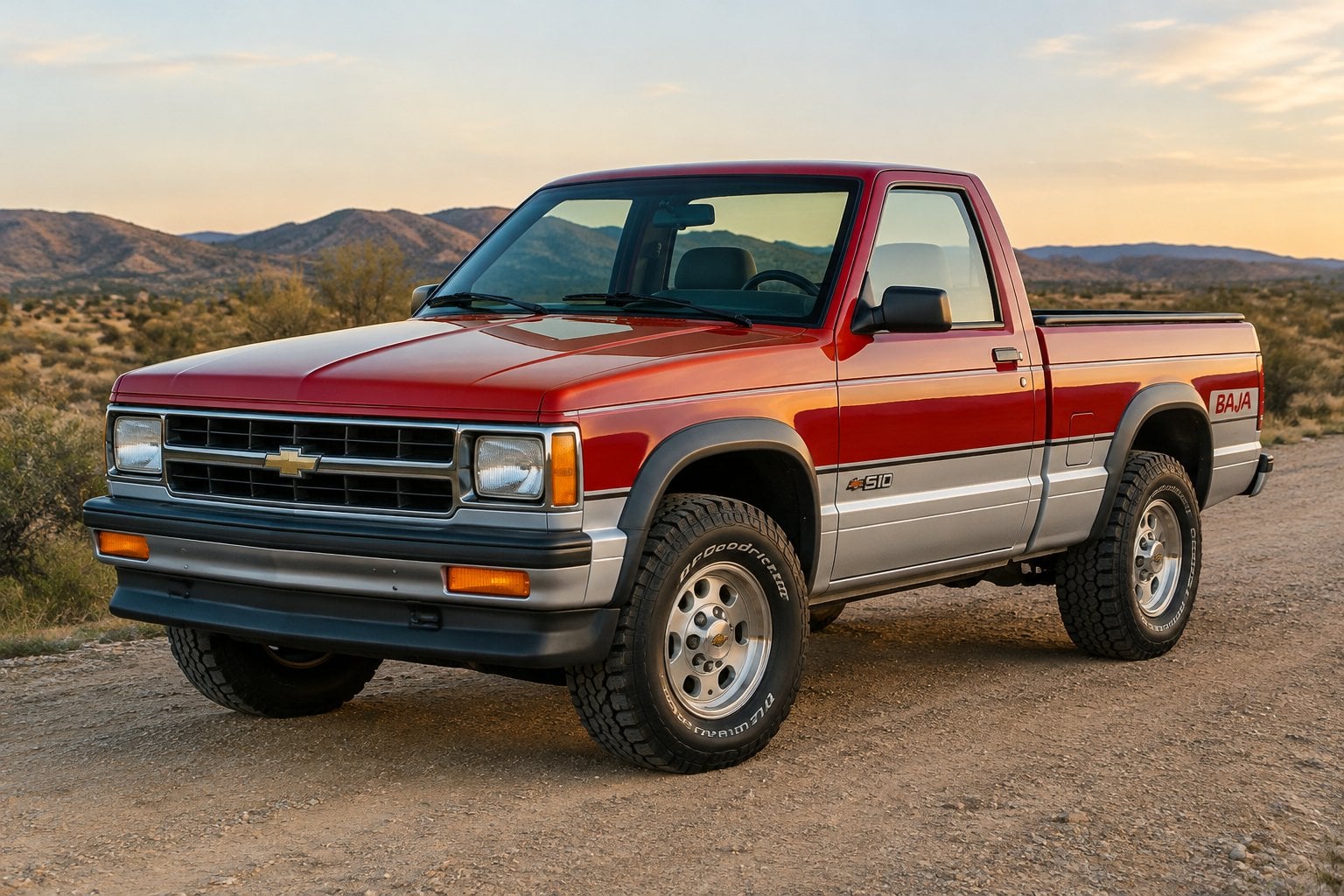
You get a compact truck built for looks and light off-road capability rather than raw power. The Baja was an appearance and trim package offered on four-wheel-drive S-10 models, available in regular-cab short-box, regular-cab long-box, and extended-cab short-box configurations.
The package typically included bold striping and badging that set it apart from a standard S-10.
Your interest in this truck probably comes from its rarity. Chevy produced the Baja package only from 1988 to 1991, making surviving examples uncommon compared to standard S-10 trims.
You’d choose the Baja for its styling and its connection to off-road-themed trucks of the era, even though it wasn’t a heavily modified performance variant. Engine options followed the standard S-10 four-wheel-drive lineup of the period, giving you dependable, straightforward compact truck mechanics.
For collectors, your appeal lies in finding low-mileage, well-preserved trucks with factory-correct trim intact, since many examples didn’t survive daily use unmodified.
21. GMC Syclone (1991)
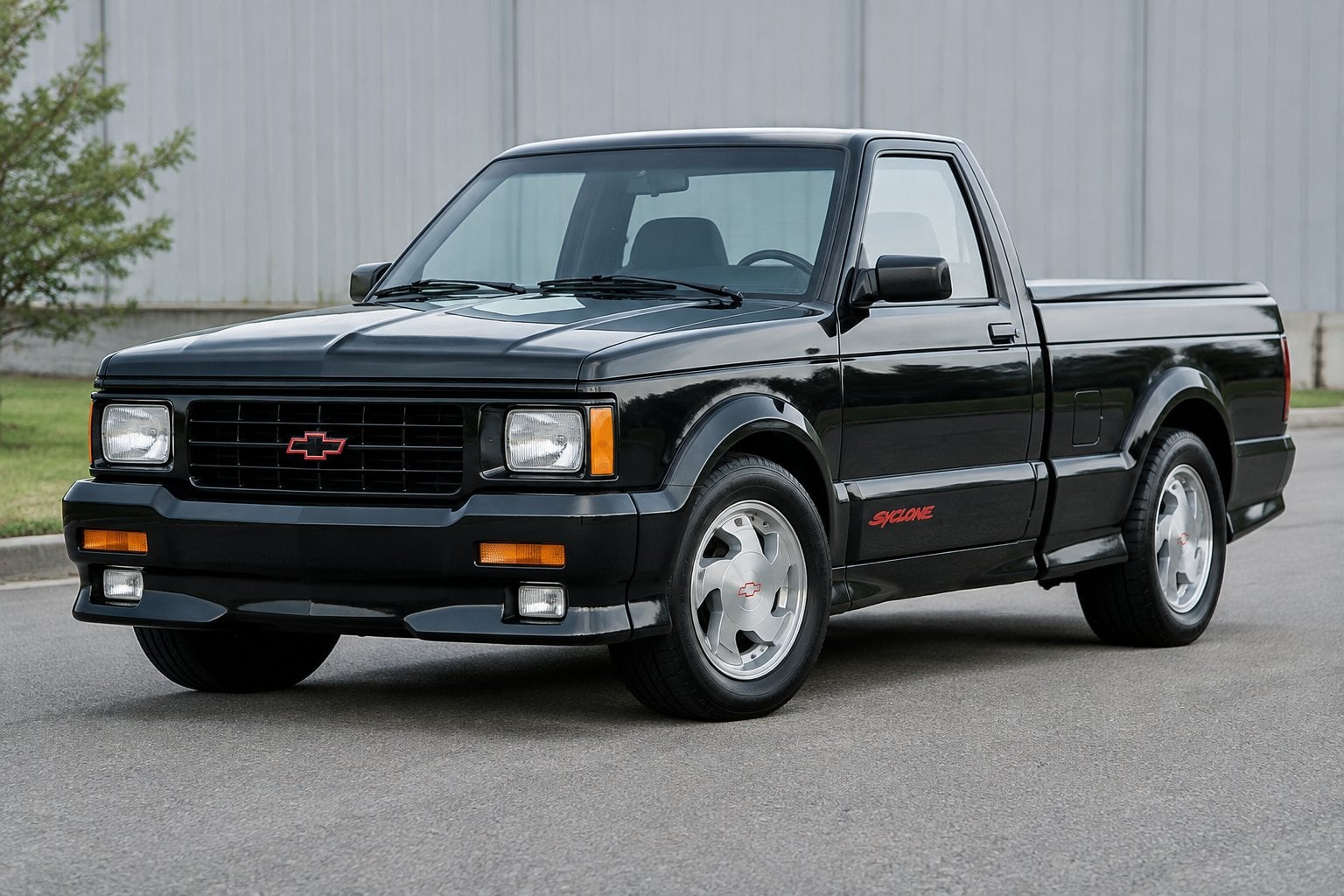
You won’t find this one on a typical truck shopping list, and that’s the point. GMC built the Syclone, but it shared its platform with the Chevy S-10, making it a close cousin worth including here for its sheer audacity.
Under the hood sat a turbocharged 4.3-liter V6 producing 280 horsepower and 350 lb-ft of torque. You could rocket from 0-60 mph in about 4.3 seconds, a figure that embarrassed sports cars of the era, including the Ferrari 348.
All-wheel drive gave you the traction needed to put that power down without spinning the tires uselessly. This wasn’t a truck built for hauling lumber or towing trailers; payload capacity was minimal by design.
You bought this truck for speed, not utility. Reviewers praised its acceleration while criticizing its impracticality as an actual pickup.
Production numbers stayed low, which only adds to its appeal today. If you’re after a piece of performance truck history, the Syclone represents the moment GM proved a truck could outrun a sports car.
22. Chevrolet K1500 Z71 (1994)
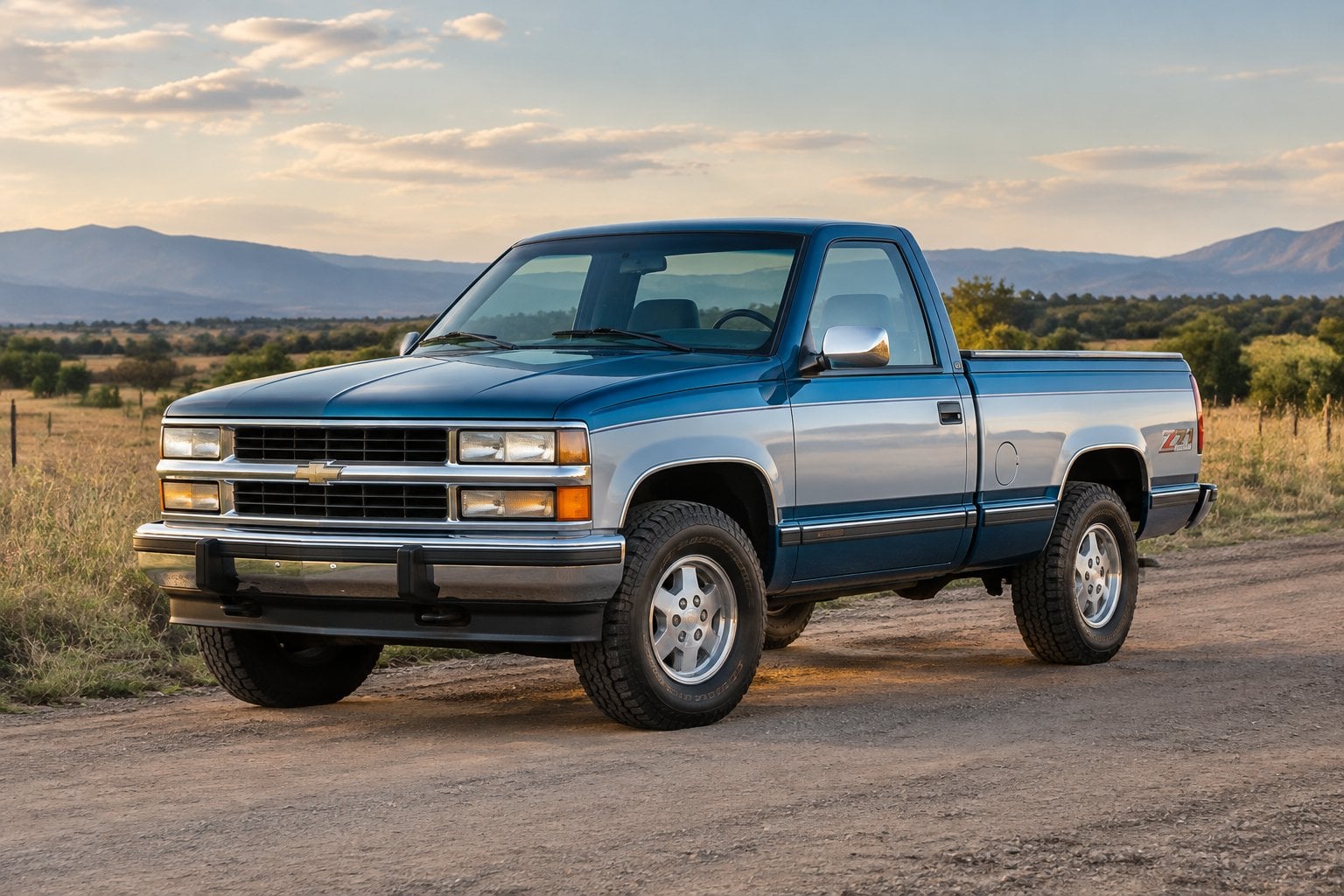
The 1994 K1500 Z71 represents the GMT400 platform at its peak, built during a period when GM trucks were known for straightforward mechanical reliability. Under the hood, you’ll typically find the 5.7-liter V8, RPO code L05, a throttle body fuel-injected update to a small block design with decades of refinement behind it.
The Z71 package adds a specific off-road suspension tune, skid plates, and all-terrain tires on top of the standard four-wheel drive system. You get a truck that handles rough terrain without sacrificing everyday drivability, which is part of why this generation earned its reputation.
Inside, you’re looking at a simple, functional cabin layout without unnecessary complexity. Owners consistently point to the durability of the drivetrain and the ease of maintenance as standout qualities, since these trucks were designed to be serviced with basic tools.
What draws collectors to this specific year and trim is the combination of fuel injection reliability with classic OBS styling. You’re getting a truck built before emissions and safety regulations added significant weight and complexity, making it a favorite among those who want a capable, no-frills 4×4 from Chevrolet’s golden era of truck production.
23. Chevrolet Silverado 1500 (1999)
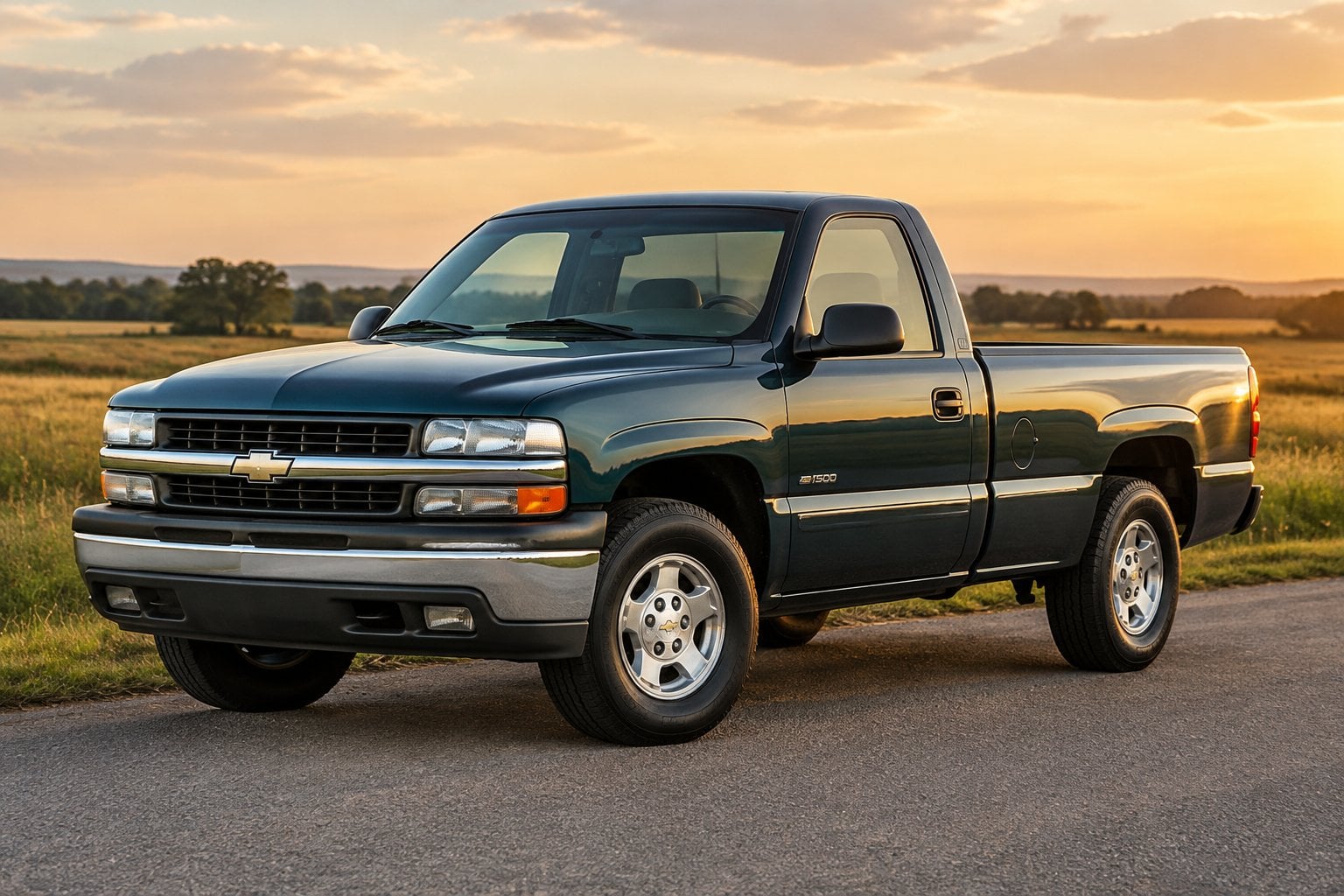
When you look at the 1999 Silverado 1500, you’re looking at the first model year of GM’s GMT800 platform. This redesign replaced the long-running C/K series and gave you a completely new truck underneath the familiar Chevy badge.
You could choose from several engine options, including the 4.3-liter V6 and multiple V8 choices, with the Vortec 5300 becoming one of the most talked-about powerplants in the lineup. These engines gave you a solid balance of power and durability that many owners still mention today.
If you drove one of these trucks, you likely noticed the improved ride quality compared to the outgoing model. GM reworked the suspension and interior, giving you a more refined cabin and better handling for daily driving.
You’ll find that reliability is the main reason this truck still gets attention decades later. Many owners report reaching well beyond 200,000 miles with standard maintenance, and that reputation is a big part of why the 1999 Silverado holds its place among Chevy’s most respected trucks.
24. Chevrolet Silverado 1500HD (2001)
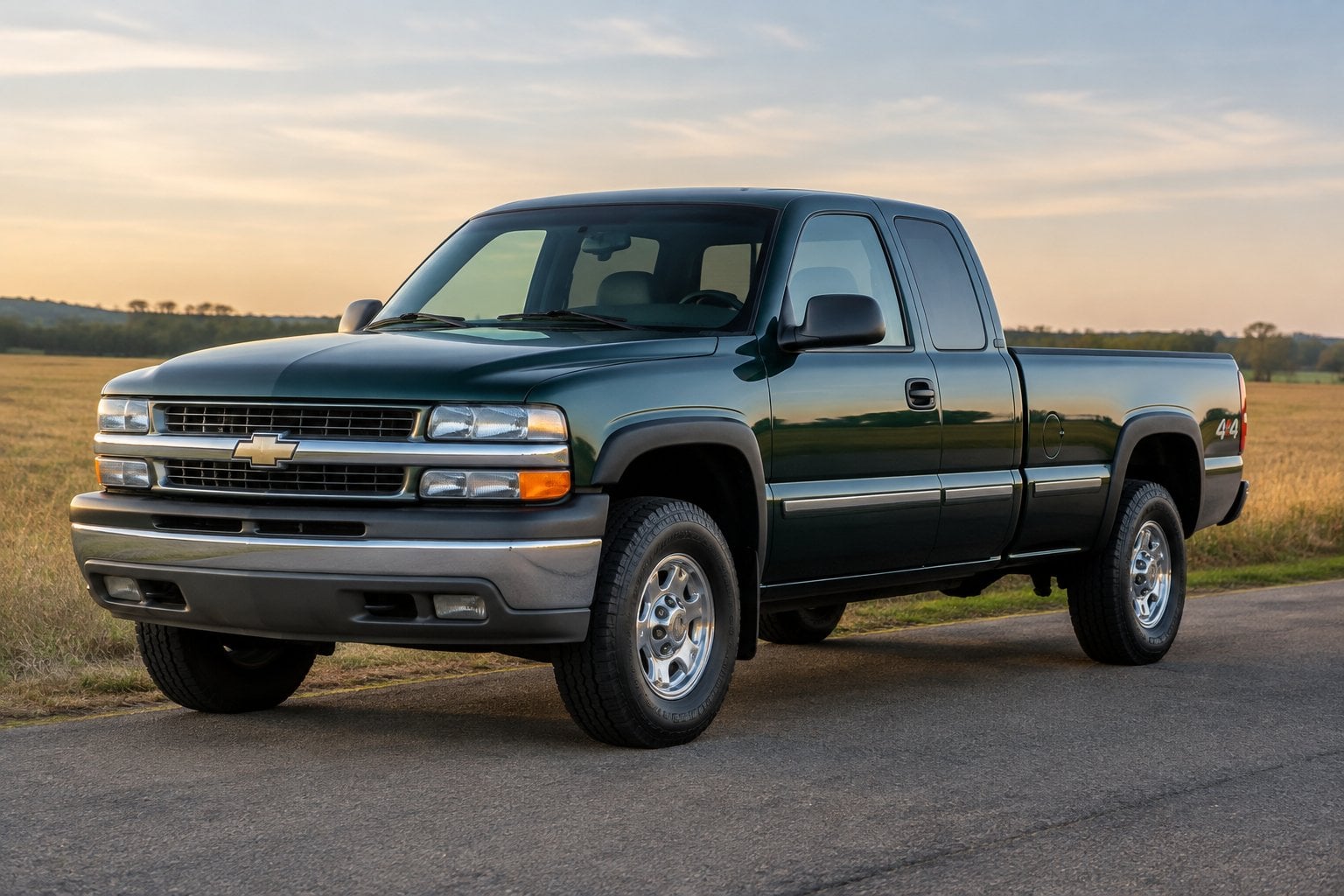
You get a truck built specifically to bridge the gap between the standard half-ton Silverado and the heavier 2500 series. Chevrolet introduced the 1500HD in 2001 to give you more capability without pushing you into full 3/4-ton territory.
Under the hood, you find a 6.0-liter V-8 paired with a 4L80E four-speed automatic transmission. This combination gives you a stronger foundation than the standard 1500, with heavier-duty components borrowed from the 2500 line.
You’ll notice the Crew Cab configuration was a defining feature, giving you four full doors and more passenger space than many half-ton trucks offered at the time. If you needed a truck that could handle real work while still seating your crew comfortably, this model addressed that need directly.
Owners have pointed to the beefed-up suspension and frame as reasons the 1500HD held up well under heavier loads. You get a truck that bridges daily usability with legitimate towing capability, which is why it earned a place among Chevy’s more purposeful half-ton offerings.
25. Chevrolet Silverado SS (2003)
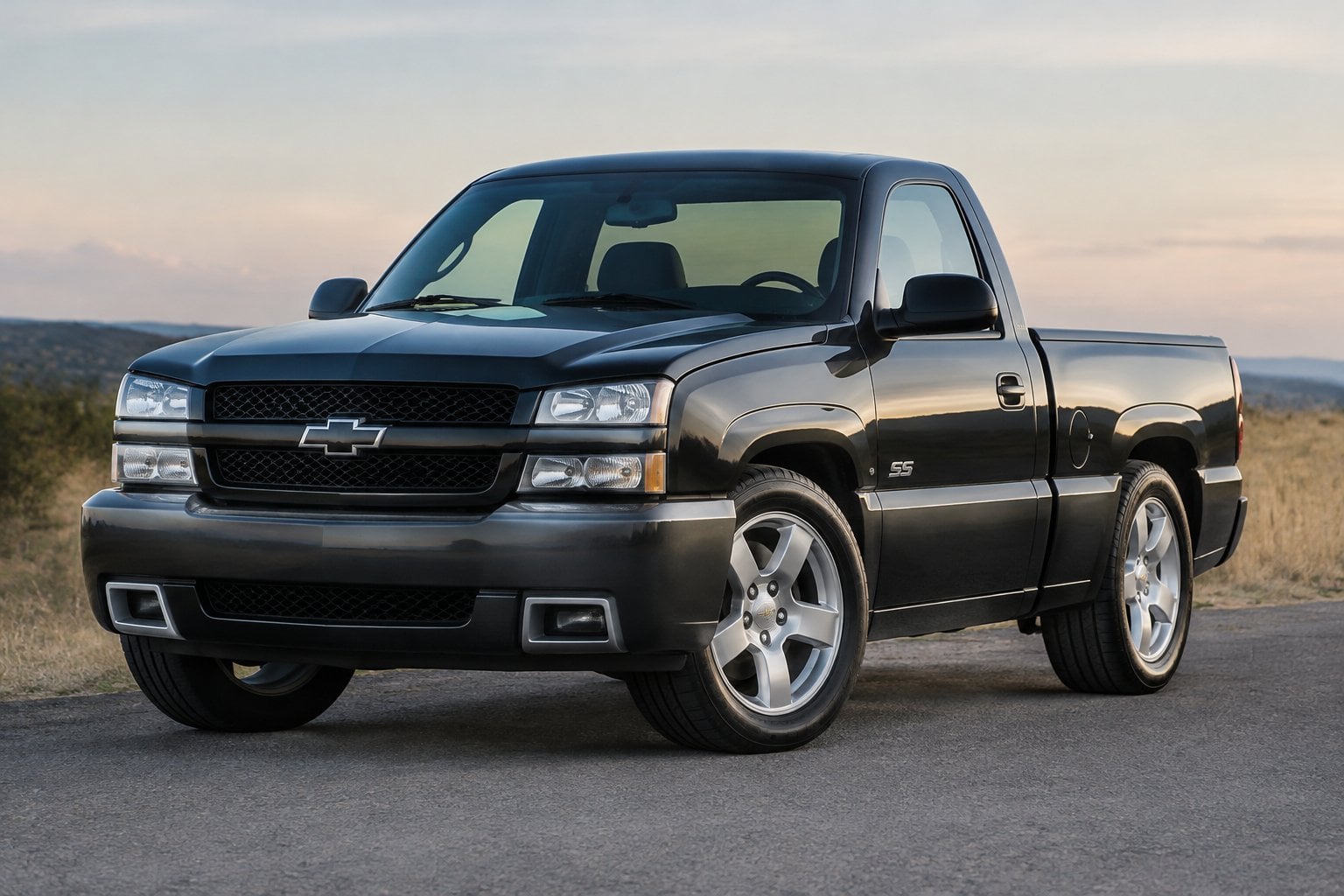
If you wanted a factory pickup that could outrun most cars at a stoplight, the 2003 Silverado SS gave you that option. Built on the GMT800 platform, it came exclusively as an Extended Cab with a 6.5-foot box, so you got a specific look and layout rather than a full range of configurations.
Under the hood, you’d find the LQ9 6.0-liter V8, a high-output Vortec V8 producing 345 horsepower and 380 lb-ft of torque. Chevrolet paired it with a 4L65-E automatic transmission, and early models sent power to all four wheels through a full-time all-wheel-drive system.
You get a truck that handled differently than typical pickups of its era, thanks to a lowered suspension and unique 20-inch wheels. Reviewers at the time praised the acceleration and the AWD grip, especially in poor weather.
Chevrolet later added a rear-wheel-drive version before the SS ended with this truck generation. If you’re hunting for one today, you’re looking at a low-production performance truck with genuine muscle car roots.
26. Chevrolet Colorado Z71 (2004)
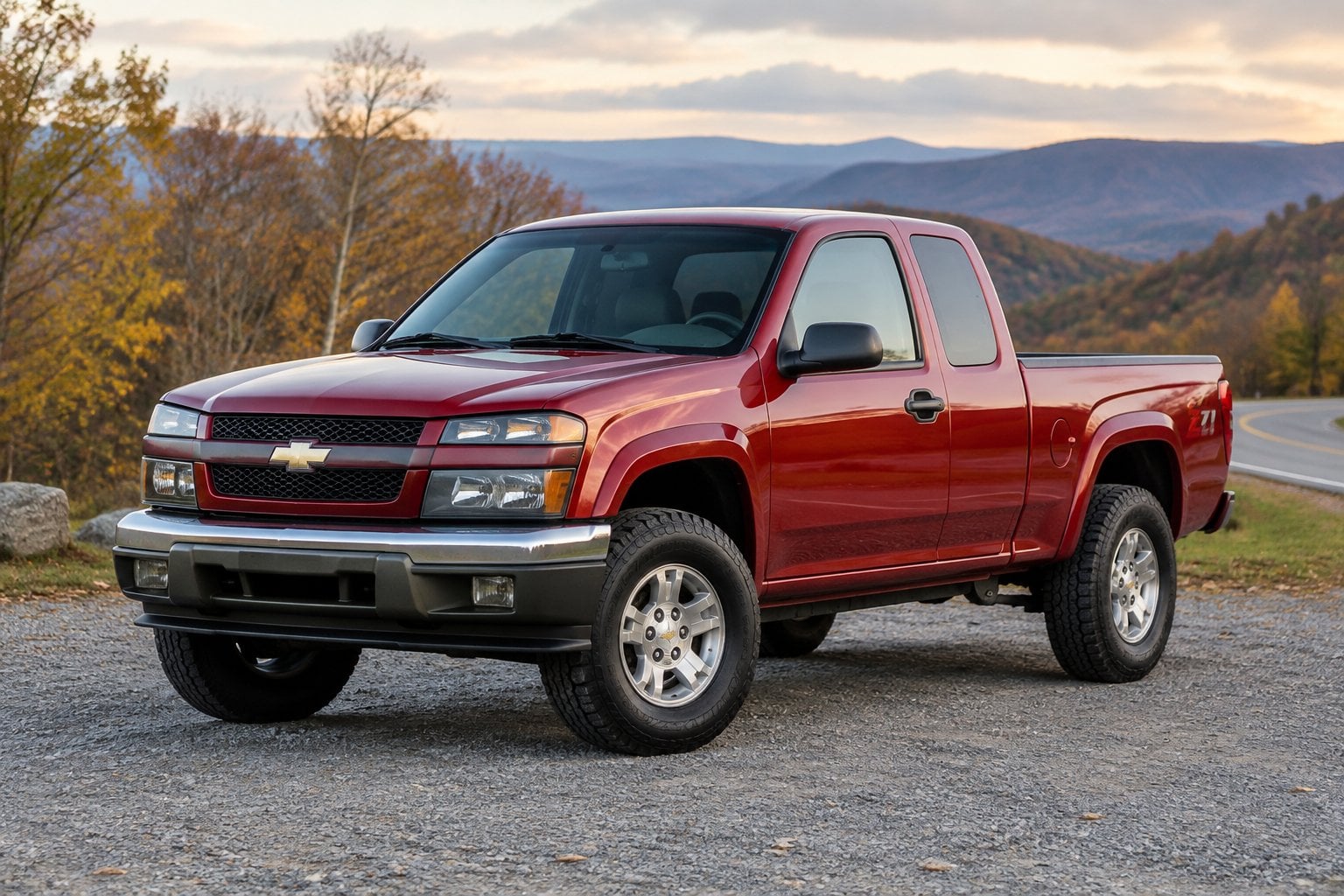
When you look at the 2004 Chevrolet Colorado, you’re seeing GM’s answer to the aging S-10. This truck replaced a long-running compact pickup with something built specifically for the midsize segment.
You had a choice between a 175-horsepower four-cylinder and an available five-cylinder engine, which was an unusual configuration for the class at the time. The Z71 package added off-road suspension tuning, skid plates, and all-terrain tires, giving you better capability on rough terrain.
You’ll notice the independent front suspension, a feature that wasn’t standard across every competitor. It improved your ride quality without sacrificing the truck’s working capability.
Reviewers praised the Colorado’s fuel economy, especially compared to full-size trucks you might have cross-shopped. You also got antilock brakes and a standard theft deterrent system, which added practical value.
If you’re considering the Z71 trim specifically, you’re looking at a truck designed for buyers who wanted genuine off-road ability without stepping up to a larger, heavier platform. It represented GM’s effort to modernize the compact truck formula for a new generation.
27. Chevrolet Silverado 1500 (2007)
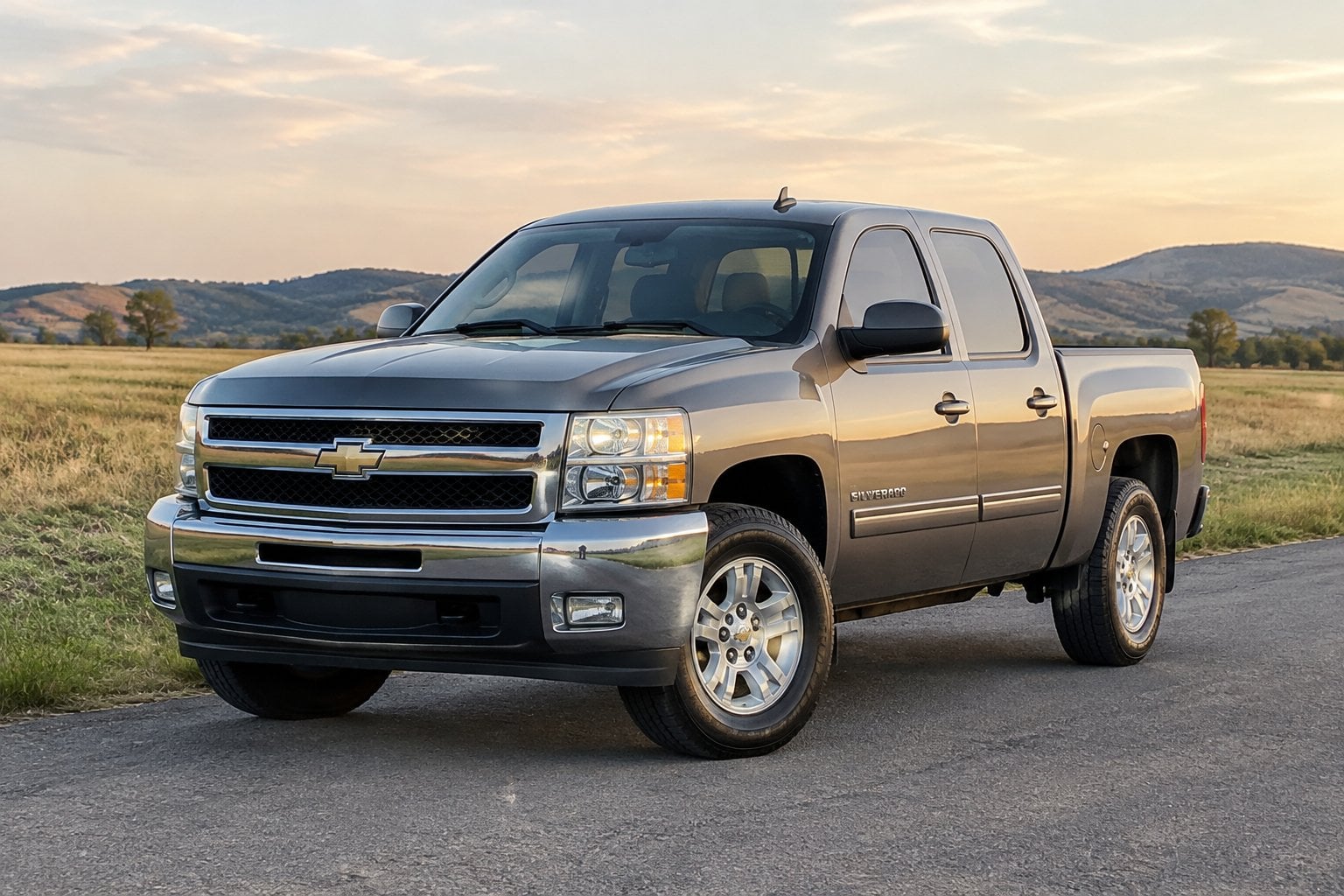
If you drove a 2007 Silverado 1500, you got the first model year of a full redesign for this generation. GM rebuilt it from the ground up, giving you a fresh platform, improved cabin materials, and upgraded safety features over the previous generation.
You could choose from a wide range of configurations, including multiple cab styles, bed lengths, and trim levels. This flexibility meant you could tailor the truck to work duty, family use, or a more upscale daily driver setup.
Under the hood, you had access to several V8 options, with the 5.3-liter V8 standing out as a favorite among owners for its balance of power and dependability. You’ll find this engine frequently praised in long-term ownership reports for holding up well over high mileage.
Towing capacity and payload numbers improved over earlier Silverados, giving you more confidence if you hauled trailers or heavy loads regularly. Reviewers at the time noted the truck’s refined ride quality compared to its predecessor.
Owners who’ve kept these trucks running for over a decade often point to simple mechanicals and solid build quality as reasons this model year holds up as a dependable workhorse.
28. Chevrolet Colorado ZR2 (2017)
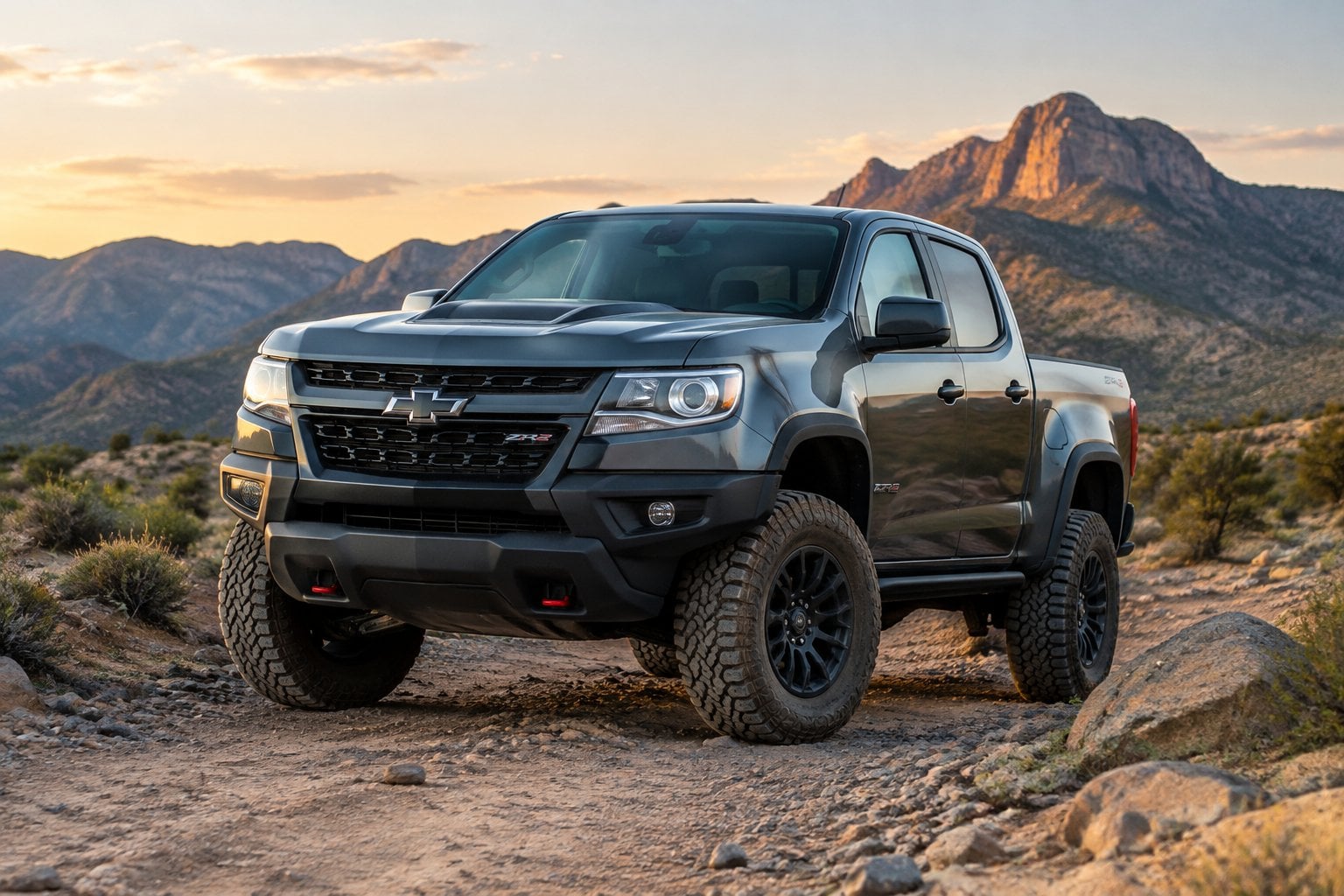
When you look at the Colorado ZR2, you’re looking at Chevy’s answer to serious off-road midsize trucks. It built on the regular Colorado’s frame but widened the track by 3.5 inches and raised ride height by two inches, giving you more clearance and stability on rough terrain.
You could choose between a 3.6-liter V-6 gas engine or a 2.8-liter Duramax diesel four-cylinder, a rare combination in this segment. The diesel appealed to you if torque and efficiency mattered most, while the V-6 offered stronger horsepower for those who wanted quicker acceleration.
The standout feature you’d notice immediately was the Multimatic DSSV spool-valve dampers, technology borrowed from racing applications. These shocks let you handle high-speed desert running and slow rock crawling without swapping components.
Front and rear locking differentials came standard, giving you traction control that most competitors only offered as aftermarket upgrades. Reviewers praised how the ZR2 balanced daily drivability with genuine off-road capability, noting you didn’t have to sacrifice comfort for capability. It remained a one-trim-level model, keeping your options list simple.
29. Chevrolet Silverado ZR2 (2022)
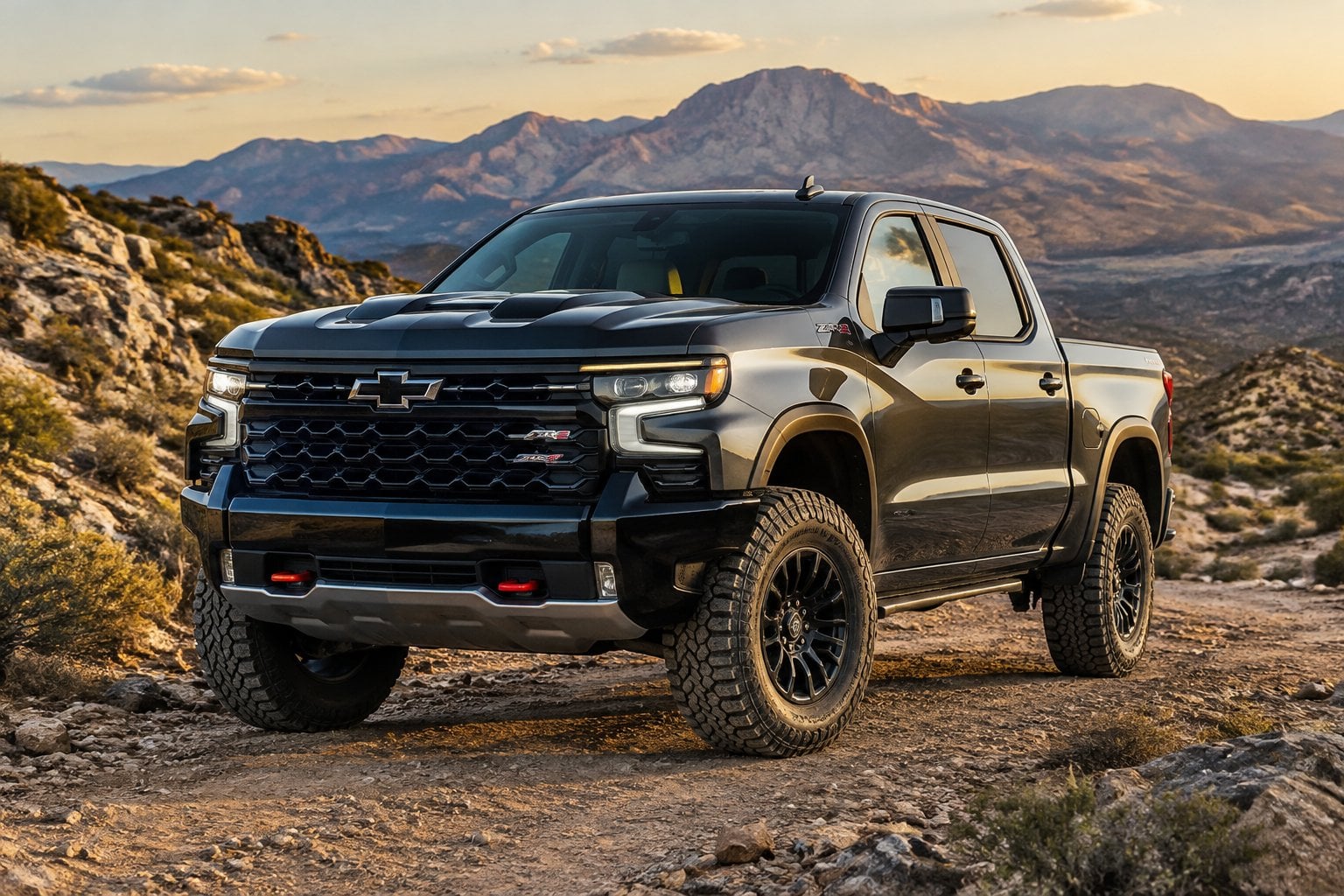
When you look at the 2022 Silverado ZR2, you’re looking at Chevy’s first factory-built off-road flagship in the Silverado 1500 lineup. You get this truck positioned above the Trail Boss, built to compete directly with off-road-focused half-tons from other brands.
Under the hood, you have a 6.2-liter V-8 paired with a 10-speed automatic transmission. This setup gives you dependable power whether you’re climbing trails or cruising on pavement.
You’ll notice the ZR2’s hardware tells the real story: Multimatic DSSV dampers, a two-inch suspension lift, and locking front and rear differentials. These components let you handle rough terrain without sacrificing everyday drivability, something reviewers consistently pointed out.
You also benefit from a payload rating around 1,440 pounds and towing capacity near 8,900 pounds, numbers that kept this truck practical rather than purely recreational.
You get a truck that balances daily usability with genuine off-road credibility, which is why it earned its place among Chevy’s most capable trucks.
30. Chevrolet Silverado EV (2024)
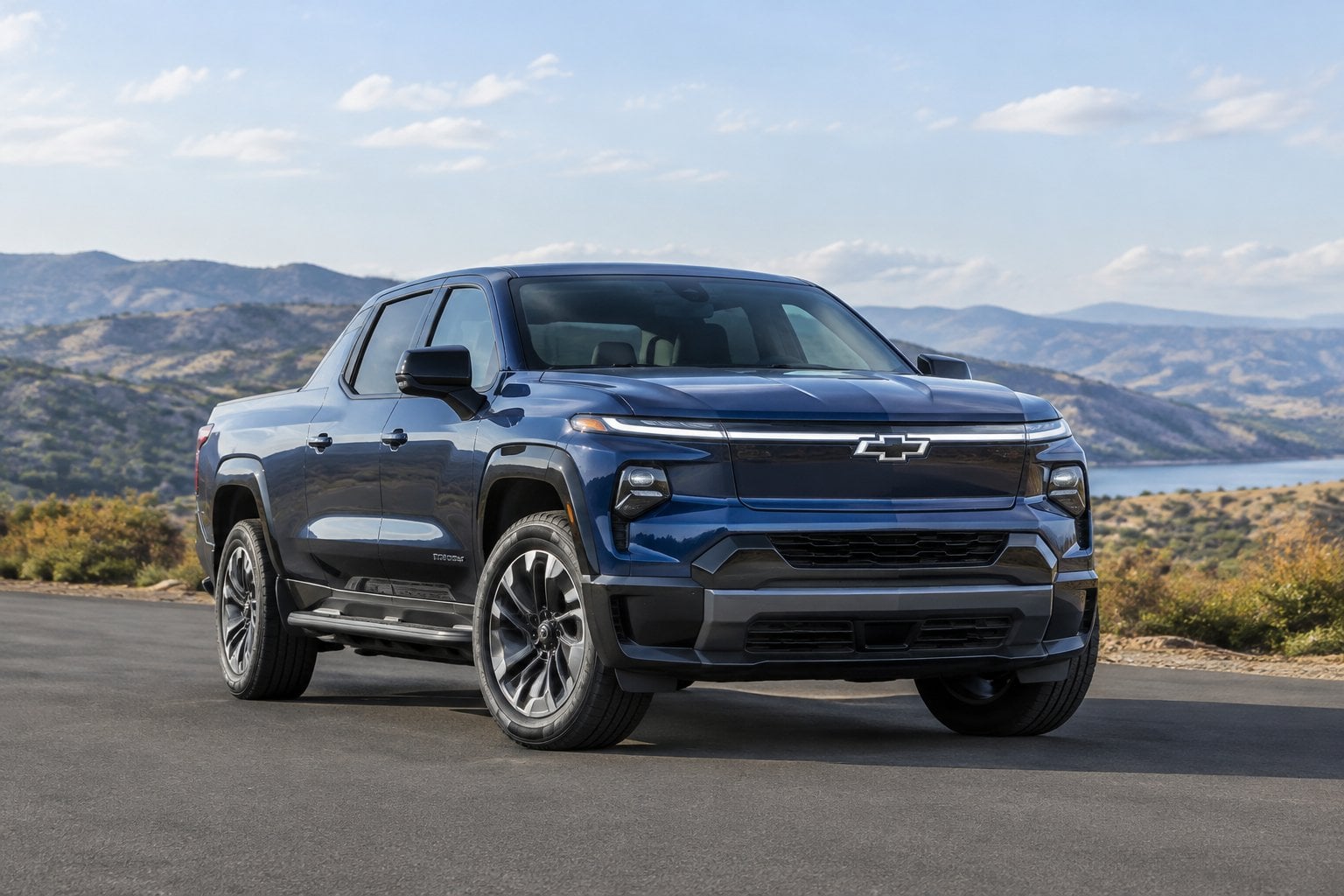
You get Chevy’s first full-size electric pickup with the 2024 Silverado EV, built on GM’s Ultium platform. The WT and RST trims offer different range figures, with some configurations rated up to 450 miles on a full charge. That puts it ahead of several competitors when range anxiety is a concern.
You’ll notice the truck’s unique design choices right away, including a multi-flex midgate and tailgate system that expands cargo capacity. The frunk adds extra storage space you won’t find in a traditional gas-powered Silverado. Towing capacity reaches up to 10,000 pounds depending on trim, which handles most work and recreational needs.
You can expect strong acceleration from the dual-motor setup, a feature reviewers consistently highlighted. The ride quality benefits from four-wheel steering, making the truck easier to maneuver despite its size and weight.
Owners appreciate the tech-forward interior, with large displays and the convenience of vehicle-to-home power capability during outages. Some critics noted the truck’s steep price and considerable weight as drawbacks. Even so, it marked a serious step forward for electric trucks in the Chevy lineup.
How Chevrolet Truck Engineering Evolved
Chevrolet truck engineering changed from basic load-hauling equipment into vehicles built for daily driving comfort. The biggest shifts show up in cab design, drivetrain technology, and towing capacity.
From Workhorse Utility to Everyday Comfort
Early Chevy trucks, like the 1918 One-Ton, gave you a bare chassis with few amenities. You sat on a hard bench seat, worked a manual choke, and dealt with minimal weather protection.
By the 1950s, Chevrolet started adding features you’d recognize today. The 1955 Task Force series introduced a wraparound windshield and a more car-like dashboard.
Interior upgrades accelerated through the following decades:
- 1960s-70s: Optional air conditioning, carpeted floors, and AM/FM radios
- 1980s-90s: Power windows, cruise control, and extended cab configurations
- 2000s-present: Touchscreen infotainment, heated seats, and advanced safety sensors
Your truck’s cab no longer forces a trade-off between work capability and comfort.
Advances in Powertrains, Chassis, and Towing Capability
Engine technology moved from simple inline-six units to a wide range of V8 and turbocharged options. The small-block V8, introduced in 1955, gave you more power without excessive weight.
Chassis construction also improved significantly. Chevrolet shifted from rigid leaf-spring setups to coil springs and independent front suspension, which you’d notice in ride quality on rough roads.
Towing capability grew alongside these changes. Modern Silverado models offer:
- Integrated trailer brake controllers
- Multiple camera angles for hitching
- Available diesel engines rated for higher torque output
You get a truck that can tow significantly more than earlier generations while maintaining better fuel efficiency and control.
What Matters When Collecting a Classic Chevy Truck
Value in a classic Chevy truck comes down to three things: how original it is, how sound the sheet metal and drivetrain are, and how easily you can find parts to keep it running. Before you buy, you need to weigh these factors against your budget and what you actually plan to do with the truck.
Originality, Documentation, and Historical Significance
Matching numbers between the engine, transmission, and VIN add real value to any classic Chevy. You should ask for the original title, build sheet, or window sticker if the seller has them.
A truck with its original paint, interior, and factory options will usually command a higher price than one that’s been heavily modified. Rare factory options matter too:
- 454SS package (1990-1993)
- Big Window cabs on Advance Design trucks
- Factory 4×4 configurations on early C/K models
- Original trim levels like Cheyenne or Silverado packages
Service records and prior ownership history give you a clearer picture of how the truck was maintained. A documented history also makes resale easier down the line, since buyers trust paperwork over verbal claims.
Rust, Mechanical Condition, and Restoration Costs
Rust is the biggest threat to any classic truck, and you need to check specific areas before committing to a purchase. Cab corners, floor pans, bed supports, and the frame itself are the most common failure points.
Surface rust is manageable, but structural rust in the frame or cab mounts can turn a cheap truck into an expensive project. You should get repair estimates and budget for them before you buy.
Mechanical condition matters just as much as cosmetics. You should inspect the engine for oil leaks, check the transmission for smooth shifting, and test the brakes before negotiating a price.
Parts Availability and Long-Term Ownership
Parts availability varies a lot depending on which generation you choose. The C/K series, built from 1960 through 1998, benefits from a large aftermarket, so you’ll find reproduction panels, trim, and mechanical parts without much trouble.
Earlier trucks like the Advance Design (1947-1955) and Task Force (1955-1959) generations have fewer reproduction parts, which means you may rely more on salvage yards or specialty suppliers. This can raise both the cost and time needed for repairs.
You should also factor in community support. Active owner clubs and online forums for popular generations like the 1967-1972 C10 give you access to troubleshooting advice and trusted parts vendors, which makes long-term ownership more manageable.