The 30 Greatest Diesel Trucks Ever Built: Cummins, Power Stroke, Duramax and More
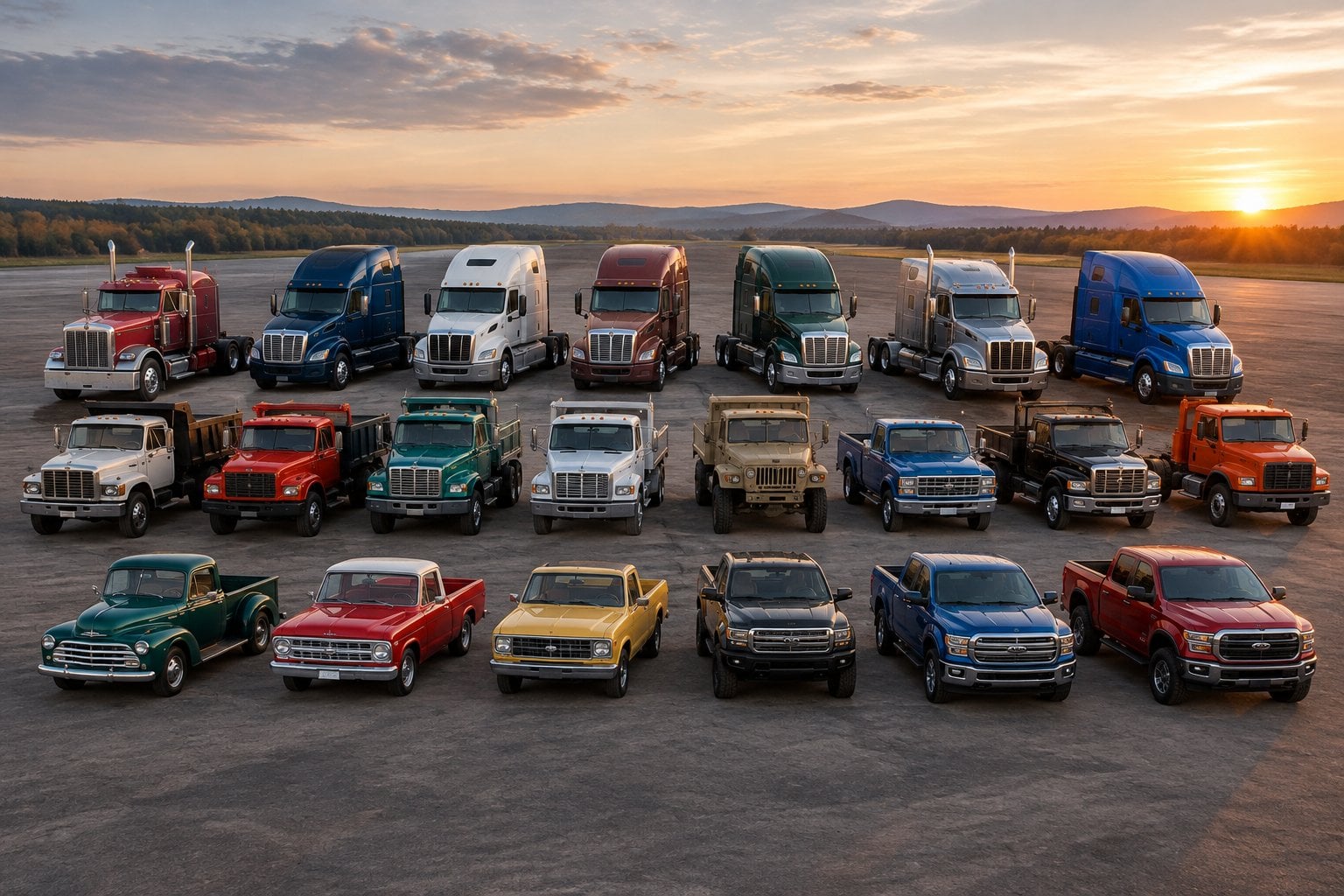
Diesel trucks have earned their reputation through decades of hard work rather than marketing hype. Engine durability, towing capacity, and long-term reliability separate the trucks that last from the ones that fade into obsolescence. When you look at the diesel pickups that have stood the test of time, you find a common thread: simple engineering built to survive abuse.
You will find that opinions vary widely when ranking the best diesel trucks, since different generations value different strengths. Some trucks earned their status through raw torque output, while others became legendary for engines that run reliably past 500,000 miles. This list examines the models that combine performance, durability, and lasting influence on the diesel truck market.
1. Mercedes-Benz Unimog (1948)
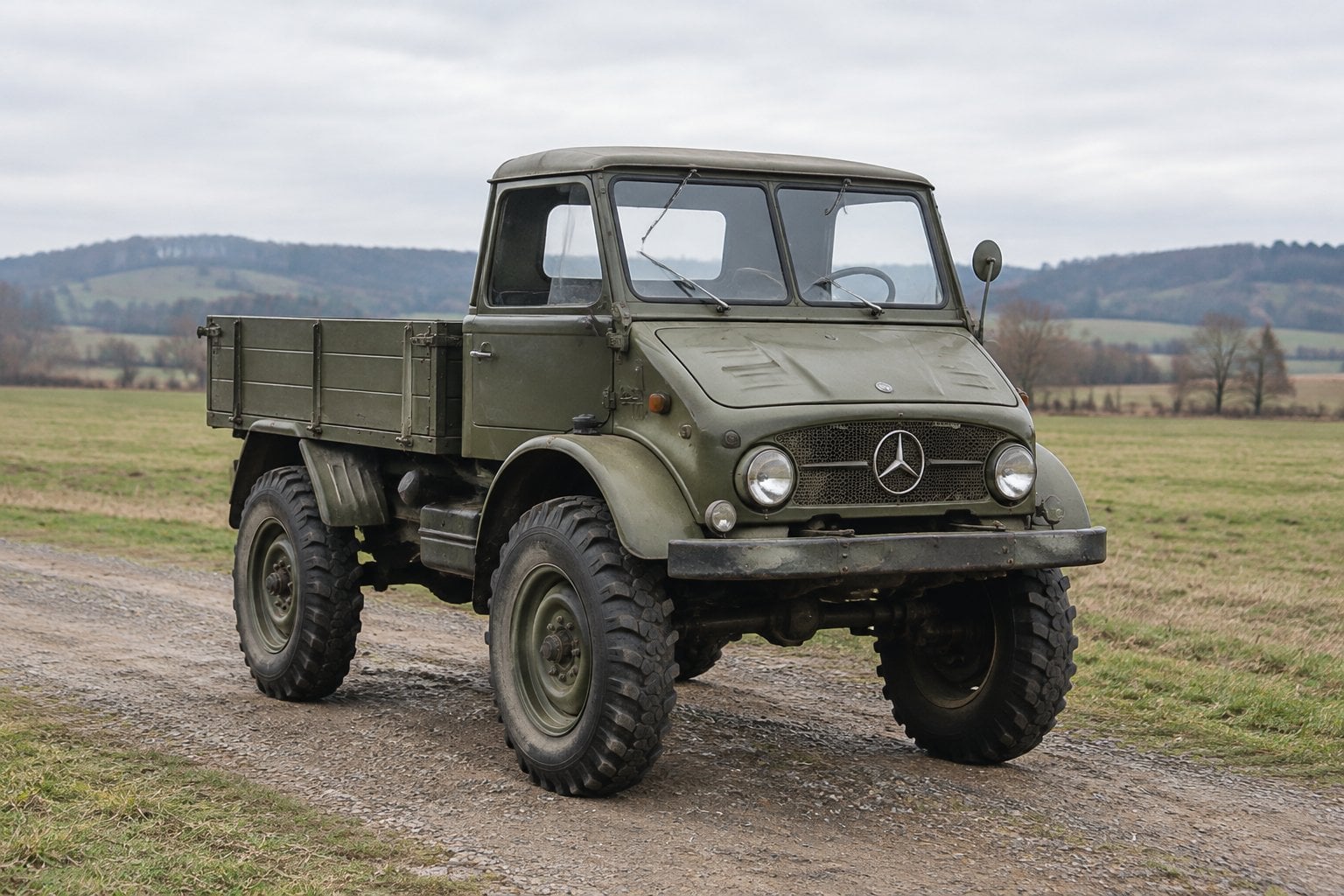
The Unimog began as a post-war agricultural tool in Germany, with early prototype trials completed in October 1946. By 1948, it reached production and made its public debut at the DLG fair in Frankfurt, built initially by Gebrüder Boehringer in Göppingen before Daimler-Benz took over manufacturing.
Power came from the Daimler-Benz OM 636 diesel engine, a four-cylinder unit producing around 25 horsepower. It wasn’t fast, topping out near 50 km/h, but speed was never the point.
You’d recognize its value in the portal axles and flexible frame, which let it cross terrain that stopped conventional trucks cold. Engine-driven power take-offs made it adaptable for farming, hauling, and light industrial work.
What set the Unimog apart was versatility rather than raw output. It could serve as a tractor one day and a light truck the next, which made it indispensable to a country rebuilding its infrastructure and agriculture after the war. That adaptability became the foundation for decades of Unimog models that followed.
2. Toyota Hilux Diesel (1979)
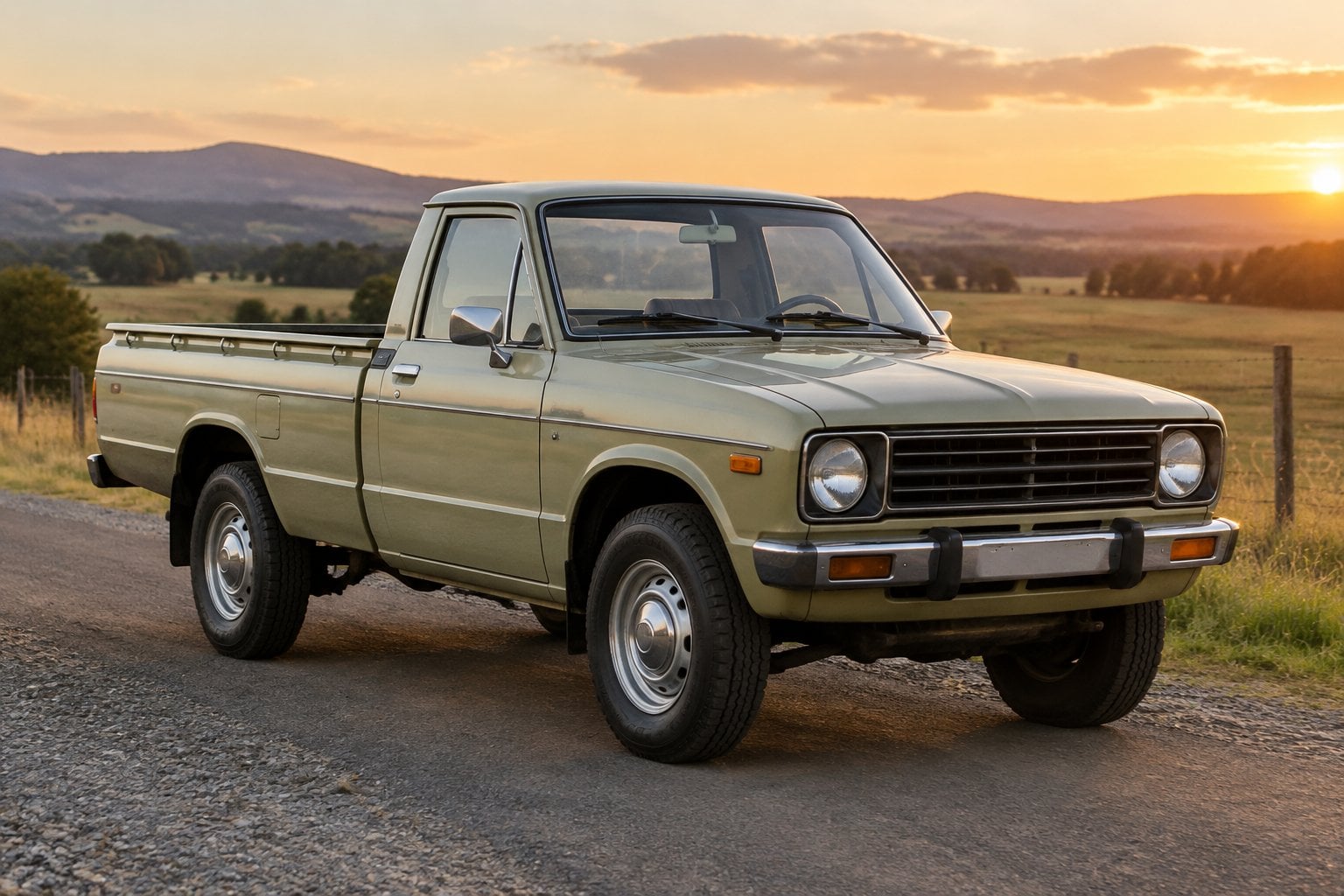
You’re looking at the third-generation Hilux, redesigned in 1978 and sold in Europe from January 1979. This is the version that introduced selectable four-wheel drive to the compact pickup segment.
Under the hood, you’d find Toyota’s L-series diesel engine, offered on 2WD models starting in September 1979 and later extended to 4WD variants in 1983. This was a simple, naturally aspirated unit built for durability rather than speed.
You won’t find impressive horsepower figures here. What you get instead is a truck engineered to keep running under harsh conditions, whether in agricultural use, remote terrain, or commercial service.
Owners and reviewers point to the same qualities again and again: mechanical simplicity, low maintenance demands, and an ability to withstand abuse that would sideline other trucks. You can see why it earned a reputation that later Hilux generations built upon.
This generation matters to your understanding of diesel truck history because it established the Hilux’s identity. The truck wasn’t about raw power or comfort. It was about surviving decades of hard use with minimal complaint.
3. Chevrolet C/K 2500/3500 with the 6.2L Detroit Diesel (1982–1993)
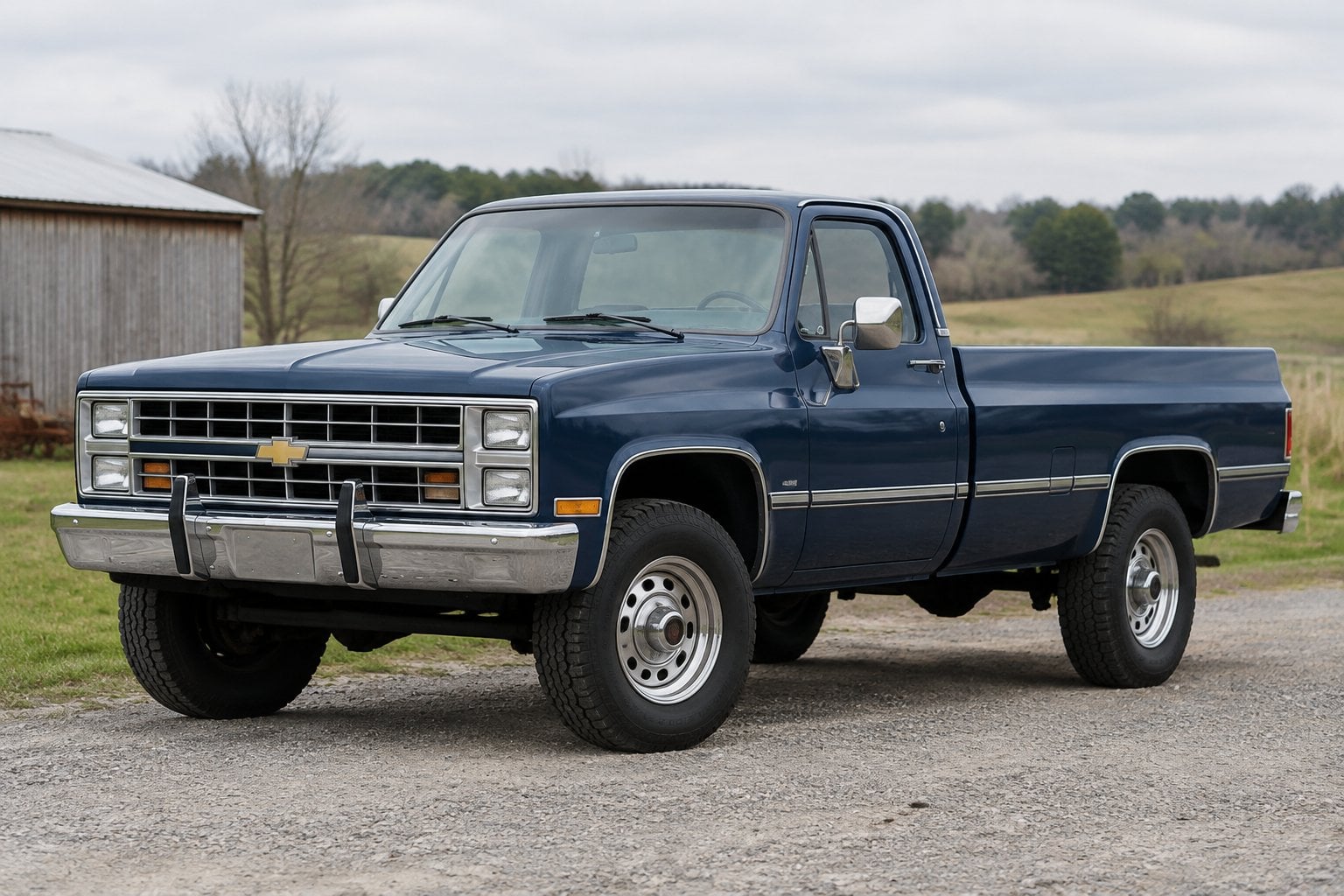
You get an early entry in GM’s diesel pickup lineup when you look at the 1982–1993 C/K 2500 and 3500. General Motors developed this engine with Detroit Diesel, and it marked GM’s first real push into diesel power for full-size trucks.
The 6.2L is an indirect injection V8, a design that favored durability and simplicity over outright performance. You won’t find big horsepower numbers here; output sat in the 130 to 160 range depending on year, with torque figures that were modest by later standards.
What you notice when researching this engine is how often owners mention its mechanical simplicity. There’s no electronic fuel injection to worry about, and the lack of a factory turbocharger means fewer parts that can fail under stress.
You can still find plenty of these trucks running today, which speaks to the engine’s reputation for longevity when maintained properly. Towing capacity was limited compared to what came later, but for farm work, towing light trailers, or daily hauling, the 6.2L did its job without drama. It’s remembered as a dependable, low-maintenance workhorse rather than a performance engine.
4. Ford F-250/F-350 with the 6.9L IDI diesel (1983–1987)
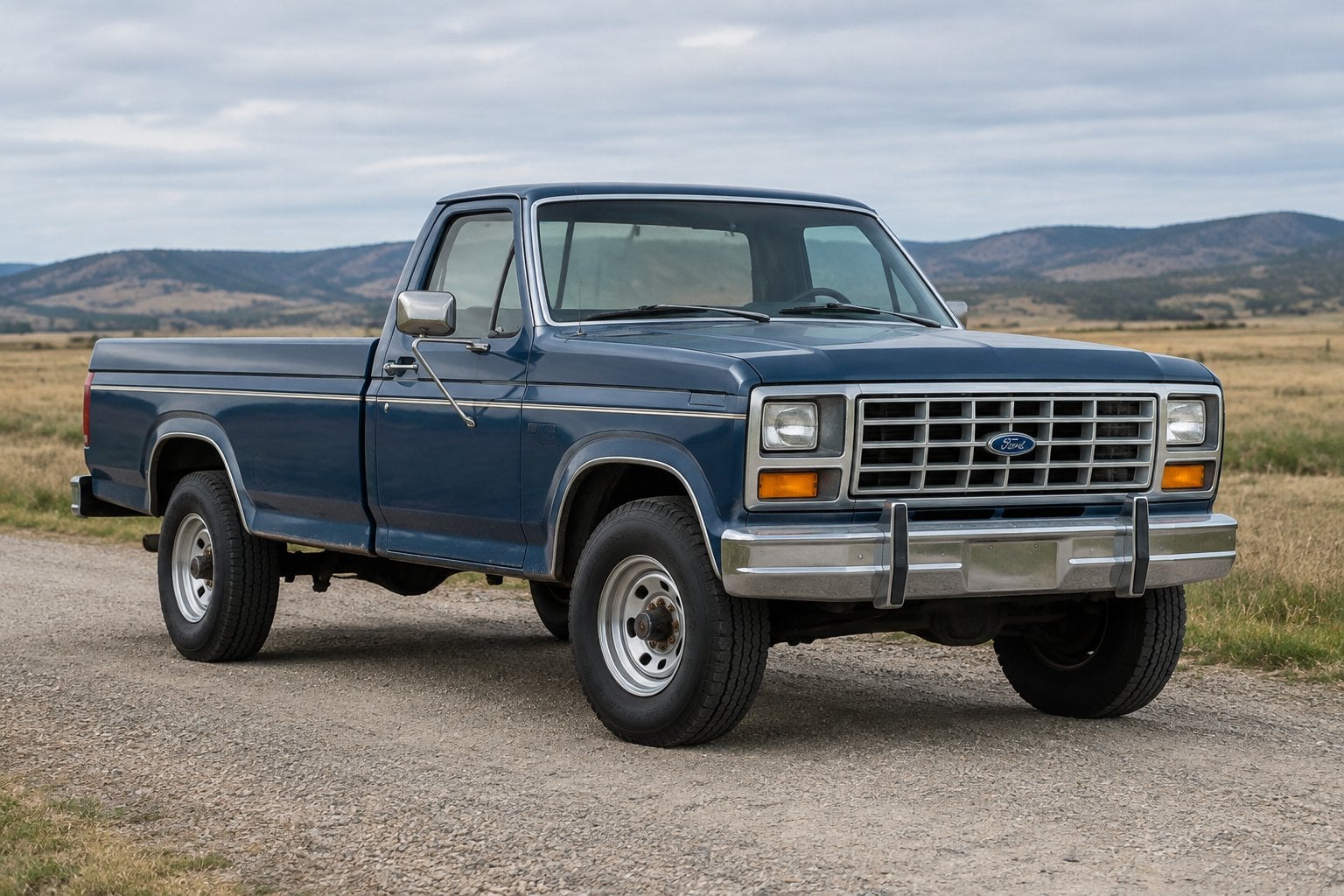
This engine marked Ford’s first serious diesel partnership with International Harvester. You get a 420-cubic-inch V8 with indirect injection and no turbocharger, which kept the design simple.
By 1986, output peaked at 170 horsepower and 315 lb-ft of torque. These numbers look modest today, but they were competitive for a 3/4-ton or 1-ton truck in the mid-1980s.
You’ll find this engine praised for its mechanical simplicity. There’s no complex electronics to fail, which means you can diagnose and repair most issues with basic tools.
Owners often point to the engine’s durability when properly maintained. The naturally aspirated design puts less stress on internal components compared to turbocharged alternatives.
This truck served as a diesel alternative to Ford’s 460 gas engine, giving you better fuel economy and torque for towing. It’s a popular choice if you want a classic 4×4 with a pre-electronic, easy-to-maintain diesel.
The 6.9L was replaced by the 7.3L IDI in 1988, but it remains respected as the engine that established Ford’s diesel truck lineup.
5. Toyota Land Cruiser 70 Series Diesel (1984)
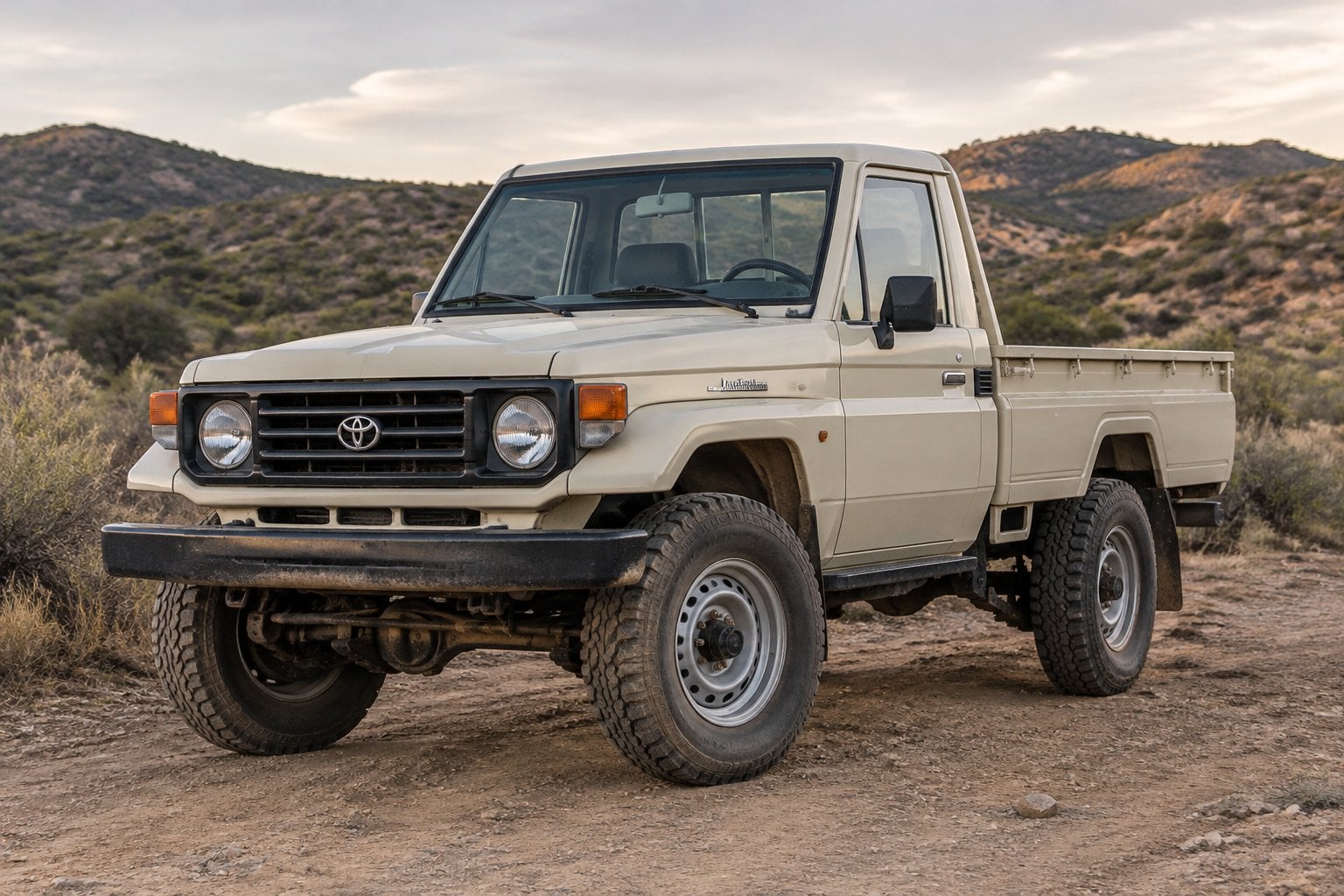
You can trace the 70 Series back to 1984, when Toyota introduced it as the replacement for the aging 40 Series. It kept the body-on-frame construction and solid axle setup that made its predecessor so capable off-road.
Depending on the market, you’d find the 70 Series fitted with various diesel engines, including the 2H and later the 1HZ inline-six units. These engines weren’t fast, but you could count on them to run for hundreds of thousands of miles with basic maintenance.
Power figures were modest by modern standards, often under 130 horsepower, but torque delivery suited low-range crawling and steady highway cruising. You’ll notice reviewers consistently point to simplicity as its biggest strength—few electronics, straightforward mechanicals, and parts that were easy to source globally.
Owners in Africa, Australia, and the Middle East relied on these trucks in extreme heat, remote terrain, and minimal service infrastructure. You can still find original 70 Series diesels working daily in some regions.
Toyota continued building and updating the 70 Series for decades, a testament to how right they got the original formula in 1984.
6. Ford F-250/F-350 with the 7.3L IDI diesel (1988–1994)
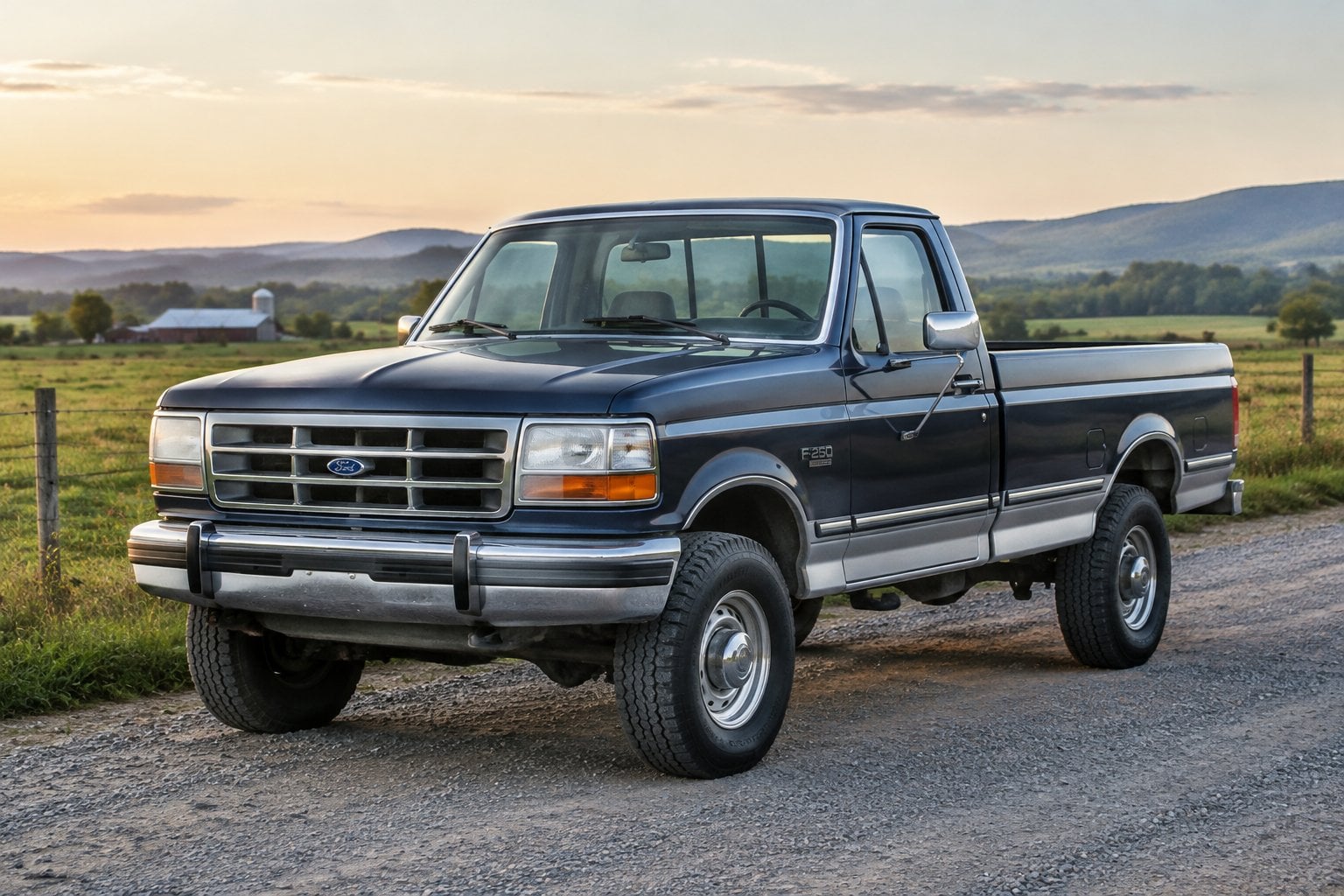
When you look at the 7.3L IDI, you’re looking at an engine built by International Navistar for Ford’s F-250 and F-350 trucks. It replaced the 6.9L IDI and ran from 1988 to 1994, predating the Power Stroke name entirely.
You’ll find this engine naturally aspirated for most of its run, with a turbocharged option arriving in 1993. Horsepower sat in the 170 to 190 range depending on the year and configuration, with torque figures that matched the engine’s reputation for slow, steady pulling power rather than quick acceleration.
If you’re drawn to mechanical simplicity, this is where the 7.3L IDI earns its praise. No complex electronics stand between you and the fuel system, which means diagnosing problems often comes down to basic mechanical troubleshooting.
Owners who’ve kept these trucks running for decades point to that simplicity as the reason. You won’t get modern refinement, but you’ll get an engine that keeps running with routine maintenance and few surprises.
7. Dodge Ram W250/W350 with the 5.9L Cummins 12-valve (1989–1993)
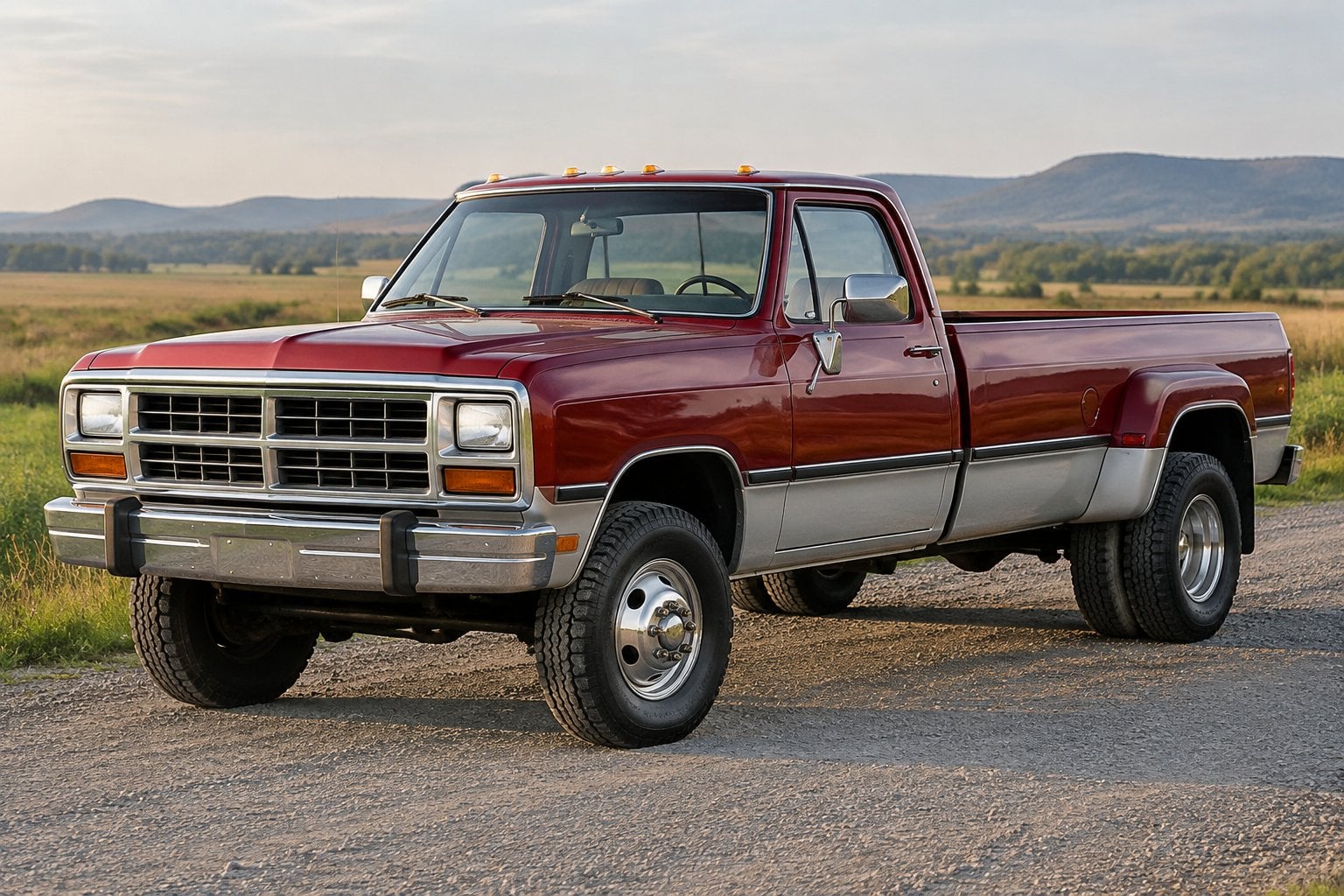
If you’re looking at the truck that changed Dodge’s reputation overnight, this is it. Before 1989, Dodge trucks trailed behind Ford and Chevy in sales. The addition of the 5.9L Cummins 12-valve diesel gave you a medium-duty engine in a consumer pickup, and buyers took notice.
Early versions produced around 160 horsepower and 400 lb-ft of torque, numbers that seem modest now but outperformed competing diesels at the time.
In 1991, Dodge added an air-to-air intercooler, improving efficiency and output. You’ll find two drivetrain designations on these trucks: “D” for two-wheel drive and “W” for four-wheel drive.
What you’ll hear most from owners is praise for mechanical simplicity. The 12-valve design uses a mechanical injection pump with no electronic controls to fail, which means fewer things can go wrong. That reliability is why these trucks still command attention among diesel enthusiasts decades later.
8. Dodge Ram 2500/3500 with the 5.9L Cummins 12-valve (1994–1998)
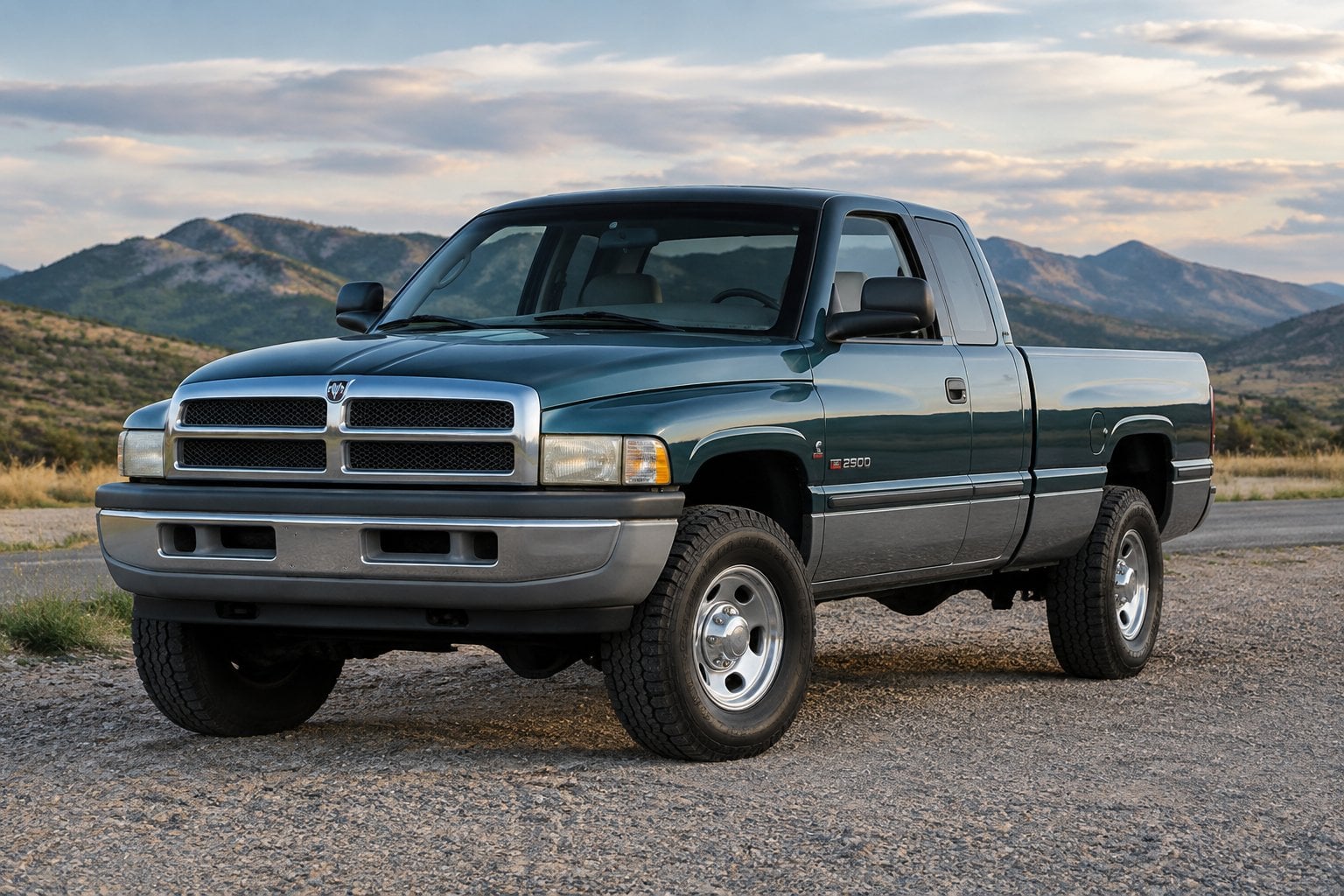
If you want a diesel truck known for mechanical simplicity, this is where you start. Dodge redesigned the Ram in 1994, giving it a new body style and pairing it with the 5.9L Cummins 12-valve engine.
You get an inline-six design with a P7100 injection pump, a setup valued for being fully mechanical. There’s no complex electronics to fail on you, which is why so many of these trucks are still on the road today.
Horsepower ranged from 160 to 215, with torque figures between 400 and 440 lb-ft depending on the model year and transmission. If you paired it with the NV4500 5-speed manual, you had access to higher output than the automatic versions received.
You’ll hear this engine praised for its durability under hard work and heavy towing. Owners often point to its ability to handle high mileage with basic maintenance, along with strong aftermarket support if you want more power. For a lot of diesel enthusiasts, this truck represents the standard other engines get measured against.
9. Ford F-250/F-350 with the 7.3L Power Stroke (1994–1997)
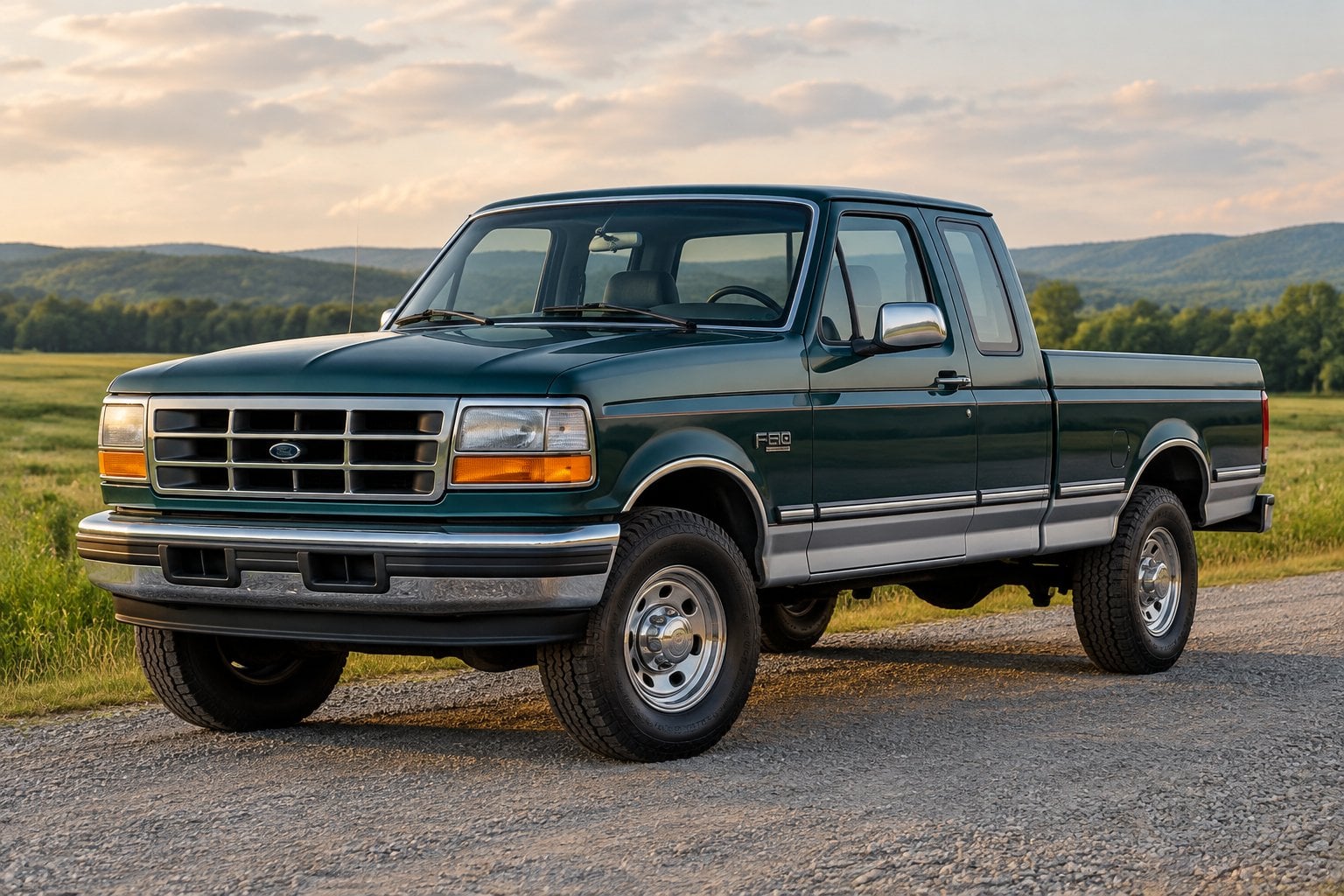
You’ll often hear this generation called the OBS, short for “Old Body Style,” and it marks the point where Ford’s diesel lineup earned a serious reputation. The 7.3L Power Stroke was built by Navistar and used a direct-injection design with HEUI injectors, a setup that is still relatively simple to diagnose and repair compared to later engines.
Depending on the model year and transmission, you’re looking at roughly 210 to 235 horsepower and up to 450 lb-ft of torque. Those numbers seem modest by current standards, but they were strong for a mid-1990s diesel truck, and towing capacity reached into the 10,000-pound range when properly equipped.
If you talk to owners, you’ll hear a consistent theme: durability. This engine doesn’t rely on complex emissions hardware, so there’s less to fail over time.
You’ll also notice the boxy, upright styling that defines the OBS look, which still has a following among truck enthusiasts today. Reliability, straightforward maintenance, and a reputation for high mileage are what keep this truck on collectors’ and workhorse buyers’ lists alike.
10. Chevrolet C/K 2500/3500 with the 6.5L Turbo Diesel (1994–2000)
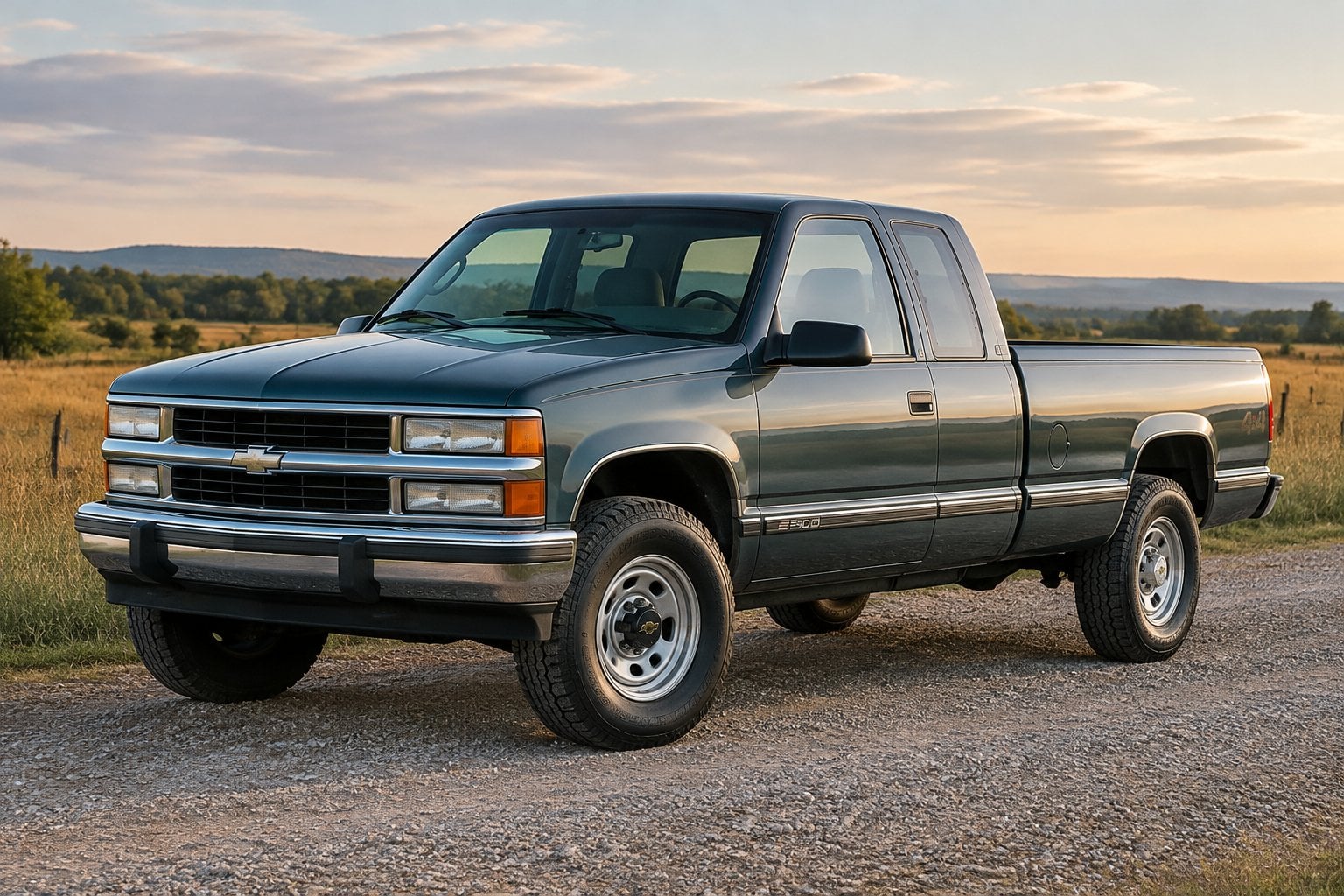
If you owned one of these trucks, you ran a 6.5L V8 diesel built by Detroit Diesel. GM replaced the older 6.2L with this engine for 1994.
You could get it naturally aspirated or turbocharged, depending on the model year and configuration. The turbo version gave you more usable power for towing and hauling, which made it the preferred choice if you needed to move heavy loads.
Horsepower ratings on these engines typically fell in the 180 to 215 range, with torque output suited to work-truck duty rather than high-performance driving. You paired this engine with either a manual or automatic transmission, depending on your truck’s build.
Owners generally praised the 6.5L for its simplicity and relative ease of maintenance compared to more complex diesel systems that came later. You’ll find plenty of these trucks still in service today, often used for towing trailers, hauling equipment, or farm work.
If you’re searching for one now, expect a truck built for durability rather than refinement, with a reputation for getting the job done.
11. Dodge Ram 2500/3500 with the 5.9L Cummins 24-valve (1998.5–2002)
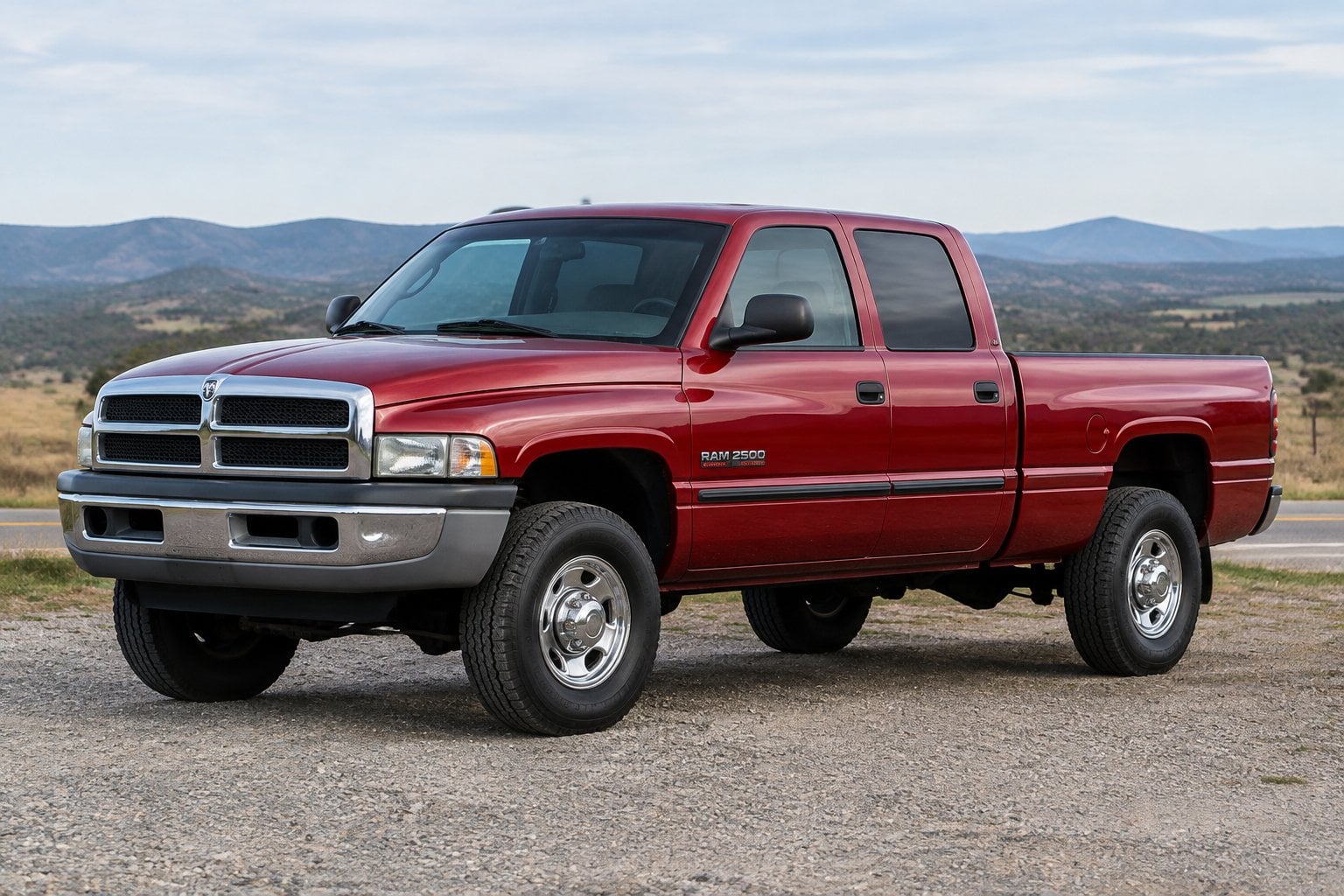
In mid-1998, Dodge replaced the 12-valve Cummins with a 24-valve version of the same 5.9L inline-six. You get a cylinder head with four valves per cylinder instead of two, which improved airflow and refined how the engine ran.
Automatic-equipped trucks received a Standard Output rating of 215 horsepower and 420 lb-ft of torque. Manual transmission trucks got a High Output version, eventually reaching 245 horsepower and 505 lb-ft by 2001.
Fueling came from a Bosch VP44 electronic injection pump, a notable shift from the mechanical pump used in earlier Cummins engines. This pump gave you better drivability and emissions compliance, though it’s also the component most associated with reliability issues in this generation.
You’ll find owners praising this truck for its towing capability and the smoother power delivery compared to the 12-valve. Many also point to the strong aftermarket support, since the 24-valve platform responds well to tuning and injector upgrades. Despite VP44 concerns, this generation holds a solid reputation among diesel owners for performance and durability when maintained properly.
12. Ford F-250/F-350 Super Duty with the 7.3L Power Stroke (1999–2003)
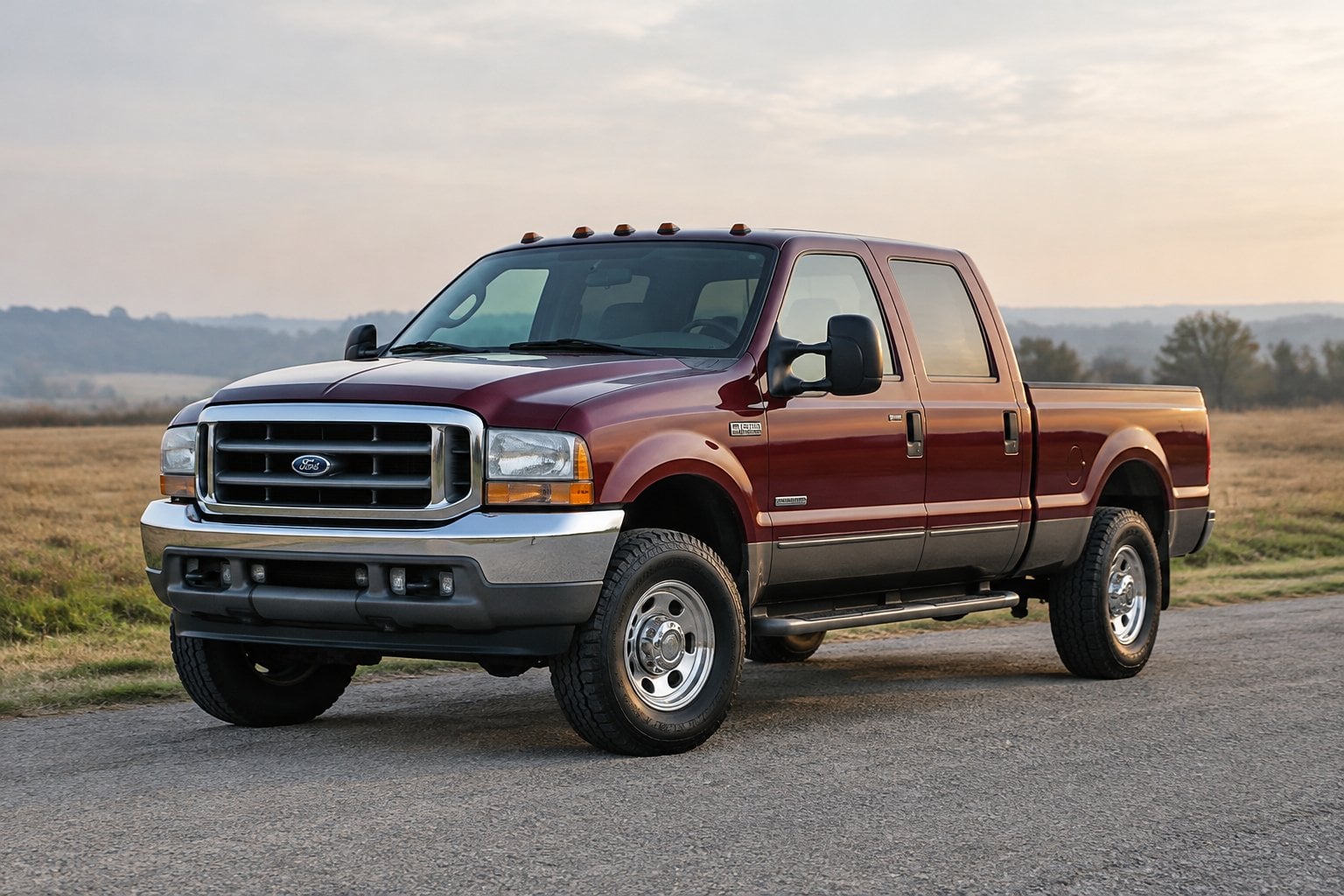
When you look at the 1999-2003 Super Duty lineup, you’re looking at the refined version of Ford’s partnership with International Navistar. The 7.3L Power Stroke in these later trucks got a factory power bump, electronic split-shot injectors, and a larger turbocharger compared to earlier versions.
You get up to 275 horsepower and 525 lb-ft of torque in the final years, which was strong for the era. Towing capacity reached around 12,500 pounds depending on configuration, giving you real capability for trailers and heavy equipment.
If you talk to owners of these trucks, reliability comes up constantly. The 7.3L has a reputation for surpassing 300,000 miles with basic maintenance, and you’ll find many examples still working daily decades later.
You’ll also notice the Super Duty chassis itself improved during this run, with heavier frames and upgraded brakes supporting the engine’s capability. The relatively simple design makes it a truck you can diagnose and repair without specialized equipment in many cases.
13. Chevrolet Silverado 2500HD/3500 with the LB7 Duramax (2001–2004)
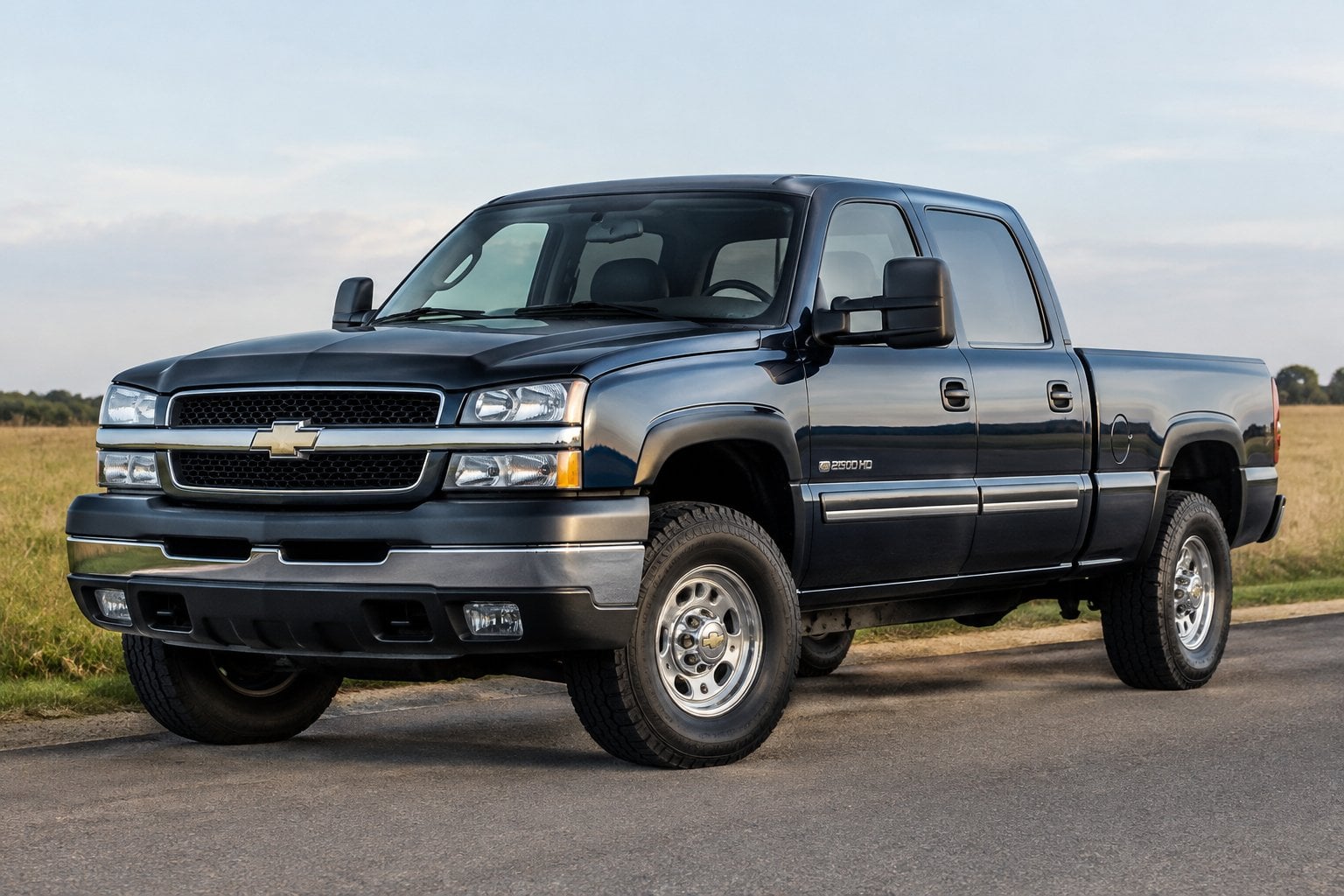
If you’re shopping for the truck that started GM’s diesel partnership with Isuzu, this is where you look. The LB7 Duramax arrived in 2001 as a 6.6-liter turbocharged V8, and it marked a real shift from GM’s earlier diesel offerings.
You’ll find 300 horsepower and 520 lb-ft of torque, strong numbers for its day. Most trucks came paired with the Allison automatic transmission, which buyers favored for its smooth shifts and durability under load.
You get a truck platform shared between the Silverado 2500HD/3500HD and the GMC Sierra twins, built on the GMT800 chassis. Owners praised the LB7 for being quieter and more refined than competing diesels of its era.
You should know about the injector issues this engine is known for, since failures were common and often required replacing the full set. Despite that, you’ll still find plenty of LB7 trucks on the road today, a sign of how well the core engine architecture held up.
14. Dodge Ram 2500/3500 with the 5.9L Cummins common-rail engine (2003–2007)
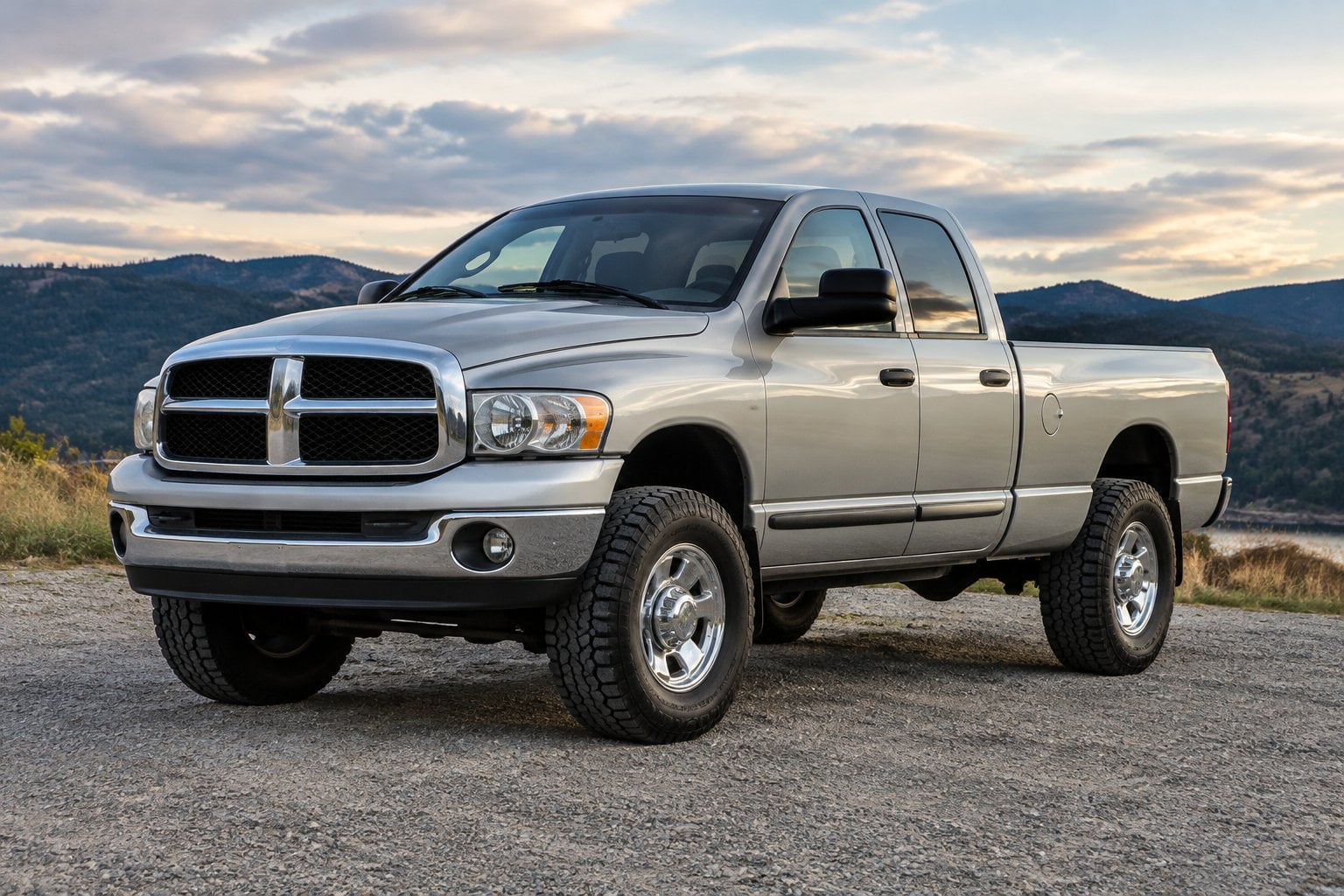
When you look at the 3rd Gen Ram, you’re looking at the truck that moved the Cummins 5.9L into the common-rail era. The switch from the previous mechanical injection system to electronically controlled common-rail fuel delivery gave you smoother power, quieter operation, and better emissions control.
Horsepower ranged from 305 to 325, with torque figures reaching up to 610 lb-ft depending on the model year and transmission. You get a truck that pulls hard at low RPM, which matters if you tow trailers or haul heavy loads regularly.
Owners consistently point to the engine’s durability. It’s common to see these trucks surpass 300,000 miles with routine maintenance, and many go well beyond that if you stay on top of oil changes and fuel quality.
You’ll also notice the simplicity of this generation compared to later diesels. There’s no diesel particulate filter or complex emissions equipment to worry about, which keeps repair costs lower and reduces the number of components that can fail. That reliability, combined with strong towing capacity, is why this truck still holds its value on the used market today.
15. Chevrolet Silverado 2500HD/3500 with the LLY Duramax (2004.5–2005)
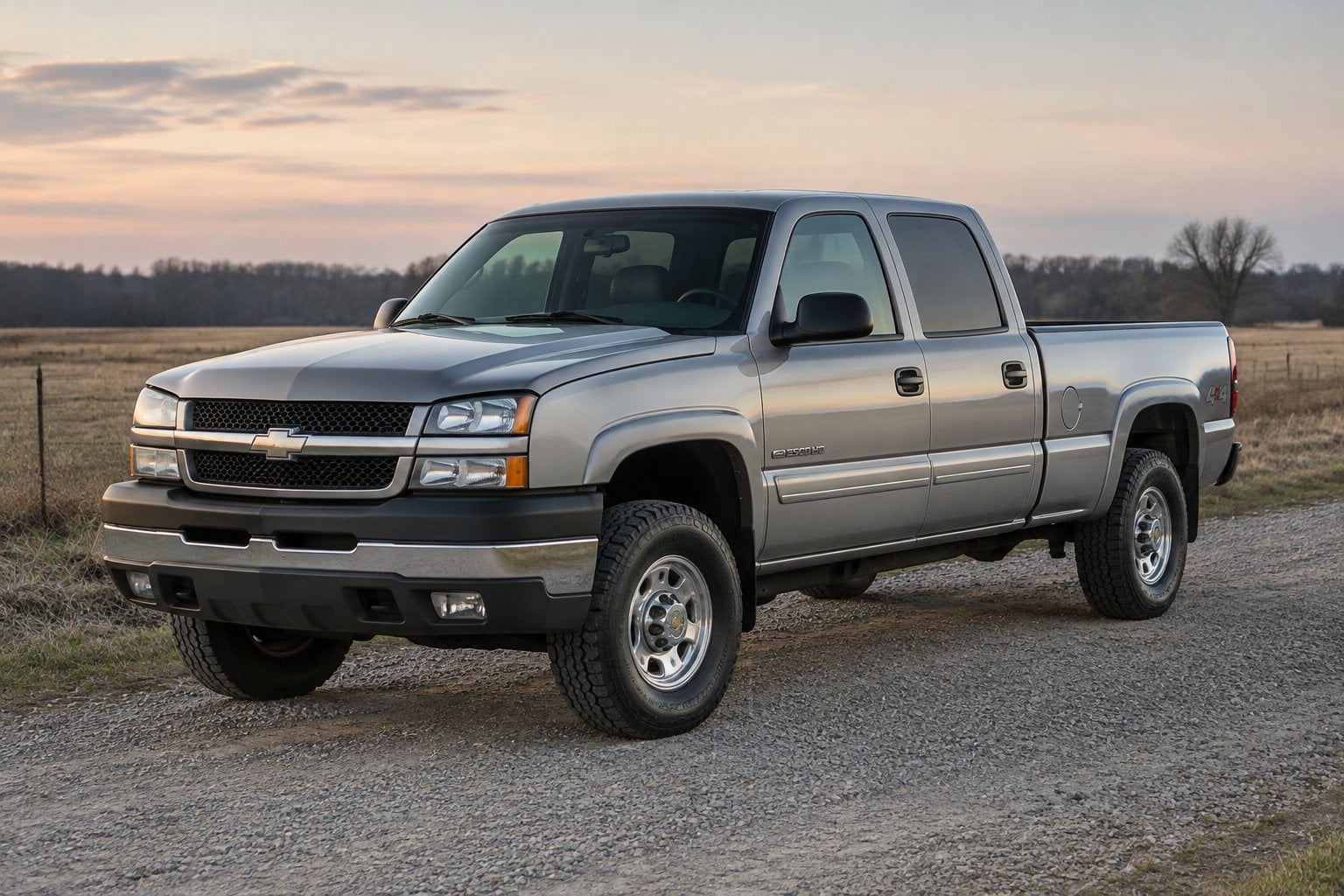
When GM introduced the LLY Duramax mid-2004, you got a 6.6L V8 diesel producing 310 horsepower and 605 lb-ft of torque. That was a modest bump over the LB7 it replaced, but it came with real upgrades.
You’ll notice the LLY added a variable-geometry turbocharger, which improved throttle response and towing performance compared to earlier Duramax engines. Paired with the Allison 1000 five-speed automatic, your truck could handle serious trailer weight without hesitation.
Owners of these trucks often point to the drivetrain’s smoothness as a standout feature. You get a diesel that feels refined for its era, with power delivery that doesn’t feel abrupt or unpredictable.
The LLY isn’t without its quirks. If you’re shopping for one, you’ll want to watch for known overheating issues tied to the turbo and cooling system design, especially under heavy load or in hot climates.
Still, when properly maintained, this engine has a reputation for lasting well past 200,000 miles. For many truck owners, that durability is exactly what earns the LLY its spot among the era’s most respected diesels.
16. Chevrolet Silverado 2500HD/3500 with the LBZ Duramax (2006–2007)
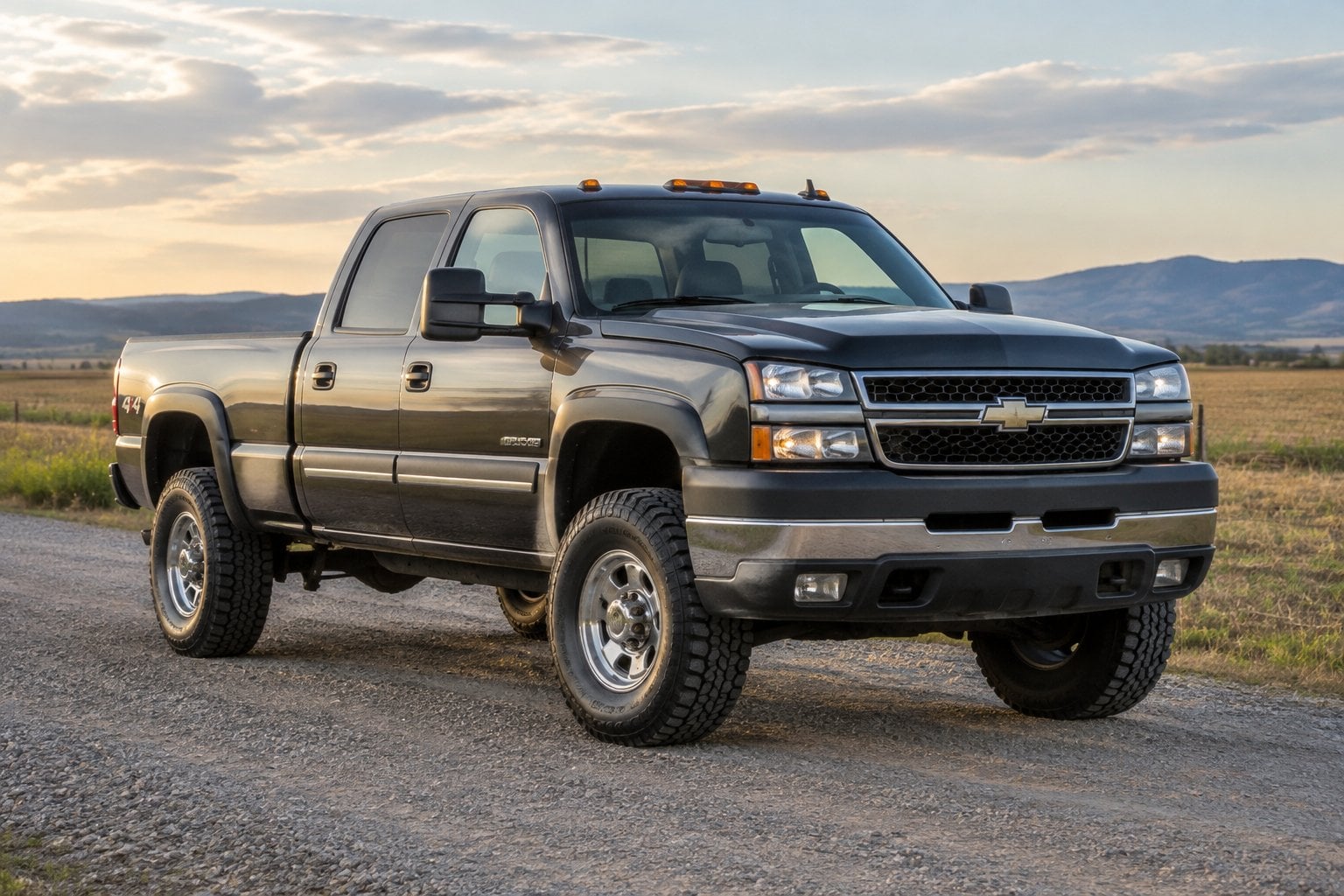
If you’re searching for the Duramax year most enthusiasts point to first, you’ll keep landing on the LBZ. GM introduced this 6.6-liter V8 in late 2005 for the 2006 model year, and it carried through 2007. It replaced the earlier LLY engine and brought a stronger block, improved fuel system, and a more capable turbocharger.
You get 360 horsepower and 650 lb-ft of torque from the LBZ, numbers that were impressive for a factory diesel at the time. Paired with the Allison 1000 six-speed automatic, you have a drivetrain that handles heavy towing without feeling strained.
What draws you to this truck isn’t flashy marketing, it’s the reputation built over years of real-world use. You’ll hear owners and shops describe the LBZ as simpler and more durable than later emissions-heavy engines, since it predates diesel particulate filters and complex exhaust aftertreatment.
If you’re shopping for a used heavy-duty diesel today, you’ll notice LBZ trucks commanding strong resale value, a sign of how much trust this engine has earned among diesel owners.
17. Ram 2500/3500 with the 6.7L Cummins (2007.5–2012)
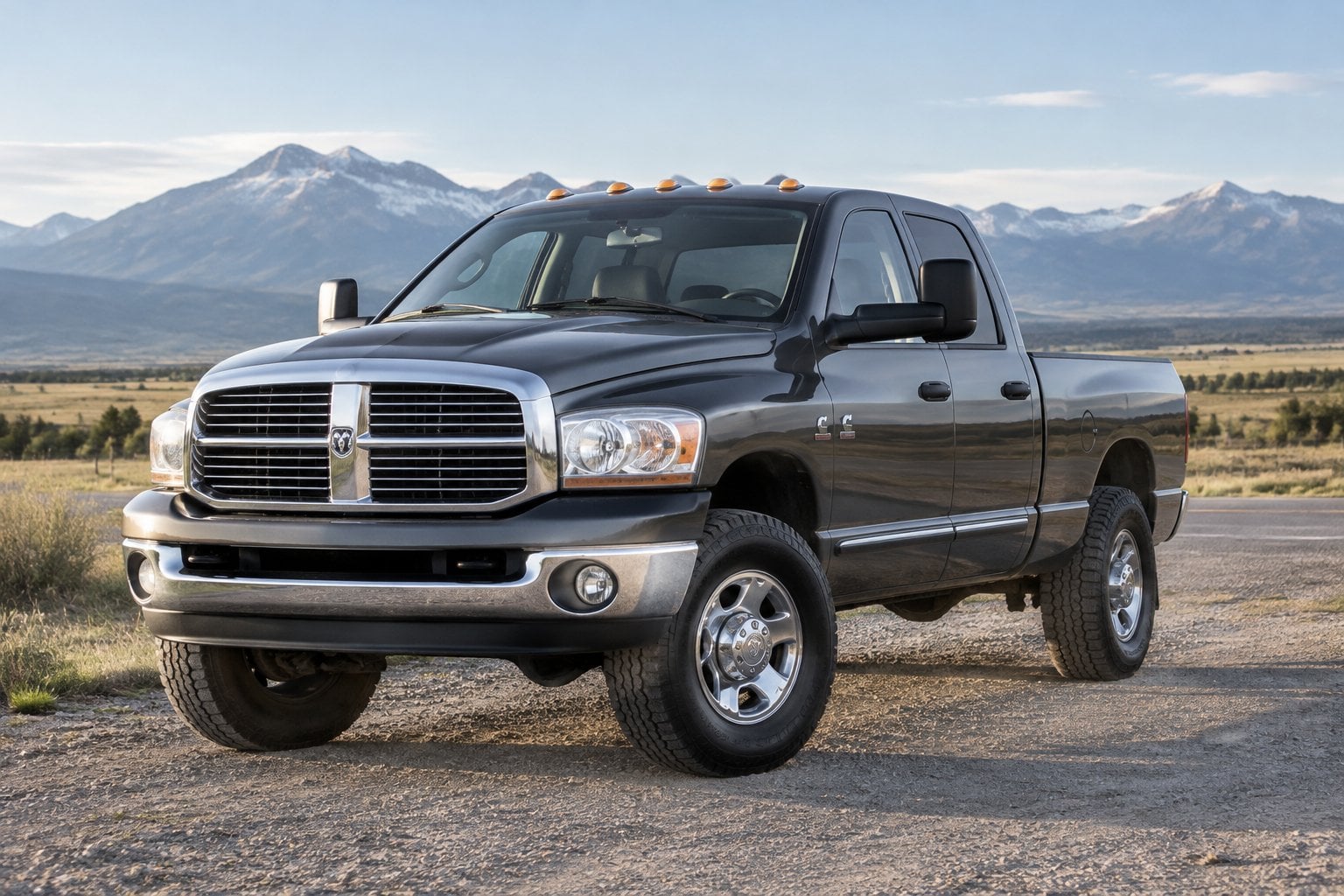
Mid-2007 marked the end of the road for the 5.9L Cummins and the start of a new era. Ram replaced it with the 6.7L Cummins, a larger displacement inline-six built to handle tightening emissions standards without sacrificing the character diesel owners expected.
You get a truck that still ranks among the most respected in the diesel world. The 6.7L delivered strong low-end torque and the kind of durability Cummins engines are known for, and it carried that reputation straight into the Ram lineup.
Early versions of this engine, from mid-2007 through 2012, came with an EGR system and a diesel particulate filter from the start to meet the new emissions rules, while the core engine architecture stayed consistent through 2012.
Owners often point to this generation’s simplicity compared to later trucks. You won’t find a Security Gateway module or an encrypted ECM here, which made the platform easier to service and modify. Towing capacity remained a strong point throughout, with these trucks handling heavy trailers without strain.
18. Chevrolet Silverado 2500HD/3500 with the LMM Duramax (2007.5–2010)
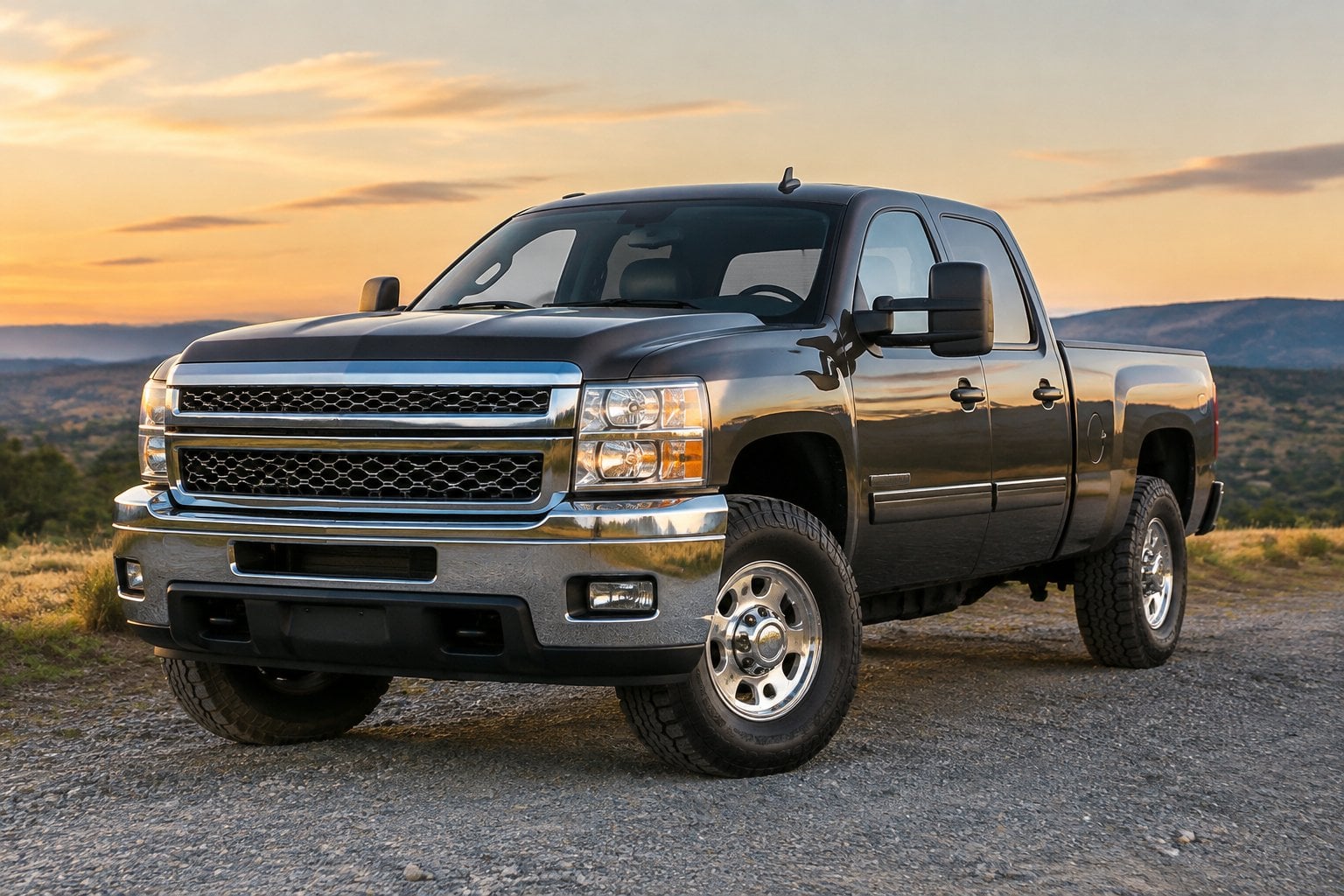
The LMM Duramax marked GM’s fourth generation of the 6.6L diesel, built for 2007.5 through 2010 Silverado and Sierra HD trucks. You get 365 horsepower and 660 lb-ft of torque from this engine, figures that were competitive for its era.
This engine uses a Bosch CP3 injection pump, a component you’ll find praised for its durability and consistent fuel delivery under load. Unlike later diesel platforms, the LMM doesn’t require DEF fluid, which simplifies maintenance for you as an owner.
You’ll also find the Allison 1000 six-speed automatic transmission paired with this engine, a combination known for handling heavy towing without excessive strain. Many owners point to this driveline as one of the most dependable in GM’s diesel lineup.
If you’re shopping for a used HD truck, the LMM generation sits between the earlier LBZ and the later LML. It shares much of the LBZ’s robust architecture while offering updated emissions controls, making it a solid middle-ground choice if you want proven mechanicals with modern towing capability.
19. Ford F-250/F-350 Super Duty with the 6.7L Power Stroke (2011–2014)
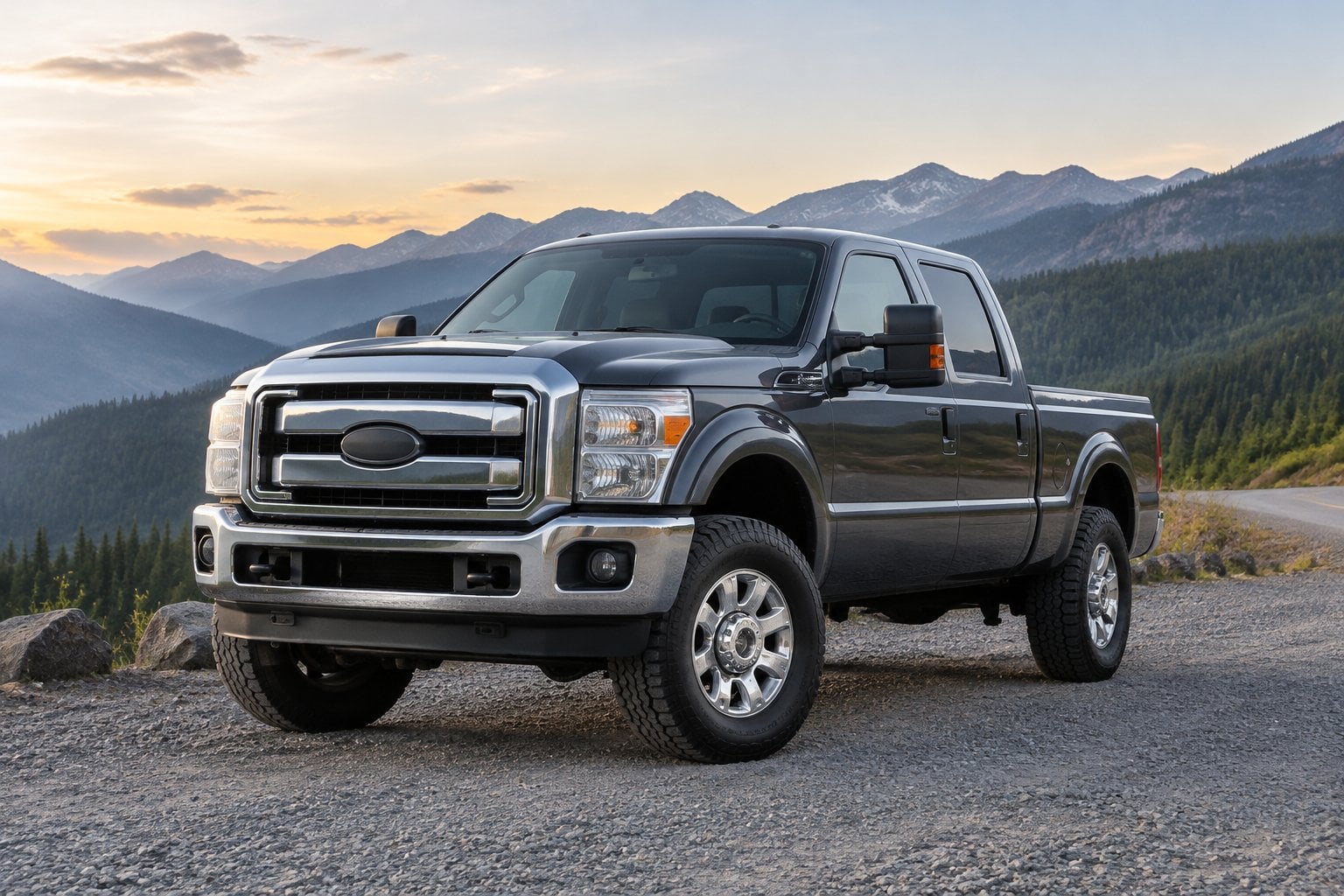
When you look at the first generation of Ford’s 6.7L Power Stroke, you’re looking at the start of Ford’s first fully in-house diesel engine program. Before this, Ford relied on Navistar for diesel engines, including the troubled 6.4L. In 2011, that changed.
You’ll find a compacted graphite iron block under the hood, which gives you more strength than a standard cast iron block while keeping weight manageable. The reverse-flow cylinder head design routes exhaust through the engine’s valley rather than the outside, a layout choice that sets this engine apart from competitors.
Horsepower and torque figures climbed through this generation, with later years in this range pushing past 800 lb-ft of torque. You get serious towing capability here, enough to handle heavy trailers and fifth-wheel setups without struggling.
Owners who’ve spent time with these trucks often point to the single variable geometry turbocharger as a highlight, since it delivers responsive power across a wide RPM range. You’re also getting a truck platform that feels purpose-built for work, not just a passenger vehicle with a bigger engine bolted in.
20. Chevrolet Silverado 2500HD/3500 with the LML Duramax (2011–2016)
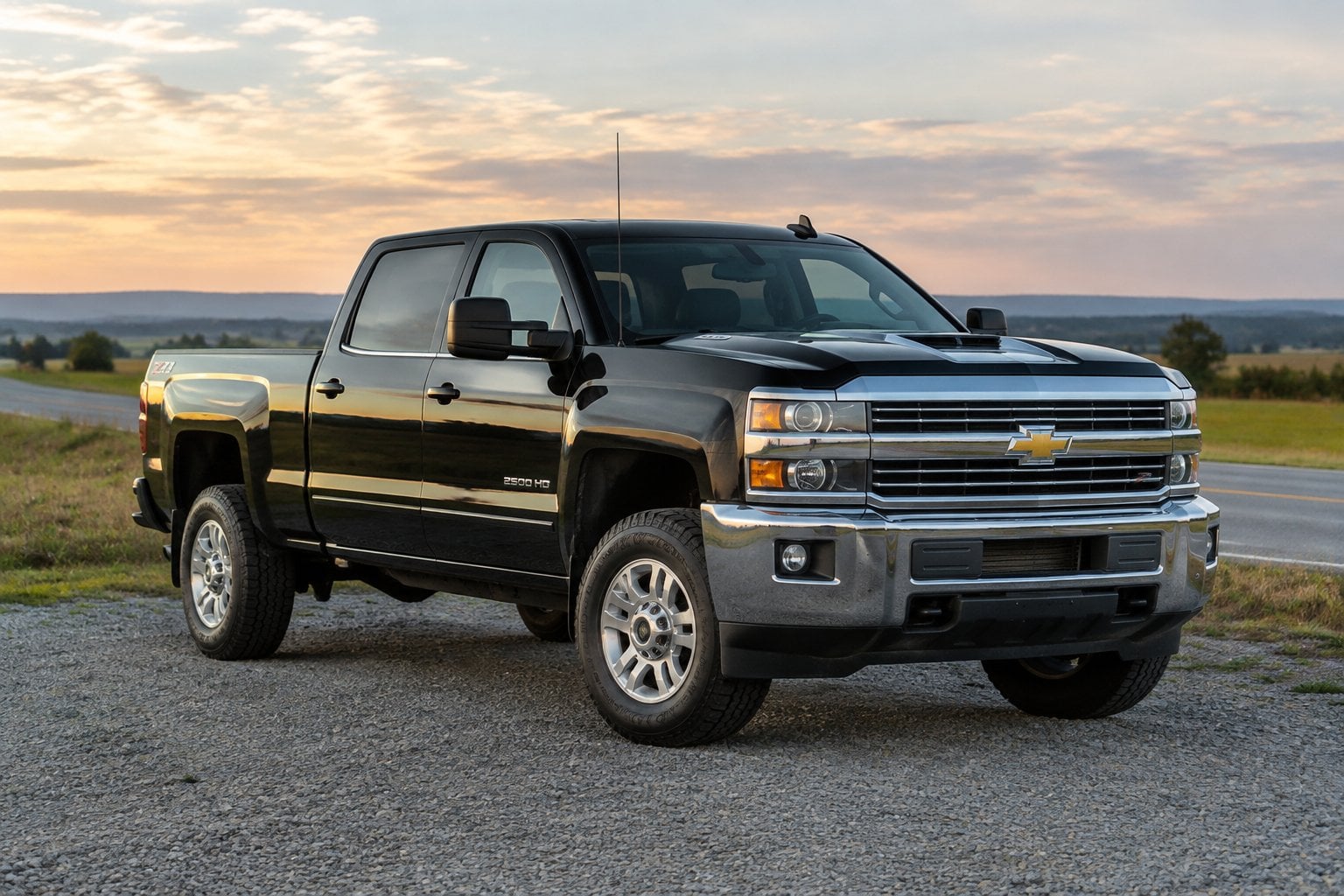
If you’re shopping for a used heavy-duty diesel, this generation deserves your attention. GM equipped these trucks with the 6.6-liter LML Duramax V8, which replaced the LMM and ran through 2016 before the L5P took over. You get 397 horsepower and 765 lb-ft of torque, figures that were competitive for the era.
The LML paired with an Allison 1000 six-speed automatic, a combination you can count on for smooth shifts under heavy loads. You’ll find improved fuel economy here too, with GM citing roughly an 11% gain over the previous Duramax generation.
Reliability is where this truck earns your trust, provided you stay on top of maintenance. The 2011-2013 model years in particular get recognized for solid build quality. You should know about the CP4 fuel pump issue, since failures can send metal debris through the fuel system if contamination occurs.
Owners praise this engine’s towing capability and the way it holds up when you use it for real work.
21. Ram 2500/3500 with the 6.7L Cummins (2013–2018)
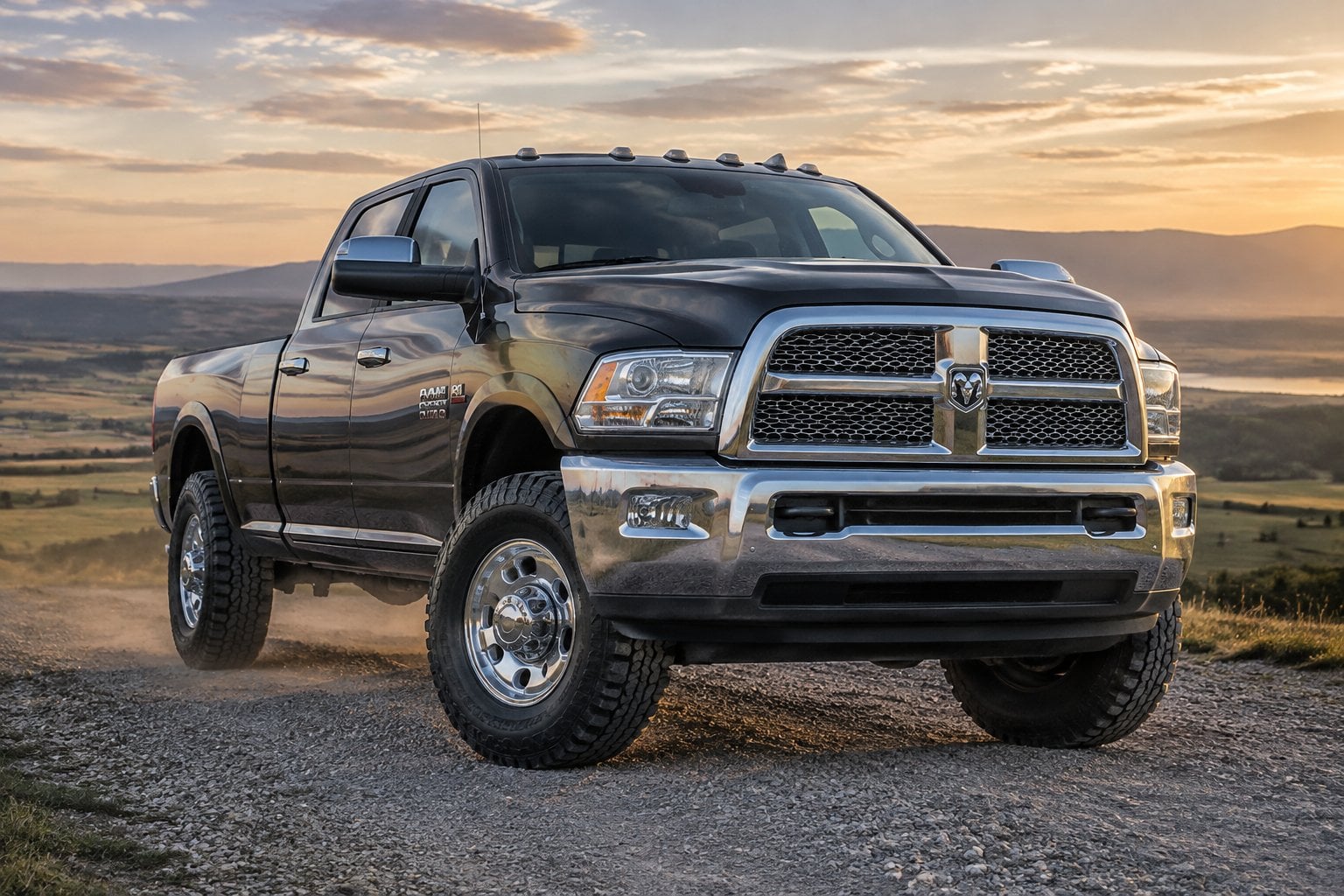
If you drove a Ram 2500 or 3500 from this generation, you had access to one of the most refined versions of the 6.7L Cummins ever offered. This is the fourth-generation platform, and by 2018 Ram pushed torque output as high as 900 to 930 lb-ft, depending on the configuration you chose.
You could pair that engine with either the standard six-speed automatic or the Aisin AS69RC transmission, which many owners preferred for towing durability. Horsepower ranged up to around 385, giving you strong, usable power for daily driving and heavy-duty work alike.
Emissions systems improved significantly over this era, reducing some of the reliability concerns tied to earlier DPF and EGR setups. You still had to stay on top of maintenance, but the system was more dependable than previous generations.
Owners often praised the truck’s turbo response and overall drivability, especially when towing. Many in the diesel community consider this generation a strong balance of power, refinement, and the mechanical simplicity still present in Cummins design philosophy.
22. Ram 1500 EcoDiesel (2014–2023)
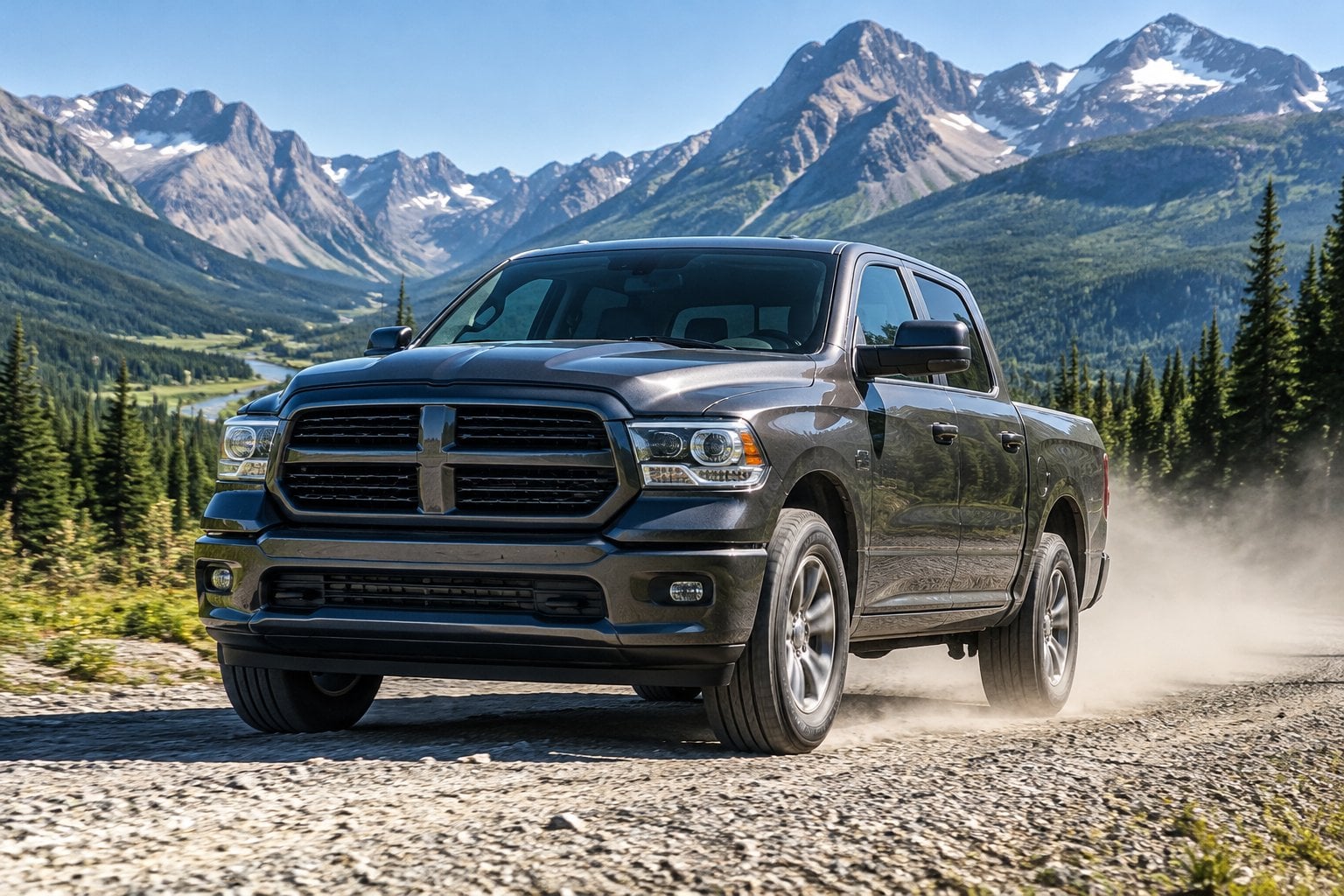
When you look at the half-ton truck market, the Ram 1500 EcoDiesel stands out as the first modern attempt to bring diesel efficiency to a light-duty pickup. Introduced in 2014, it used a 3.0L V6 built by VM Motori, a departure from the heavy-duty diesels you’d typically associate with trucks.
You get 240 to 260 horsepower depending on the model year, along with torque figures reaching up to 480 lb-ft in later versions. That torque output gives you confident highway merging and solid towing performance without the bulk of a three-quarter-ton diesel.
Fuel economy is where this engine earns your attention. You can expect figures well above what a comparable gas-powered half-ton delivers, making it appealing if you log significant highway miles.
Early model years, particularly 2014 and 2015, carry more risk due to emissions hardware issues and recalls. If you’re shopping used, later production years tend to offer more refined reliability and fewer reported complaints from owners.
23. Ford F-250/F-350 Super Duty with the 6.7L Power Stroke (2015–2019)
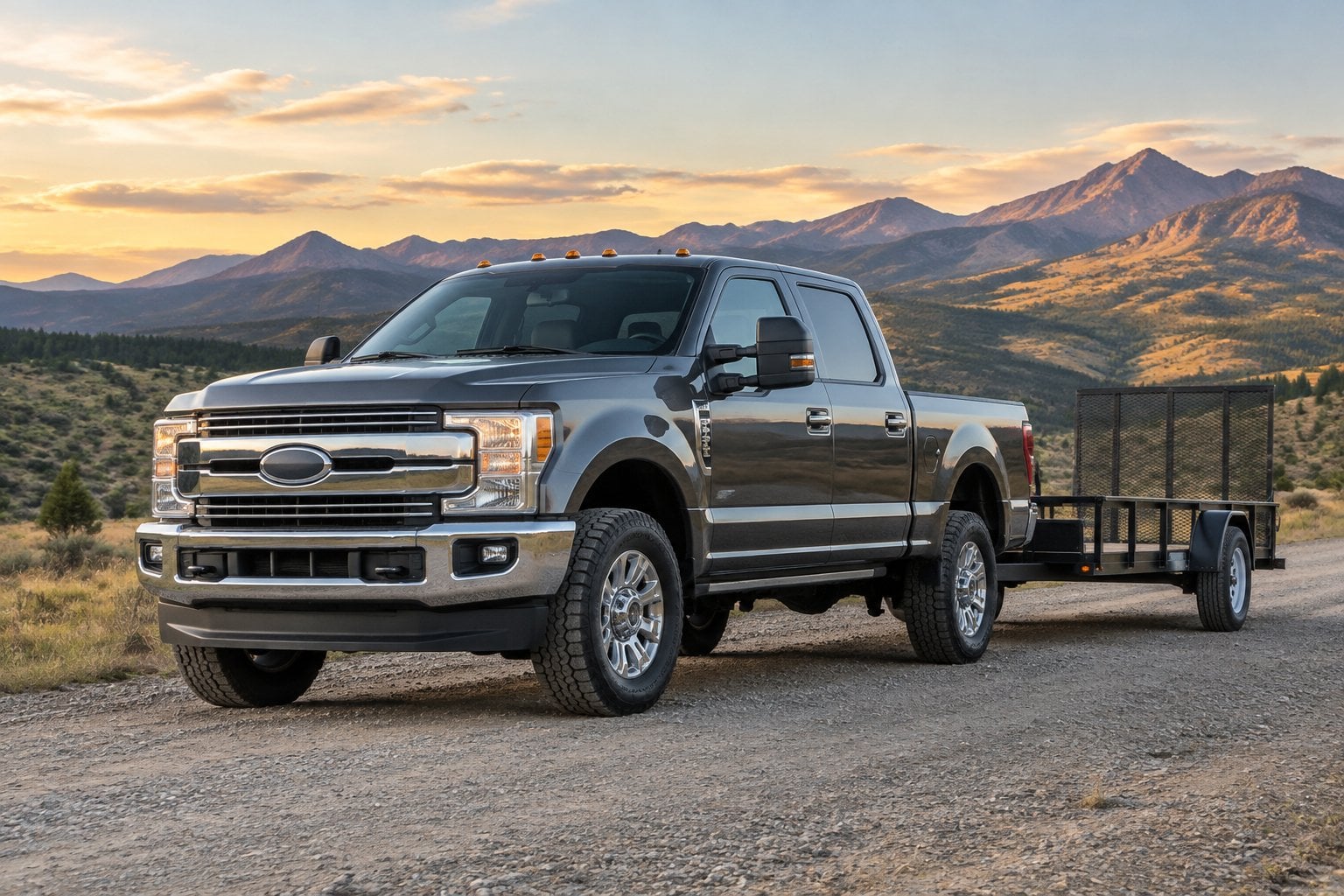
By the time you get to the second-generation 6.7L Power Stroke, Ford had worked out many of the issues that plagued the first-gen engine. For 2015, Ford fitted a larger turbocharger and raised output.
This V8 turbodiesel kept its compacted graphite iron block and reverse-flow cylinder head design, but output climbed noticeably. You get up to 440 horsepower and 925 lb-ft of torque in later model years, numbers that put these trucks near the top of their class for towing and hauling.
If you’re looking at an F-250 or F-350 from this era, you’ll notice the improved turbocharger response and better fuel delivery system compared to the 2011-2014 trucks. Owners often point to the stronger low-end torque and more confident towing performance as standout traits.
You should know that these trucks still require regular maintenance, particularly around the emissions system. But when properly maintained, this generation is widely regarded as a dependable workhorse for heavy towing and daily driving alike.
24. Chevrolet Colorado with the 2.8L Duramax (2016–2022)
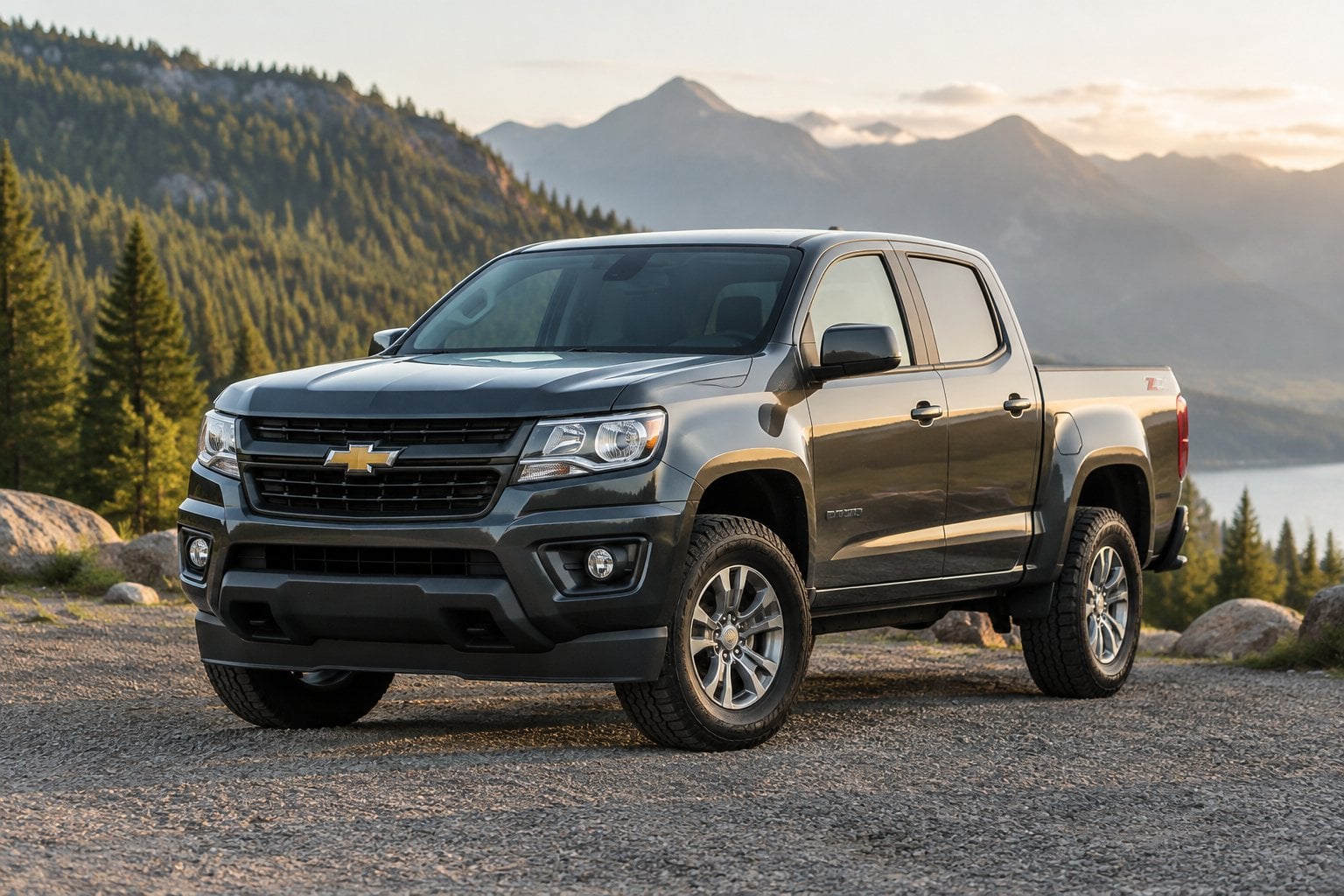
If you wanted a smaller diesel truck without giving up real capability, this generation of Colorado gave you that option. GM introduced the 2.8L Duramax LWN in 2016. You get a four-cylinder turbo-diesel rated at 181 horsepower and 369 lb-ft of torque.
Those numbers might look modest next to full-size diesel trucks, but you feel the difference in everyday driving. The low-end torque makes towing and hauling feel effortless for a midsize platform, and you won’t find yourself straining the engine on grades or with a trailer attached.
Fuel economy stands out as one of the biggest draws for owners. You get efficiency numbers that rival many gas-powered midsize trucks while still having access to diesel towing characteristics.
Reliability reports on this engine have been largely positive, with few widespread complaints. If your priority is a truck that’s easier to park and maneuver than a heavy-duty model, but still handles real work, this Colorado variant gives you that balance.
25. Nissan Titan XD with the 5.0L Cummins (2016–2019)
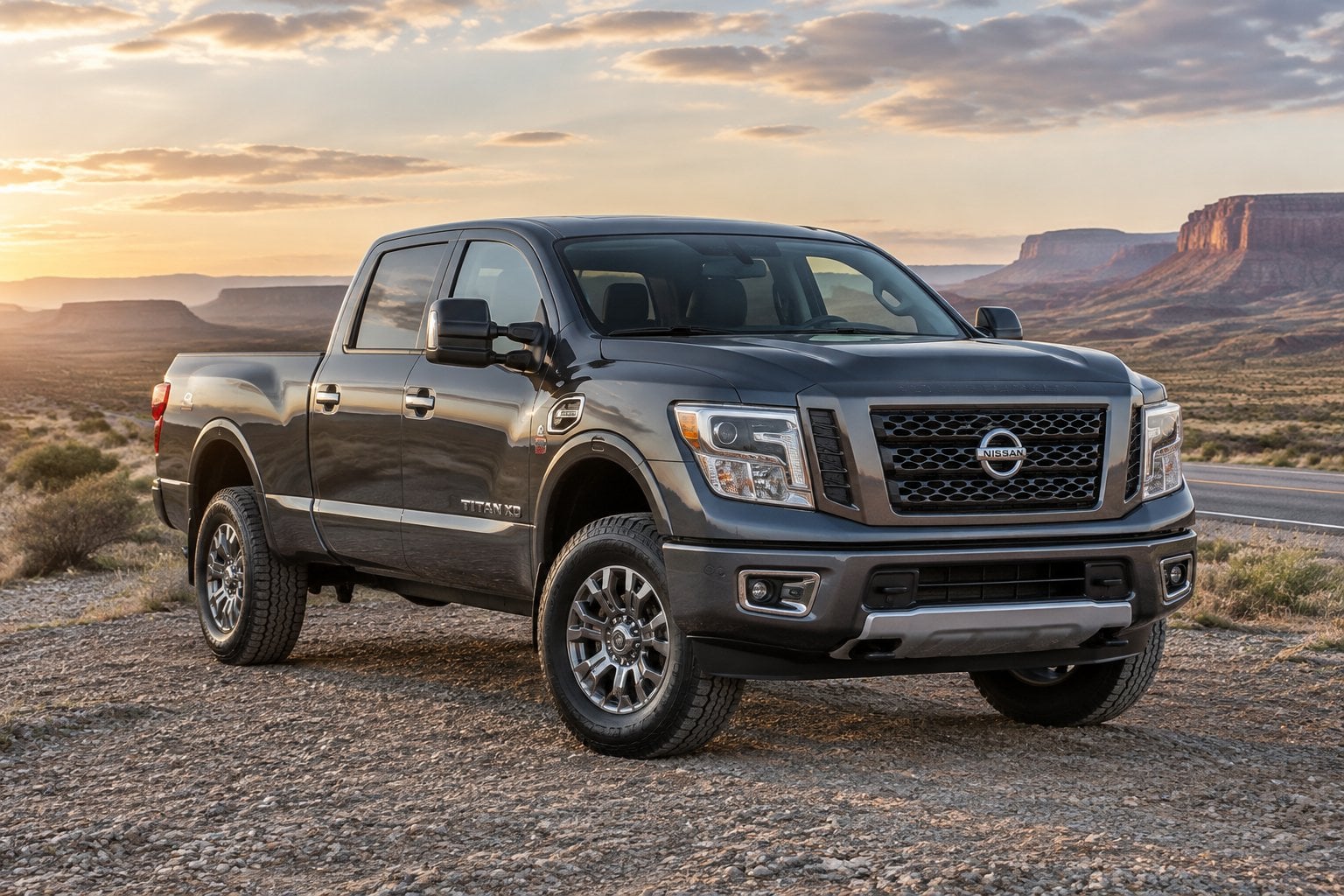
You won’t find many trucks that tried to split the difference between half-ton and heavy-duty quite like the Titan XD. Nissan built it as a “tweener,” aiming to give you more capability than a standard half-ton without pushing you into HD territory.
Under the hood sits the 5.0L Cummins V8, known internally as the ISV5.0. It’s paired with an Aisin six-speed automatic and produces 310 horsepower and 555 lb-ft of torque.
Cummins originally developed this V8 for light-duty pickups, and the Titan XD became its best-known home.
Nissan gave it a stronger frame than its regular half-ton Titan, so it had sturdier bones than a typical half-ton truck.
Reviewers noted the Titan XD occupied an unusual middle ground in the full-size truck market. You’re not getting half-ton fuel economy or full HD towing numbers, but you are getting a distinct combination of torque and chassis strength that set it apart from both categories.
26. Chevrolet Silverado 2500HD/3500 with the L5P Duramax (2017–2019)
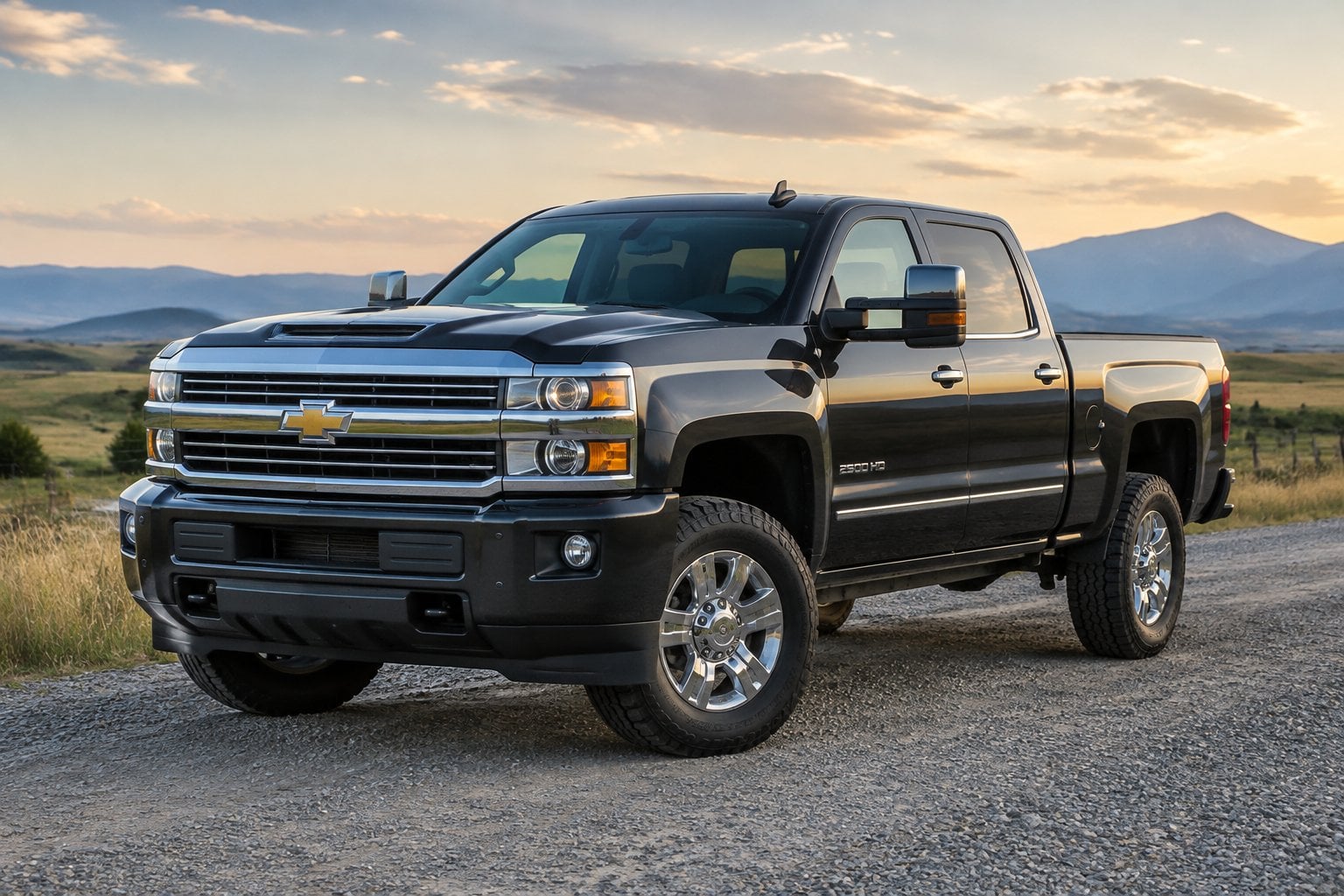
When you look at the L5P generation, you’re looking at GM’s biggest technical leap in the Duramax lineup. This 6.6L V8 replaced the long-running LML and brought a stronger block, improved cooling, and a more precise fuel injection system. You get 445 horsepower and 910 lb-ft of torque, figures that were class-leading when the truck launched.
You have real capability if you haul heavy trailers or equipment, and the Allison six-speed automatic handles the load with smooth shifts.
You’ll notice owners consistently praise the L5P for its quieter operation compared to earlier Duramax engines. Reviewers also highlighted its strong low-end torque and consistent reliability once early production issues were addressed. If you’re shopping the used diesel market, this generation stands out for combining modern emissions compliance with genuine workhorse performance, making it a practical choice if you need a dependable heavy-duty truck.
27. Ford F-150 with the 3.0L Power Stroke (2018–2021)
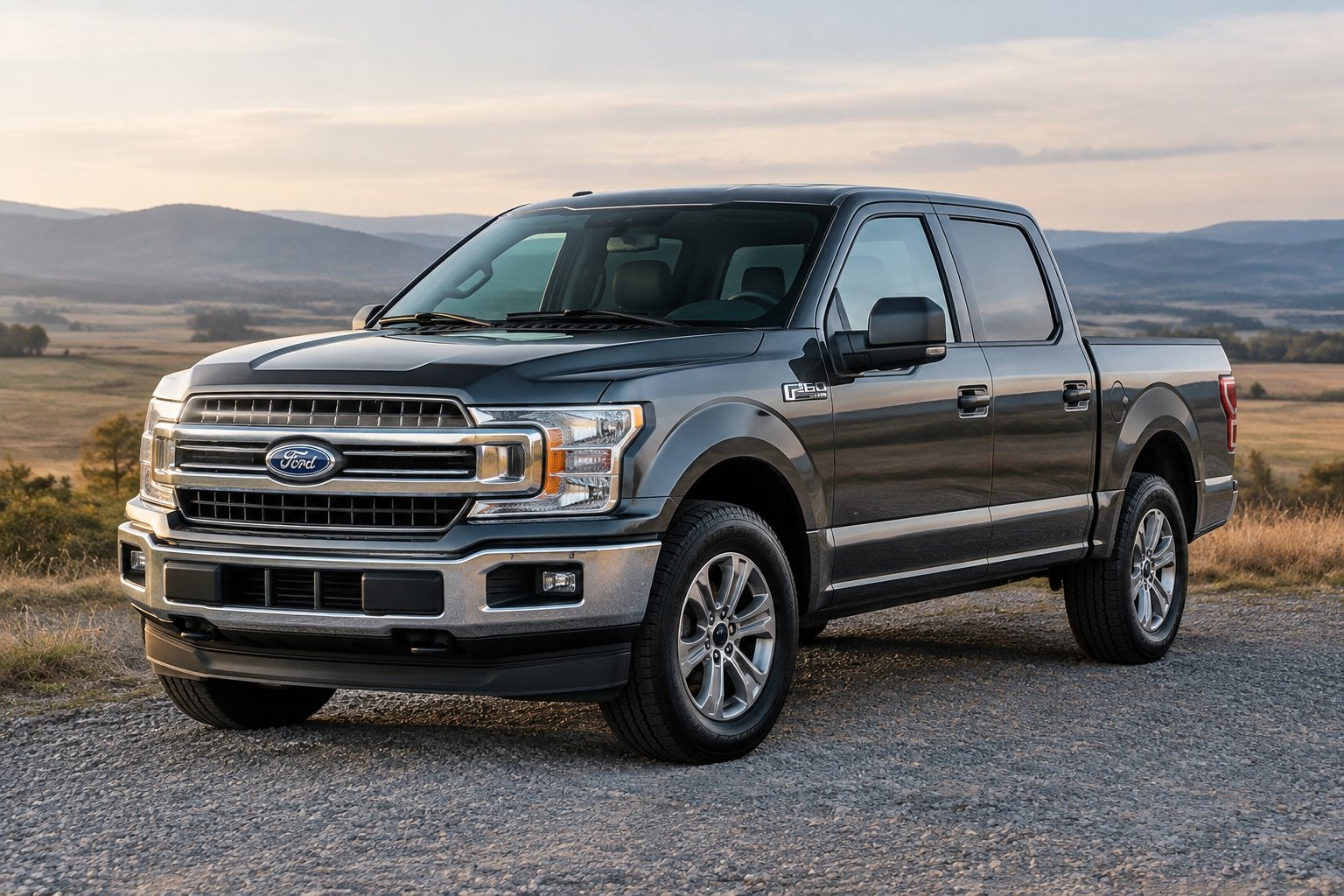
If you wanted a half-ton Ford built around fuel economy rather than raw power, this was your truck. The 3.0L Power Stroke was a diesel V6 with a single turbocharger and a high-pressure common rail fuel injection system. It arrived in 2018 as Ford’s answer to the Ram 1500 EcoDiesel, giving F-150 buyers a diesel option for the first time.
Output was 250 horsepower and 440 lb-ft of torque, numbers that favor efficient cruising over towing muscle. You could still tow up to about 11,400 lbs depending on configuration, which covered most work and recreational needs.
Fuel economy was the main draw. EPA ratings landed around 22 mpg city and 30 mpg highway, figures that stood out in the light-duty truck segment at the time.
Owners and reviewers praised the engine’s quiet operation and smooth low-rpm torque delivery through the 10-speed automatic transmission. Ford discontinued the engine after 2021 due to limited demand, but it remains a respected choice if you value highway efficiency over towing capacity.
28. Ram 2500/3500 with the 6.7L Cummins High Output (2019–2024)
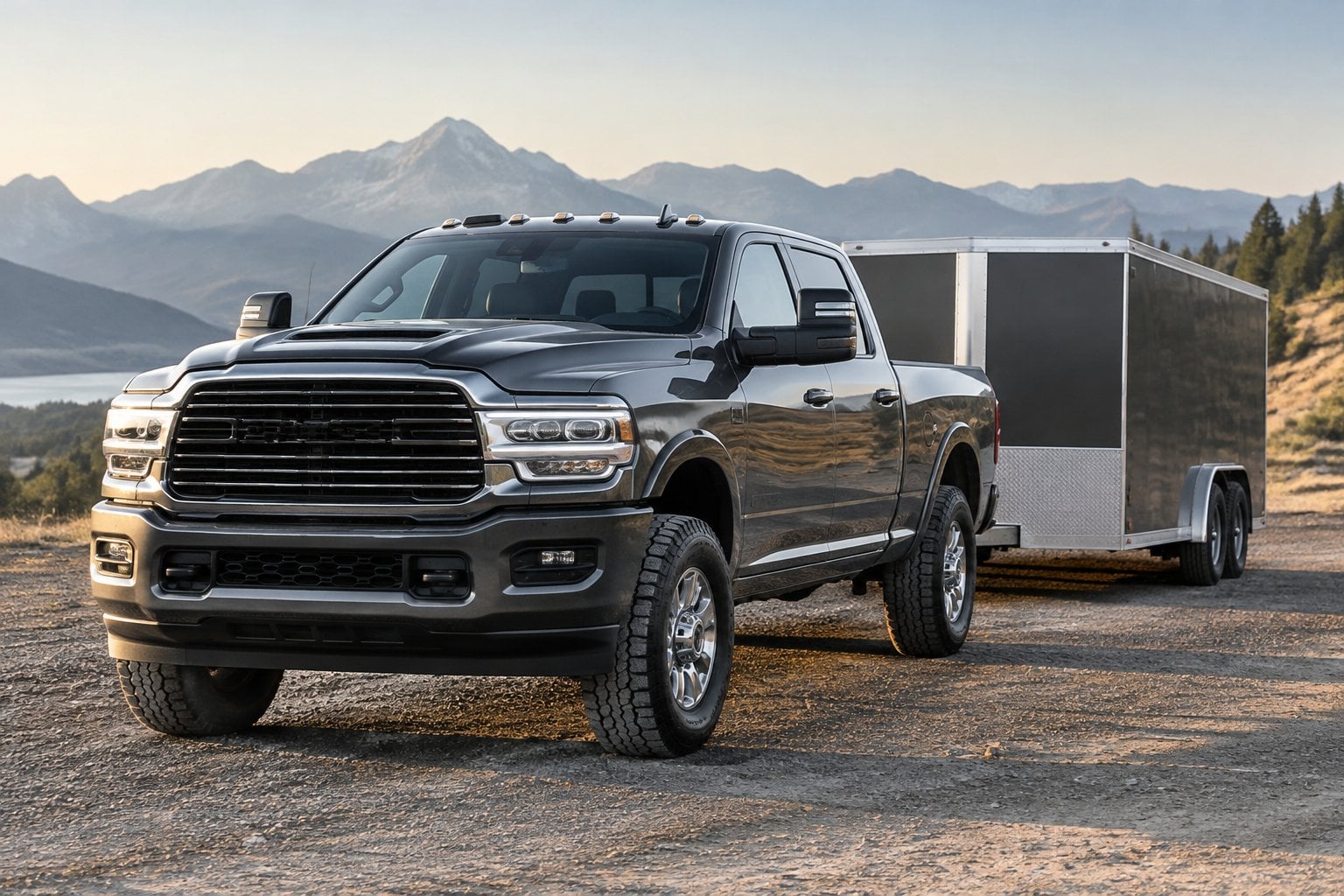
When you look at the fifth-generation Ram heavy-duty lineup, the High Output 6.7L Cummins stands out as one of the most capable factory diesel setups you can get. Paired with the Aisin six-speed automatic in the Ram 3500, this engine delivers up to 420 horsepower and 1,075 lb-ft of torque in later model years.
You get a compacted graphite iron block in the HO engine for added strength. This isn’t a small upgrade over the Standard Output version; it’s a genuinely different tune aimed at serious towing work.
If you’re hauling heavy trailers, you’ll notice the HO variant’s towing capacity can exceed 37,000 lbs in the right configuration. That number puts it at the top of its class during this production run.
You’ll also find that owners consistently praise the smoothness of power delivery and the truck’s ability to hold speed on grades without excessive downshifting. Reviewers point to the improved NVH refinement compared to earlier generations, along with a more modern interior and updated electronics package that makes long hauls easier on you.
29. Ford F-250/F-350 Super Duty with the 6.7L Power Stroke (2020–2024)
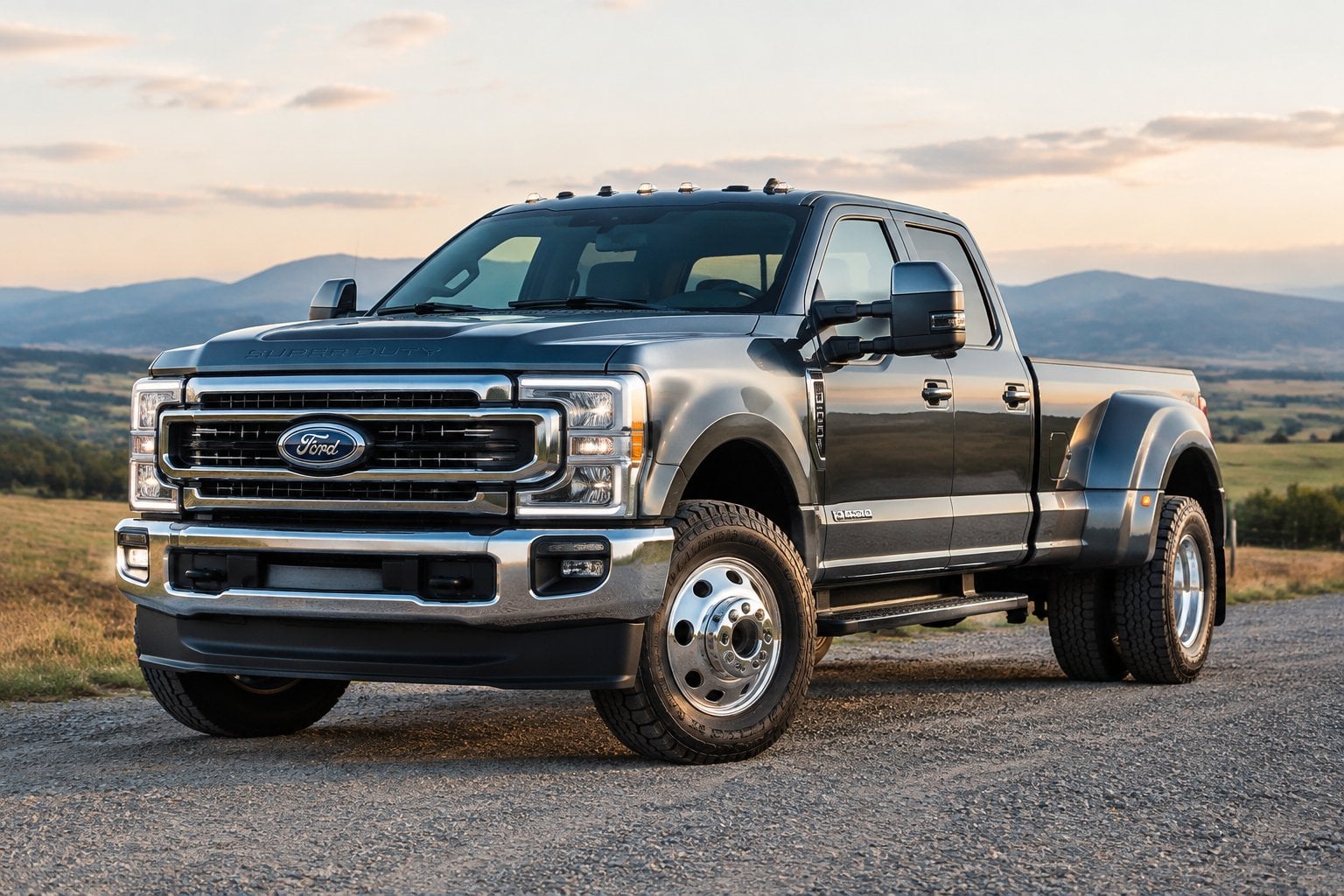
If you’re looking at a 2020-2024 Super Duty, you’re getting a refined version of Ford’s in-house diesel V8. This generation benefited from updates including a new 10-speed transmission and improved cooling, building on the Scorpion platform introduced back in 2011.
Your engine produces up to 475 horsepower and 1,050 lb-ft of torque, depending on the model year and configuration. That output puts you in strong competition with the Cummins and Duramax rivals in this class.
You’ll notice the compacted graphite iron block and reverse-flow cylinder heads, features carried over from earlier versions that contribute to durability under heavy loads. Towing capacity reaches into the high 30,000-lb range when properly equipped, giving you serious capability for fifth-wheel and gooseneck trailers.
Owners of these trucks often point to the smoother shifting from the 10-speed transmission and the added confidence from upgraded trailer brake controls. You get a truck that balances daily drivability with genuine work capacity, which is part of why this generation holds a strong reputation among Super Duty buyers.
30. Jeep Gladiator EcoDiesel (2021–2023)
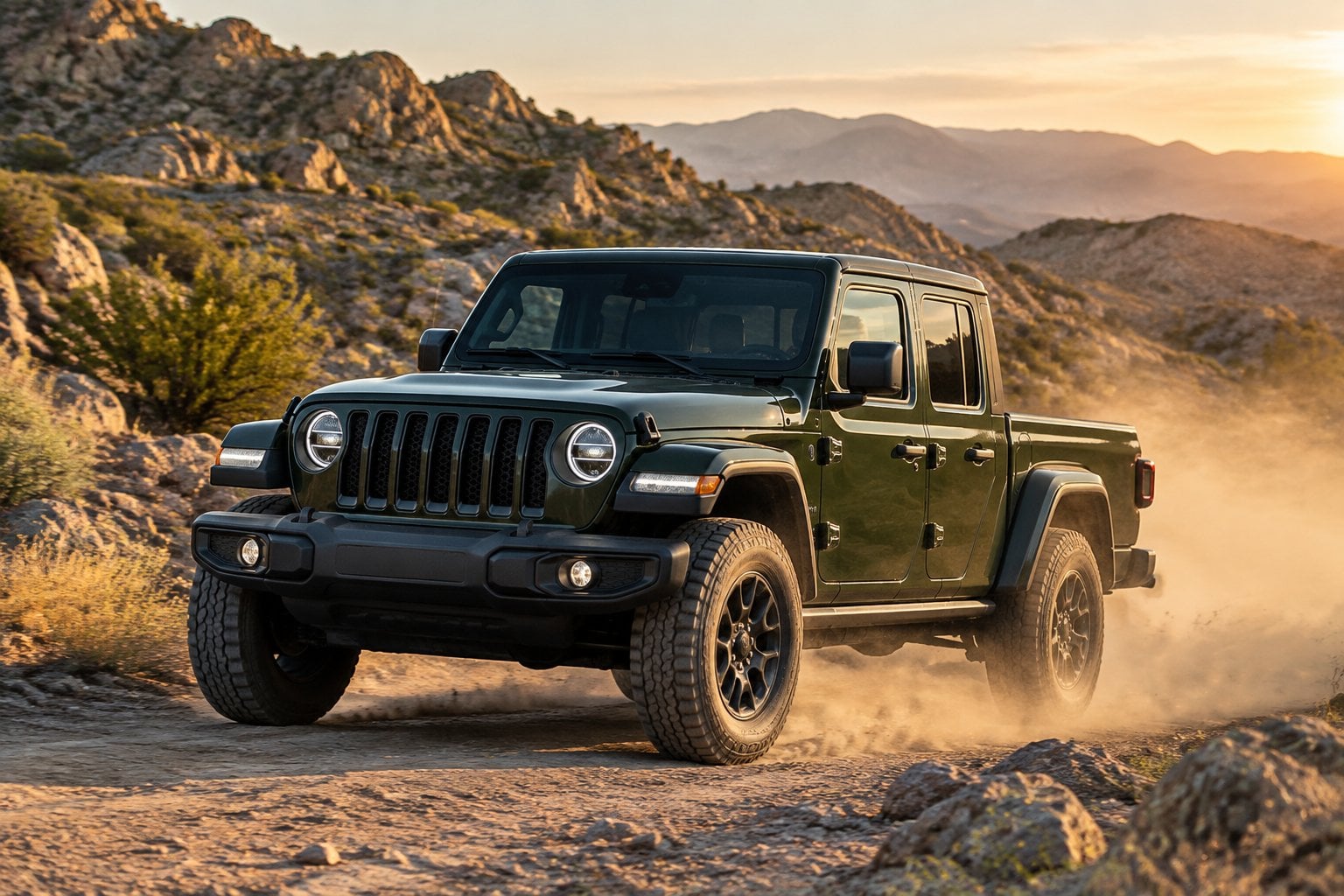
You get a Wrangler-based pickup with a diesel engine that arrived in 2021, two years after the gas-only Gladiator launched. Jeep fitted it with the 3.0-liter EcoDiesel V6, the same unit used in the Wrangler and Ram 1500, producing 260 horsepower and 442 lb-ft of torque.
If you’re comparing it to the gas V6, you’ll notice the diesel feels stronger at low speeds, thanks to that torque advantage. It pairs exclusively with an eight-speed automatic transmission, so you won’t find a manual option here.
You should also know some trade-offs exist. The diesel Gladiator weighs more than its gas counterpart. In exchange, you get better fuel economy, with EPA estimates around 22 mpg city and 28 mpg highway.
Reviewers consistently praised its off-road manners, noting the extra torque helps with crawling over obstacles. You can still tow a respectable amount while enjoying the open-top, removable-door Wrangler platform underneath. Jeep discontinued the EcoDiesel after the 2023 model year, closing out a short but well-regarded chapter for diesel fans of the brand.
What Defines a Great Diesel Truck
A great diesel truck comes down to three factors you can measure: how long the engine lasts, how much work it can actually do, and how well the rest of the truck holds up under that work.
Engine Durability and Long-Term Reliability
You judge a diesel engine’s quality by how many miles it runs before needing major repairs. The best diesel engines regularly pass 300,000 miles with routine maintenance, and some exceed 500,000 miles in commercial use.
Simplicity matters here. Engines with fewer electronic components and simpler fuel systems tend to have fewer failure points, which is why older mechanical injection systems earned reputations for toughness.
You should also look at how an engine handles heat and stress over time. Cast iron blocks, forged internals, and conservative factory tuning all contribute to an engine surviving decades of hard use without cracking a head or spinning a bearing.
Torque, Towing Capacity, and Payload
Torque output tells you how much work a truck can do without straining. Diesel engines generate torque at low RPM, which is why they pull heavy loads more efficiently than gas engines of similar size.
When you’re comparing trucks, check these three numbers:
- Peak torque (measured in lb-ft, and how low in the rev range it arrives)
- Maximum towing capacity (conventional and fifth-wheel ratings differ)
- Payload capacity (what the bed and chassis can carry, separate from towing)
A truck with high horsepower but weak torque will struggle with heavy trailers. You want a balance where torque arrives early and stays strong through the working RPM range, since that’s what keeps a loaded truck moving on grades without excessive downshifting.
Chassis Strength and Serviceability
An engine only matters if the frame and drivetrain underneath it can handle the load. You need a chassis built with thick-gauge steel, reinforced crossmembers, and axles rated to match or exceed the engine’s output.
Serviceability affects your long-term ownership costs directly. Trucks with accessible components, common parts, and straightforward repair procedures cost less to maintain over time.
You’ll find that the most respected diesel trucks share a design philosophy: mechanical systems you can diagnose and fix without specialized tools or dealer-only software. That approach keeps repair costs predictable and keeps the truck in service longer.
What to Know Before Buying a Classic Diesel Truck
A classic diesel truck can deliver decades of service, but only if you understand what you’re inspecting before you hand over cash. Mechanical condition, parts access, and regional emissions rules will all affect what you pay and how much the truck costs to keep running.
Maintenance History and Common Wear Points
Ask for service records before you look at anything else. A truck with documented oil changes, injector service, and head gasket work tells you more than a clean paint job ever will.
Check these areas on any used diesel:
- Head gaskets – common failure point on 6.0L Power Stroke engines, especially past 150,000 miles
- Injectors – listen for excessive knocking or rough idle
- Transmission fluid – look for burnt smell or dark color, a sign of neglected fluid changes
- Frame and undercarriage – rust is a bigger threat to longevity than engine wear in most older trucks
- Cooling system – diesel engines run hot under load, so check hoses and the radiator for leaks
A pre-purchase inspection by a diesel specialist costs a few hundred dollars. It’s worth the expense before you commit to a truck that’s decades old.
Parts Availability and Ownership Costs
Some engines, like the 5.9L Cummins and 7.3L Power Stroke, have strong aftermarket support with parts that are easy to source and often inexpensive. Others, including early Duramax or less common International-powered trucks, can mean longer waits and higher prices for replacement components.
Before buying, research:
- Whether a local shop or specialist works on that specific engine
- Average cost of common repairs like injector replacement or turbo rebuilds
- Availability of body panels and interior trim, which can be harder to find than mechanical parts
Insurance costs also vary by state and by whether the truck qualifies for classic vehicle coverage. Older trucks with low annual mileage often qualify for reduced rates, but you’ll need to confirm eligibility with your insurer first.
Emissions Equipment and Local Regulations
Pre-2007 diesel trucks are generally free of the complex emissions systems that came later, which simplifies maintenance but may not satisfy stricter state requirements. California and a handful of other states enforce smog or emissions testing that can exclude certain older diesels from registration.
Check your state’s rules on:
- Age-based emissions test exemptions, which often apply to vehicles over 20 or 25 years old
- Diesel-specific opacity testing requirements
- Any restrictions on modified exhaust systems or removed emissions components
If you’re buying a truck from out of state, confirm it can be legally registered where you live. Rules differ widely, and a truck that’s road-legal in one state may not pass inspection in another.