The 30 Most Expensive American Cars Ever Made: Ranked by Price
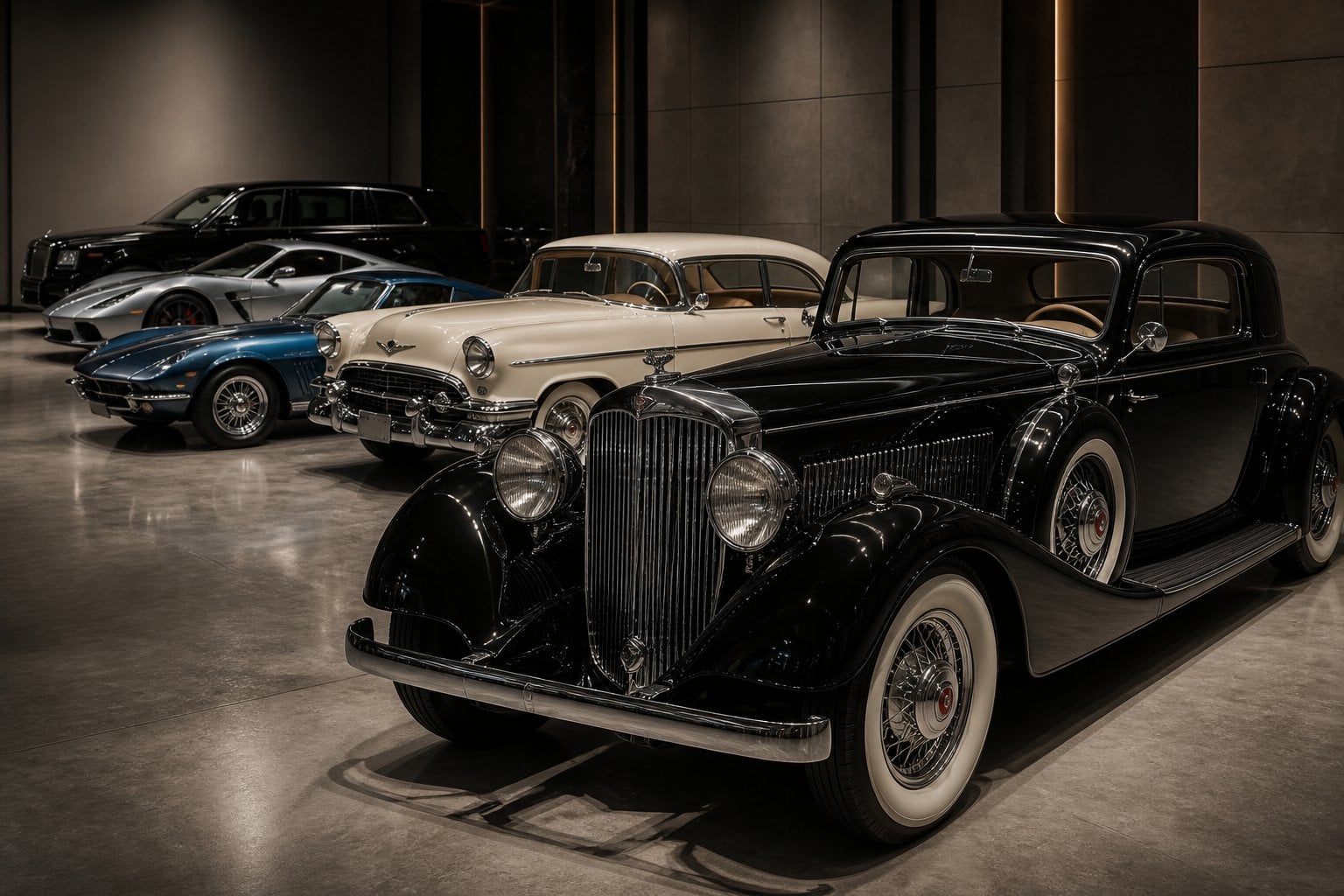
American carmakers have built some of the most valuable cars on earth. When the right one crosses the auction block, collectors now pay sums that used to be reserved for Ferraris and fine art.
This list ranks the 30 most expensive American cars ever sold at public auction, from the highest price down. Every figure is a real, reported sale result, including the buyer’s premium.
You’ll notice a pattern quickly. The top of the list belongs to three kinds of cars: the Shelby Cobras and Ford GT40s built to beat Ferrari in the 1960s, and the coachbuilt Duesenbergs of the 1930s, which were America’s answer to Rolls-Royce and Bugatti.
A few one-offs break up the pack, including a Corvette race car, a 1914 Mercer and a certain TV crime-fighter’s ride. Here they are, ranked by price.
1. 1964 Shelby Cobra Daytona Coupe CSX2300: $42,905,000
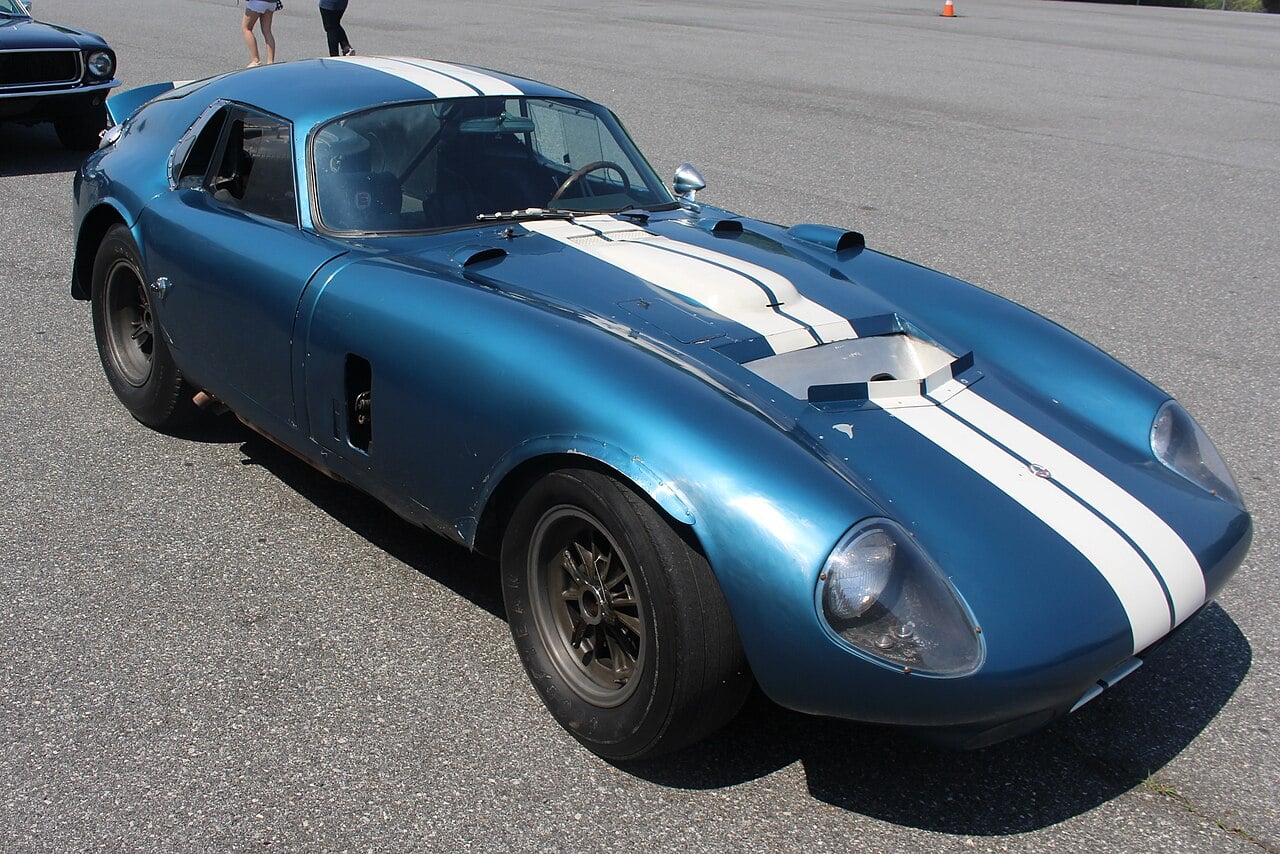
The most expensive American car ever sold at auction is a Shelby Cobra Daytona Coupe. Chassis CSX2300 sold for $42,905,000 at Gooding Christie’s Pebble Beach sale during Monterey Car Week in August 2026. The hammer fell at $39 million, against a pre-sale estimate of “in excess of $25 million.”
The Daytona Coupe exists because the open Cobra roadster was too slow on long straights. Designer Peter Brock wrapped the Cobra chassis in a slippery, cut-off coupe body, and Shelby American used it to take on Ferrari’s 250 GTO in international GT racing.
CSX2300 raced in 1965, including a third-place overall finish at Daytona, plus events at Sebring, the Nürburgring and Reims. Carroll Shelby himself later owned the car for years, and it was the only Daytona he ever owned. The sale nearly doubled the earlier American record held by the Duesenberg SSJ.
2. 1935 Duesenberg SSJ: $22,000,000
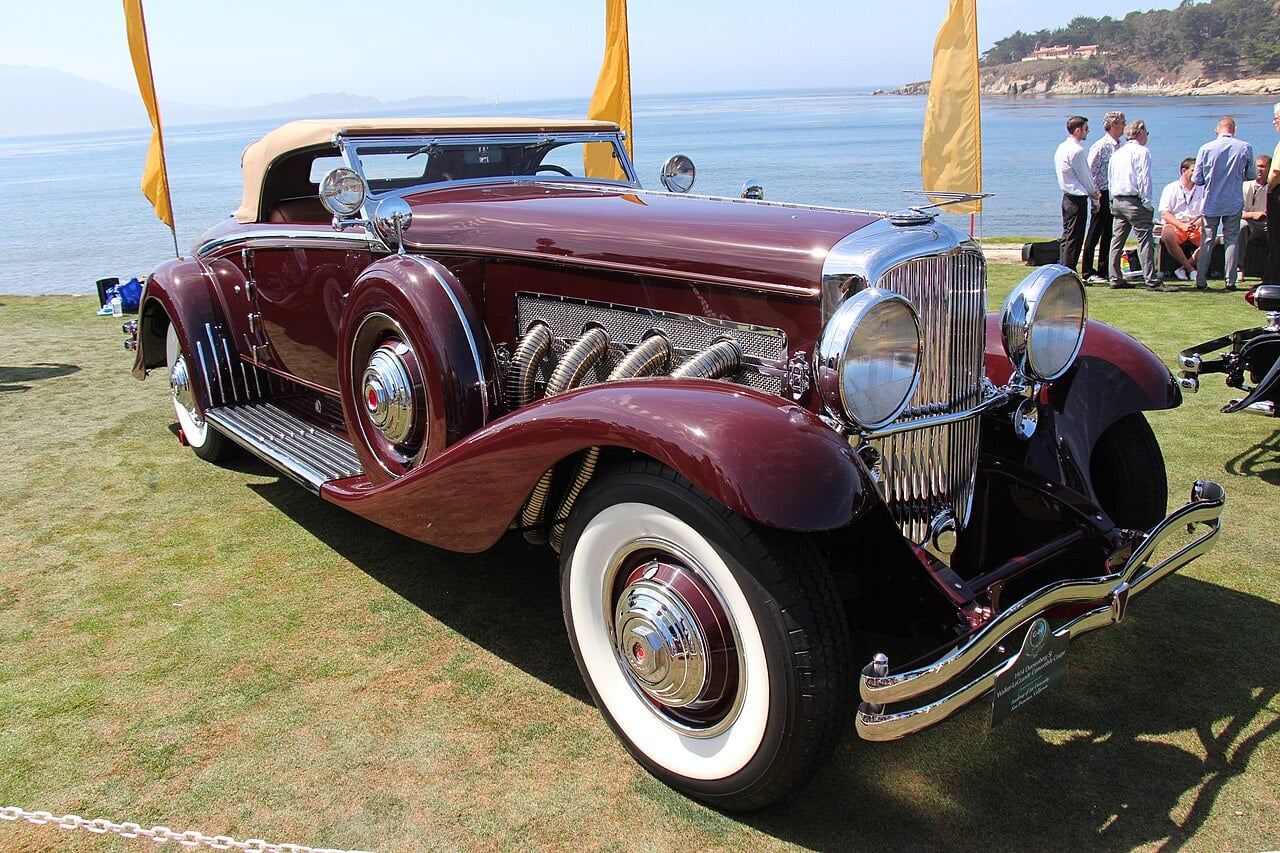
Before the Daytona Coupe, this Duesenberg held the American auction record. The 1935 Duesenberg SSJ sold for $22,000,000 at Gooding & Company’s Pebble Beach auction in August 2018.
Only two SSJs were built. Both rode on a shortened 125-inch chassis and carried the supercharged twin-cam straight-eight, good for about 400 horsepower, an enormous figure for the 1930s. The open roadster body came from LaGrande.
The two cars went to Hollywood’s biggest stars. This one was delivered to Gary Cooper, and the other went to his friend Clark Gable. Later owners included racer Briggs Cunningham and collector Miles Collier.
Part of the price comes from originality. The car still has its original engine, chassis and body, which is rare for a Duesenberg, since many were rebodied or had parts swapped over the decades. That combination of rarity, star power and originality made it the benchmark for American classics for eight years.
3. 1963 Chevrolet Corvette Grand Sport (Chassis 003): $18,705,000
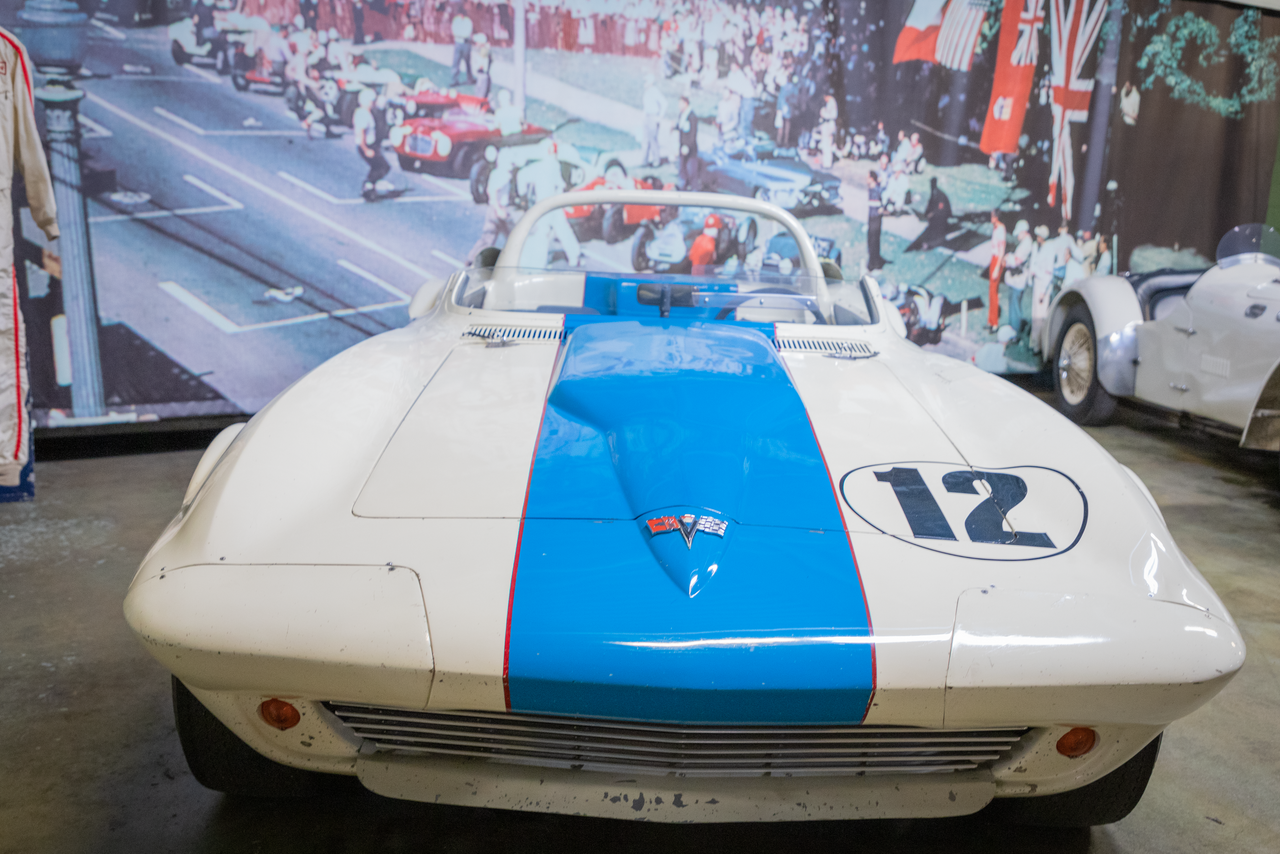
The Corvette Grand Sport was Zora Arkus-Duntov’s lightweight racer, built to take on the Shelby Cobras. GM’s racing ban cut the program short, and only five Grand Sports were ever built.
Chassis 003 sold for $18,705,000 at RM Sotheby’s Monterey auction in August 2026, far above its $11 million to $13 million estimate. It was the first Grand Sport offered for public sale in 17 years, and it is now the most expensive Corvette ever sold at auction.
Its racing résumé reads like a who’s who of American motorsport. A.J. Foyt, Jim Hall and Augie Pabst all drove it, and Dick Doane took class wins with it at Wilmot and Greenwood in 1963.
With all five Grand Sports accounted for and rarely sold, collectors had little reason to expect another chance soon. That scarcity is a big part of why the bidding ran so far past the estimate.
4. 1962 Shelby 260 Cobra CSX2000: $13,750,000
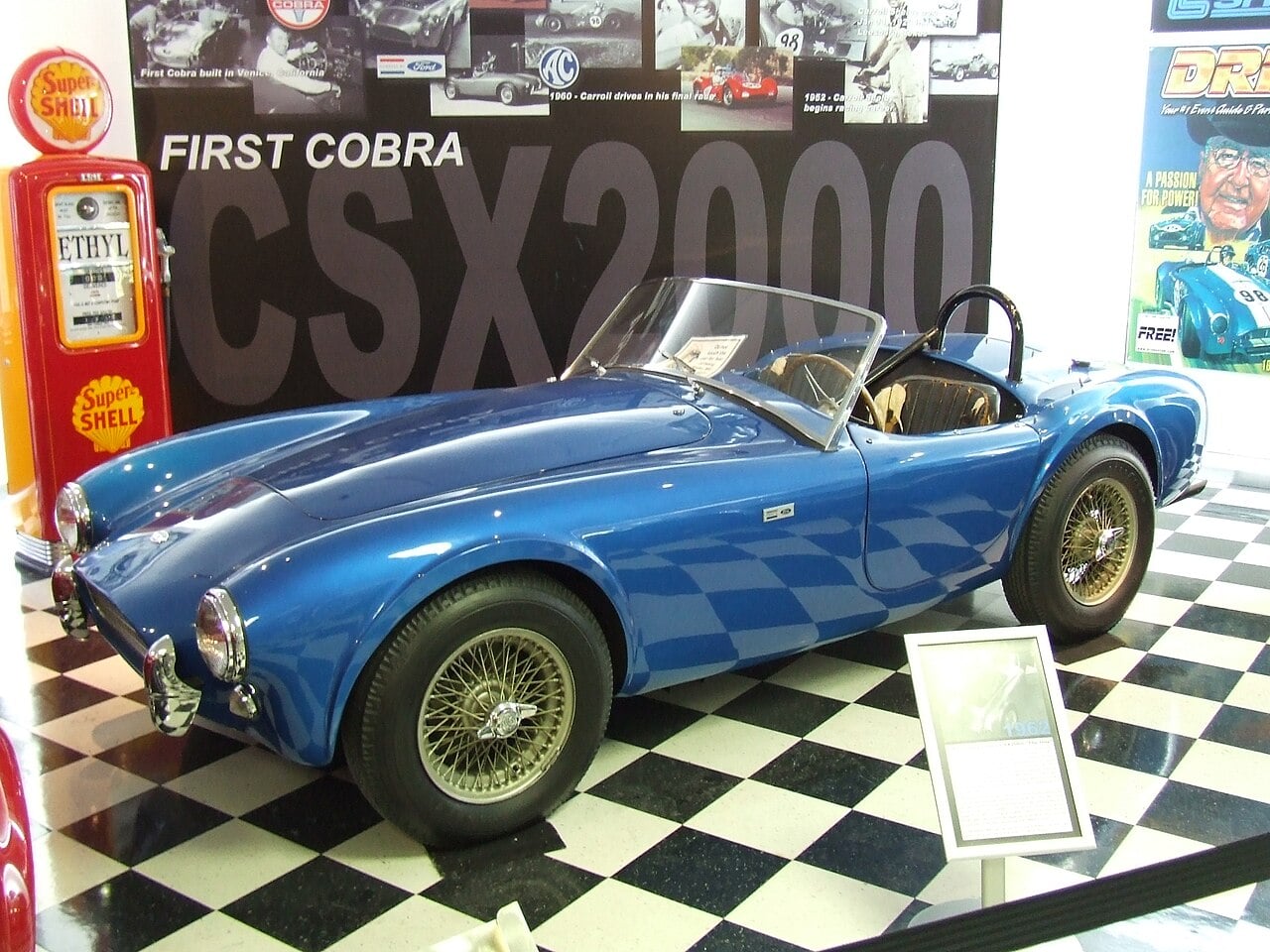
CSX2000 is where the Cobra story begins. It’s the very first Cobra, created when Carroll Shelby installed a 260-cubic-inch Ford V8 in a British AC Ace chassis in 1962.
Shelby never let it go. He kept the car for the rest of his life, and in the early days he famously repainted it in different colors for magazine shoots, making his small company look as if it had more cars than it really did.
After Shelby died in 2012, the Carroll Hall Shelby Trust sent the car to RM Sotheby’s Monterey auction in August 2016, where it sold for $13,750,000. At the time, that made it the most expensive American car ever sold at auction.
The price reflects pure history rather than race wins. Every Cobra, every Daytona Coupe and much of Shelby American’s later success traces back to this one prototype.
5. 1966 Ford GT40 Mk II P/1032: $13,205,000
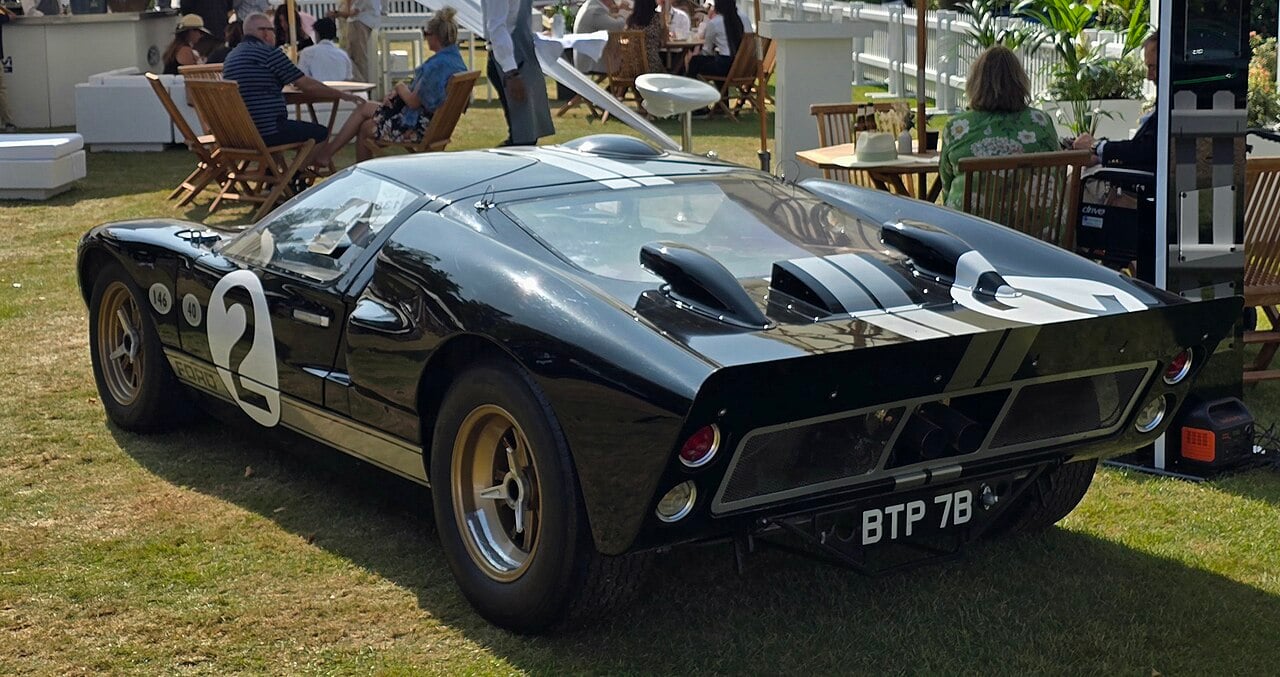
The GT40 Mk II is the car Ford built to beat Ferrari at Le Mans, powered by a 427-cubic-inch V8 derived from Ford’s NASCAR engine. Only eight Mk IIs were built, and chassis P/1032 is one of them.
It sold for $13,205,000 at RM Sotheby’s Miami auction in February 2025, a record for the Ford brand at auction.
P/1032 has real front-line history. Running for Holman-Moody, it finished second at the 1966 12 Hours of Sebring with Walt Hansgen and Mark Donohue driving. At Le Mans that June, it started as the No. 4 car for Donohue and Paul Hawkins but retired from the race.
The car spent decades out of private hands. It was donated to the Indianapolis Motor Speedway Museum in 1968, and the museum later chose to sell it, giving collectors a rare chance at a genuine factory Mk II.
6. 1966 Ford GT40 Mk II Factory Lightweight XGT-3: $12,375,000
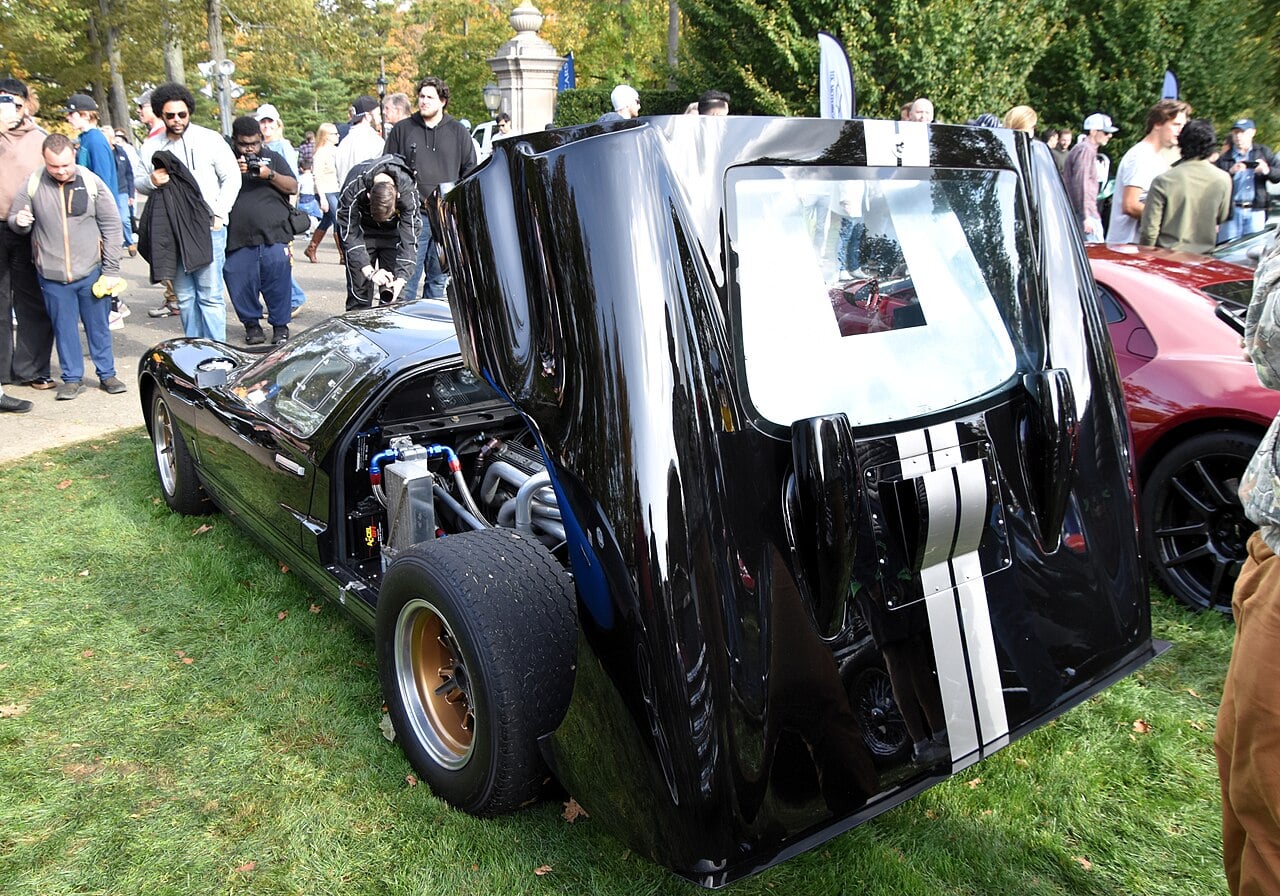
This GT40 is valuable for the opposite reason. It never raced at all.
XGT-3 is one of three factory lightweight Mk IIs, built with lighter chassis and bodywork than the standard cars. Because it was never campaigned, it escaped the crashes, rebuilds and part swaps that most race cars go through, and it is considered the most original GT40 Mk II still in existence.
Ford owned the car until 1977, and it has had just four private owners since. It sold for $12,375,000 at Mecum’s Kissimmee auction in January 2026, the most expensive Ford of that sale.
For collectors, originality can matter as much as race wins. A Mk II that looks today much as it did when it left the factory is something no restored race car can match, and the price shows it.
7. 1968 Ford GT40 Gulf/Mirage Lightweight P/1074: $11,000,000
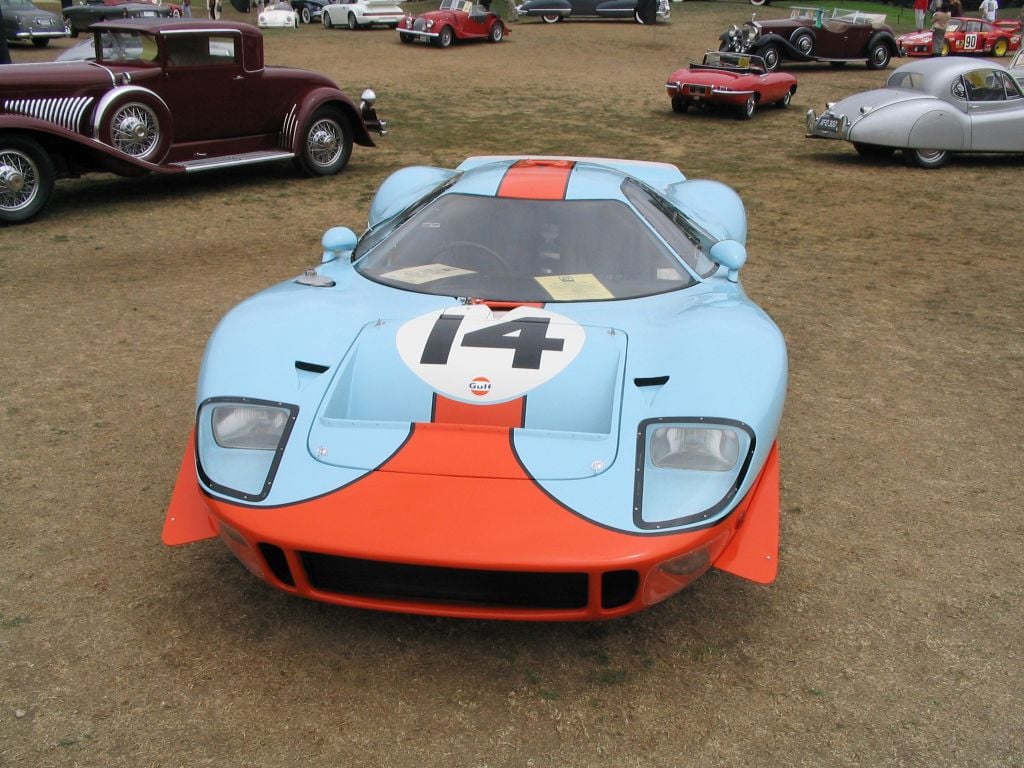
Painted in the famous light blue and orange of Gulf Oil, P/1074 is one of the best-known GT40s in the world. It’s a lightweight racer from the Gulf-backed program, and it has a Hollywood connection too.
The car served as a camera car during filming of Steve McQueen’s movie “Le Mans,” capturing on-track footage for the film. That link to McQueen and to the Gulf livery made it a magnet for collectors.
It sold for $11,000,000 at RM Auctions’ Monterey sale in August 2012. At the time, that was the highest price ever paid for an American car at auction.
Its record stood until the first Shelby Cobra sold in 2016. Even now, more than a decade later, it remains one of the most expensive Fords ever sold, and Gulf-liveried GT40s are still among the most recognizable race cars ever built.
8. 1931 Duesenberg Model J Coupe by Murphy (J-460): $10,340,000
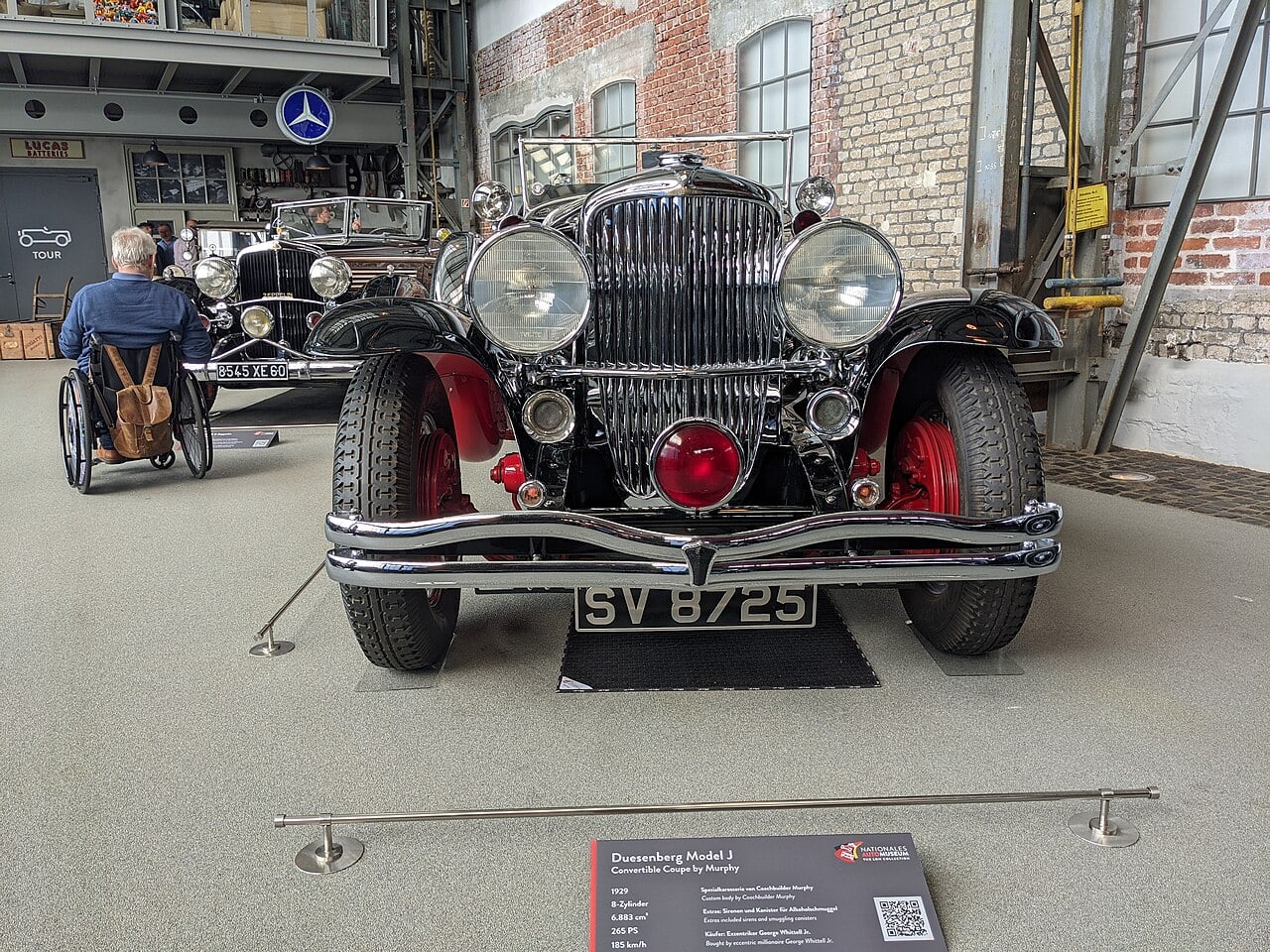
Wealthy Nevada eccentric George Whittell Jr. ordered several Duesenbergs, and this long-wheelbase coupe by Murphy is the most famous of them. It was built as a one-of-a-kind car, with a body no other Duesenberg shares.
At Gooding & Company’s Pebble Beach auction in August 2011, the hammer fell at $9.4 million, and the final price with the buyer’s premium came to $10,340,000. That set the record for a Duesenberg and for any American car at the time.
The Model J was Duesenberg’s flagship. Buyers bought a rolling chassis and engine, then sent it to a coachbuilder such as Murphy for a custom body. That’s why nearly every surviving Model J looks different.
A one-off body, a famous first owner and the Duesenberg name made J-460 one of the most important American classics of its era, and its record held until GT40s and Cobras began to pass it.
9. 1966 Ford GT40 Mk II P/1016: $9,795,000
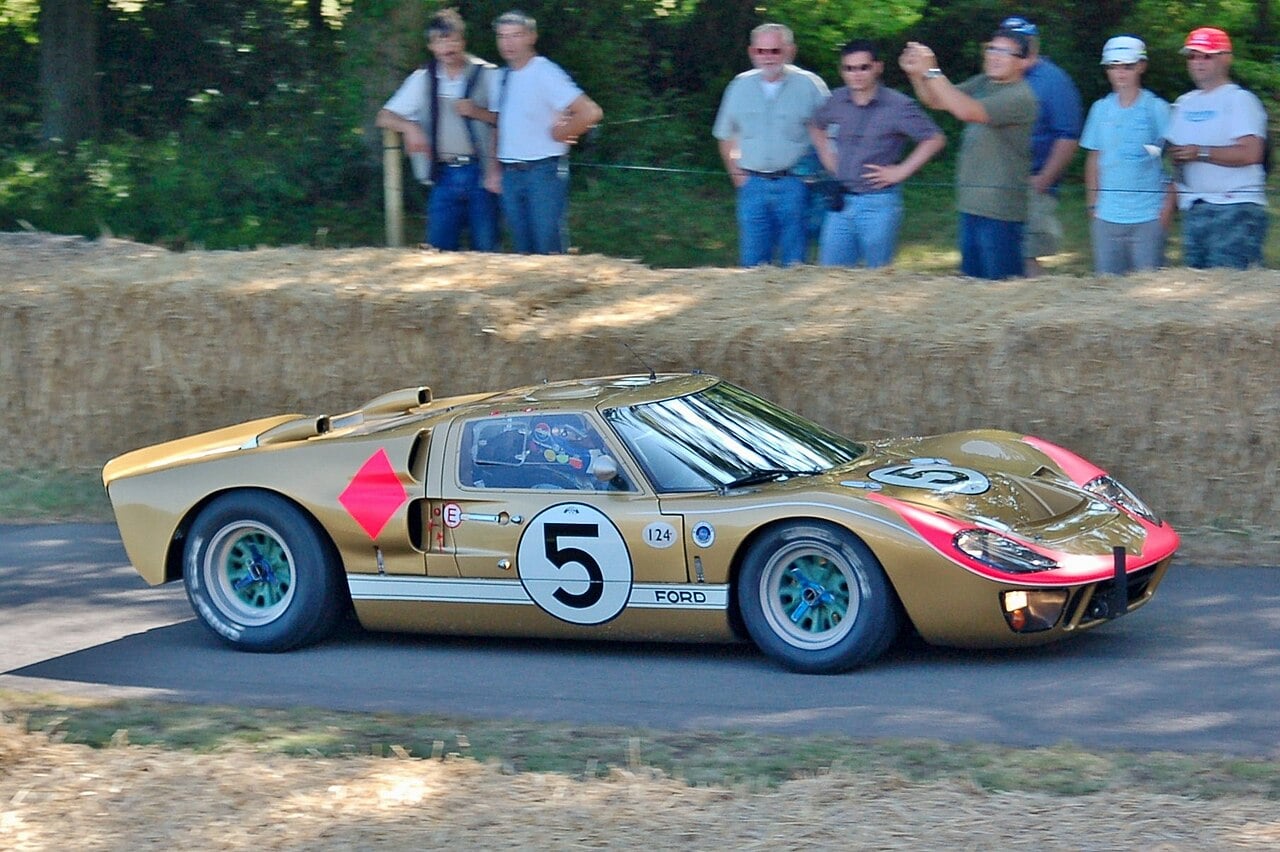
In 1966, Ford finally beat Ferrari at Le Mans, and it did it in style with a 1-2-3 finish. P/1016 was the third car in that famous lineup.
Ronnie Bucknum and Dick Hutcherson drove it to third place overall, completing the result Henry Ford II had spent millions chasing. The story of that race later reached a new audience through the film “Ford v Ferrari.”
P/1016 sold for $9,795,000 at RM Sotheby’s Monterey auction in August 2018. It was the third-highest result of that sale, which was topped by a $48.4 million Ferrari 250 GTO.
There’s a nice irony in that. The GT40 was built to beat Ferrari on the track, and at auction it still sits right behind one. For many American collectors, though, a car from the 1966 podium is about as historic as a race car gets.
10. 1935 Duesenberg Model JN (Clark Gable’s): $9,080,000
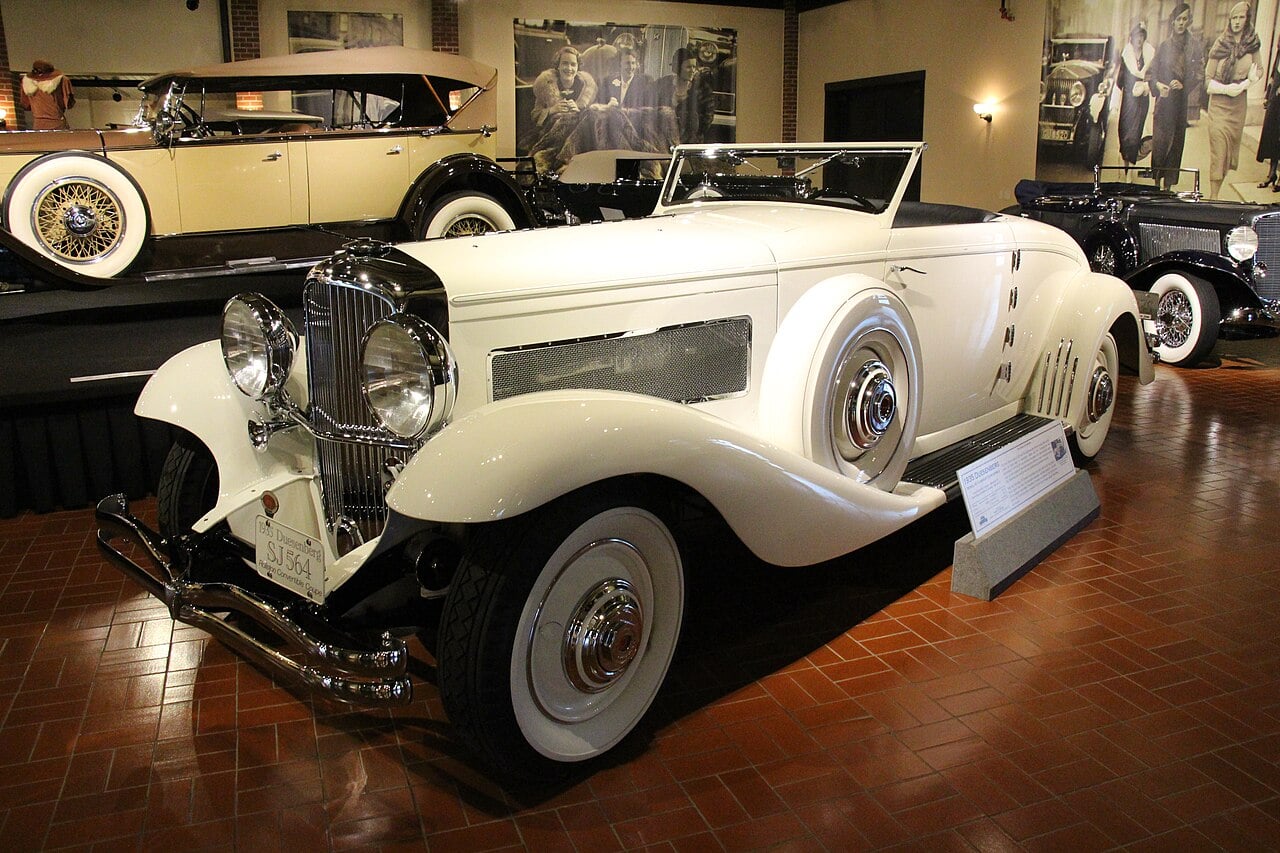
Clark Gable appears twice in the Duesenberg story. He owned the second SSJ, and he also ordered this 1935 Duesenberg JN convertible coupe new and had it customized to his own wishes.
It sold for $9,080,000 at RM Sotheby’s Monterey auction in August 2026, well above its $5.75 million to $8 million estimate. The car came from the Sam and Emily Mann Collection.
The result stunned the market for this model. Before this sale, the record for a Duesenberg JN was $594,000, so Gable’s car sold for more than 15 times the previous best.
The JN was a late, lower-slung version of the Model J, built as Duesenberg tried to modernize its look in the mid-1930s. Most are not famous, but this one belonged to the biggest star in Hollywood, and that made all the difference.
11. 1969 Ford GT40 Mk I Lightweight P/1080: $7,865,000
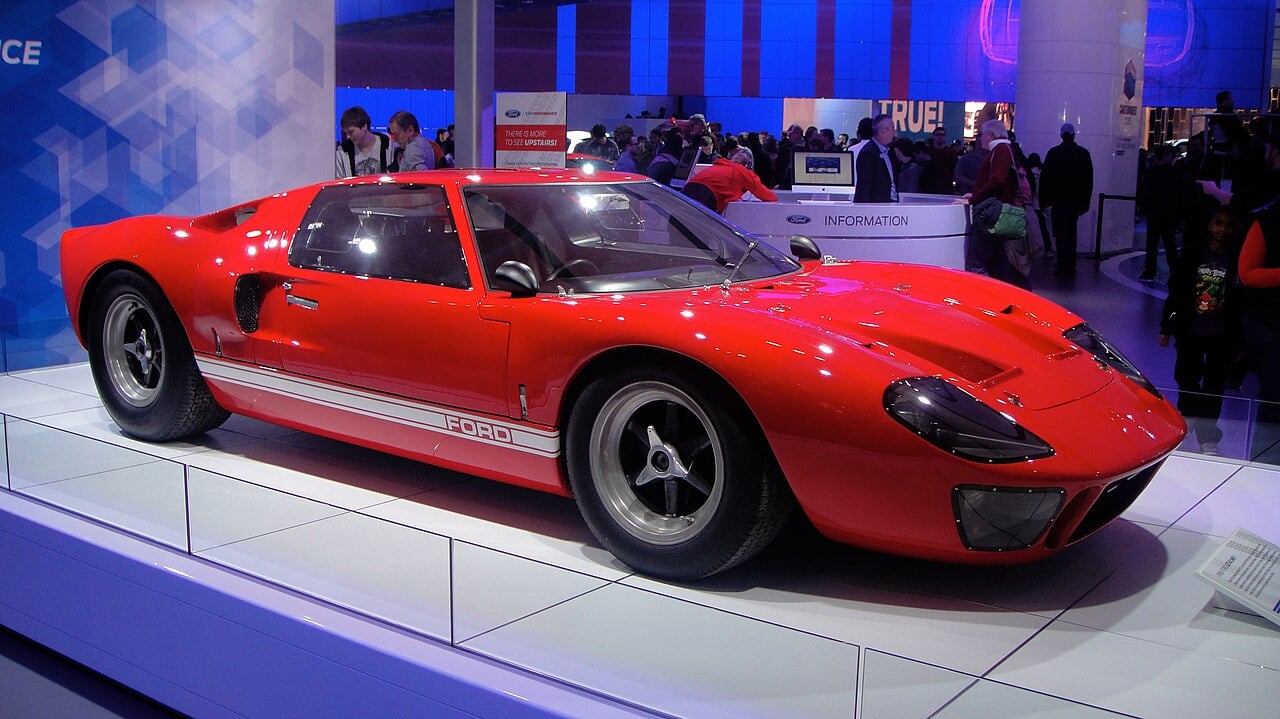
P/1080 is one of the last GT40s built by Ford Advanced Vehicles in England, and one of just 10 lightweights. It uses the 289-cubic-inch (4.7-liter) V8 with Gurney-Weslake cylinder heads.
Its racing career took an unusual turn, to Africa, where Emilio Marta drove it to win the 1972 Angolan sports car series.
What makes it so valuable today is how much of it survives. P/1080 still has its original body, engine and gearbox, which is unusual for a GT40 that raced.
The car sold for $7,865,000 at Mecum’s Monterey auction in August 2024, the top sale of that event. Mecum’s own release lists $7,850,000; most reports give the slightly higher figure. Either way, it’s proof that even late-production GT40s now command top-tier money when their history is intact.
12. 1957 Chevrolet Corvette SS (Project XP-64): $7,705,000
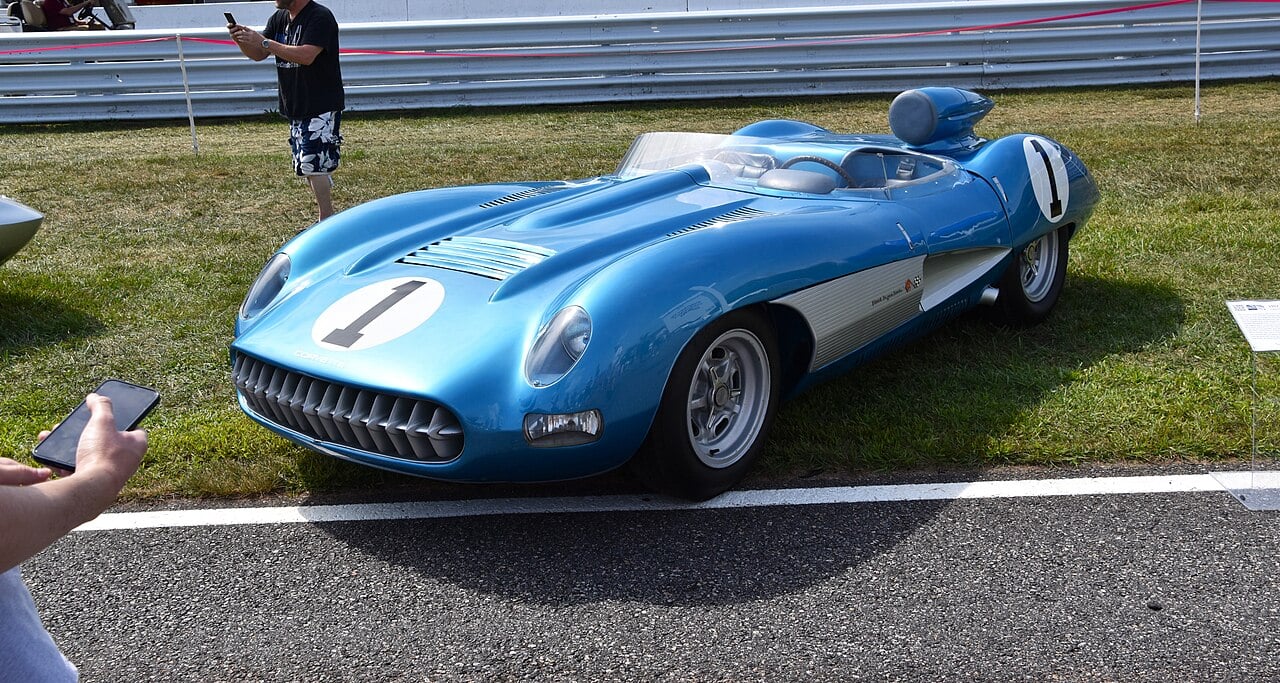
The Corvette SS was Zora Arkus-Duntov’s dream of taking the Corvette to Le Mans. Built by his team in 1957, it was billed as GM’s first purpose-built race car, and only one was ever made.
It had a short racing life. The SS debuted at the 1957 12 Hours of Sebring with John Fitch and Piero Taruffi, but retired after 23 laps. A few months later, the June 1957 AMA ban on factory racing ended the program.
The car spent decades at the Indianapolis Motor Speedway Museum. When the museum sold it at RM Sotheby’s Miami auction in February 2025, it brought $7,705,000.
That was enough to break the old Corvette record of $3.85 million, held by a 1967 L88 coupe. The record didn’t last long, though: the Grand Sport at No. 3 passed it in 2026.
13. 1965 Shelby Cobra Daytona Coupe CSX2601: $7,685,000
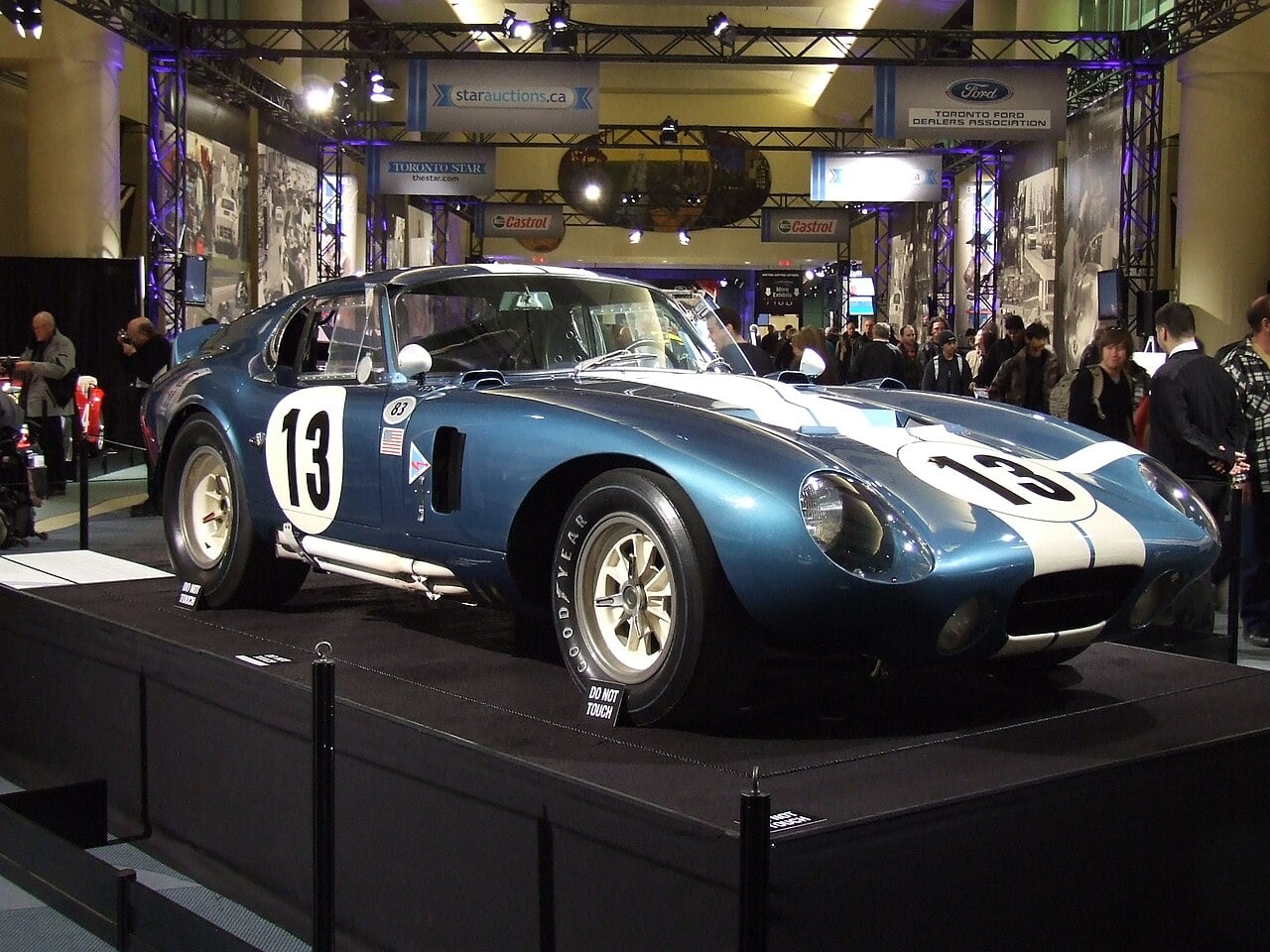
CSX2601 is the Daytona Coupe that won Shelby a world title. On July 4, 1965, Bob Bondurant drove it at Reims, France, and the result clinched the FIA GT world championship for Shelby American, the first such title for an American manufacturer.
It’s one of the six Daytona Coupes built. During 1965 it raced at Daytona, Monza, Spa and the Nürburgring as Shelby took the fight to Ferrari across Europe.
The car sold at Mecum’s Monterey auction in August 2009. The hammer fell at $7.25 million, and with the buyer’s premium the total came to $7,685,000.
At the time it was one of the biggest prices ever paid for an American car. That makes the 2026 sale of sister car CSX2300 even more remarkable: 17 years later, a Daytona Coupe brought more than five times as much.
14. 1965 Ford GT40 Roadster Prototype GT/108: $7,650,000
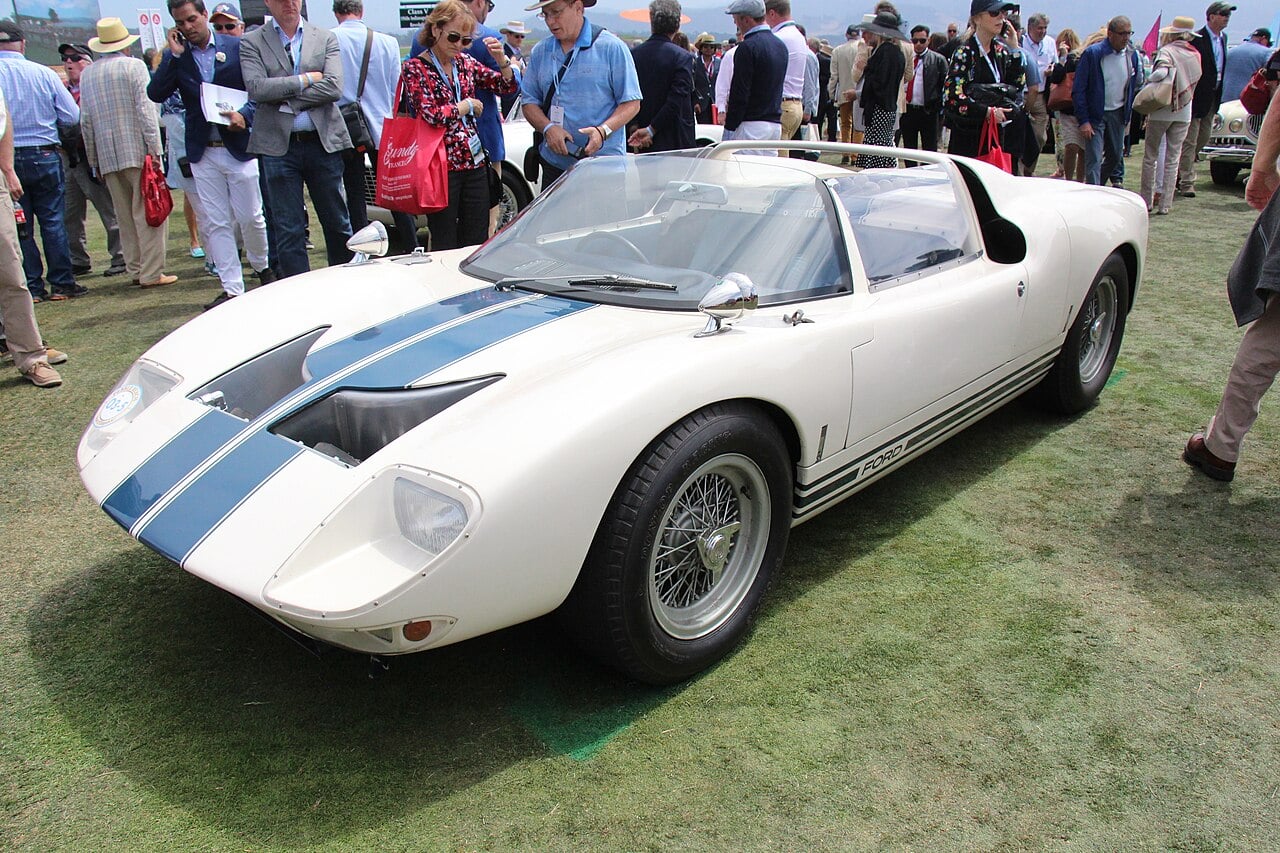
Most GT40s are coupes, but Ford also built a handful of open roadsters during development. GT/108 was the first of them.
It has a remarkable driver list. Ken Miles, Carroll Shelby and Jim Clark all drove it during development work, and Shelby once took Henry Ford II for a ride in it during a demonstration for Ford’s board.
GT/108 has sold twice at RM’s Monterey auction. In August 2014 it brought $6,930,000, and in August 2019 it sold again for $7,650,000, its highest result.
Open GT40 roadsters are among the rarest members of the family. With its link to Miles, Shelby and Ford himself, GT/108 tells the story of how the GT40 was developed in a way no production car can.
15. 1964 Ford GT40 Prototype GT/104: $7,560,000
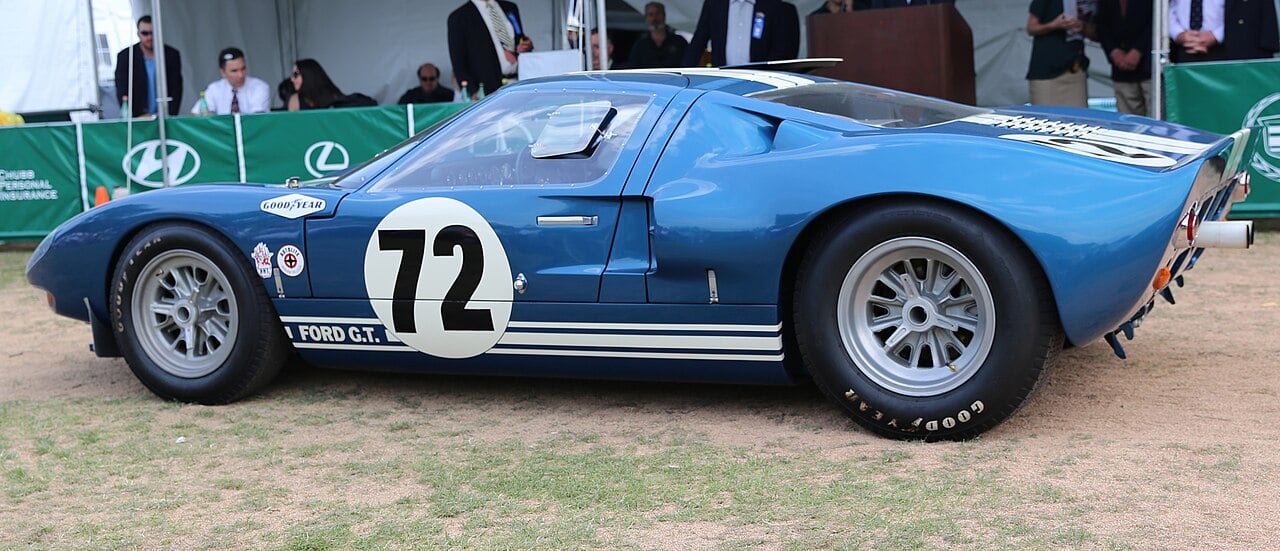
GT/104 takes the GT40 story back to the very beginning. It was the fourth GT40 ever built and is the second-oldest surviving example.
Mecum described it as the first GT40 built to Shelby American specification, from the period when Ford handed the struggling GT program to Carroll Shelby’s team to sort out. It finished third at Daytona in 1965.
The car sold at Mecum’s Houston auction in April 2014. The hammer fell at $7 million, and the total with fees came to $7,560,000.
Early prototypes like this one were test beds, so many were modified, crashed or scrapped. A 1964 prototype that survives with its history documented is a rare find, and it gave collectors a chance to own a piece of the GT40 story before the Le Mans wins.
16. 1966 Ford GT40 Mk I Road Car P/1034: $7,040,000
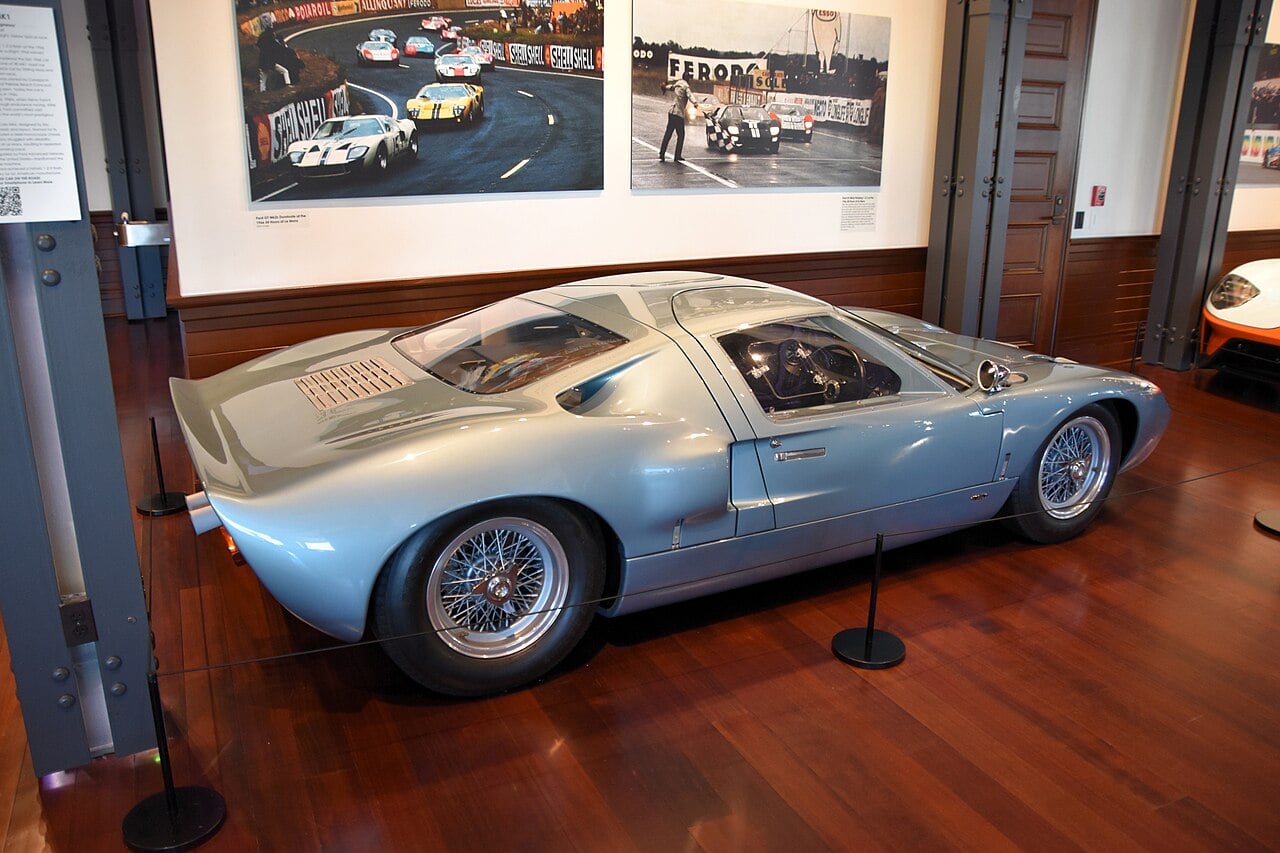
Not every GT40 was built for racing. Ford also built about 31 Mk I road cars for private buyers, with a few comforts added so they could be driven on the street.
P/1034 was the first of those road cars delivered to a private customer, which gives it a special place among them.
It sold for $7,040,000 at Mecum’s Kissimmee auction in January 2025, the top sale of that event. Kissimmee is better known for muscle cars, so a seven-figure GT40 leading the sale shows how strong demand for these cars has become.
Road-going GT40s were never common. With so few built and many later converted for racing, an early example with a clear history is one of the most desirable Fords a collector can buy.
17. 1966 Ford GT40 Mk I Road Car P/1052: $6,930,000
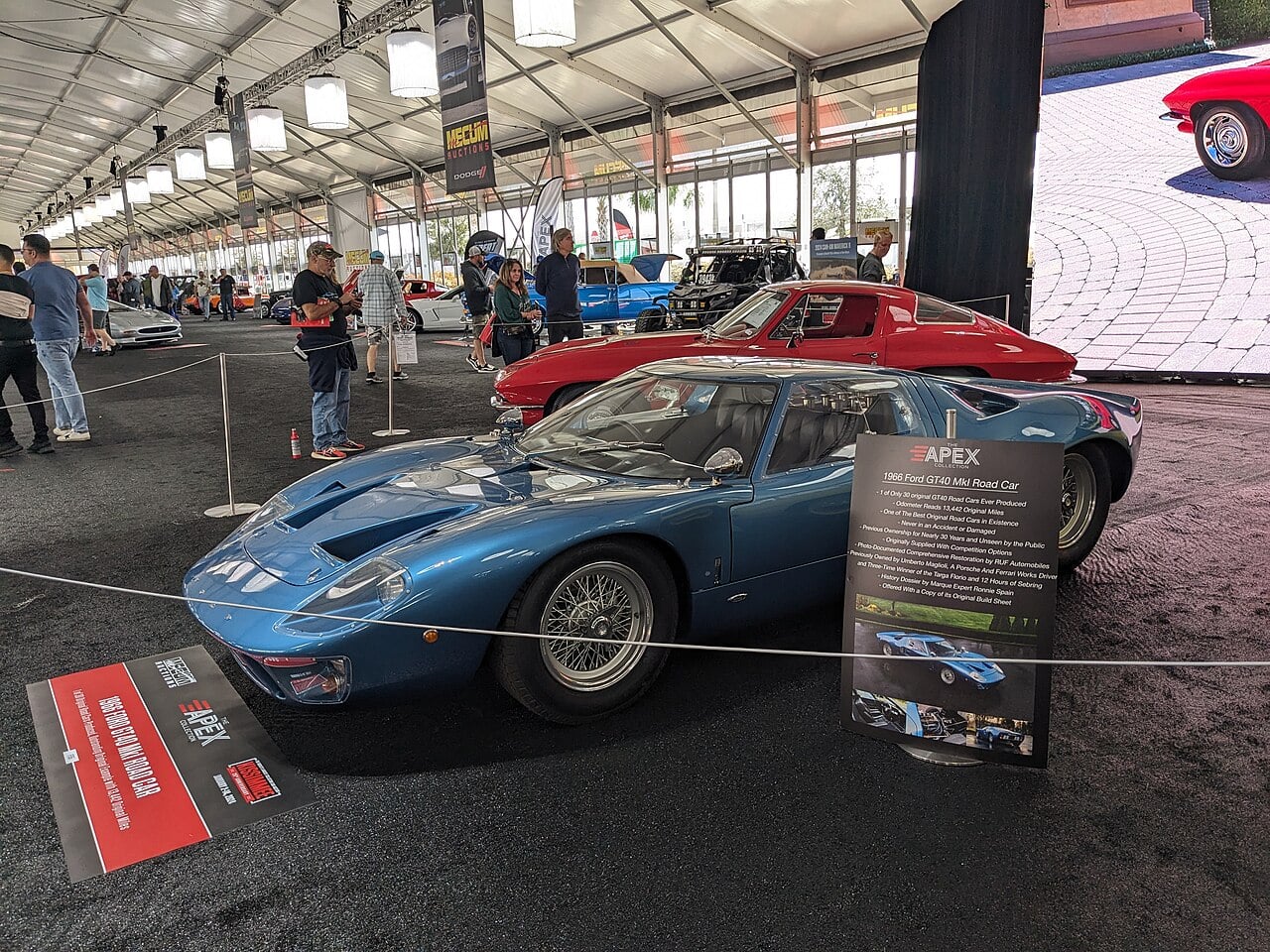
P/1052 is another of the roughly 31 GT40 road cars, and it has a European twist. It was bought new by an Italian customer and specified with race-oriented changes, according to Hagerty.
The auction signage also noted that it was once owned by works driver Umberto Maglioli, adding a racing name to its history.
It sold for $6,930,000 at Mecum’s Kissimmee auction in January 2024. A year later, its sister car P/1034 sold at the same event for slightly more, a sign of how steadily GT40 road car prices have climbed.
The Mk I road cars used the same basic layout as the racers, with a mid-mounted Ford V8 and a body that stands just 40 inches tall. That’s where the GT40 name came from, and it’s what makes even the road versions look like race cars today.
18. 1965 Shelby 427 Cobra Roadster CSX3178 (Carroll Shelby’s own): $5,940,000
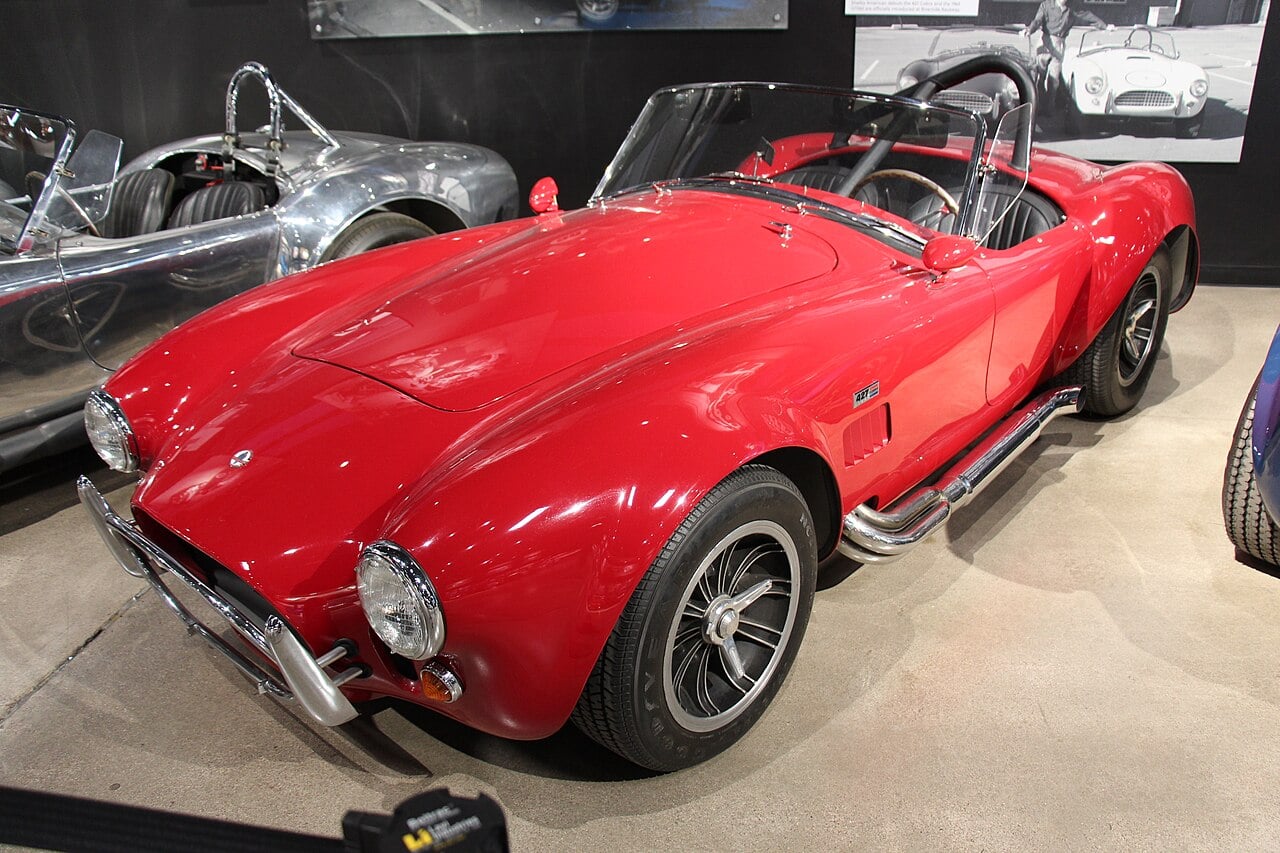
Carroll Shelby kept two very special Cobras for himself: CSX2000 at No. 4, and this 427 roadster. CSX3178 stayed in Shelby’s hands from new until his death in 2012.
The 427 Cobra was the brute of the family. It used a 427-cubic-inch big-block Ford V8 and a four-speed Toploader gearbox, in a wider, stronger body than the earlier small-block cars. This one was originally painted Charcoal Gray.
In 2019 it was restored to factory specification, a job that took about 3,000 hours. It then sold for $5,940,000 at Mecum’s Kissimmee auction in January 2021.
Owner history counts for a lot with Cobras, and nothing beats Shelby himself. That’s why this car sold for several times what a typical 427 Cobra brings.
19. 1929 Duesenberg Model J “Disappearing Top” Torpedo by Murphy: $5,725,000
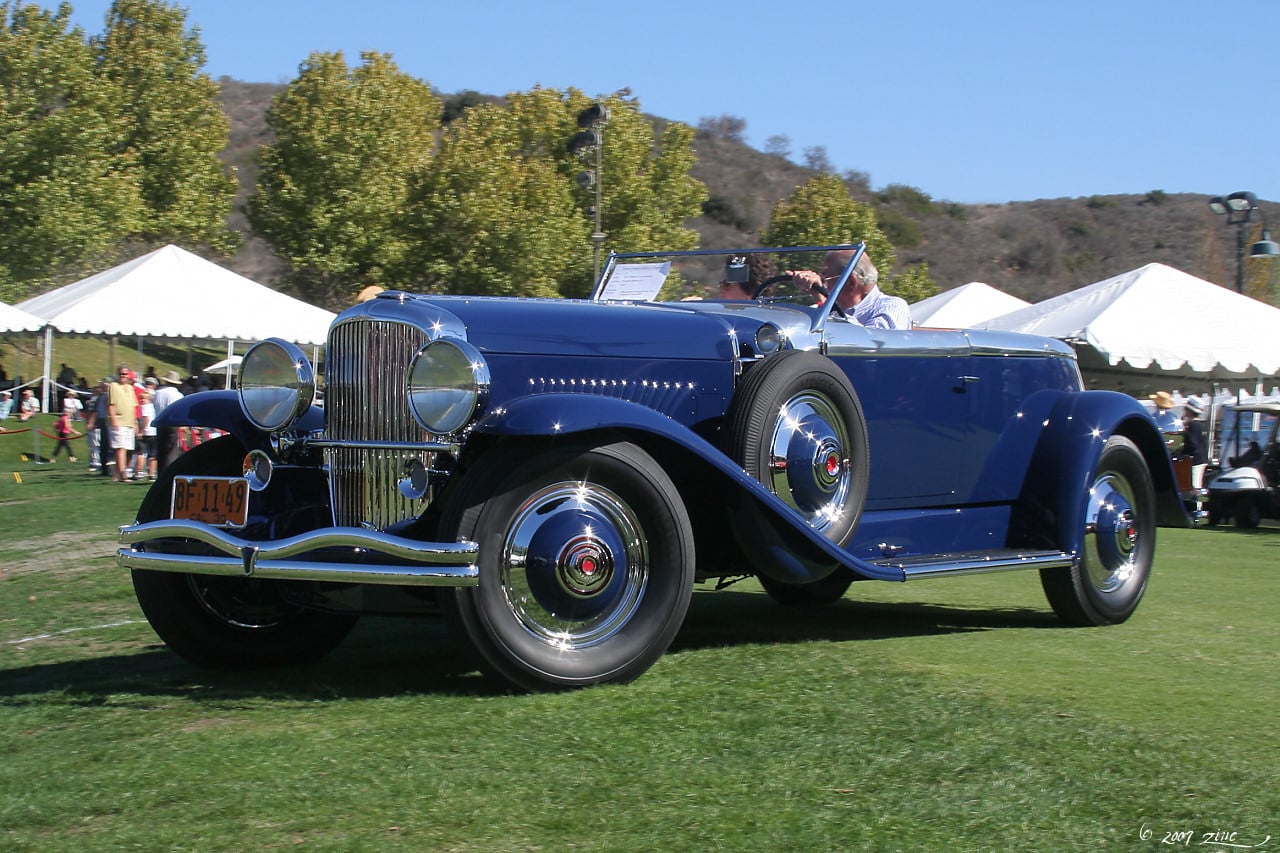
Murphy’s “Disappearing Top” design was one of the most elegant bodies ever put on a Duesenberg. When lowered, the convertible top folds away under a panel, leaving a clean, uninterrupted line.
This 1929 Model J stands out even among those cars. Its Murphy body is finished in bare polished and brushed aluminum. Only two were built that way, and this is the only survivor.
It sold for $5,725,000 at RM Sotheby’s Amelia Island auction in May 2021, beating its $3.5 million to $4 million estimate and topping the sale. According to Fox News and Hagerty reports, the same car had sold for about $3 million in 2016.
The Model J’s straight-eight engine made it one of the fastest and most powerful cars of its day. Paired with a body as striking as this one, it’s easy to see why collectors fought over it.
20. 1966 Shelby Cobra 427 Super Snake CSX3015: $5,500,000
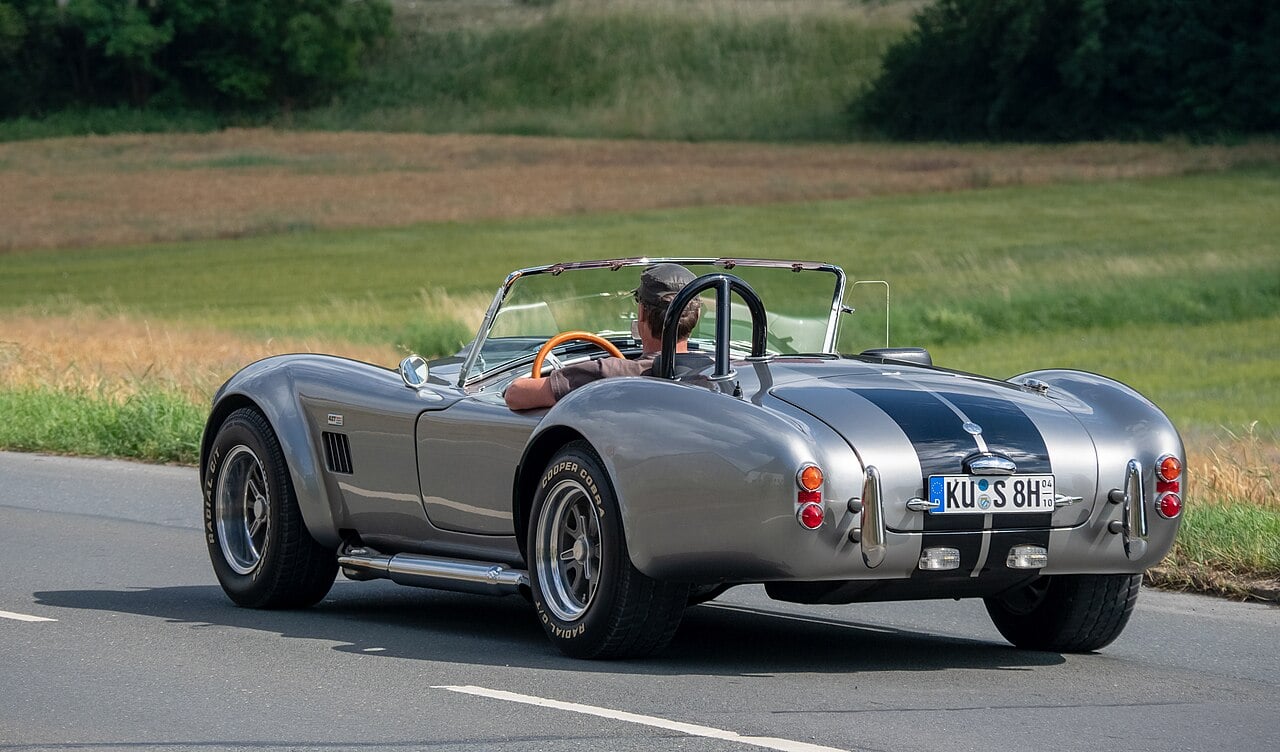
If a regular 427 Cobra wasn’t wild enough, there was the Super Snake. Only two were built. The other, CSX3303, was briefly owned by comedian Bill Cosby and was later destroyed in a crash, which leaves CSX3015 as the surviving one.
The Super Snake’s 427 V8 was fitted with twin superchargers for roughly 800 horsepower, and it used a three-speed automatic transmission, an unusual choice for a car this powerful.
CSX3015 sold for $5,500,000 at Barrett-Jackson’s Scottsdale auction in January 2007, one of the headline sales of that era. It returned to Barrett-Jackson in January 2015 and sold for $5,115,000.
Twin superchargers, Shelby’s name and a production run of two make the Super Snake one of the most extreme American cars of the 1960s, and one of the most valuable.
21. 1966 Ford GT40 Mk I Road Car P/1028: $4,840,000
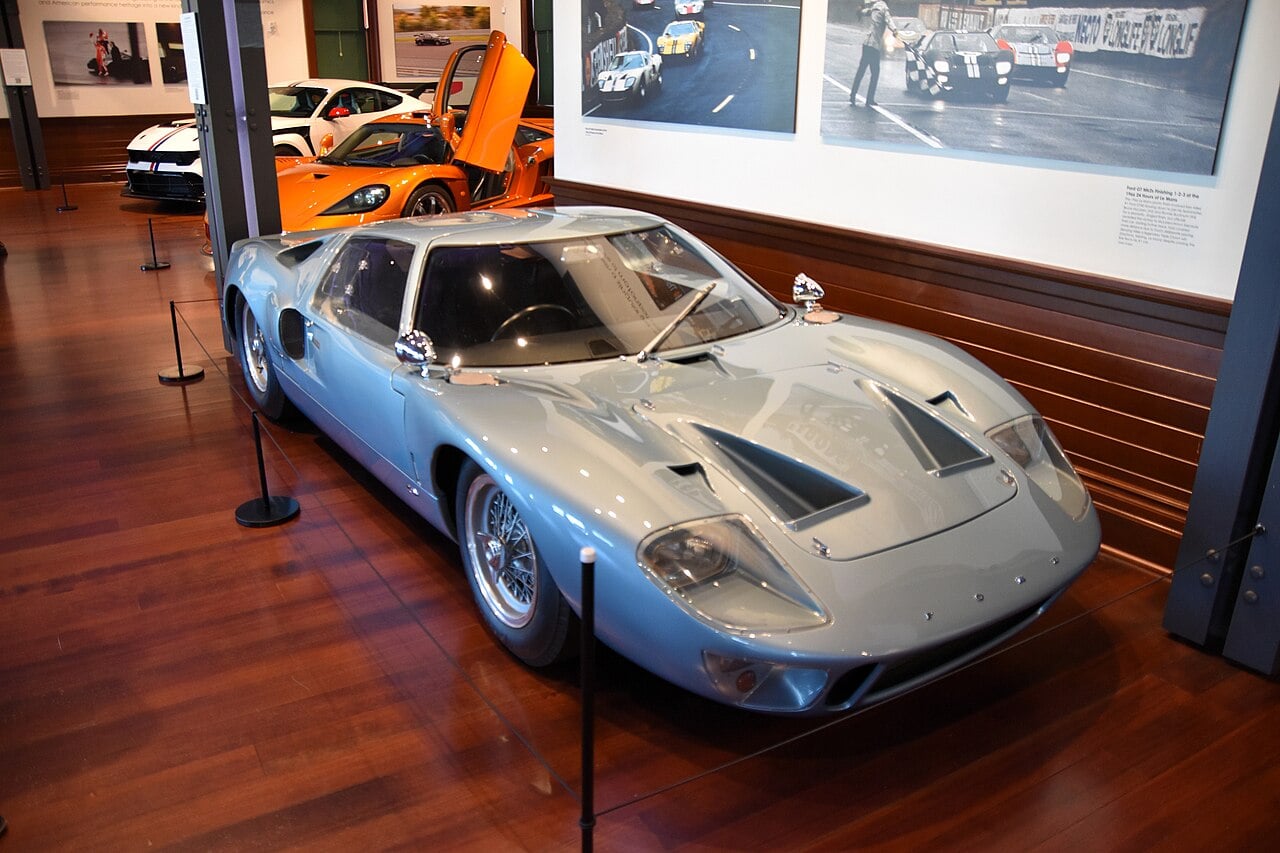
P/1028 was the first GT40 road car delivered to a customer in North America. That makes it a milestone car for American collectors, since most GT40 road cars went to Europe.
It was shown at the 2003 Monterey Historics as part of Ford’s centennial celebrations, and one owner held onto it for nearly 40 years.
The car sold for $4,840,000 at Mecum’s Monterey auction in August 2016, with a hammer price of $4.4 million. At the time it was a strong result for a road car. Since then, GT40 road car prices have climbed sharply, with P/1052 and P/1034 bringing close to $7 million in 2024 and 2025.
Long single ownership and a documented history are exactly what collectors look for, and P/1028 has both.
22. 1914 Mercer Type 35-J Raceabout: $4,790,000
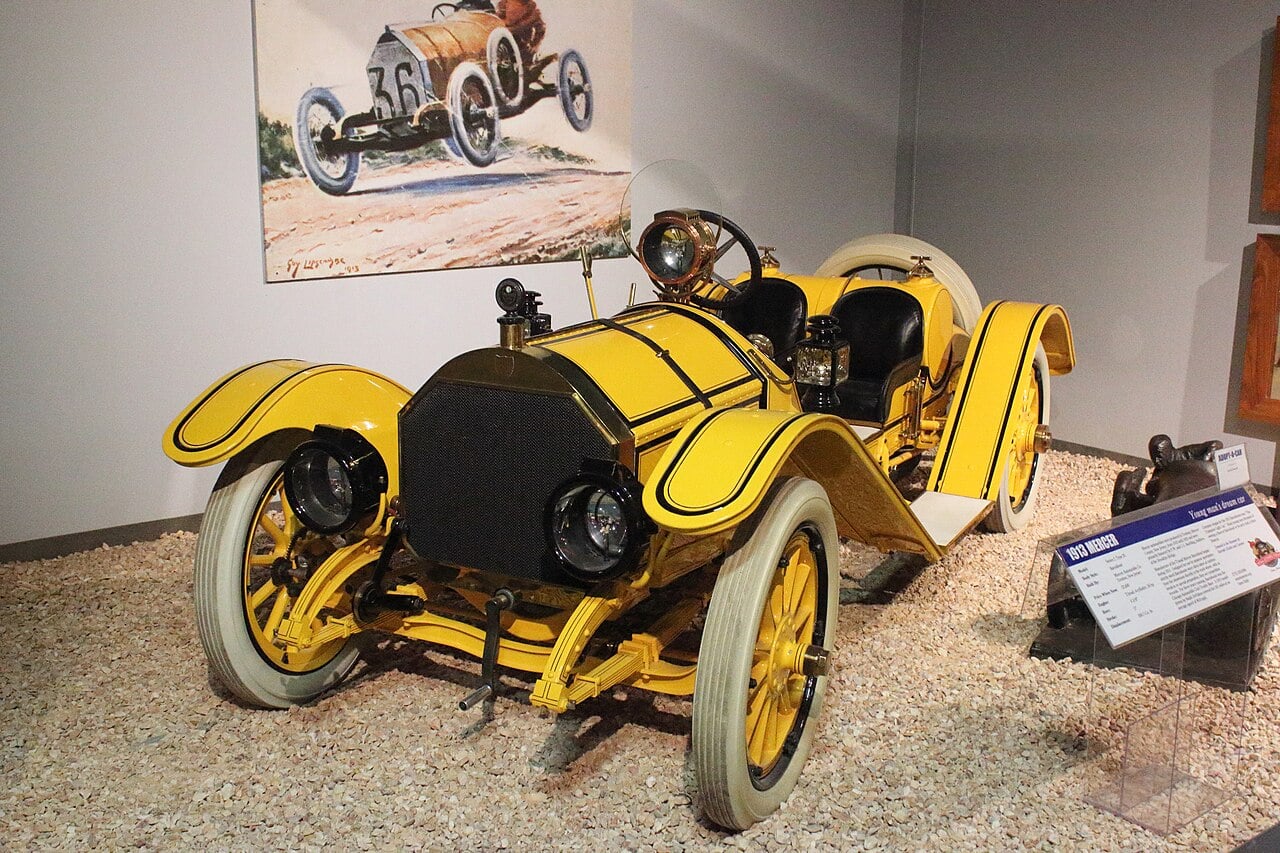
Long before the Corvette, the Mercer Raceabout was America’s sports car. Built in New Jersey, it was light, fast and stripped to the essentials, with just a pair of seats, a fuel tank and a monocle windscreen behind the engine.
This 1914 Type 35-J uses a 300-cubic-inch T-head four-cylinder engine making 58 horsepower, through a four-speed gearbox. That was plenty in an era when most cars were heavy touring machines.
It has racing history too. Ralph De Palma drove it in the 1936 Vanderbilt Cup Old-Timer race, and it was the centerpiece of the Jerry S. Foley III collection for more than 50 years.
At Gooding & Company’s Pebble Beach auction in August 2023, it sold for $4,790,000, well above its $3 million to $4 million estimate. More than a century after it was built, it still outsells most modern supercars.
23. 1935 Duesenberg Model J Convertible Coupe by Rollston: $4,680,000
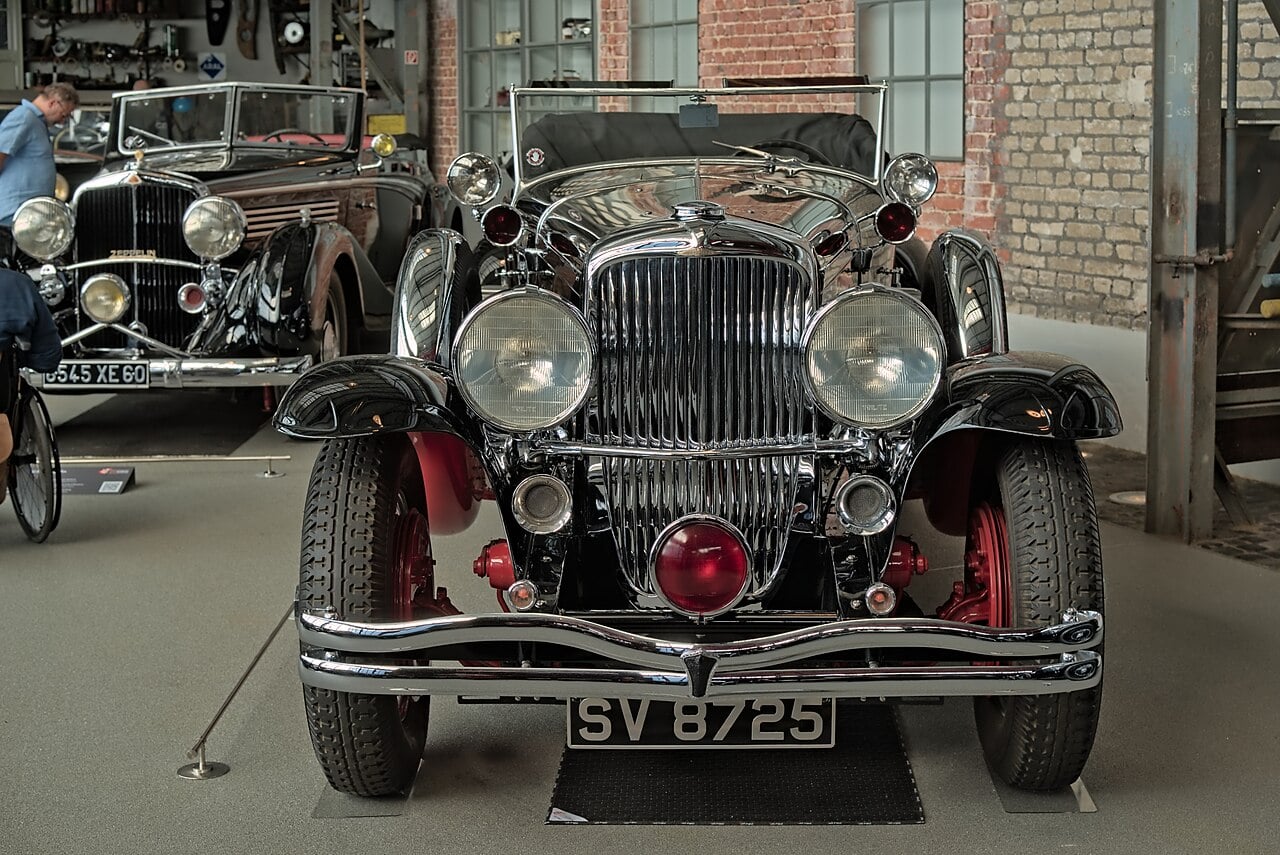
This 1935 Model J (chassis 2576) carries the only Rollston body built to this design on a Duesenberg chassis. It’s also numbers-matching, which matters greatly to Duesenberg collectors.
Its ownership history spans continents. The first owner was Isabel Townsend Pell, and the car later spent time in France and Cuba.
From 1967 to 2022, it belonged to Terence Adderley, who kept it for about 55 years. When it came to RM Sotheby’s Monterey auction in August 2022 after that long ownership, it sold for $4,680,000.
Cars that have been out of sight for decades often bring strong prices, because collectors know another chance may not come along for a generation. A one-off body and matching numbers made this Rollston coupe a rare opportunity.
24. 1966 Batmobile: $4,620,000
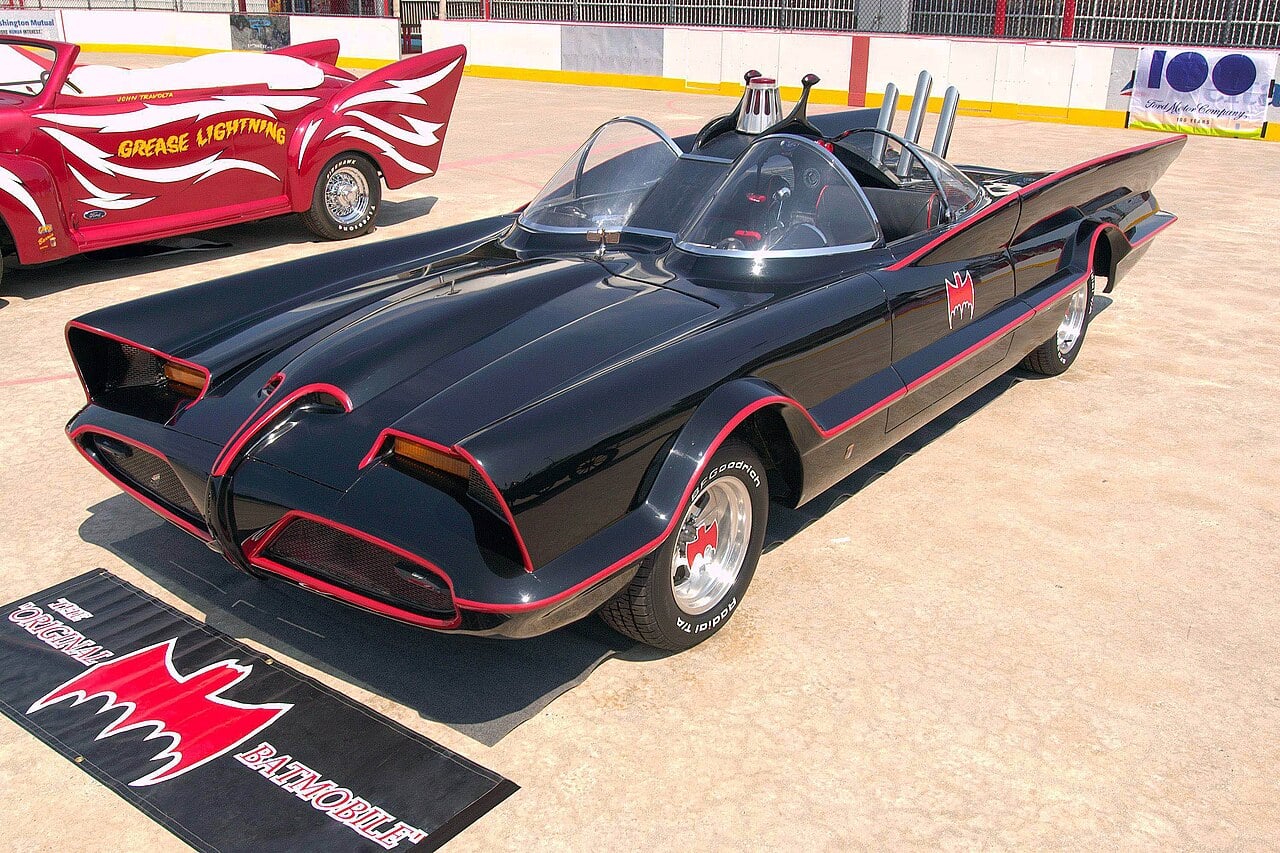
Not every expensive American car was built for racing or royalty. The original Batmobile from the 1966 “Batman” TV series started life as a Ford concept car.
That car was the 1955 Lincoln Futura, a one-off show car. Customizer George Barris turned it into the Batmobile for the series, adding the bat-shaped fins and the gadgets that made it famous.
The original Batmobile sold for $4,620,000 at Barrett-Jackson’s Scottsdale auction in January 2013. The hammer price was $4.2 million, and the buyer was collector Rick Champagne.
Barris built several copies over the years, but this was the real thing. A one-off Lincoln concept car turned into one of the most famous cars in TV history: no other car on this list has that kind of pop-culture pull.
25. 1935 Duesenberg SJ Convertible Coupe by Walker-LaGrande: $4,510,000
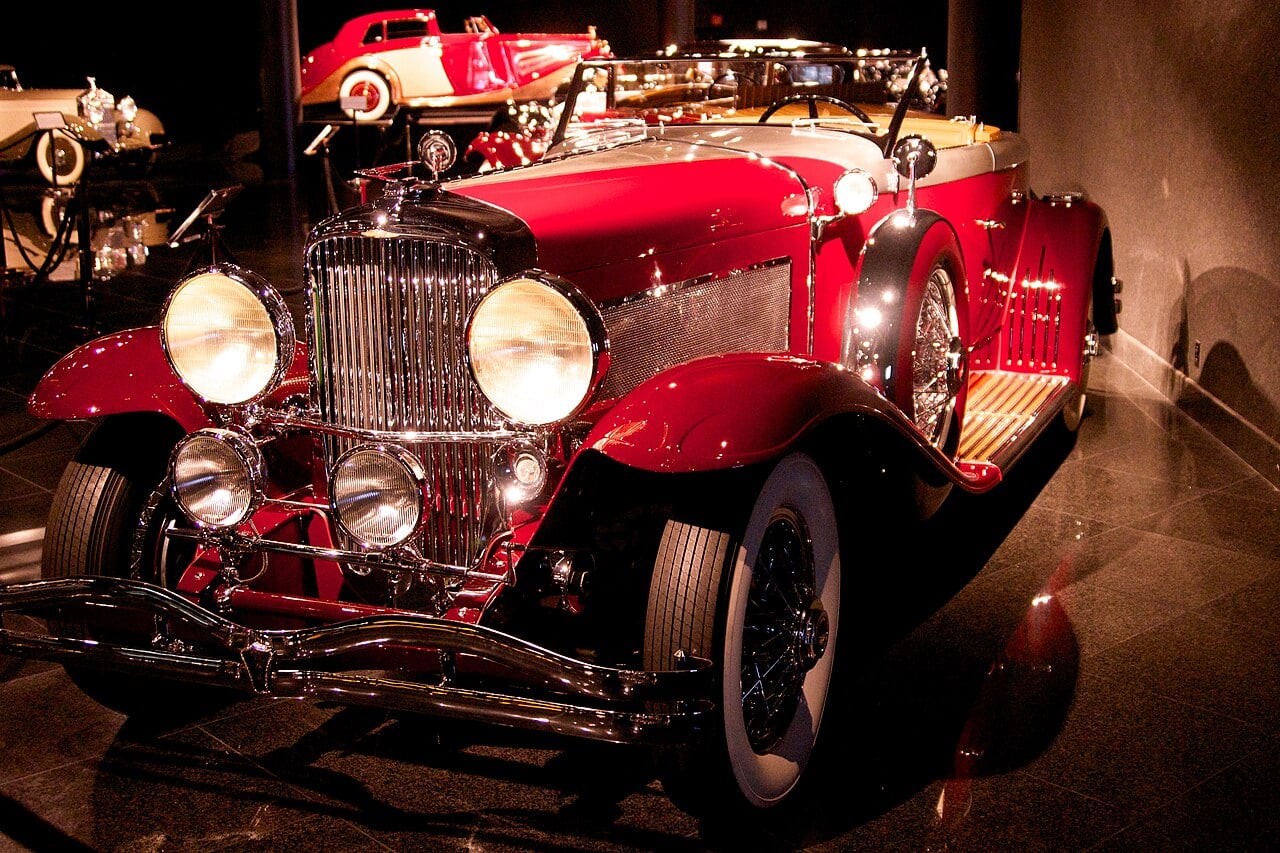
Duesenberg’s supercharged SJ was the fastest version of the Model J, and this 1935 example carries one of the rarest bodies of all. Walker-LaGrande built just three convertible coupes in this style.
The SJ’s supercharger was visible from outside through the chrome exhaust pipes that snaked out of the hood. They became a Duesenberg trademark that owners of non-supercharged cars sometimes added just for the look.
At RM Auctions’ Amelia Island sale in March 2013, this SJ sold for $4,510,000, roughly double its estimate, and it was the top seller of the auction.
Supercharged power, a three-car production run and a coachbuilt body made it one of the strongest Duesenberg results of its time. More than a decade later, it still ranks among the top 30 American cars ever sold.
26. 1935 Duesenberg SJ Special “Mormon Meteor”: $4,455,000
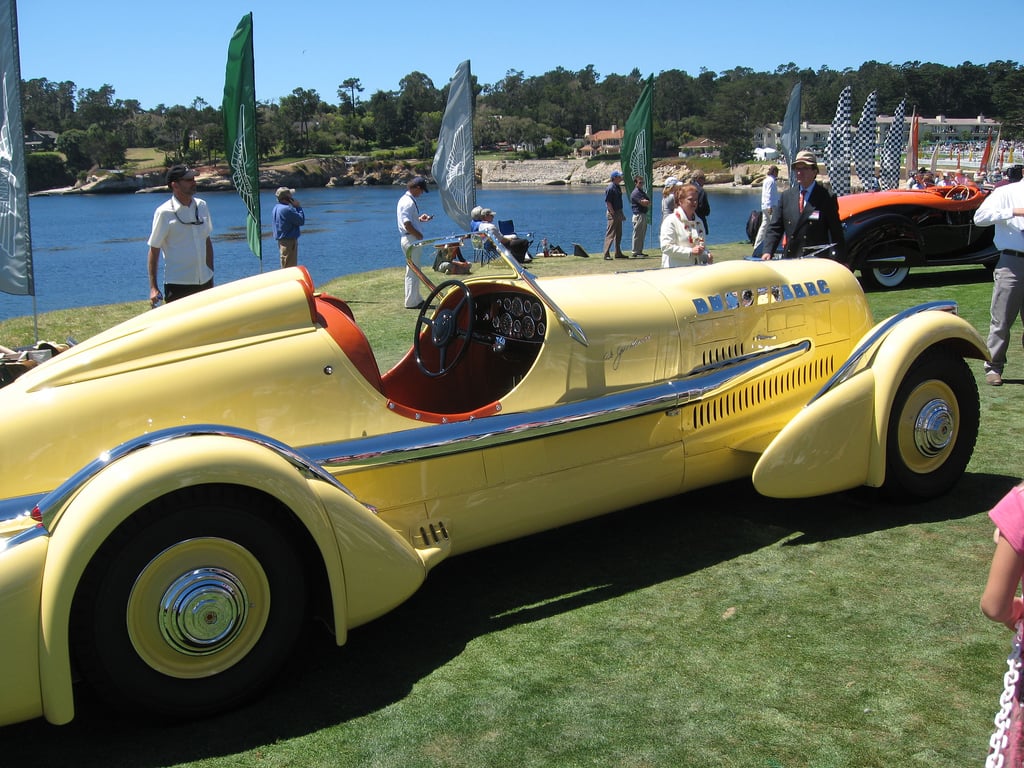
The Mormon Meteor was built for speed records, not showrooms. Utah racer Ab Jenkins used this special SJ to set endurance records on the Bonneville Salt Flats in the 1930s.
The car was eventually sold by the Kershaw family. It brought $4,455,000 at Gooding & Company’s Pebble Beach auction in August 2004 (some reports list $4,445,000). At the time, that was the highest price ever paid at auction for a Duesenberg.
New owner Harry Yeaggy then took it to the Pebble Beach Concours d’Elegance, where it won Best of Show in 2007.
Few classics combine record-setting history with concours glory. The Mormon Meteor did both, and it remains one of the most famous Duesenbergs ever built.
27. 1967 Ford GT40 Mk I Road Car P/1069: $4,405,000
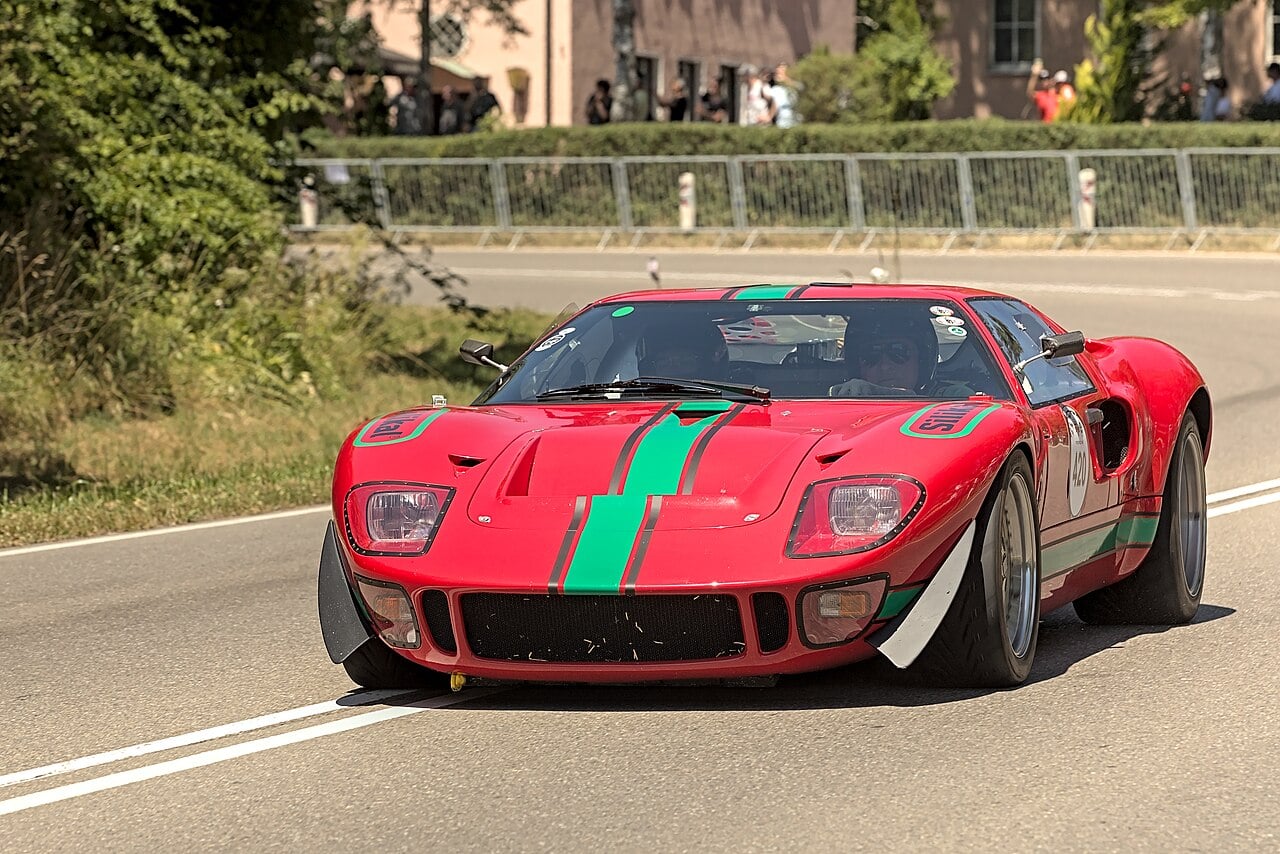
P/1069 was ordered by Ford USA as a Mk I road car, but it ended up across the Atlantic. It became part of Ford UK’s press fleet and was road-registered in Britain in July 1968, giving journalists of the day a chance to drive a GT40.
That press-car history sets it apart from the other road cars on this list. Most GT40s were sold to racing teams or wealthy customers; very few were handed to magazine writers to test.
The car sold for $4,405,000 at Broad Arrow’s Amelia Island auction in March 2024, the top sale of that event.
With roughly 31 GT40 road cars built, each one has its own story. This one’s role in showing the car to the public makes it one of the more unusual GT40s to come to market.
28. 1935 Duesenberg Model J Torpedo Phaeton by Walker-LaGrande: $4,405,000
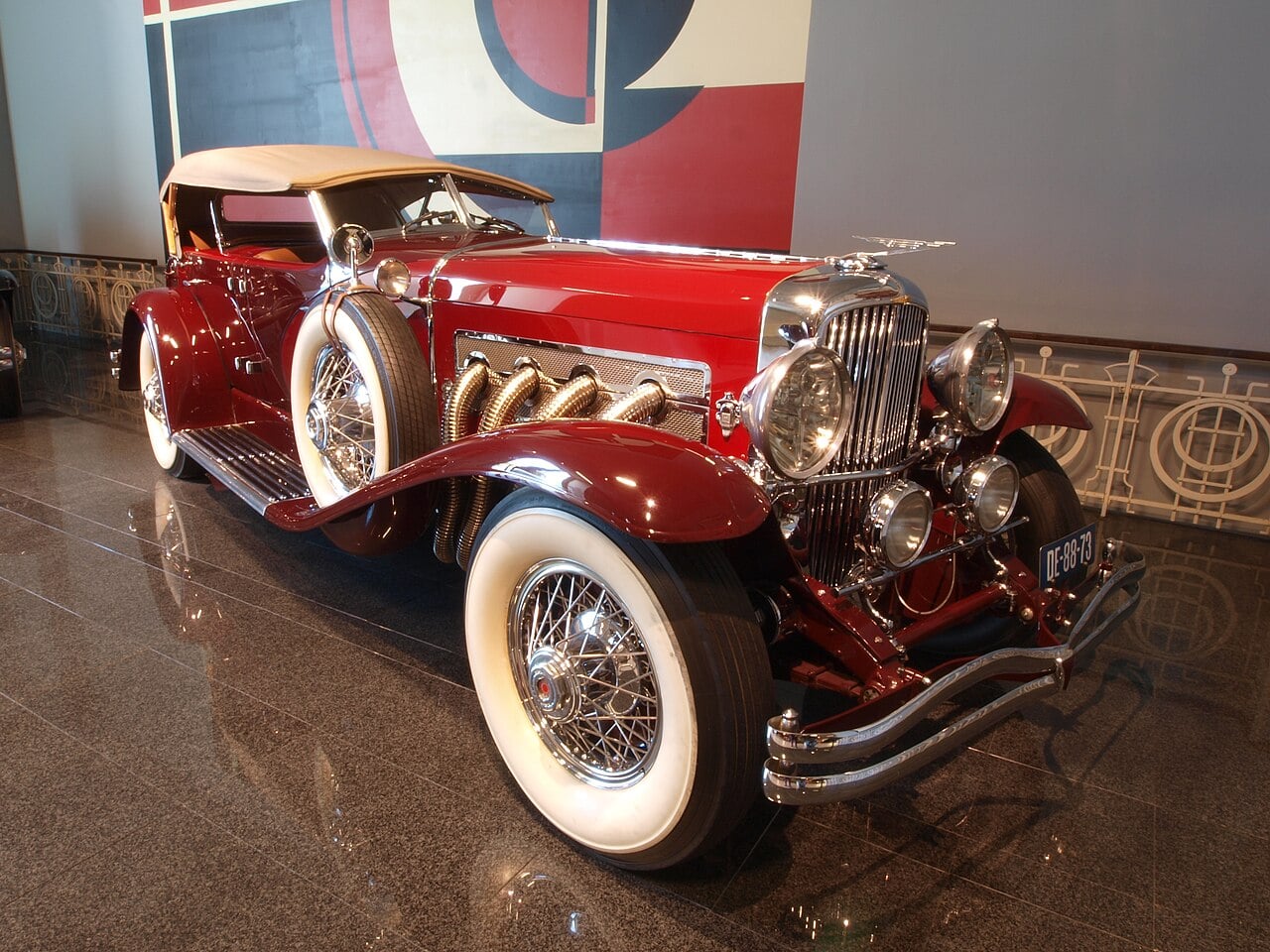
This 1935 Model J (chassis 2583) carries a Torpedo Phaeton body, an open touring style with a long, tapering tail. Only five were built in this style, and just two of those came from Walker-LaGrande.
It has already proven itself on the show lawn, with a first-in-class award at the Pebble Beach Concours d’Elegance.
The car sold for $4,405,000 at RM Sotheby’s Monterey auction in August 2025, the top Duesenberg sale of that year’s Monterey Car Week. That ties it with GT40 P/1069 on price.
Duesenberg sold only around 480 Model Js in total, and most carried unique or near-unique coachwork. That’s why the same chassis can bring wildly different prices depending on the body, its history and its condition. A rare, award-winning body like this one sits near the top of that range.
29. 1935 Duesenberg SJ Town Car by Bohman & Schwartz: $4,400,000
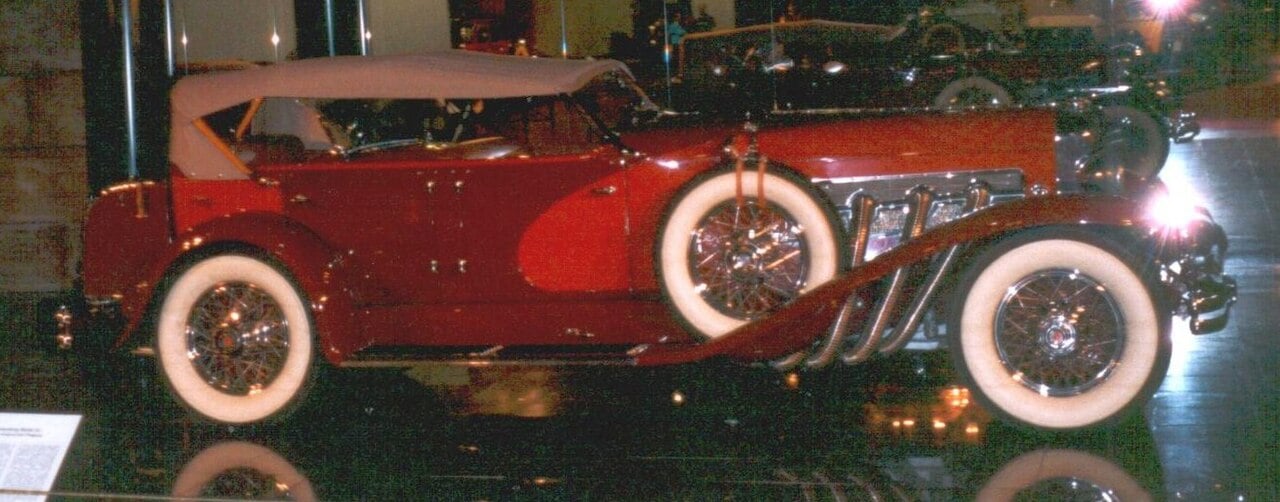
This supercharged Duesenberg has a Hollywood backstory. It was designed for actress Mae West, who ended up choosing a different car. It was instead bought by Ethel Mars, of the Mars candy family, which is why collectors call it the “Mars” car.
Its formal town car body was built by Bohman & Schwartz, a Pasadena coachbuilder known for its work for Hollywood clients.
The car sold for $4,400,000 at RM Auctions’ Monterey sale in August 2007, the second-highest result of that auction. That was an enormous price for a Duesenberg at the time, three years after the Mormon Meteor set the marque record.
RM later sold a “Mars Town Car” at Fort Worth in 2015 for $3,630,000. It’s probably the same car, but that hasn’t been confirmed, so only the 2007 price is counted here.
30. 1934 Packard 1108 Twelve Sport Phaeton by LeBaron: $4,295,000
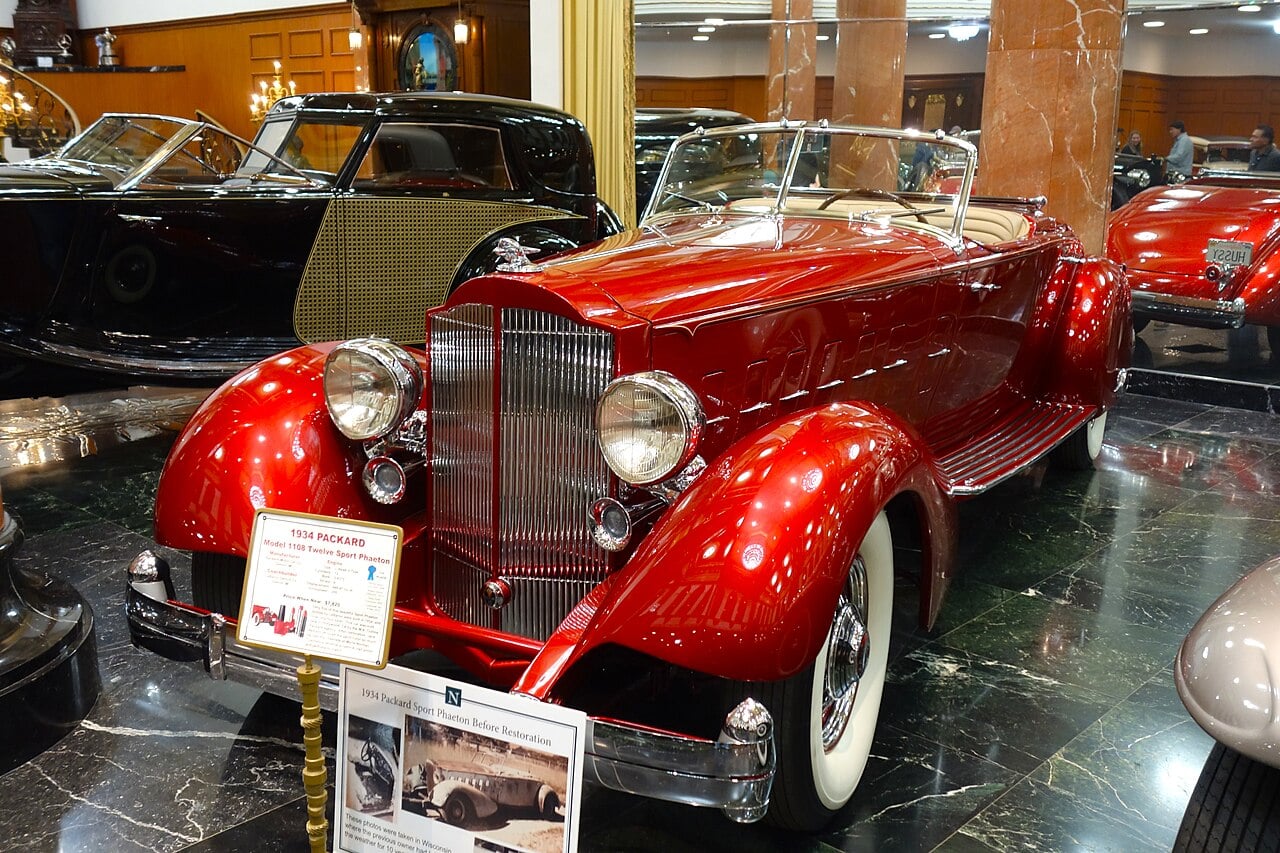
Packard was one of America’s great luxury makers, and the 1934 Twelve was its finest hour. This 1108 Twelve Individual Custom Sport Phaeton, bodied by LeBaron, sold for $4,295,000 at RM Sotheby’s Monterey auction in August 2026.
That price set the auction record for any Packard. According to RM, this is one of only four surviving original examples.
Its provenance is strong. The car was part of the famous Harrah collection and was later owned by General William Lyon, a well-known collector of American classics. It sold within its $4 million to $5 million estimate.
The Twelve’s smooth V12 engine and long, low LeBaron body show just how far American luxury cars had come by the mid-1930s. It rounds out the list as proof that Duesenberg wasn’t the only American maker building cars fit for a king.
How American Collector Car Values Are Determined
Several factors work together to set the price tag on a collector car, and no single element tells the whole story. You need to weigh rarity, history, and sale context together to understand why one car sells for $50,000 and a similar-looking model sells for $5 million.
Rarity, Provenance, And Historical Significance
Production numbers matter directly to what you’ll pay for a car. A Duesenberg SSJ with only two units built commands a different price bracket than a mass-produced muscle car with tens of thousands of copies.
Provenance adds another layer to the equation. A car once owned by a celebrity, a factory racing team, or a notable historical figure carries documentation that separates it from an otherwise identical model.
Historical significance also plays a role you shouldn’t overlook:
- First-of-its-kind engineering (early fuel injection, first V8 in a given class)
- Racing pedigree with verified competition history
- Design influence on later production models
- Cultural connection to a specific era or movement
Original, unrestored condition (“survivor” status) typically increases value over cars that have been heavily modified or restored.
Auction Results Versus Private-Sale Prices
Auction results give you the most visible data point, since public sales get recorded and reported by houses like Barrett-Jackson, Mecum, and RM Sotheby’s. These figures include the buyer’s premium, which typically adds 10-15% on top of the hammer price.
Ownership Considerations For Ultra-High-Value Vehicles
Owning a car worth six or seven figures brings responsibilities beyond the purchase price. You need to verify what you’re buying, protect it from damage or theft, and keep it running properly, and each of these tasks carries its own costs and requirements.
Authentication, Documentation, And Preservation
You should never buy a rare American car without full verification of its identity. This includes matching numbers on the engine, chassis, and transmission, along with a clear title history.
Build sheets, factory invoices, and original window stickers add significant value and confirm authenticity. If you’re buying a limited-production model, ask for documentation showing where it falls in the production sequence.
Keep these records in mind when preserving your vehicle’s value:
- Service history: Every repair, part replacement, and inspection should be logged.
- Ownership chain: A documented history from the original buyer to you reduces disputes later.
- Restoration records: If work was done, you need receipts and photos showing the process.
- Certificates of authenticity: Some manufacturers or clubs issue these for verified original vehicles.
Storage conditions also affect preservation. You should avoid extreme temperature swings and humidity, since both accelerate deterioration of paint, upholstery, and mechanical seals.
Storage And Specialist Maintenance
Storage matters just as much as paperwork. A climate-controlled garage protects your investment from rust, cracking, and pest damage, and many owners install monitored security systems or alarms as an added layer of protection.
Maintenance requires specialists, not general mechanics. You should work with technicians who have direct experience with your specific make and model, since many ultra-high-value cars use components that aren’t available through standard parts suppliers.