The 30 Best Economy Sports Cars Ever Made: Affordable Performance That Changed Driving Forever
Sports cars have traditionally been associated with luxury price tags and exclusive ownership, but the automotive industry has consistently produced affordable alternatives that deliver genuine driving excitement without breaking the bank.
The market has evolved significantly over the past three decades, with manufacturers recognizing that enthusiasts exist across all income levels.
Economy sports cars prove that exceptional handling, engaging performance, and pure driving joy don’t require six-figure investments.
From lightweight Japanese roadsters to turbocharged hot hatches, these vehicles demonstrate that smart engineering and focused design can create thrilling experiences at accessible prices.
They range from iconic models that revolutionized their segments to modern interpretations that blend classic sports car principles with contemporary efficiency and technology.
Here are the 30 best economy sports cars ever made:
1. Mazda MX-5 Miata
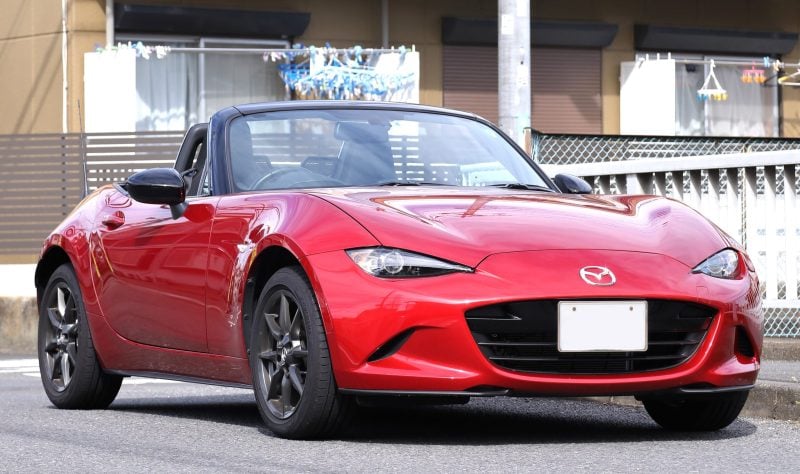
The Mazda MX-5 Miata stands as the world’s best-selling two-seat convertible sports car. Since its 1989 debut, over 1.2 million units have been produced globally.
The MX-5 delivers pure driving enjoyment through its lightweight design and rear-wheel-drive configuration. Its go-kart-like handling characteristics make it accessible to drivers of all skill levels.
Mazda positioned the Miata as an affordable entry point into sports car ownership. The formula combines open-top motoring with reliable engineering and low running costs.
The car’s success spans multiple generations and racing series. Spec Miata and MX-5 Cup racing have made it one of the most raced vehicles in motorsports.
The MX-5’s enduring appeal lies in its focus on driving fundamentals rather than raw power. This approach has maintained its reputation as an ideal first sports car for over three decades.
2. Toyota GR86
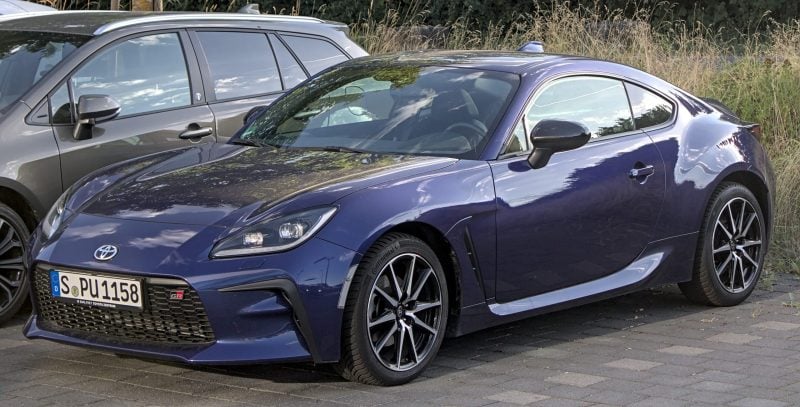
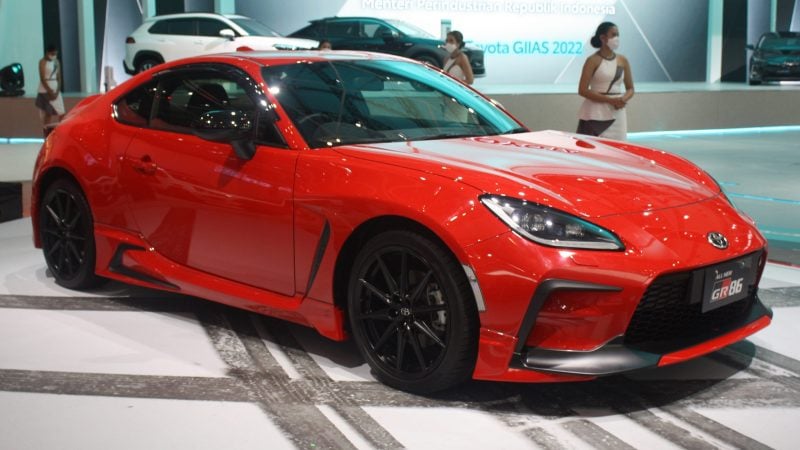
The Toyota GR86 stands as one of the most affordable sports cars available today. Starting at $29,950, it delivers genuine sports car performance without breaking the bank.
The GR86 features a 2.4-liter boxer engine producing 228 horsepower and 184 lb-ft of torque. Power goes exclusively to the rear wheels through either a 6-speed manual or automatic transmission.
This car evolved from the Toyota 86 and Scion FR-S through Toyota’s partnership with Subaru. The collaboration has produced a lightweight, well-balanced sports coupe that prioritizes driving engagement.
The GR86 weighs significantly less than many competitors while delivering comparable power. Its low center of gravity and rear-wheel-drive layout create an authentic sports car experience.
Toyota designed the GR86 specifically for driving enthusiasts who want affordable performance. The car offers proper sports car dynamics at roughly half the price of premium alternatives.
3. Honda S2000
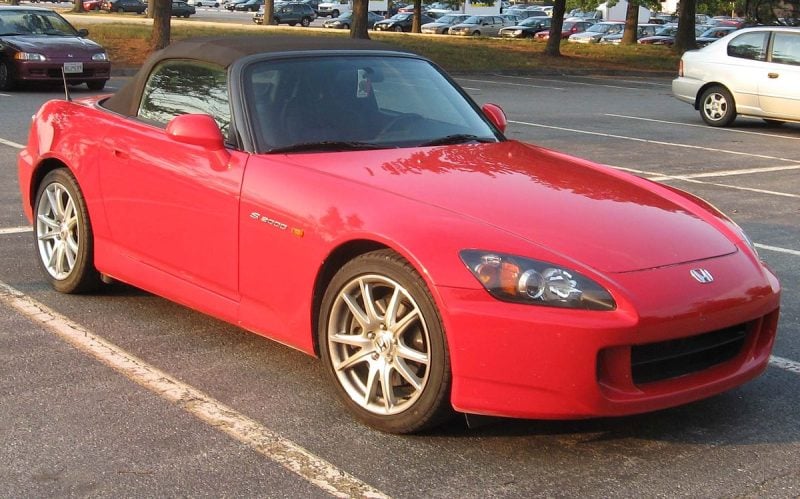
Honda launched the S2000 in 1999 to celebrate the company’s 50th anniversary. The two-seater roadster featured a naturally aspirated F20C four-cylinder engine that delivered exceptional performance.
The car came in two generations: the AP1 and AP2 models. Both variants maintained nearly identical styling throughout the production run.
Honda produced approximately 110,000 units worldwide during the S2000’s decade-long production span. The vehicle represented Honda’s return to front-engine, rear-wheel-drive sports cars after the S800 ended in 1970.
The S2000 earned recognition for its high-revving engine and precise handling characteristics. Its minimalist design approach focused on delivering pure driving engagement without unnecessary complexity.
Today, the S2000 commands strong resale values in the used car market. Enthusiasts appreciate its analog driving experience and reliable mechanical components.
4. Subaru BRZ
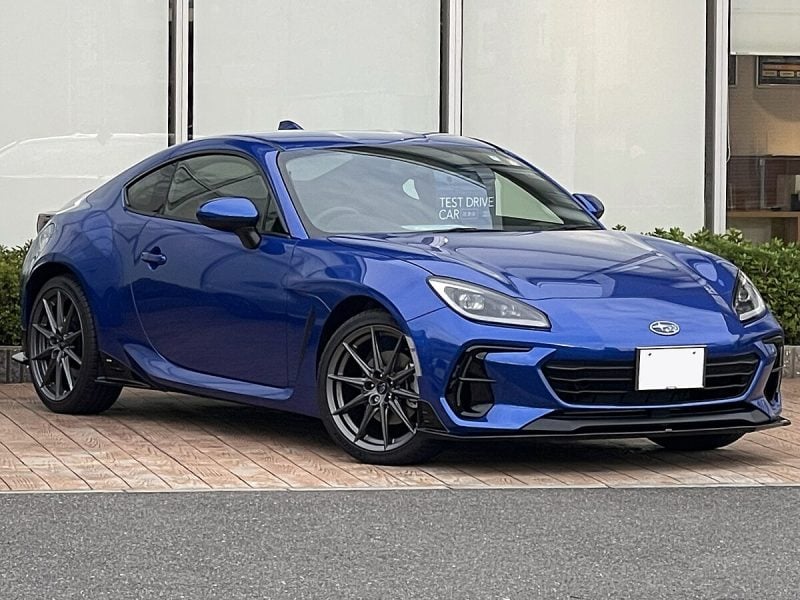
The Subaru BRZ debuted in 2013 as an affordable rear-wheel drive sports car. Developed jointly with Toyota, it brought accessible performance to budget-conscious enthusiasts.
The BRZ features a naturally aspirated four-cylinder engine paired with rear-wheel drive. This lightweight combination delivers engaging handling characteristics that make it suitable for both daily driving and weekend track events.
Fuel economy stands at 25 mpg combined, making it practical for regular use. The car offers decent trunk space and comfortable seating for two occupants.
The 2025 model year received updates including enhanced technology and improved performance. The BRZ tS variant adds STI-tuned suspension components and Brembo brakes for enhanced driving dynamics.
Pricing remains competitive in the sports car segment. The BRZ provides an entry point into rear-wheel drive sports car ownership without the premium costs associated with higher-end alternatives.
5. Fiat 124 Spider
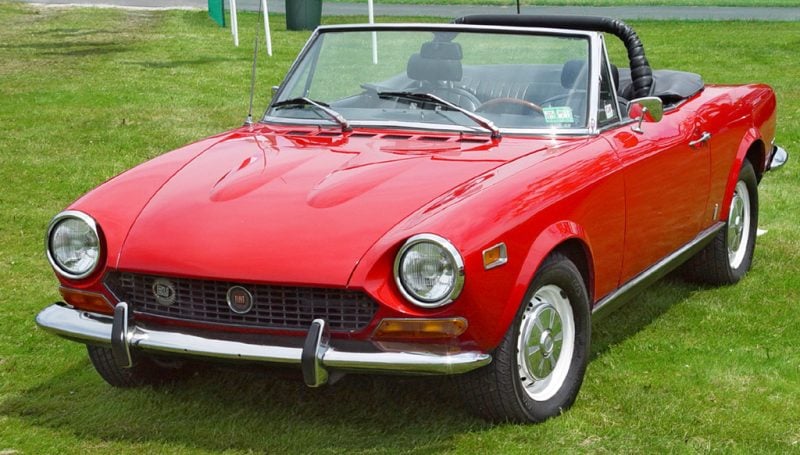
The Fiat 124 Spider delivered Italian sports car styling at an accessible price point from 1966 to 1985. Pininfarina designed and manufactured this convertible roadster, creating elegant proportions that aged gracefully over nearly two decades of production.
The 124 Spider featured front-engine, rear-wheel drive configuration with a lightweight monocoque structure. Various four-cylinder engines powered the car throughout its run, providing adequate performance for spirited driving without breaking budgets.
Fiat marketed the Spider in North America where it gained significant popularity among enthusiasts seeking European character. The car’s reliable engineering and parts availability made ownership practical compared to other Italian sports cars.
Production transitioned from Fiat branding to Pininfarina badging in 1982, with the final models sold as Spidereuropa until 1985. The 124 Spider established itself as an affordable entry point into classic Italian roadster ownership that remains attainable today.
6. Nissan 370Z
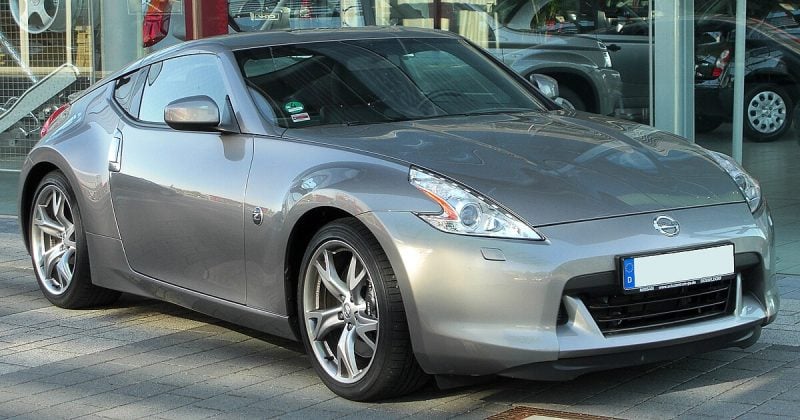
The Nissan 370Z delivered impressive performance at an accessible price point during its 2009-2020 production run. This rear-wheel-drive sports car featured a naturally aspirated 3.7-liter V6 engine producing 332 horsepower.
The 370Z offered genuine sports car dynamics with sharp handling and responsive steering. Its manual transmission provided an engaging driving experience that many competitors had abandoned.
Pricing remained competitive throughout its lifecycle, making it attainable for enthusiasts seeking performance without premium costs. The car’s reliability proved solid, particularly in later model years like 2015.
The 370Z maintained classic sports car proportions with a long hood and short deck design. Its straightforward approach focused on driving enjoyment rather than luxury features, keeping costs manageable for buyers.
7. BMW Z4
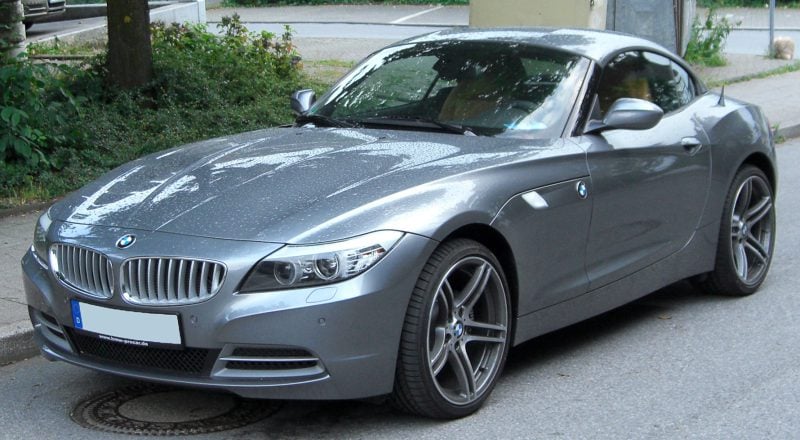
The BMW Z4 stands out as one of the few remaining six-cylinder sports cars with manual transmission options. This German roadster combines luxury with genuine sports car performance.
The current G29 generation offers improved sportiness over previous models. It maintains the classic front-engine, rear-wheel-drive layout that delivers an old-school driving experience.
BMW engineered the Z4 with near-perfect 50/50 weight distribution. This balance enhances handling and provides engaging driving dynamics on winding roads.
The Z4’s sleek styling attracts luxury sports car enthusiasts worldwide. Its drop-top design allows for open-air motoring when weather permits.
Reliability varies significantly between model years and generations. Overall, the Z4 delivers average to above-average dependability for its luxury sports car class.
The Z4 represents accessible performance in BMW’s lineup. It offers high-performance engines without the premium pricing of BMW’s flagship sports cars.
8. Porsche Cayman 718
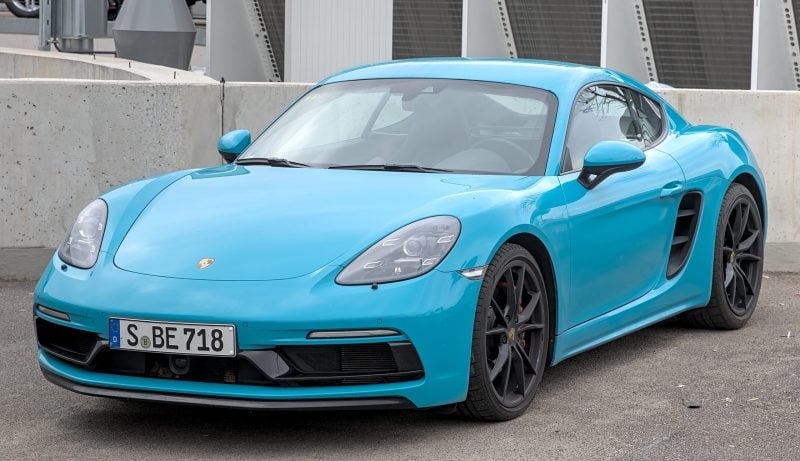
The Porsche 718 Cayman stands as the least expensive new Porsche sports car available. Despite its entry-level positioning, it delivers exceptional performance and handling characteristics.
The base model features a 2.0-liter turbocharged four-cylinder engine producing 296 horsepower. This power enables 0-62 mph acceleration between 4.7 and 5.3 seconds depending on options.
The mid-engine layout provides balanced weight distribution and precise handling. This configuration makes the 718 Cayman particularly engaging for driving enthusiasts seeking pure sports car dynamics.
Production of the current generation ends soon, with an electric variant expected as replacement. The 718 Cayman represents one of the last traditionally powered mid-engine sports cars from Porsche.
Its combination of affordability, performance, and renowned Porsche engineering makes it an attractive option for buyers seeking premium sports car experience without flagship pricing.
9. Audi TT
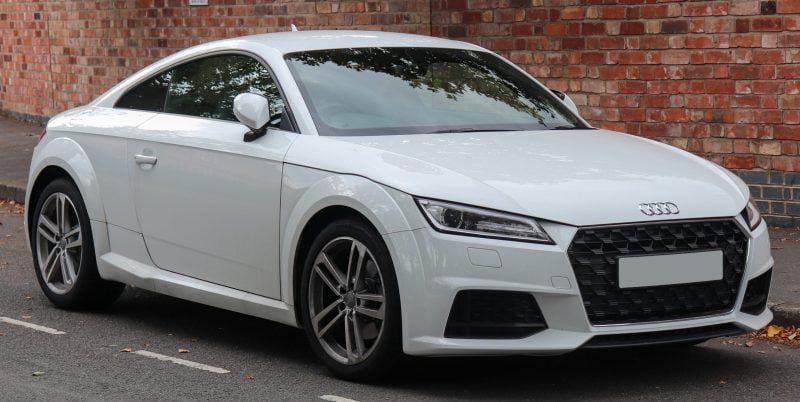
The Audi TT debuted as a 2000 model and quickly established itself as an affordable sports car option. Its distinctive design featured clean lines and a minimalist interior that set it apart from competitors.
The TT offered impressive fuel economy for a sports car. This made it practical for daily driving while still delivering sporty performance when needed.
Audi equipped the TT with various engine options throughout its production run. The turbocharged 5-cylinder engine became particularly notable for its balance of power and efficiency.
The car’s sharp handling characteristics made it enjoyable on winding roads. Its compact size and responsive steering provided an engaging driving experience without the high costs associated with supercars.
Production ended in 2023 after three generations. The TT proved that sports cars could be both economical and fun to drive.
10. Chevrolet Corvette C7
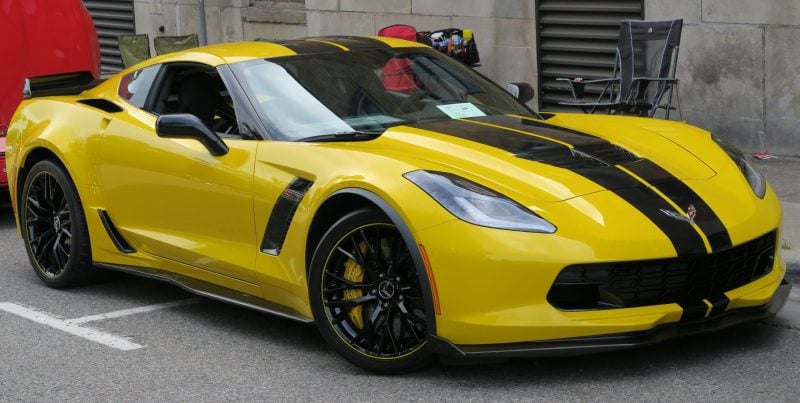
The C7 Corvette delivered exceptional performance at a competitive price point. Production ran from 2014 to 2019, marking the final front-engine generation.
The base Stingray featured a 6.2-liter V8 producing 455 horsepower. This allowed acceleration from 0-60 mph in under 4 seconds while maintaining reasonable fuel economy for a sports car.
The Z06 variant elevated performance with a supercharged 6.2-liter LT4 V8 engine. This powerplant generated 650 horsepower and 650 lb-ft of torque, competing directly with much more expensive European supercars.
Build quality improved significantly over previous generations. The interior featured higher-grade materials and better ergonomics compared to earlier Corvettes.
Manual and automatic transmission options provided flexibility for different driving preferences. The C7 offered genuine supercar performance at a fraction of typical supercar pricing.
11. Ford Mustang EcoBoost
The Ford Mustang EcoBoost delivers legitimate sports car performance while maintaining reasonable fuel efficiency. Its turbocharged 2.3-liter four-cylinder engine provides impressive acceleration and responsiveness that competes effectively in the sports car segment.
The EcoBoost starts at $31,920, making it one of the most affordable performance cars available. This pricing positions it as an accessible entry point into genuine sports car ownership.
The 2024 model features a 10-speed automatic transmission that optimizes both performance and efficiency. The combination of turbocharging and modern transmission technology creates a compelling balance between power delivery and fuel economy.
Beyond performance metrics, the Mustang EcoBoost offers practical daily driving capabilities. It provides substantial cargo space for everyday tasks, making it functional for regular use rather than just weekend driving.
The EcoBoost variant maintains the iconic Mustang styling and heritage while delivering modern efficiency standards that competing muscle cars often cannot match.
12. Volkswagen Golf GTI
The Volkswagen Golf GTI established the hot hatchback template when it debuted in 1976. It combined practical everyday usability with genuine sporting performance in an affordable package.
The GTI formula remained consistent across eight generations. Each version delivered turbocharged power, precise handling, and distinctive styling cues like the tartan interior and golf ball gear knob.
The Mk5 generation from 2004 brought back the GTI’s premium interior touches after the lackluster Mk4. It featured sculpted sports seats, aluminum accents, and the iconic squared-off steering wheel.
Special editions like the Clubsport S and Edition 50 pushed performance boundaries. The Edition 50 became the most powerful production GTI with 320 horsepower.
The GTI’s significance extends beyond raw performance numbers. It democratized sports car thrills for budget-conscious enthusiasts while maintaining practical daily driving capabilities.
13. Mini Cooper S
The Mini Cooper S delivers impressive fuel efficiency while maintaining spirited performance credentials. Its turbocharged engine produces between 189-301 horsepower depending on the variant.
The transverse engine layout paired with front-wheel drive creates an efficient and compact design. This configuration maximizes interior space while minimizing weight.
Models from 2013 onwards represent the most reliable choices with fewer reported problems. The fourth-generation Cooper balances modern technology with the brand’s characteristic driving dynamics.
The base 2025 Mini Cooper starts at $28,950, positioning it competitively in the economy sports car segment. The Cooper S variant commands a premium but delivers enhanced performance.
Recent generations achieve mid-six-second 0-60 times while maintaining better fuel economy than previous models. The car’s British heritage combines with German engineering precision for a unique driving experience.
Multiple body styles including convertible, Clubman, and Countryman variants expand the lineup’s appeal to different buyers.
14. Alfa Romeo 4C
The Alfa Romeo 4C stands as a lightweight carbon fiber sports car that prioritizes pure driving experience. Its mid-engine layout and turbocharged 1.75-liter four-cylinder engine deliver focused performance.
The 4C’s carbon fiber monocoque construction keeps weight under 2,500 pounds. This creates an impressive power-to-weight ratio that enhances acceleration and handling dynamics.
Italian design defines the 4C’s aesthetic with aggressive stance and flowing lines. The exterior captures classic Alfa Romeo styling cues while incorporating modern aerodynamic elements.
Despite production ending in 2018, the 4C has maintained strong resale values. Current market prices average around $60,000, making it accessible compared to other exotic sports cars.
The 4C offers drivers an unfiltered connection to the road through its manual steering and lightweight construction. This creates a driving experience that emphasizes engagement over comfort features.
15. Hyundai Veloster N
The Hyundai Veloster N represents Hyundai’s serious entry into the performance hatchback market. This high-performance variant delivers genuine sports car capabilities at an accessible price point.
The Veloster N features a turbocharged 2.0-liter four-cylinder engine producing substantial power. Its track-focused engineering includes performance suspension, enhanced braking systems, and aerodynamic improvements.
Hyundai developed this model using knowledge from motorsports including WRC and TCR racing. The car earned the nickname “The Corner Rascal” due to its exceptional cornering abilities and track performance.
The unique three-door asymmetrical design sets it apart from traditional hatchbacks. One large door serves the driver side while two smaller doors accommodate passengers on the opposite side.
Production ended in 2022, but the Veloster N established Hyundai’s credibility in the performance car segment. It paved the way for future N-division vehicles while proving that economy-focused manufacturers could create legitimate sports cars.
16. Mazda RX-7
The Mazda RX-7 stood out in the economy sports car segment from 1978 to 2002. Its unique Wankel rotary engine delivered impressive performance while maintaining relatively affordable pricing.
Mazda produced three distinct generations across nearly 25 years. The first generation SA/FB (1978-1985) established the car’s lightweight philosophy with excellent handling characteristics.
The rotary engine provided smooth power delivery and high-revving capability. This compact powerplant allowed for better weight distribution than traditional piston engines.
The RX-7’s front mid-engine, rear-wheel-drive layout created balanced dynamics. Lightweight construction enhanced agility and responsiveness on winding roads.
Mazda positioned the RX-7 as an accessible alternative to expensive European sports cars. It offered genuine sports car performance at a fraction of the cost of competitors.
The car’s distinctive styling and engineering innovation earned it recognition among enthusiasts. Today, well-maintained examples command strong resale values in the collector market.
17. Honda Civic Type R
The Honda Civic Type R transforms Honda’s practical economy car into a legitimate performance machine. It debuted in Japan in the late 1990s but didn’t reach American shores until 2017.
The Type R features aggressive styling and track-focused engineering. Its turbocharged engine produces significant power while maintaining Honda’s reputation for reliability.
Modern versions can accelerate from 0-60 mph in under five seconds. The car delivers exceptional handling through sophisticated suspension tuning and aerodynamic enhancements.
Honda designed the Type R primarily for front-wheel-drive performance. It competes directly with established hot hatchbacks from European manufacturers.
The vehicle offers daily drivability despite its performance credentials. Drivers can use it for commuting while enjoying track-ready capabilities on weekends.
Recent generations have earned praise from automotive journalists and enthusiasts alike. The Type R proves that economy cars can deliver genuine sports car thrills.
18. Toyota Celica GT-Four
The Toyota Celica GT-Four emerged as Japan’s first serious World Rally Championship contender with all-wheel drive and turbocharging. Based on the regular Celica, it featured a turbocharged engine and advanced AWD system designed for rally homologation.
Toyota produced three generations of the GT-Four from 1986 to 1999. The ST165, ST185, and ST205 variants each brought improvements in power and handling capability.
The car delivered Toyota’s first WRC drivers’ championship, establishing Japanese manufacturers as legitimate rally competitors. Its motorsport DNA translated into exceptional street performance across various road surfaces.
The GT-Four balanced daily usability with genuine sports car capability. While maintenance costs run higher than standard economy cars, the combination of AWD traction, turbocharged power, and rally heritage made it a unique proposition in the affordable sports car market.
Parts availability presents challenges today due to the car’s age and limited production numbers.
19. Mitsubishi Lancer Evolution X
The Mitsubishi Lancer Evolution X marked the final chapter of the legendary Evo lineage when production ended in 2016. This tenth-generation model delivered impressive performance credentials that made it accessible to budget-conscious enthusiasts.
The Evo X featured a turbocharged 2.0-liter four-cylinder engine producing 291 horsepower. Its sophisticated all-wheel-drive system provided excellent traction and handling characteristics inherited from Mitsubishi’s rally racing heritage.
Available with either a five-speed manual or dual-clutch automatic transmission, the car appealed to different driving preferences. The model offered practical four-door sedan body style while maintaining serious sports car performance.
Buyers could find used Evo X models for under $40,000, making it an attractive option in the economy sports car segment. The combination of rally-bred engineering and relative affordability positioned it as a compelling alternative to competitors like the Subaru WRX STI.
20. Lotus Elise
The Lotus Elise debuted in September 1996 as a lightweight two-seater roadster. Its bonded aluminum chassis and fiberglass body created an exceptionally rigid yet light platform.
The car weighs under 2,000 pounds, making it one of the lightest production sports cars available. This weight advantage translates into impressive acceleration and handling dynamics.
Lotus produced 35,124 examples over the Elise’s 25-year production run. About 5,400 units reached American shores during its limited U.S. availability.
The Toyota-sourced four-cylinder engines provided reliable power while maintaining the car’s economical nature. Higher-performance variants like the Cup 220 delivered 214 horsepower and 4.3-second 0-60 times.
Current market prices for good-condition examples start around $33,500. The Elise earned recognition as the best sports car of the last 25 years in enthusiast polls, cementing its status as an affordable performance icon.
21. Suzuki Swift Sport
The Suzuki Swift Sport delivers affordable performance in a lightweight package. This warm hatch weighs approximately 200kg less than many competitors.
The current generation features a 1.4-liter Boosterjet engine producing 129 horsepower and 235 Nm of torque. A small 14 HP electric motor provides hybrid assistance from a 0.38 kWh battery.
Suzuki pairs the powertrain with a six-speed automatic transmission. The hybrid system helps achieve excellent fuel economy while maintaining sporty characteristics.
The Swift Sport offers practical cabin space despite its performance focus. Safety features include collision detection sensors and driver alerts.
This represents the third generation since the nameplate’s debut. The Swift Sport continues the tradition of the popular 1990s Swift GTI with modern efficiency and reliability.
22. Renault Clio RS
The Clio Renault Sport launched in 1998 as Renault’s entry into the hot hatch segment. Renault Sport engineered this performance variant to transform the basic economy car into a track-capable machine.
The Clio RS delivered genuine sports car performance at an accessible price point. Various generations offered different power outputs and handling characteristics while maintaining affordability.
The most extreme version was the limited-production RS16 concept. This variant packed the 271-horsepower engine from the Megane 275 Trophy-R into the lighter Clio chassis.
Multiple iterations of the Clio RS proved that economy cars could offer serious performance credentials. The combination of lightweight construction and tuned engines created impressive power-to-weight ratios.
The Clio RS established itself as a benchmark in the affordable sports car category through decades of refinement.
23. Peugeot 208 GTi
The Peugeot 208 GTi emerged as a worthy successor to the legendary 205 GTi. It delivered impressive performance while maintaining affordability in the hot hatch segment.
Peugeot equipped the 208 GTi with a turbocharged 1.6-liter engine producing 200 horsepower. The six-speed manual transmission provided engaging gear changes for driving enthusiasts.
Weight reduction played a crucial role in the 208 GTi’s appeal. The car weighed 165 kilograms less than its predecessor, the 207 GTI 175, improving handling and acceleration.
Peugeot celebrated the GTi heritage with the 30th Anniversary edition. This special variant increased power to 208 horsepower and torque to 300 Nm, creating a more intense driving experience.
The 208 GTi featured upgraded suspension components including stiffer anti-roll bars and sport-tuned dampers. These modifications enhanced cornering ability while maintaining daily usability.
24. Kia Stinger
The Kia Stinger transformed how the automotive world viewed Korean manufacturers when it debuted in 2017. This sports sedan proved that Kia could compete with established luxury brands at a fraction of the cost.
The Stinger GT features a twin-turbocharged V6 engine that delivers impressive acceleration and performance. Its fastback design creates an aggressive, head-turning appearance that rivals more expensive European sedans.
Kia positioned the Stinger as a near-premium vehicle with luxury interior appointments and advanced technology. The model offered exceptional value by providing BMW-level performance at a significantly lower price point.
Production ran from 2018 to 2023, with Kia continuously refining the vehicle throughout its lifespan. The Stinger successfully established Kia’s credibility in the performance car segment.
This sports sedan remains one of the best performance bargains available in the used car market. Its combination of power, styling, and value proposition makes it a standout choice for budget-conscious enthusiasts.
25. Tesla Roadster (2008)
The Tesla Roadster launched in 2008 as the first highway-legal all-electric production sports car. Based on the Lotus Elise chassis, it delivered performance that challenged perceptions about electric vehicles.
Tesla priced the original Roadster at $109,000. The company easily sold all 500 units of the initial production run.
The battery-powered sports car achieved a top speed of 125 mph. It could travel more than 320 kilometers on a single charge, impressive range for early electric vehicle technology.
The Roadster used lithium-ion battery cells, making it the first serial production all-electric car with this technology. This powertrain choice proved crucial for the vehicle’s performance capabilities.
Tesla updated the model in 2010 with the Roadster 2.5, followed by the 2.5 Sport variant producing 288 horsepower. The original Roadster established Tesla’s foundation before the company developed mainstream models like the Model S.
26. BMW M2 Competition
The BMW M2 Competition replaced the original M2 in 2018. It features a 3.0-liter twin-turbocharged inline-six engine producing 405 horsepower.
This engine comes from BMW’s S55 unit found in the M3 and M4. The M2 Competition delivers power through a six-speed manual transmission or seven-speed dual-clutch automatic.
The car maintains BMW M division’s driver-focused philosophy. Its compact dimensions and rear-wheel-drive layout create an engaging driving experience on both road and track.
Precise handling and responsive steering define the M2 Competition’s character. The suspension setup balances performance capability with daily usability.
BMW priced the M2 Competition competitively within the sports car segment. It offers substantial performance in a relatively affordable package compared to larger M models.
The M2 Competition represents BMW’s approach to accessible high performance. Production ended in 2020 when BMW introduced the redesigned M2.
27. Chevrolet Camaro 1LE
The Chevrolet Camaro 1LE emerged in 1988 as a specialized package designed for Showroom Stock road racing. This track-focused variant transformed the standard Camaro into a serious performance machine.
The 1LE package included upgraded suspension components, enhanced cooling systems, and weight reduction measures. These modifications prioritized handling over straight-line acceleration, shifting the Camaro’s character from muscle car to sports car.
Multiple generations received the 1LE treatment, with each iteration building on the formula. The package typically featured stiffer springs, performance dampers, and larger anti-roll bars for improved cornering capabilities.
The modern SS 1LE variant offers exceptional value in the used sports car market. It combines V8 power with manual transmission and rear-wheel drive in an increasingly rare configuration.
The 1LE represents Chevrolet’s commitment to creating track-capable vehicles at accessible price points. Its three-decade evolution demonstrates the package’s enduring relevance in American performance car history.
28. Subaru WRX STI
The Subaru WRX STI emerged from rally racing heritage in the 1990s. It transformed Subaru from an economy car manufacturer into a performance brand.
This all-wheel-drive sports sedan delivered genuine rally-bred capability at an affordable price. The turbocharged boxer engine provided distinctive sound and substantial power output.
Early models like the 1994 WRX STI Version featured 247 horsepower with upgraded intercoolers and suspension components. The iconic 22B STI became one of the most sought-after variants.
The WRX STI competed directly with sports sedans costing significantly more. Its combination of performance, practicality, and weather capability was unmatched in its price range.
Used STI models remain excellent value propositions for enthusiasts. The 2015, 2018, and 2019 model years are considered the strongest choices for buyers seeking reliability and performance.
29. Dodge Challenger R/T
The Dodge Challenger R/T debuted in 1970 as a powerful muscle car option. It offered competitive performance against the Ford Mustang and Chevrolet Camaro with its strong V8 engine lineup.
The original R/T featured multiple engine choices including the legendary 426 Hemi. This powerplant delivered impressive acceleration and raw performance for its era.
Modern Challenger R/T models continue the tradition with updated technology. The contemporary version uses a 5.7-liter HEMI V8 producing substantial horsepower while maintaining reasonable fuel economy for a muscle car.
The R/T strikes a balance between performance and daily usability. It provides genuine sports car acceleration with comfortable seating for four passengers and practical trunk space.
The Challenger R/T appeals to drivers seeking classic American muscle car styling with modern reliability. Its retro design pays homage to the original while incorporating current safety and convenience features.
30. Ford Focus ST
The Ford Focus ST transformed Ford’s practical family hatchback into a legitimate performance machine. This hot hatch delivered genuine sports car capabilities while maintaining the affordability that economy car buyers demanded.
Ford’s ST lineup represented two decades of accessible performance engineering. The Focus ST proved that manufacturers could create exciting driving experiences without premium price tags.
The Focus ST achieved notable racing success, including sixth place in the 2012 Race of Morocco. It claimed the overall class victory in the 2013 China Touring Car Championship, demonstrating its competitive capabilities.
Production ended after nearly 20 years, marking the conclusion of one of the most successful hot hatch programs. The Focus ST showed that economy sports cars could deliver authentic performance thrills while remaining practical for daily use.
Defining Economy Sports Cars
Economy sports cars balance performance capabilities with accessible pricing and practical ownership costs. These vehicles prioritize fuel efficiency, affordable maintenance, and reasonable purchase prices while delivering engaging driving dynamics.
Performance Versus Affordability
Economy sports cars typically feature engines ranging from 1.4 to 2.5 liters with power outputs between 150-300 horsepower. This configuration provides adequate acceleration while maintaining fuel economy ratings above 25 mpg combined.
Manufacturers achieve this balance through lightweight construction and efficient powertrain design. Cars like the Mazda MX-5 Miata weigh under 2,400 pounds, allowing smaller engines to deliver spirited performance.
Cost considerations extend beyond the initial purchase price. Economy sports cars maintain lower insurance premiums compared to high-performance supercars. Parts availability and service costs remain reasonable due to shared components with mainstream vehicle platforms.
Most models in this category feature naturally aspirated engines or small-displacement turbocharged units. These powertrains offer reliability and lower maintenance complexity than exotic high-performance alternatives.
Common Features and Specifications
Economy sports cars share several key characteristics that distinguish them from luxury performance vehicles:
Engine Types:
- 4-cylinder naturally aspirated (1.6-2.5L)
- Small displacement turbocharged units
- Hybrid powertrains in newer models
Transmission Options:
- 6-speed manual transmissions
- CVT or traditional automatics
- Dual-clutch systems in premium variants
Weight typically ranges from 2,200 to 3,200 pounds. Manual transmissions remain standard equipment on many models, providing cost savings and enhanced driver engagement.
Interior amenities focus on essential features rather than luxury appointments. Most include basic infotainment systems, cloth seating, and simplified climate controls.
Historical Context and Evolution
The economy sports car segment emerged in the 1960s with vehicles like the Datsun 240Z and Ford Mustang. These cars democratized performance by offering sports car styling and handling at mainstream prices.
Japanese manufacturers dominated the segment through the 1980s and 1990s. Models like the Honda CRX, Toyota MR2, and Nissan 240SX established the template for affordable performance vehicles.
Modern economy sports cars incorporate advanced safety systems and fuel-efficient technologies. Turbocharging has become prevalent, allowing smaller engines to produce competitive power while meeting emissions standards.
The segment expanded significantly after 2010 as manufacturers recognized growing demand for accessible performance vehicles. Current offerings include both traditional rear-wheel-drive configurations and front-wheel-drive hot hatches that deliver similar performance characteristics.
Ownership Experience of Economy Sports Cars
Economy sports cars deliver performance thrills while maintaining reasonable running costs, but ownership involves specific considerations around maintenance complexity and daily practicality. Insurance premiums and repair expenses can vary significantly between models, affecting long-term ownership satisfaction.
Maintenance and Reliability Considerations
Japanese economy sports cars like the Mazda MX-5 Miata and Honda S2000 typically offer superior reliability compared to European counterparts. The MX-5 requires basic maintenance every 7,500 miles with minimal complexity.
German models such as the BMW Z4 and Porsche Boxster demand more frequent attention. Oil changes occur every 10,000 miles but cost significantly more due to synthetic requirements.
Common reliability patterns include:
- Japanese models: 150,000+ mile lifespans with proper care
- German models: Higher repair costs after 80,000 miles
- American V6 models: Moderate reliability with affordable parts
Convertible mechanisms add complexity to maintenance schedules. Soft tops require replacement every 10-15 years at $800-2,000 cost. Hard tops involve expensive motor and hydraulic system repairs.
Tire replacement happens more frequently due to performance driving. High-performance tires cost $200-400 each and last 20,000-30,000 miles versus 50,000+ for standard tires.
Cost of Ownership and Insurance Factors
Insurance premiums for economy sports cars exceed standard sedans by 20-40%. The Subaru BRZ typically costs less to insure than the Chevrolet Camaro due to safety ratings and theft statistics.
Fuel costs remain manageable with most models achieving 25-35 mpg combined. The Toyota 86 delivers 28 mpg while the Ford Mustang EcoBoost achieves 25 mpg.
Depreciation hits hardest in years 3-5 of ownership. Limited production models like the Honda S2000 have reversed this trend, appreciating 15-20% annually since 2020.
Driving Enjoyment and Everyday Usability
Economy sports cars excel at weekend drives but present daily driving compromises. Firm suspension enhances handling but creates harsh rides over rough pavement.
Storage limitations affect practicality significantly. Two-seat roadsters offer minimal cargo space while 2+2 configurations like the Subaru BRZ provide rear seats suitable only for children or storage.
Ground clearance issues plague lowered sports cars. Speed bumps and steep driveways require careful navigation to avoid scraping.
Weather performance varies considerably. Rear-wheel-drive models struggle in snow while all-wheel-drive options like the Audi TT Quattro maintain year-round usability.
Daily driving trade-offs include:
- Road noise from performance tires
- Limited passenger capacity
- Reduced fuel efficiency during spirited driving
- Higher maintenance attention requirements
Most owners report these compromises become acceptable when balanced against the emotional satisfaction of sports car ownership.