The 30 Worst Cars Ever Made: A Comprehensive Analysis
The automotive industry has produced countless vehicles over the decades, ranging from legendary classics to complete disasters that left manufacturers scrambling to recover their reputations.
While car enthusiasts often celebrate the greatest achievements in automotive history, there exists an equally fascinating collection of vehicles that represent the opposite end of the spectrum.
These poorly designed, unreliable, or misguided vehicles serve as important lessons about what happens when automotive engineering, marketing, and consumer expectations collide in the worst possible ways.
From safety hazards that sparked federal investigations to luxury cars that bankrupted their manufacturers, the worst car models in history share common threads of poor execution and market misjudgment.
These vehicles demonstrate how factors like inadequate testing, misguided design philosophy, and rushed production schedules can transform promising automotive concepts into cautionary tales.
The impact of these automotive failures extends far beyond disappointed consumers, often reshaping entire brands and influencing industry standards for decades to come.
Here are the 30 worst car models ever made:
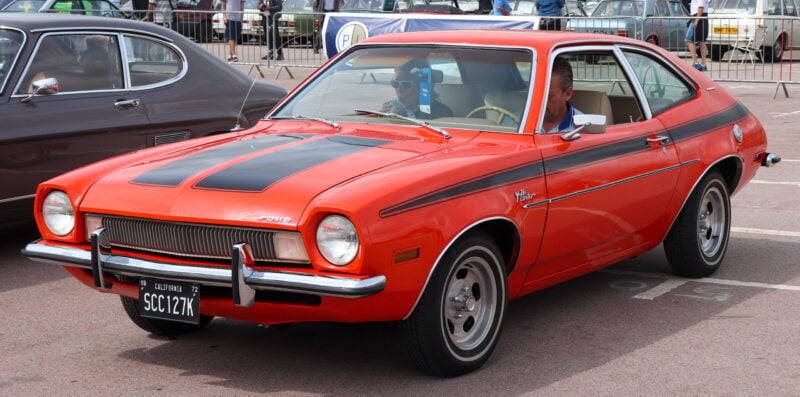
1. Ford Pinto

The Ford Pinto earned notoriety as one of America’s most dangerous vehicles during its production run from 1971 to 1980. Ford positioned the subcompact car as an affordable entry-level option for budget-conscious consumers.
The Pinto’s fatal flaw lay in its fuel tank design. Engineers placed the tank in a vulnerable position that made it susceptible to rupturing during rear-end collisions.
Even minor impacts could cause the fuel tank to burst into flames. This design defect led to numerous deaths and injuries throughout the vehicle’s lifespan.
The infamous Ford Pinto memo revealed the company’s cost-benefit analysis. Internal documents showed Ford calculated that paying victim settlements would cost less than fixing the design flaw.
Sales peaked in 1974 with over 544,000 units sold. However, mounting safety concerns and negative publicity caused sales to plummet by more than 50% by 1977.
2. Chevrolet Vega
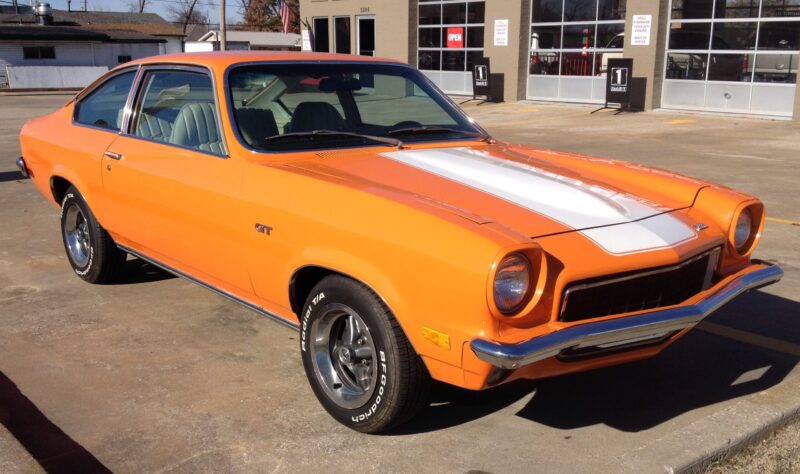
The Chevrolet Vega promised to be GM’s answer to the growing small car market when it launched in 1971. Instead, it became one of the company’s most notorious failures.
The Vega suffered from fundamental design flaws. Its aluminum engine block was prone to overheating and warping. The cooling system couldn’t handle normal driving conditions.
Rust problems plagued the vehicle from early production. Body panels corroded rapidly, sometimes within the first year of ownership. The cheap construction quality became apparent quickly.
Safety concerns emerged as gas tank fires occurred in some models. Multiple recalls damaged the car’s reputation further. Word spread fast about the Vega’s reliability issues.
Despite strong initial sales, the problems mounted. The 1975 Cosworth Vega attempted to salvage the model’s reputation with performance improvements. However, the damage was already done to GM’s credibility in the compact car segment.
3. Yugo GV
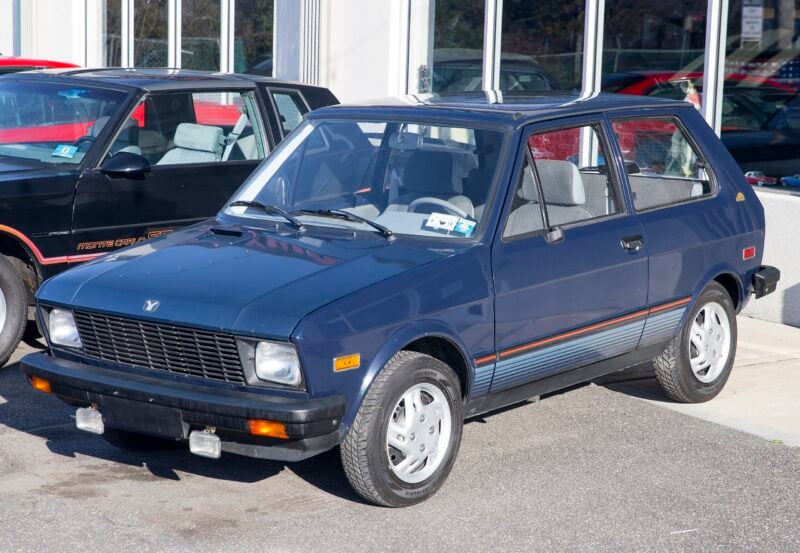
The Yugo GV launched in the 1980s as an affordable compact car from Yugoslavia. Malcolm Bricklin imported the vehicle to American markets in 1985, positioning it as budget transportation for the masses.
The car’s “GV” designation stood for “great value,” though this promise proved misleading. Built by Zastava corporation, the vehicle suffered from significant quality control issues and poor manufacturing standards.
Reliability problems plagued the Yugo GV throughout its production run. Owners frequently experienced mechanical failures, electrical issues, and premature component wear that made ownership costly despite the low purchase price.
Performance was equally disappointing. The small engine provided inadequate power while fuel economy failed to meet expectations for a car of its size and weight.
Production ended in 2008 when the last Yugo rolled off the assembly line in Kragujevac, Serbia. Despite its notorious reputation, the car has developed a small cult following among automotive enthusiasts who appreciate its unique place in automotive history.
4. DeLorean DMC-12
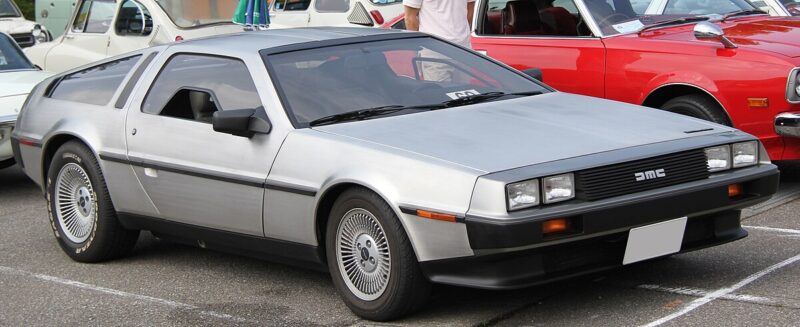
The DeLorean DMC-12 stands as one of automotive history’s most notorious failures. Produced from 1981 to 1983, this stainless steel sports car captured attention with its distinctive gull-wing doors and futuristic design.
Despite its striking appearance, the DMC-12 suffered from severe performance issues. The underpowered V6 engine produced only 130 horsepower, disappointing buyers who expected sports car performance.
John DeLorean’s company managed to produce just 8,582 units before collapsing. The car’s high price point and reliability problems contributed to poor sales figures.
While the DMC-12 gained iconic status through the “Back to the Future” films, its real-world performance remained lackluster. The vehicle’s weight and weak engine made acceleration sluggish compared to competitors.
The DeLorean Motor Company’s rapid demise highlighted the challenges of launching an independent automaker in the competitive sports car market.
5. Ford Edsel
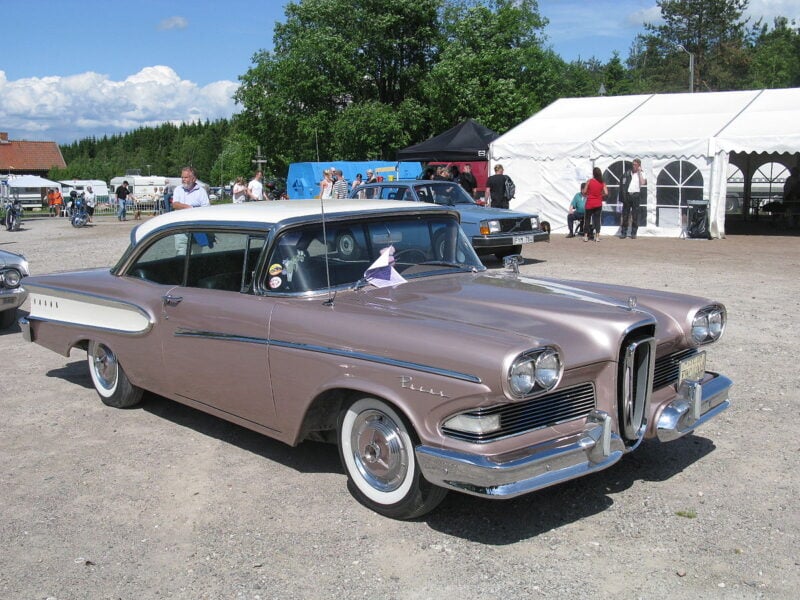
The Ford Edsel launched in 1958 as one of automotive history’s most spectacular commercial failures. Ford designed the car to fill a gap between their existing brands but misjudged market demand entirely.
The Edsel’s distinctive horse-collar grille proved polarizing with consumers. Many found the styling homely and unappealing, contributing to poor sales performance.
Ford offered 18 different Edsel models but needed wildly unrealistic sales numbers to meet their goals. The ambitious launch coincided with a late 1950s recession, making the expensive car even less attractive.
Quality control issues plagued the vehicle. The Teletouch transmission system became notorious among repair shops for its complexity and frequent failures.
Production ended in 1960 after just three years. Only 44,891 units were produced in the final year, cementing the Edsel’s reputation as a massive commercial disappointment.
6. AMC Gremlin
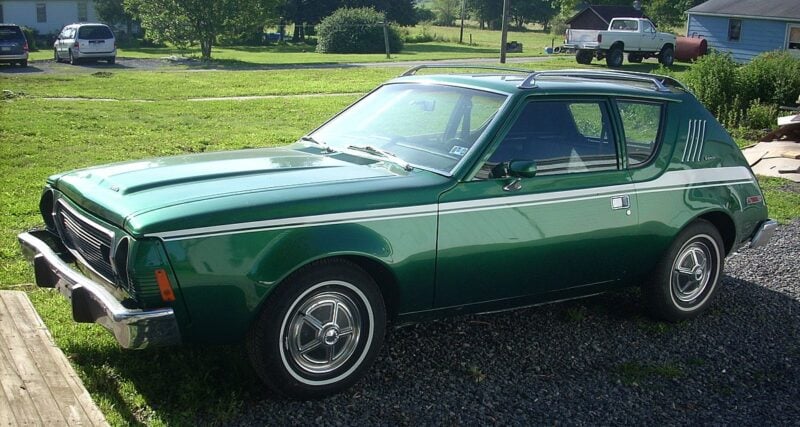
The AMC Gremlin debuted in 1970 as American Motors Corporation’s rushed entry into the subcompact market. The company created it by essentially cutting off the rear section of the AMC Hornet.
The Gremlin’s awkward proportions and truncated rear end created an unusual appearance that polarized consumers. Its design featured a hatchback configuration with proportions that many found unappealing.
AMC’s hurried development process resulted in outdated technology and poor build quality. The car suffered from rust issues and lackluster performance despite its compact size.
TIME Magazine named the Gremlin one of the 50 worst cars ever made. Critics consistently pointed to its odd styling and subpar engineering as major flaws.
Despite negative reviews, the Gremlin achieved moderate sales success during its production run from 1970 to 1978. It became AMC’s second-best-selling model, though this reflected the company’s limited lineup rather than the car’s quality.
7. Renault Alliance

The Renault Alliance emerged in 1983 as a collaboration between American Motors Corporation and French automaker Renault. This front-wheel drive subcompact initially impressed Motor Trend enough to win Car of the Year.
The early recognition proved misleading. The Alliance quickly developed a reputation for severe reliability problems and poor build quality.
Rust issues plagued the vehicle throughout its production run from 1983 to 1987. The combination of French engineering and American manufacturing created significant quality control problems.
Legal experts in the automotive field identified the Alliance as one of the worst examples of lemon law cases. The car’s mechanical failures became so common that it earned infamy among consumer protection attorneys.
The Alliance represented the final desperate attempt by a dying AMC to stay afloat. Despite initial sales, the model’s reputation for breakdowns contributed to AMC’s eventual collapse.
8. Pontiac Aztek

The Pontiac Aztek earned its place among automotive history’s most ridiculed vehicles. Production ran from 2001 to 2005, targeting young, active consumers with futuristic styling.
The Aztek’s design featured multiple visual elements that created an awkward appearance. It had a distinctive double hood, small three-spoke wheels, and extensive plastic paneling that made it look deformed to many observers.
Despite its polarizing looks, the Aztek packed innovative features. It included a built-in cooler, removable rear components, and adventure-focused equipment designed for outdoor activities.
The crossover’s Y2K aesthetic captured the era’s extreme styling trends. While critics called it one of the worst-looking cars ever made, the Aztek influenced modern crossover design.
General Motors’ first attempt at this market segment failed commercially but established precedents for future vehicles.
9. Mitsubishi Mirage (1990s)
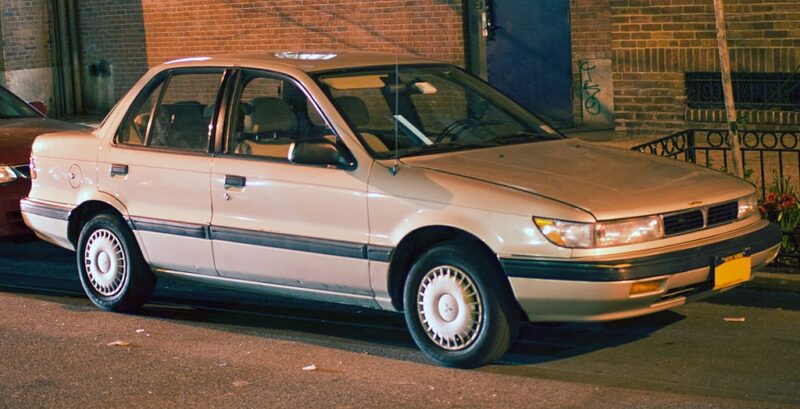
The 1990s Mitsubishi Mirage earned its reputation as one of the most disappointing compact cars of the decade. Despite being marketed as a budget-friendly option, the vehicle suffered from fundamental design flaws that overshadowed its low price point.
The Mirage’s most glaring weakness was its underpowered engine, which struggled to provide adequate acceleration for highway driving. This lack of power made merging and passing dangerous situations for drivers.
Poor handling characteristics further compromised the driving experience. The car felt unstable during cornering and provided little driver confidence on winding roads.
Interior space was severely limited, with cramped seating that made longer trips uncomfortable for passengers. The cabin materials felt cheap and flimsy, reinforcing the perception of poor build quality.
The combination of these issues created a vehicle that failed to deliver even basic transportation needs effectively.
10. Fiat Multipla
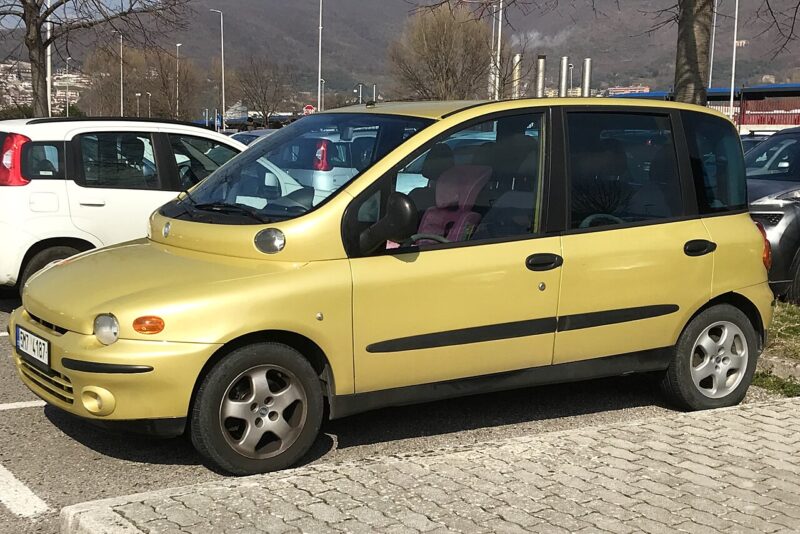
The Fiat Multipla earned widespread recognition as one of the ugliest cars ever produced. Roberto Giolito designed this multipurpose vehicle with distinctive split-level headlights and bulbous proportions that made it instantly recognizable.
Fiat introduced the Multipla in 1998 as a six-seater compact MPV. The company maximized interior space within a small footprint, creating a practical family vehicle.
The car’s appearance featured dual headlight clusters and curved bodywork that many found unappealing. Consumer polls consistently ranked it among the worst-looking vehicles ever made.
Despite its unconventional design, the Multipla offered genuine practicality. It seated six passengers comfortably while maintaining compact dimensions for urban driving.
The vehicle’s reputation for ugliness overshadowed its functional benefits. Car buyers largely rejected the model due to its appearance, despite its innovative interior packaging and space efficiency.
11. Chrysler PT Cruiser
The Chrysler PT Cruiser debuted in 2001 with distinctive retro styling that divided opinions from launch. Its hearse-like appearance became a frequent target of criticism.
Multiple model years proved problematic for owners. The 2001 model received 966 NHTSA complaints and 7 recalls, establishing reliability concerns early.
Experts identify 2001, 2002, 2004, 2006, and 2010 as the worst PT Cruiser years. These models experienced significant technical flaws and mechanical issues.
The turbocharged GT variant offered 215 horsepower, providing better performance than base models. However, this improvement couldn’t overcome the car’s fundamental design and reliability problems.
The PT Cruiser’s polarizing design and documented mechanical issues earned it placement on numerous “worst cars ever made” lists. Its unconventional styling attracted initial attention but failed to deliver long-term appeal or dependability.
12. Cadillac Cimarron
The Cadillac Cimarron was produced from 1982 to 1988 and remains one of the most criticized vehicles in automotive history. This compact sedan was essentially a rebadged Chevrolet Cavalier with minimal upgrades.
General Motors created the Cimarron as a response to Mercedes-Benz’s success with premium compact cars. The company took its J-platform sedan and added luxury materials and accessories.
The vehicle failed to meet luxury car standards expected from the Cadillac brand. It featured a weak four-cylinder engine and cost significantly more than comparable vehicles.
Sales figures reflected consumer dissatisfaction with the model. Total production reached approximately 132,000 units over seven years, with particularly poor final-year sales.
The Cimarron damaged Cadillac’s reputation and became a symbol of misguided badge engineering. It demonstrated the risks of rebadging economy cars as luxury vehicles without substantial modifications.
13. Jeep Cherokee XJ (diesel)
The Jeep Cherokee XJ diesel stands out as one of the most problematic variants in the Cherokee lineup. This experimental model never made it to the United States market, remaining exclusive to international markets.
The diesel engine proved unreliable and underpowered for the Cherokee’s intended use. Off-road performance suffered significantly compared to gasoline variants.
Mechanical issues plagued the diesel XJ throughout its production run. The engine experienced frequent breakdowns and required expensive repairs that often exceeded the vehicle’s value.
The diesel variant’s poor fuel economy negated one of the main advantages diesel engines typically offer. Combined with limited parts availability, maintenance became a costly nightmare for owners.
This model represents a misstep in Jeep’s diesel experimentation during the 1980s and 1990s.
14. Daewoo Espero
The Daewoo Espero launched in 1990 as South Korea’s first independently developed sedan. Despite body styling by renowned Italian design house Bertone, the car suffered from significant quality issues.
Built on the aging GM J-platform, the Espero represented outdated engineering practices. Daewoo’s strategy focused on loading the vehicle with features while keeping prices artificially low.
The sedan experienced numerous mechanical problems and reliability concerns throughout its production run. Build quality remained inconsistent, contributing to Daewoo’s reputation for producing substandard vehicles.
Production ended in 1997 after just seven years. The Espero’s failure contributed to Daewoo’s broader struggles in international markets, particularly in North America where the brand developed a reputation for poor reliability.
The model’s premature discontinuation reflected deeper problems within Daewoo’s manufacturing processes and quality control systems.
15. Nissan Cube
The Nissan Cube stands out as one of the most polarizing vehicles ever produced. Its asymmetrical design and boxy shape drew harsh criticism from automotive enthusiasts and critics alike.
The model’s worst years include 2009, 2010, and 2011, which accumulated the most complaints from owners. These early production years suffered from various mechanical issues that tarnished the vehicle’s reputation.
Critics frequently mocked the Cube’s appearance, comparing it to a “half-melted Scion xB.” The vehicle earned spots on multiple “ugliest cars” lists, including Edmunds’ 100 ugliest cars compilation.
Despite having some reliable later years like 2012-2014, the Cube’s controversial styling and early quality problems contributed to its commercial failure. The vehicle’s bizarre aesthetic choices and problematic initial years ultimately led to its discontinuation in the North American market.
16. Suzuki X-90
The Suzuki X-90 launched in 1995 as a two-door, two-seater SUV that confused buyers and critics alike. Suzuki marketed it as a “sporty utility vehicle” targeting American youth.
The vehicle featured removable T-tops and four-wheel drive capability. However, it failed to excel as either a sports car or practical SUV.
Motor Trend ranked the X-90 number one on its worst cars list. Top Gear Magazine also included it among the 13 worst cars of the last 20 years.
The 1.6-liter four-cylinder engine produced just 95 horsepower. Many owners complained about sluggish acceleration and poor performance.
With no back seat and limited cargo space, the X-90 offered minimal practicality. Its high price relative to its capabilities made it unappealing to consumers.
Suzuki discontinued the X-90 in 1997 after poor sales.
17. Smart Fortwo (early models)
The Smart Fortwo launched in 1998 with ambitious goals for urban mobility. However, early models suffered from significant reliability issues that plagued owners for years.
Transmission problems were particularly common in early Smart Fortwo models. The automated manual transmission delivered jerky shifts and frequent breakdowns. Many owners reported complete transmission failures within the first few years of ownership.
Build quality remained inconsistent throughout the early production run. Interior components felt cheap and broke easily. Paint quality was poor, with premature fading and chipping reported by numerous owners.
The early Smart Fortwo’s fuel efficiency disappointed buyers despite its tiny size. Many conventional compact cars achieved better mileage than the Smart. The car’s limited practicality beyond city driving further reduced its appeal.
Safety concerns also emerged with early models. The lightweight construction raised questions about crash protection, though later testing showed acceptable results for such a small vehicle.
18. Volkswagen Phaeton
The Volkswagen Phaeton represented an ambitious but misguided attempt to enter the luxury car market. Ferdinand Piëch conceived this ultra-luxury sedan as a direct competitor to Mercedes-Benz and BMW flagship models.
Despite exceptional engineering and premium features, the Phaeton faced insurmountable market challenges. Consumers struggled to accept a luxury vehicle wearing the Volkswagen badge, regardless of its quality.
The car’s high production costs and disappointing sales volumes created significant financial strain. Starting prices approached six figures, making it difficult to justify over established luxury competitors.
Volkswagen built a showcase glass-walled factory in Dresden specifically for Phaeton production. The vehicle was nearly hand-assembled with meticulous attention to detail and premium materials.
Production ended in 2016 after 15 years of poor sales performance. The Phaeton’s failure demonstrated that superior engineering alone cannot overcome brand perception challenges in the luxury segment.
19. Toyota MR2 Spyder (first gen)
The first-generation Toyota MR2 Spyder launched in 2000 with significant design flaws that disappointed sports car enthusiasts. Toyota stripped away essential features from previous MR2 generations, including the hardtop roof and adequate storage space.
The 1.8-liter engine produced only 138 horsepower, creating underwhelming performance for a sports car. Many drivers found the power delivery insufficient for spirited driving experiences.
Build quality issues plagued early models, particularly the problematic pre-catalytic converters that frequently failed. The convertible soft top mechanism proved unreliable and expensive to repair when it malfunctioned.
Interior materials felt cheap and flimsy compared to competitors in the same price range. The cabin layout prioritized cost-cutting over driver comfort and functionality.
Toyota’s attempt to create an affordable sports car resulted in too many compromises. The Spyder lacked the engaging driving dynamics that made previous MR2 models successful.
20. Hyundai Excel (first gen)
The first-generation Hyundai Excel launched in 1985 as the Korean automaker’s debut in the American market. Despite selling over 168,000 units in its first year, the Excel quickly gained a reputation for poor reliability and build quality.
Automotive experts frequently cite the 1985-1989 Excel as one of the worst vehicles sold in America during the late 20th century. The car suffered from numerous mechanical problems and subpar construction that frustrated owners.
The Excel’s rapid depreciation became legendary in automotive circles. These vehicles disappeared from roads unusually quickly, with many ending up in junkyards faster than similarly priced competitors.
First-generation Excels are now extremely rare finds, even in salvage yards. Their scarcity reflects the model’s poor durability rather than collector interest.
The Excel represented Hyundai’s first fully self-developed car, suggesting the company may have rushed to enter the competitive American market before perfecting their product.
21. Edison Electric Car (early 1900s)
Thomas Edison’s electric car represented a significant technological disappointment during the early automotive era. The Edison Baker, developed in the 1890s, suffered from fundamental design flaws that made it impractical for widespread use.
The vehicle’s lead-acid battery system was excessively heavy and provided only 30 to 50 miles of range per charge. This limited distance made the car unsuitable for anything beyond short city trips.
Edison’s electric car also carried a prohibitively high price tag compared to gasoline-powered alternatives. The vehicle’s top speed remained disappointingly low, further reducing its appeal to consumers.
By the time Edison developed an improved battery system, petroleum-based cars had already gained market dominance. The promised partnership with Ford for electric vehicles never materialized, leaving Edison’s automotive venture as one of his notable failures.
The car’s poor performance contributed to the broader decline of electric vehicles in the early 1900s.
22. Tucker 48
The Tucker 48 stands as one of automotive history’s most controversial vehicles. Preston Tucker conceived this ambitious automobile in Ypsilanti, Michigan, with production beginning in Chicago in 1948.
Only 51 cars were ever manufactured before the company collapsed. The Tucker Corporation declared bankruptcy on March 3, 1949, ending production permanently.
The car featured innovative safety technologies and a rear-mounted engine design. These advanced features were revolutionary for their time period.
Despite its technical innovations, the Tucker 48 suffered from extensive negative publicity. Media coverage damaged the company’s reputation and investor confidence.
The vehicle’s brief production run and financial scandal overshadowed its engineering achievements. The Tucker 48 represents a cautionary tale of ambitious automotive ventures that failed to reach market viability.
23. Honda Insight (first gen)
The first-generation Honda Insight arrived in 1999 as a two-door, two-passenger hybrid liftback. Despite achieving impressive fuel economy figures of over 60 mpg, the car suffered from significant practical limitations.
The cramped interior space made it unsuitable for most daily driving needs. Only two seats and minimal cargo room severely restricted its utility as a family vehicle.
The hybrid battery packs aged poorly over time, creating expensive replacement costs for owners. This reliability issue undermined the car’s long-term value proposition.
The Insight’s unusual styling, while aerodynamically efficient, failed to appeal to mainstream buyers. Its narrow rear track and distinctive wheel covers gave it an awkward appearance.
Honda discontinued the first-generation model in 2006 after poor sales performance. The vehicle demonstrated hybrid technology potential but fell short on practicality and refinement that consumers expected.
24. Chevrolet SSR
The Chevrolet SSR launched in 2003 as an unusual combination of pickup truck and convertible sports car. General Motors designed it with retro styling and composite body panels to capture attention in the marketplace.
The SSR featured powerful V8 engines, including 5.3L and 6.0L options. Despite this performance capability, the vehicle struggled to find buyers due to its awkward appearance and limited practicality.
Sales numbers reflected the market’s rejection of the concept. Only about 24,000 units sold during its production run, making it a clear commercial failure.
The high price point combined with questionable utility turned potential customers away. The SSR’s impractical design failed to serve effectively as either a work truck or sports car.
GM announced production cutbacks in December 2004 due to excessive inventory. The company closed the Lansing Craft Center manufacturing facility in mid-2006, ending the SSR’s brief production run.
25. Plymouth Prowler
The Plymouth Prowler was a retro-styled sports car produced from 1997 to 2002. It featured an unconventional hot rod design with exposed front wheels and a distinctive tapered rear end.
Despite its eye-catching appearance, the Prowler faced significant criticism for its performance shortcomings. The car lacked a manual transmission, which disappointed enthusiasts expecting authentic hot rod driving dynamics.
The Prowler was notably underpowered for a sports car. Its automatic-only transmission made it difficult to achieve the tire-smoking acceleration typical of classic hot rods it attempted to emulate.
TIME Magazine included the Prowler on its list of the 50 worst cars of all time. Critics cited its impracticality, high price point, and failure to deliver on its performance promises.
The vehicle represented Plymouth’s final sports car effort before the brand’s discontinuation. While visually striking and nearly identical to its concept car, the Prowler failed to meet expectations as a true performance vehicle.
26. Kia Sephia
The Kia Sephia served as Kia’s first compact car in the United States market from 1992 to 2003. This budget-friendly vehicle aimed to provide affordable transportation but suffered from numerous reliability issues.
Engine problems dominated the Sephia’s complaint history. The vehicle accumulated 27 complaints over its production run, with most focusing on engine-related failures.
Despite being one of Kia’s earlier models, the Sephia ranks sixth in reliability among 24 Kia models. However, this placement reflects the brand’s overall struggles during its early years in the American market.
The 1999 model year received particular attention for having a high number of complaints. Older Sephia vehicles tend to develop more problems over time due to their age and build quality.
The Sephia’s affordable price point attracted budget-conscious buyers, but the frequent mechanical issues often resulted in costly repairs that negated the initial savings.
27. Saturn Ion
The Saturn Ion debuted in 2003 as Saturn’s attempt to revitalize the brand with a compact car alternative. The vehicle was produced through 2007 but failed to meet consumer expectations.
The Ion suffered from numerous mechanical problems that damaged its reputation. Ignition switch failures and electrical system issues plagued owners throughout its production run.
These reliability problems led to multiple recalls and frustrated customers. The Ion accumulated 332 complaints during its brief lifespan, indicating widespread quality control issues.
Despite Saturn’s commitment to customer satisfaction, the Ion’s unconventional design choices and lackluster performance received harsh criticism. The vehicle represented a significant misstep for the company.
The Ion’s poor reception contributed to Saturn’s declining market position. What was intended as a fresh start became a liability that tarnished the brand’s image.
28. Isuzu Stylus
The Isuzu Stylus stands as one of the automotive industry’s most spectacular commercial failures. Despite its stylish design and competitive pricing, only 17,754 units were sold in America from 1990 to 1993.
This compact sedan shared its platform with the popular Geo Storm. The Stylus featured decent engineering and offered a sporty driving experience that appealed to younger buyers.
The car’s failure had little to do with its actual quality or performance. Market timing and brand positioning proved fatal for the model’s success in the competitive compact car segment.
The Stylus became Isuzu’s final truly home-grown passenger car sold in the United States. Its poor sales performance contributed to Isuzu’s eventual withdrawal from the American passenger car market entirely.
29. Dodge Neon (early 2000s)
The early 2000s Dodge Neon earned a reputation as one of the most problematic compact cars of its era. Despite its affordability and fuel efficiency, quality issues plagued these models consistently.
The interior featured cheap materials and poor build quality. The ride was notably rough compared to competitors in the compact car segment.
Reliability problems were extensive across multiple systems. Engine issues, cooling system failures, and electrical problems were common complaints from owners.
The 2005 model year was particularly problematic. This final year of production accumulated numerous complaints and is often cited as the worst iteration of the Neon.
Recall frequency was excessive throughout the early 2000s production run. Issues ranged from exterior lighting failures to more serious mechanical problems that affected safety and performance.
30. Lincoln Blackwood
The Lincoln Blackwood was produced for only the 2002 model year. Ford attempted to create a luxury pickup truck that combined high-end comfort with utility.
The vehicle merged elements from the Lincoln Navigator SUV with a truck bed. It featured plush interiors and upscale amenities throughout the cabin.
The Blackwood’s design proved impractical for most buyers. The small cargo bed offered limited functionality compared to traditional pickup trucks.
The truck lacked four-wheel drive capability. This omission made it unsuitable for many work applications that pickup buyers typically required.
The high price point further limited its appeal. Most consumers found the cost difficult to justify given the vehicle’s limited practicality.
The Blackwood quickly disappeared from the market after its single production year. It remains a rare example of Lincoln’s failed attempt to enter the luxury pickup segment.
Factors That Led to Infamous Car Failures (Causes of Automotive Flops)
Car failures stem from critical missteps in three primary areas: fundamental design problems that compromise functionality, manufacturing defects that undermine reliability, and strategic miscalculations about consumer preferences and market conditions.
Design and Engineering Flaws
Poor engineering decisions create vehicles that fail to meet basic performance standards. The Pontiac Aztek suffered from awkward proportions and bulky styling that alienated potential buyers despite innovative features like built-in coolers.
Structural weaknesses plague many failed models. Engineers sometimes prioritize cost reduction over safety and durability, resulting in vehicles with inadequate crash protection or mechanical components that wear prematurely.
Common design failures include:
- Inadequate powertrain integration
- Poor aerodynamics affecting fuel efficiency
- Uncomfortable seating and ergonomics
- Electrical system complications
Weight distribution problems cause handling issues that make cars unsafe or unpleasant to drive. Some models feature engines that are underpowered for their vehicle size or overly complex systems that mechanics struggle to service.
Manufacturing and Quality Control Issues
Production problems transform potentially decent designs into unreliable vehicles. Assembly line defects create inconsistent build quality where identical models perform differently due to manufacturing variations.
Quality control failures allow defective parts to reach consumers. Paint defects, misaligned panels, and improperly installed components damage brand reputation and require expensive warranty repairs.
Manufacturing problems typically involve:
- Inconsistent assembly processes
- Substandard supplier components
- Inadequate pre-delivery inspections
- Rush production schedules
Parts sourcing issues compound quality problems when manufacturers choose cheaper components that fail prematurely. Some companies lack proper testing protocols to identify defects before vehicles reach dealerships.
Market Misjudgments
Misreading consumer preferences leads to vehicles that nobody wants to buy. Companies sometimes create cars for markets that don’t exist or ignore changing consumer trends in favor of outdated assumptions.
Pricing miscalculations make vehicles uncompetitive. Some manufacturers position budget cars at premium prices or fail to offer sufficient value compared to established competitors.
Strategic errors include:
- Ignoring competitor advantages
- Misunderstanding target demographics
- Poor timing of market entry
- Inadequate marketing support
Economic timing affects vehicle success significantly. Cars launched during recessions or fuel crises often fail when consumer priorities shift toward economy or reliability over other features.
The Aftermath of Poor Automotive Releases (Brand & Consumer Impact)
Failed car models create lasting damage that extends far beyond initial sales disappointments. Manufacturers face decades of reputation recovery while consumers develop deep skepticism toward future releases from affected brands.
Long-Term Impact on Brand Reputation
Poor automotive releases devastate manufacturer credibility for extended periods. The Cadillac Cimarron’s failure in the 1980s damaged Cadillac’s luxury reputation for nearly two decades.
General Motors struggled to rebuild trust after releasing multiple problematic models. The company’s market share declined significantly as competitors gained ground with more reliable offerings.
Brand recovery requires substantial investment in:
- Quality control improvements
- New product development
- Marketing campaigns to rebuild image
- Customer service enhancements
The Yugo brand never recovered from its reputation for unreliability. Despite attempts to improve build quality, the brand became synonymous with poor engineering and eventually exited the U.S. market entirely.
Some manufacturers abandon entire model lines rather than attempt recovery. This strategy prevents further damage but represents significant financial losses from discontinued development investments.
Consumer Trust and Loyalty
Automotive failures create lasting consumer skepticism that affects purchasing decisions for generations. Buyers often avoid brands associated with problematic models even decades later.
Word-of-mouth damage spreads rapidly among consumers. Family members share negative experiences across generations, creating multi-decade sales impacts for affected manufacturers.
Consumer behavior changes include:
- Increased research before purchases
- Preference for proven competitors
- Reluctance to try new models from affected brands
- Higher expectations for warranties and guarantees
Dealership networks suffer alongside manufacturers. Service departments face increased warranty claims while sales teams struggle to overcome negative perceptions during customer interactions.
The financial burden extends to consumers who purchased failed models. Owners experience higher maintenance costs, reduced resale values, and difficulty finding replacement parts as manufacturers discontinue support.