The 30 Best Alfa Romeos Ever Made: Italian Automotive Excellence
Alfa Romeo has maintained its position as one of the most respected Italian automakers through a century of innovative design and engineering excellence.
The brand has consistently produced vehicles that balance performance with aesthetic appeal, creating cars that are both visually striking and rewarding to drive.
This comprehensive ranking examines thirty of Alfa Romeo’s most significant models, spanning from early racing legends to modern performance vehicles that continue to define the brand’s character.
The selection includes everything from rare prototype sports cars and classic grand tourers to contemporary SUVs and track-focused machines.
Each vehicle represents a crucial moment in Alfa Romeo’s evolution, demonstrating how the company has influenced automotive design and maintained its reputation for creating cars with genuine character and driving passion.
Here are the 30 best Alfa Romeos ever made:
1. Alfa Romeo 33 Stradale
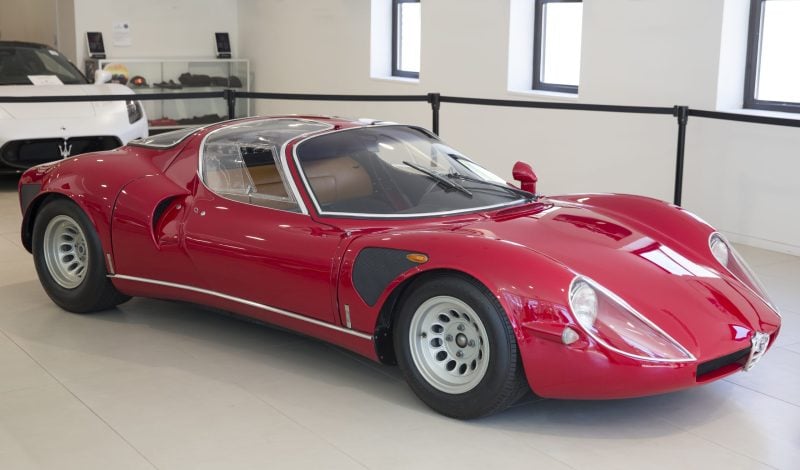
The Alfa Romeo 33 Stradale stands as the most beautiful car ever created. Franco Scaglione designed this masterpiece in 1967 as a road-legal version of the Tipo 33 race car.
Only 18 units were produced between 1967 and 1969. This extreme rarity makes it one of the most coveted Alfa Romeos ever built.
The 33 Stradale delivered remarkable performance for its era. Its specifications remain impressive even by today’s standards.
The car originally cost $17,000 when a new Mustang sold for $2,500. This premium pricing reflected its exceptional engineering and artistry.
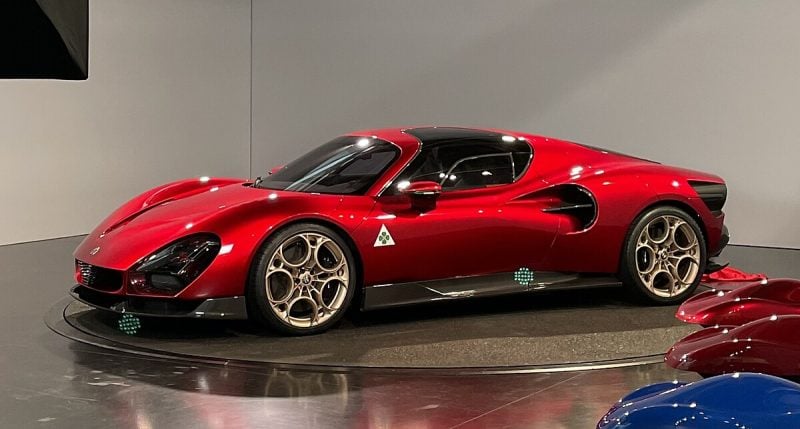
Alfa Romeo recently launched a modern interpretation of the 33 Stradale. Only 33 units of the new supercar will be produced, and all have already sold.
The original 33 Stradale continues to inspire automotive design decades later. It represents the perfect blend of racing heritage and street-legal sophistication.
2. Alfa Romeo 8C 2900 Mille Miglia
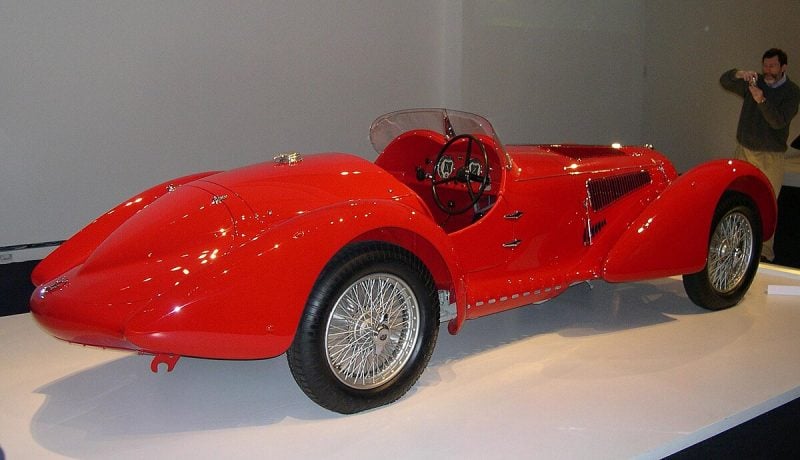
The 8C 2900 Mille Miglia stands as one of the greatest sports cars of the 1930s. Designed by Vittorio Jano, it dominated Italy’s most prestigious endurance race.
The car featured a twin-supercharged straight-eight engine derived from Grand Prix technology. Its chassis came directly from Alfa Romeo’s racing program, providing exceptional performance and handling.
The 2900MM won the 1938 Mille Miglia decisively. This victory marked the third consecutive win for Alfa Romeo in the grueling 1,000-mile race through Italy.
Only five examples were ever produced, making it extraordinarily rare. The car combined racing-bred engineering with road-going capability.
Its supercharged 2.9-liter engine delivered remarkable power for the era. The lightweight construction and advanced suspension made it nearly unbeatable on both road and track.
The 8C 2900 represents the pinnacle of pre-war automotive engineering and remains highly coveted by collectors today.
3. Alfa Romeo Giulia Quadrifoglio
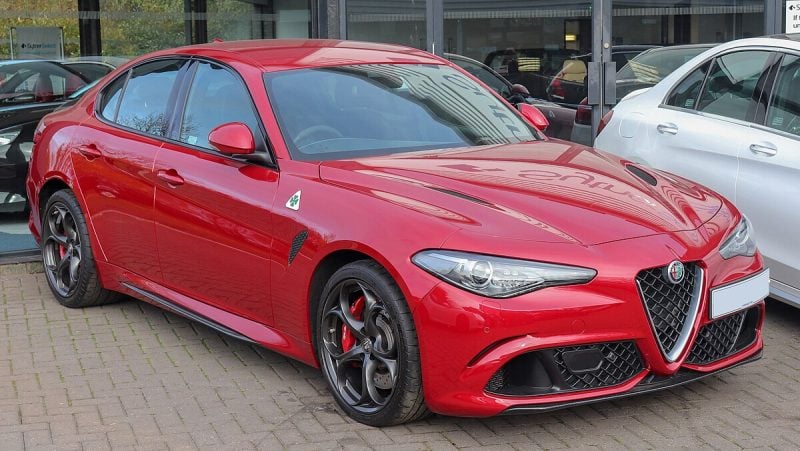
The Giulia Quadrifoglio marked Alfa Romeo’s triumphant return to the performance sedan market in 2015. This BMW M3 rival combines Italian passion with serious engineering credentials.
Under the hood sits a 2.9-liter twin-turbocharged V6 engine. The powerplant delivers exceptional performance while maintaining the distinctive Alfa Romeo character that enthusiasts demand.
The Quadrifoglio serves as a flagship model that showcases Alfa Romeo’s modern capabilities. It represents the brand’s ability to compete directly with established German performance sedans.
The car features aggressive styling cues that distinguish it from the standard Giulia. Carbon fiber elements and aerodynamic enhancements emphasize its performance-focused nature.
Track-tuned suspension and precise steering dynamics provide an engaging driving experience. The Quadrifoglio successfully balances daily usability with genuine sports car performance characteristics.
This model proved that Alfa Romeo could produce a contemporary supercar disguised as a practical sedan.
4. Alfa Romeo 2000 Sportiva
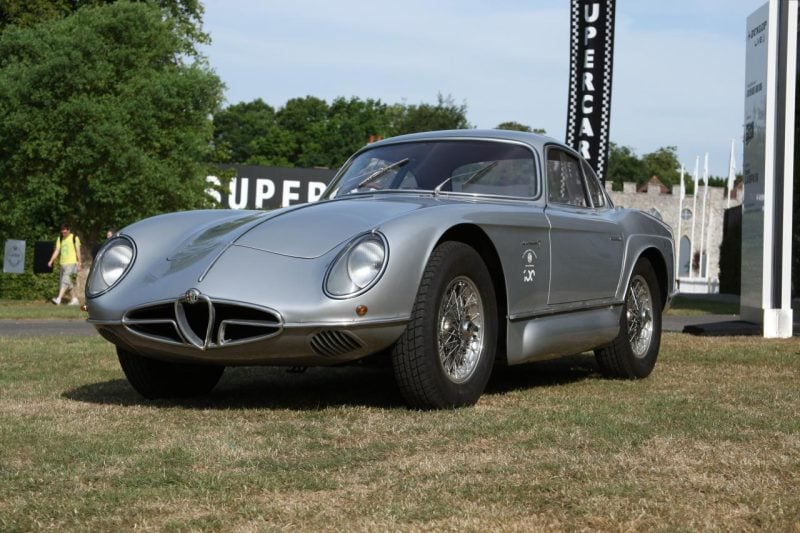
The Alfa Romeo 2000 Sportiva stands as one of the marque’s most exclusive creations from 1954. Only four examples were ever produced by Bertone – two coupes and two spiders.
Franco Scaglione designed this stunning 2-liter sports car at Bertone. The company originally planned a small production run but ultimately built just these four prototypes.
The Sportiva utilized a spaceframe chassis similar to the Disco Volante. Its 2-liter engine featured hemispherical combustion chambers and produced nearly 140 horsepower.
Bertone equipped the car with a De Dion rear axle for superior handling. The word “Sportiva” appeared in italics on the boot lid beneath the Alfa Romeo emblem.
This model was intended to celebrate Alfa Romeo’s racing victories from the 1930s and 1940s. The Giulietta Sprint eventually took its place as the mainstream production sports car when the 2000 Sportiva failed to reach series production.
5. Alfa Romeo GT with Busso 3.2-litre V6
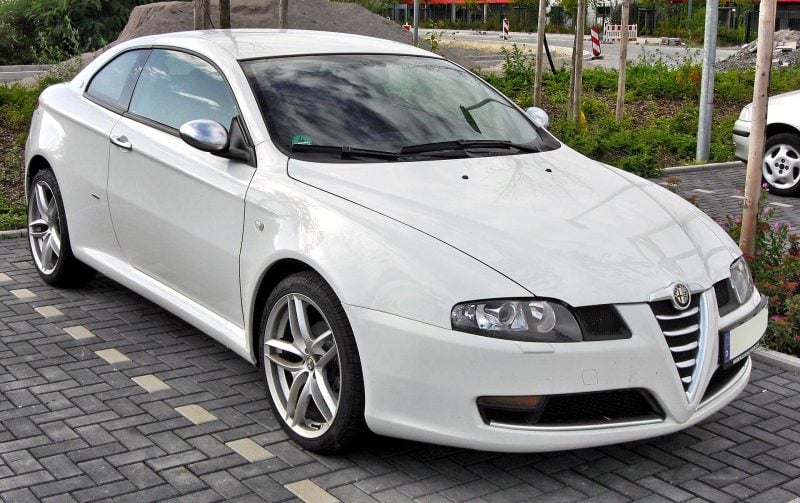
The Alfa Romeo GT represented one of the final applications of Giuseppe Busso’s legendary V6 engine. Produced from 2003 to 2010, this coupe featured Bertone’s distinctive styling that balanced elegance with sporting character.
The 3.2-litre version delivered 240 horsepower and produced an unmistakable exhaust note that enthusiasts still celebrate today. This naturally aspirated engine provided smooth power delivery throughout its rev range.
Bertone’s design created a practical yet beautiful two-door coupe. The GT offered more everyday usability than many sports cars while maintaining genuine Alfa Romeo character.
The combination of the Busso V6’s sonorous soundtrack and the GT’s refined handling made it a compelling choice. It served as an accessible entry point into Alfa’s performance lineup during its production run.
Today, well-maintained examples with the 3.2-litre V6 are increasingly sought after by collectors who appreciate this final iteration of the iconic Busso engine.
6. Alfa Romeo Giulietta Sprint
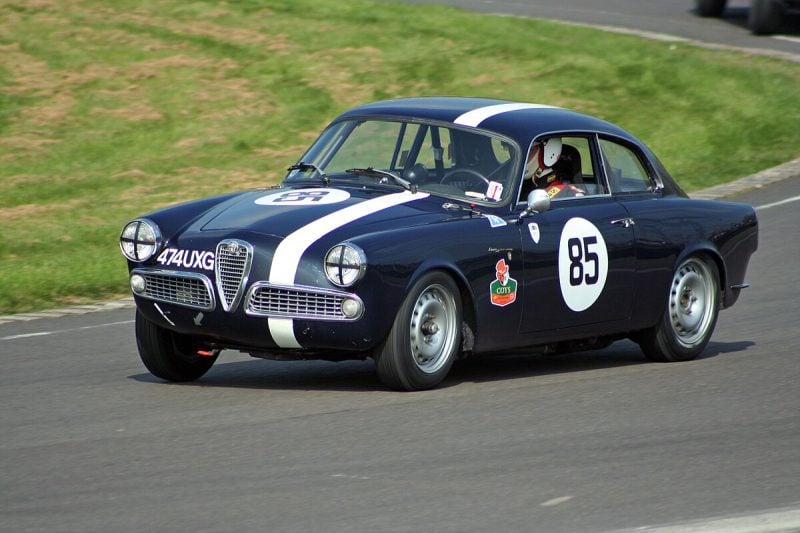
The Giulietta Sprint marked Alfa Romeo’s quantum leap in production quality during the 1950s. Franco Scaglione designed this elegant coupé in collaboration with coachbuilder Bertone.
The Sprint featured technically advanced engineering for its era. Its high-revving twin camshaft engine used aluminum alloy construction, while the gearbox and differential casing shared the same lightweight material.
Racing DNA flowed through the Sprint’s design. The same technicians responsible for Alfa Romeo’s racing program developed this road car, ensuring genuine performance credentials.
The Giulietta Sprint became one of Alfa Romeo’s most successful models. Its distinctive yet minimal design combined power, speed, and beauty in a compelling package that influenced Italian automotive styling for years to come.
7. Alfa Romeo Montreal
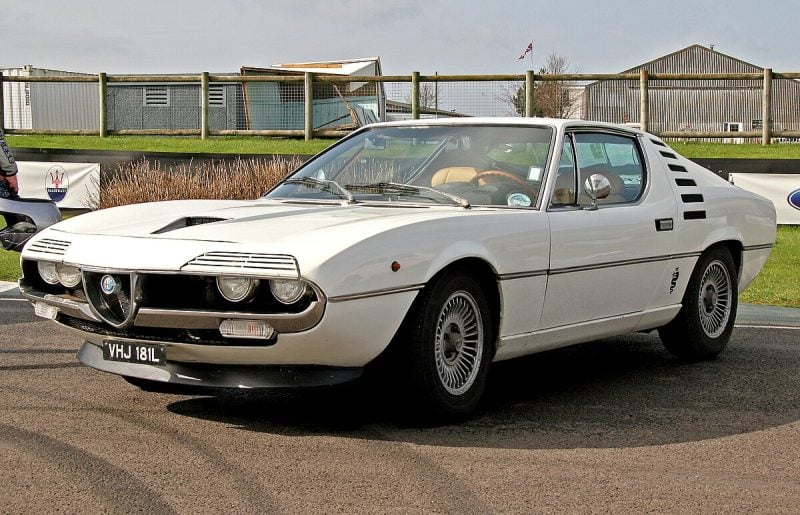
The Montreal stands as one of the most striking Alfas ever produced. Marcello Gandini at Bertone crafted its distinctive design, creating an automotive masterpiece.
This 2+2 coupe utilized a derivative of the 2.6-liter V8 engine from the Tipo 33. The powertrain delivered genuine sports car performance with grand touring refinement.
Production remained extremely limited, with only 3,900 units manufactured. This rarity makes surviving examples highly sought after by collectors today.
The Montreal perfectly balanced aggressive styling with elegant proportions. Its unique louvered headlight covers and muscular haunches created an unmistakable silhouette.
Gandini’s design work placed the Montreal among the most desirable Alfas ever created. The car represented the pinnacle of 1970s Italian automotive artistry.
8. Alfa Romeo Spider Duetto
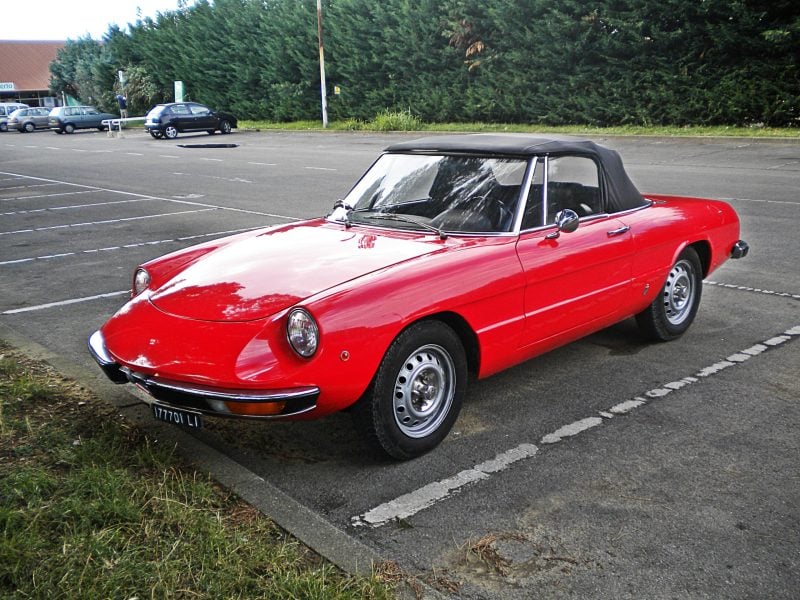
The Alfa Romeo Spider Duetto debuted at the 1966 Geneva Motor Show. Pininfarina designed this elegant roadster based on the Giulia chassis.
The name “Duetto” came from a public contest won by Guidobaldo Triomfi. He received the first production car as his prize.
Hollywood made the Spider famous in 1967’s “The Graduate” starring Dustin Hoffman. The film brought worldwide recognition to this Italian convertible.
Production lasted 28 years from 1966 to 1993. Alfa Romeo built over 124,000 examples across four generations, making it the company’s longest-running model.
The Spider’s timeless design and engaging driving dynamics established it as the definitive Italian roadster. Its beautiful proportions and sporty character captured enthusiasts globally.
9. Alfa Romeo Alfetta GTV
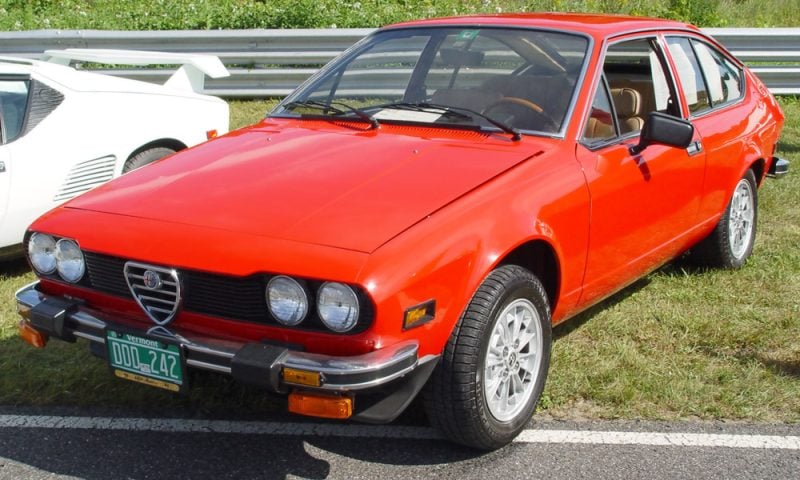
The Alfetta GTV emerged as a coupe version of the popular Alfetta saloon. Produced between 1974 and 1987, it faced the challenging task of replacing the beloved “105” Bertone coupés.
Initially called the GT with a 1.8-liter engine, the car featured a revolutionary drivetrain. The rear-mounted transaxle provided excellent weight distribution and handling characteristics.
The GTV made a significant impact on the motoring world with its advanced engineering. Its innovative design combined sporty performance with practical everyday usability.
The model proved successful in motorsport applications beyond its road car origins. Modified versions with powerful V8 engines dominated racing series in Australia and other markets.
The Alfetta GTV represented Alfa Romeo’s engineering excellence during the 1970s and 1980s. It delivered the brand’s signature driving dynamics in an accessible sports coupe package.
10. Alfa Romeo 75 (Milano)
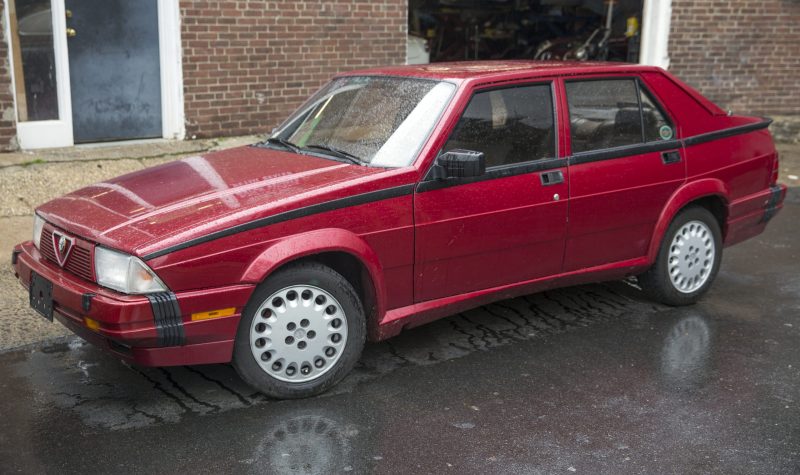
The Alfa Romeo 75 represents a pivotal moment in the marque’s history. Introduced in 1985 to commemorate Alfa Romeo’s 75th anniversary, it became the final model developed before Fiat’s acquisition.
Known as the Milano in North American markets, this compact executive sedan ran until 1992. The 75 utilized the proven Alfetta chassis platform with rear-wheel drive configuration.
Multiple engine options were available, including four-cylinder and V6 variants. The design incorporated genuine racing technology that reflected Alfa Romeo’s motorsport heritage.
This model marked the end of an era as Alfa’s last independent creation. The 75 delivered the engaging driving dynamics and distinctive character that defined classic Alfa Romeos.
Its combination of performance, styling, and engineering innovation secured its place among the brand’s most significant models. The 75 stands as a fitting tribute to Alfa Romeo’s proud legacy.
11. Alfa Romeo GTV6
The GTV6 emerged from Alfa Romeo’s 116-series platform, building upon the Alfetta sedan’s foundation. Produced from 1981 to 1986, this coupe represented pure Alfa Romeo engineering before Fiat’s complete takeover.
The car’s defining feature was its 2.5-liter V6 engine. Many enthusiasts consider this powerplant among the best-sounding V6 engines ever created. The distinctive exhaust note became legendary among automotive circles.
Engineering excellence showed in the GTV6’s rear transaxle design. This configuration delivered perfect 50/50 weight distribution, enhancing handling dynamics significantly.
The timing proved fortunate for purists. Fiat acquisition occurred after GTV6 production ended, leaving this model untouched by corporate interference. Original Alfa Romeo design philosophy remained intact throughout its lifespan.
Contemporary reviews praised the GTV6’s balance and driving characteristics. The rear-mounted transaxle and De Dion rear suspension created exceptional road manners for its era.
12. Alfa Romeo 1900 Super Sprint
The Alfa Romeo 1900 Super Sprint represented a pivotal moment in the marque’s history. Produced from 1955 to 1958, only 599 units were manufactured across two series.
This model marked Alfa Romeo’s first car built entirely on a production line. It also introduced unitary construction without a separate chassis, advancing the brand’s manufacturing techniques.
Touring crafted the bodywork using their renowned Superleggera aluminum construction. The lightweight design contributed significantly to the car’s performance capabilities.
The Super Sprint quickly gained recognition among gentleman drivers and privateer racing teams. Its combination of nimble handling, impressive speed, and solid reliability made it highly competitive.
The car earned the nickname “Millenove” and became known as “the family car that wins races.” It excelled in both sprint and endurance events throughout Italy and beyond, establishing itself as a formidable GT-class competitor.
13. Alfa Romeo Giulia Sprint GT
The Giulia Sprint GT arrived in 1963 as a design masterpiece penned by Giorgetto Giugiaro at Bertone. The coupe borrowed styling cues from Giugiaro’s earlier 2600 Sprint design.
Studio chief Nuccio Bertone originally envisioned a limited-production model. However, Alfa Romeo management saw the potential and pushed for broader production after viewing the initial renderings.
The Sprint GT featured a twin-cam inline-four engine that produced an distinctive exhaust note. Its lightweight construction and balanced chassis delivered engaging handling dynamics that made it a driver’s favorite.
The model’s classic Italian proportions and clean lines established it as a styling benchmark. Production continued through the 1970s as part of Alfa’s successful 105 series lineup.
14. Alfa Romeo SZ (Sprint Zagato)
The Alfa Romeo SZ emerged in 1989 as a bold attempt to revive the marque’s sporting heritage following Fiat’s acquisition. Only 1,036 units were produced through 1991, making it exceptionally rare.
The SZ featured sharp-edged thermoplastic composite bodywork that polarized opinions. Despite its name suggesting Zagato design, the car was actually styled in-house by Alfa Romeo.
Built on a shortened Alfa Romeo 75 chassis, the SZ packed a 3.0-liter V6 engine producing 210 horsepower. The lightweight construction and advanced suspension delivered superb handling characteristics.
The model served as a spiritual successor to the 1960s Giulietta Sprint Zagato. Its distinctive appearance and limited production numbers have made it a sought-after collector’s item today.
15. Alfa Romeo 147 GTA
The 147 GTA represented Alfa Romeo’s most potent hatchback when it launched in the mid-2000s. Walter de Silva and Wolfgang Egger crafted aggressive bodywork that distinguished it from standard 147 models.
Under the hood sat a naturally aspirated 3.2-liter V6 engine producing 250 horsepower. This powerplant delivered remarkable performance figures for its era.
The GTA could accelerate from 0-100 km/h in 6.3 seconds and reach a top speed of nearly 250 km/h. These numbers placed it among the fastest hot hatchbacks available at the time.
Alfa Romeo offered the 147 GTA with either a six-speed manual transmission or the optional Selespeed automated manual gearbox. The Selespeed system provided convenience without sacrificing the car’s sporting character.
Visual enhancements included a redesigned front bumper, distinctive alloy wheels, and twin exhaust outlets integrated into a modified rear bumper. These details signaled the GTA’s performance intentions.
16. Alfa Romeo 4C
The Alfa Romeo 4C represented the brand’s return to lightweight sports car philosophy. Launched in 2013, it featured a carbon fiber monocoque chassis that weighed just 143 pounds.
The 4C used a turbocharged 1.75-liter four-cylinder engine producing 237 horsepower. This power figure sent the car from zero to 60 mph in 4.1 seconds.
Alfa Romeo designed the 4C without power steering to maximize driver connection. The steering required effort at low speeds but provided exceptional feedback at higher velocities.
The car’s body panels were made from SMC composite materials. This construction method kept the total weight under 2,500 pounds across both coupe and spider variants.
Critics praised the 4C’s handling dynamics and raw driving experience. However, they noted concerns about interior quality and ride comfort on rough surfaces.
17. Alfa Romeo 6C 2500
The Alfa Romeo 6C 2500 served as the final chapter in the legendary 6C series that began in 1927. This model bridged the gap between prewar excellence and postwar innovation.
Introduced in 1939, the 6C 2500 featured a 2.5-liter inline-six engine producing 110 horsepower. Production continued until 1954, with limited manufacturing during World War II years.
The Villa d’Este variant stands out as the most celebrated version. Its design combined 1930s streamlining with clean postwar aesthetics, earning recognition as one of the most beautiful cars ever created.
The Super Sport variant offered enhanced performance with a competition-tuned chassis. Count Trossi and other notable figures drove these cars in prestigious events like the Mille Miglia.
This model marked the end of Alfa Romeo’s celebrated straight-six era before the company transitioned to the 1900 series.
18. Alfa Romeo Stelvio Quadrifoglio
The Stelvio Quadrifoglio marked Alfa Romeo’s bold entry into the performance SUV segment. This high-performance crossover combines Italian style with genuine driving excitement.
Under the hood sits a Ferrari-derived 2.9-liter twin-turbocharged V6 engine. The powerplant produces 505 horsepower and 443 lb-ft of torque through an eight-speed automatic transmission.
Performance figures are impressive for an SUV of this size. The Stelvio Quadrifoglio accelerates from 0-100 kph in just 3.8 seconds and reaches a top speed of 283 kph.
The SUV shares design language with its sedan sibling, the Giulia. Its attractive styling helps it stand out among other performance crossovers in the market.
Despite carrying a premium price tag, the Stelvio Quadrifoglio delivers the driving dynamics Alfa Romeo is known for. It represents the brand’s successful adaptation of their performance philosophy to the SUV format.
19. Alfa Romeo 8C Competizione
The 8C Competizione debuted as a concept at the 2003 Frankfurt Motor Show before entering production in 2007. Alfa Romeo produced this sports car until 2010.
The name references the eight-cylinder engine and Alfa Romeo’s racing heritage. “8C” stands for eight cylinders, while “Competizione” means competition in Italian.
Many consider the 8C Competizione Alfa Romeo’s first true supercar. It featured lightweight carbon fiber components and utilized a Maserati-derived platform and powertrain.
The car’s design captured classic Alfa Romeo styling elements. Its appearance remained faithful to the original concept car, creating a modern interpretation of traditional Alfa aesthetics.
Alfa Romeo received over 1,400 orders after revealing the 8C. The model later influenced the design language of subsequent models like the MiTo and Giulietta.
20. Alfa Romeo 145 Quadrifoglio
The Alfa Romeo 145 Quadrifoglio represented the brand’s hot hatch ambitions during the 1990s. This three-door compact car delivered genuine performance in an accessible package.
The Quadrifoglio variant featured a 2.0-liter Twin Spark engine producing around 150 horsepower. This powerplant provided spirited acceleration and the distinctive Alfa Romeo exhaust note that enthusiasts cherished.
The 145’s sharp styling stood out among mainstream hatchbacks. Its wedge-shaped profile and distinctive front grille created an unmistakably Italian aesthetic that aged well.
Inside, the cabin offered typical Alfa character with supportive seats and driver-focused ergonomics. The build quality reflected the brand’s standards of the era.
The 145 Quadrifoglio remains exceptionally rare in certain markets today. Original examples have become sought-after collectibles among Alfa Romeo enthusiasts who appreciate its combination of practicality and performance heritage.
21. Alfa Romeo Giulietta QV
The Giulietta QV stands as a forgotten gem among modern hot hatchbacks. It was thoroughly oversold by competitors like the Golf GTI and Civic Type R.
The QV packed genuine performance credentials beneath its distinctive Italian styling. Its turbocharged engine delivered impressive power figures for the compact hatchback segment.
Despite strong dynamics and character, the Giulietta QV struggled to gain mainstream recognition. Many enthusiasts overlooked this model in favor of more established rivals.
The car offered typical Alfa Romeo driving engagement at a competitive price point. Its blend of performance and character made it a bargain for those who discovered it.
The Giulietta QV represented Alfa Romeo’s attempt to compete in the hot hatch market. While commercially unsuccessful, it provided genuine thrills for discerning drivers who appreciated its unique Italian approach to the segment.
22. Alfa Romeo 156 GTA
The 156 GTA debuted at the Frankfurt Motor Show in September 2001. Alfa Romeo finally delivered the high-performance version enthusiasts had been waiting for.
At its heart sat a 3.2-liter V6 engine producing 247 horsepower. This powerplant provided the performance credentials the standard 156 needed.
Both sedan and Sportwagon variants were available. The GTA treatment gave the elegant 156 platform genuine sports car capabilities.
Production remained limited with fewer than 5,000 examples built total. 2,625 sedans and 2,026 Sportwagons rolled off the production line.
The 156 GTA has gained appreciation over time. Values have increased as collectors recognize its significance in Alfa Romeo’s modern history.
Its combination of striking Italian design and genuine performance makes it memorable. The 156 GTA represents Alfa Romeo’s ability to create desirable sports sedans during the early 2000s.
23. Alfa Romeo GTV V6
The Alfa Romeo GTV V6 represents one of the most charismatic sports coupes from the Italian marque. Launched in the 1990s as part of the Type 916 series, it combined striking Italian design with genuine performance credentials.
The car’s 60-degree all-aluminum V6 engine delivered both power and an intoxicating exhaust note. This smooth, free-revving unit sacrificed Alfa’s traditional twin-cam layout for a more cost-effective single cam per bank design.
The fastest GTV variant featured a 3.2-liter V6 producing 240 horsepower. It achieved a top speed of 158 mph and completed the 0-60 mph sprint in just over six seconds.
Beyond straight-line performance, the GTV offered engaging driving dynamics typical of Alfa Romeo. The combination of responsive handling and that distinctive V6 soundtrack made it particularly appealing to driving enthusiasts.
Today, well-maintained examples with comprehensive service histories remain sought after by collectors who appreciate authentic Italian sports car character.
24. Alfa Romeo Giulietta SZ
The Giulietta SZ emerged from necessity when driver Dore Leto di Priolo sought Zagato’s help after his car was damaged in the 1956 Mille Miglia. This collaboration sparked one of Alfa Romeo’s most desirable models.
Zagato crafted an aluminum body that weighed just 770kg, making it significantly lighter than steel-bodied counterparts. The reduced weight dramatically improved performance over standard Giulietta models.
Built on the Giulietta Sprint Veloce chassis, the SZ featured a highly tuned 1290cc engine. Alfa Romeo officially contracted Zagato for production after initial success with custom builds for racers.
The partnership between Alfa Romeo and Zagato dates back to the 1930s with the 6C models. The Giulietta SZ represents a high point of this collaboration in the postwar era.
This model became one of the most collectible Alfa Romeos of its period, combining stunning Zagato design with proven racing pedigree.
25. Alfa Romeo 4C Spider
The 4C Spider represents Alfa Romeo’s modern interpretation of the classic Italian sports car formula. This mid-engined roadster debuted in 2015, offering an open-air driving experience built around a lightweight carbon fiber chassis.
The Spider maintains the same structural rigidity as its coupe counterpart despite the removable roof panels. Alfa Romeo engineered the convertible to preserve the sharp handling characteristics that define the 4C platform.
Power comes from a turbocharged 1.75-liter four-cylinder engine producing 237 horsepower. The lightweight construction keeps the Spider under 2,500 pounds, delivering impressive performance figures.
The 4C Spider’s striking design draws significant attention on the road. Its aggressive styling cues and exotic proportions give it supercar presence at a more accessible price point.
Production ended in 2020, making the 4C Spider the final chapter in Alfa Romeo’s dedicated sports car lineup for the modern era.
26. Alfa Romeo 75 Turbo Evoluzione
The 75 Turbo Evoluzione emerged in 1987 as Alfa Romeo’s homologation special for Group A touring car racing. Alfa produced exactly 500 road-going examples to meet competition requirements.
Rather than using the 75’s standard V6 engine, engineers turbocharged the twin-cam inline-four. This decision created a lighter, more balanced racing platform.
The Evoluzione generated impressive power figures for its era. The turbocharged four-cylinder delivered nearly 400 horsepower in race trim.
Alfa Corse built six examples for the 1987 World Touring Car Championship. Notable drivers included Jacques Laffite and Michael Andretti.
The car featured significant racing modifications including enlarged brakes, upgraded suspension components, and specialized torsion bars. Despite these enhancements, the 75 Turbo Evoluzione struggled against the dominant BMW M3 in competition.
The model represents one of Alfa Romeo’s final serious attempts at international touring car racing during the 1980s.
27. Alfa Romeo Brera
The Alfa Romeo Brera arrived in 2005 as a striking grand tourer that captured attention with its bold design language. Giorgetto Giugiaro penned the concept car that inspired the production model’s dramatic proportions.
The Brera featured distinctive triangular headlights and a pronounced grille that defined Alfa Romeo’s modern aesthetic. Its muscular haunches and flowing roofline created a memorable silhouette on the road.
Engine options included a 2.2-liter JTS four-cylinder and a 3.2-liter V6. The V6 variant delivered 260 horsepower and provided genuine performance credentials.
The interior showcased premium materials and sporty design cues typical of Alfa Romeo. Dashboard layout emphasized the driver while maintaining elegant Italian styling throughout.
Production ended in 2010 after five years in the lineup. The Brera represented Alfa Romeo’s commitment to distinctive design during a challenging period for the brand.
28. Alfa Romeo Tipo 33 Sport Prototipo
The Alfa Romeo Tipo 33 dominated sports prototype racing from 1967 to 1977. Autodelta, led by former Ferrari designer Carlo Chiti, developed these remarkable racing machines for the factory team.
The Tipo 33 competed across multiple prestigious series. It participated in the Sports Car World Championship, Nordic Challenge Cup, Interserie, and CanAm racing.
Franco Scaglione designed the streamlined body that sat remarkably low. The car measured less than one meter in height, creating an aggressive racing stance.
A powerful V8 engine provided the motivation for competition success. The lightweight construction and advanced engineering made it highly competitive against international rivals.
The racing program proved successful over its decade-long campaign. The Tipo 33 eventually secured the World Constructors’ Championship for Alfa Romeo, cementing its place in motorsport history.
These prototypes represented some of the most beautiful racing cars ever created during an era known for stunning designs.
29. Alfa Romeo 8C 2300
The Alfa Romeo 8C 2300 debuted in 1931 as the successor to the 6C 1750. Vittorio Jano designed the sophisticated eight-cylinder 2.3-liter engine that defined this legendary sports car.
The 8C 2300 featured advanced engineering for its era. The dual-block engine included light alloy cylinder heads, a supercharger, and forced lubrication system.
This model achieved remarkable racing success across multiple disciplines. It won the Mille Miglia, Targa Florio, and four editions of the 24-Hour Le Mans.
The 8C 2300 could reach 60 mph in 8.4 seconds, which was considered exceptionally fast in the 1930s. Only 188 examples were produced for public sale.
The car remains competitive in historic racing events today. Auction prices for surviving examples now exceed $12 million, reflecting its status as one of the most exciting sports cars ever built.
30. Alfa Romeo Tonale
The Alfa Romeo Tonale represents the brand’s entry into the compact luxury SUV segment. This crossover launched in 2022 as Alfa Romeo’s second SUV offering after the Stelvio.
The Tonale features distinctive Italian design elements that maintain Alfa Romeo’s visual identity. Its triangular grille and sleek headlight configuration give it recognizable brand characteristics.
Under the hood, the Tonale offers multiple powertrain options including mild-hybrid and plug-in hybrid variants. The plug-in hybrid system combines a turbocharged engine with electric motors for improved efficiency.
Inside, the cabin incorporates modern technology with digital displays and connectivity features. The interior design balances contemporary elements with traditional Alfa Romeo styling cues.
The Tonale aims to attract younger buyers to the Alfa Romeo brand while competing against established luxury compact SUVs. Its market positioning focuses on style and driving dynamics rather than pure practicality.
Alfa Romeo’s Influence on Automotive Design
Alfa Romeo pioneered engineering solutions like twin-cam engines and independent suspension systems that became industry standards. The brand established iconic design elements including the triangular grille, flowing body lines, and driver-focused cockpits that influenced automotive aesthetics for decades.
Pioneering Engineering Innovations
Alfa Romeo introduced the twin-cam engine design in 1914 with the Grand Prix car. This configuration became standard across the automotive industry for high-performance applications.
The company developed independent front suspension in the 1930s with the 8C series. This innovation improved handling dynamics and ride quality compared to rigid axle designs.
Key Engineering Contributions:
- Twin-cam valve timing systems
- Dry sump lubrication for racing applications
- Transaxle layouts for better weight distribution
- Supercharging technology in the 1920s and 1930s
Alfa Romeo’s racing program drove technical advancement. Solutions developed for competition found their way into road cars. The P3 Grand Prix car’s innovations influenced suspension and engine design across the industry.
The brand’s focus on lightweight construction using aluminum body panels preceded modern manufacturing techniques. This approach influenced sports car development throughout Europe.
Iconic Design Elements Across Decades
The triangular grille became Alfa Romeo’s signature element in 1910. This shield-shaped design inspired similar treatments across luxury automotive brands.
Alfa Romeo established the long hood, short deck proportions that defined sports car aesthetics. The 8C 2900’s flowing lines influenced Italian design houses like Pininfarina and Bertone.
Distinctive Visual Elements:
- Scudetto triangular grille shape
- Flowing fender lines extending from headlights
- Driver-oriented dashboard layouts
- Quad headlight arrangements
The brand’s collaboration with Italian design houses created timeless silhouettes. Bertone’s work on the Giulietta Sprint and BAT concept cars pushed aerodynamic boundaries.
Alfa Romeo’s emphasis on functional beauty influenced automotive design philosophy. Form followed function while maintaining emotional appeal. This balance became a template for premium automotive brands seeking to combine performance with visual distinction.
Legacy and Impact of Classic Alfa Romeos
Classic Alfa Romeos transformed motorsport competition through decades of racing excellence while creating cultural icons that continue inspiring collectors and enthusiasts. Modern preservation efforts maintain these vehicles as functional art pieces rather than static museum displays.
Cultural Significance in Motorsport
Alfa Romeo dominated early Formula One racing during the 1950s, establishing technical standards that influenced automotive engineering for decades. The brand won the first two Formula One World Championships in 1950 and 1951 with the Tipo 158 and 159 models.
Racing success extended beyond Formula One into sports car competitions. The 8C 2900 series dominated the Mille Miglia endurance race, demonstrating reliability alongside speed. These victories proved that Italian engineering could compete with German and British manufacturers.
Motorsport achievements elevated Alfa Romeo’s reputation among automotive enthusiasts worldwide. Racing victories translated into increased road car sales and brand prestige. The connection between track performance and street credibility became central to Alfa Romeo’s identity.
Modern racing programs reference these historical achievements. Contemporary Formula One involvement draws directly from the brand’s racing heritage established in the 1950s.
Preservation and Restoration Trends
Classic Alfa Romeo restoration focuses on maintaining original specifications rather than modernizing components. Collectors prioritize authenticity over performance upgrades when restoring models like the Giulia Sprint and Spider series.
Specialized restoration shops concentrate exclusively on Alfa Romeo models. These facilities maintain expertise in period-correct techniques and source original parts through dedicated supplier networks. Documentation requirements have become increasingly strict for concours-level restorations.
Market values continue rising for properly restored examples. The 8C 2900 series commands seven-figure prices at auction, while more accessible models like the Giulietta Sprint attract five-figure investments.
Parts availability varies significantly between models. Popular production cars maintain strong aftermarket support, while rare racing variants require custom fabrication for missing components.